Chimney Repointing Derby | Lime Mortar Stack Repair
A chimney stack shedding mortar onto the roof slates, or a damp patch showing up on the chimney breast inside, usually isn’t a sign the stack itself is failing — it’s the mortar joints holding the brickwork together giving out, and on Derby’s older terraces that can be happening for years before anyone spots it from ground level. We repoint chimney stacks across Derby and the surrounding villages, starting with a close inspection to work out whether the mortar has just weathered on the surface or whether water has already tracked in behind the brick face, and pricing the job on what’s actually found rather than what a stack looks like from the pavement.
This sits alongside our wider chimney repair work across Derby and Derbyshire, covering everything from a single course of repointing to a partial stack rebuild where the damage has moved past what repointing alone can fix.
At a Glance
- Free chimney inspection with photographed findings before any quote
- Lime mortar specified to match Derby’s older brick, not hard cement that cracks it
- PASMA and IPAF-certified access on every stack, whatever height it sits at
Derby Roofers
Chimney Stack Repairs & Repointing Service
Call us now book a FREE consultation and FREE Quotation
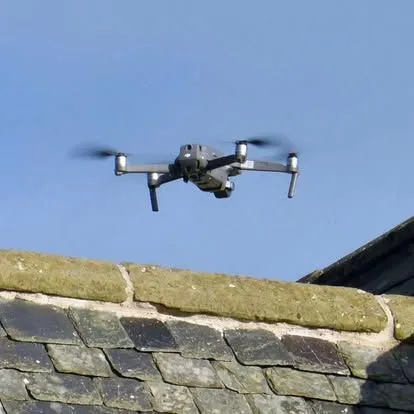
FREE Drone Survey Available
Call: 01332-529704
Chimney Stack Repair & Repointing Derby — Stop the Damage Before It Spreads
We Are Your Trusted, Local Roofing Contractor Serving Derby & Derbyshire
Don’t wait — contact Derby Roofers today for a FREE quote and a FREE drone roof survey.
📞
Call Now: 01332-529704
Noticed crumbling mortar on your chimney stack? Damp patches appearing on a bedroom ceiling? These are early warning signs — and catching them now saves you from a far more expensive repair later.
Chimney stack repair and repointing in Derby is one of the most common jobs we carry out across Derbyshire. In Derby, wet winters and hard freeze-thaw cycles eat through chimney mortar faster than most homeowners expect. This page covers everything from spotting early joint failure to booking a safe, scaffolded repoint on your stack.
We work on chimney inspections, mortar repointing, crack repairs,
chimney flaunching repair,
lead flashing replacement, and full or partial stack rebuilds. Whether you have damp patches inside, crumbling joints, a leaning stack, or loose bricks, we can assess the problem and carry out the right repair. Our team responds quickly — free inspection, same-week availability across Derby, and we arrange scaffolding access where it is needed.
Derby Roofers has been serving homeowners and landlords across Derby and Derbyshire for over 20 years. We are a local chimney repair and repointing specialist — not a call centre passing your job to a subcontractor. Call:
01332-529704 To Book A FREE Drone Survey
Why Crumbling Mortar Joints Need Prompt Attention in Derby
If the mortar between your chimney bricks is soft, sandy, or missing in patches, it is already letting water in. Many Derby homeowners spot the signs but assume it can wait until spring. It usually cannot.
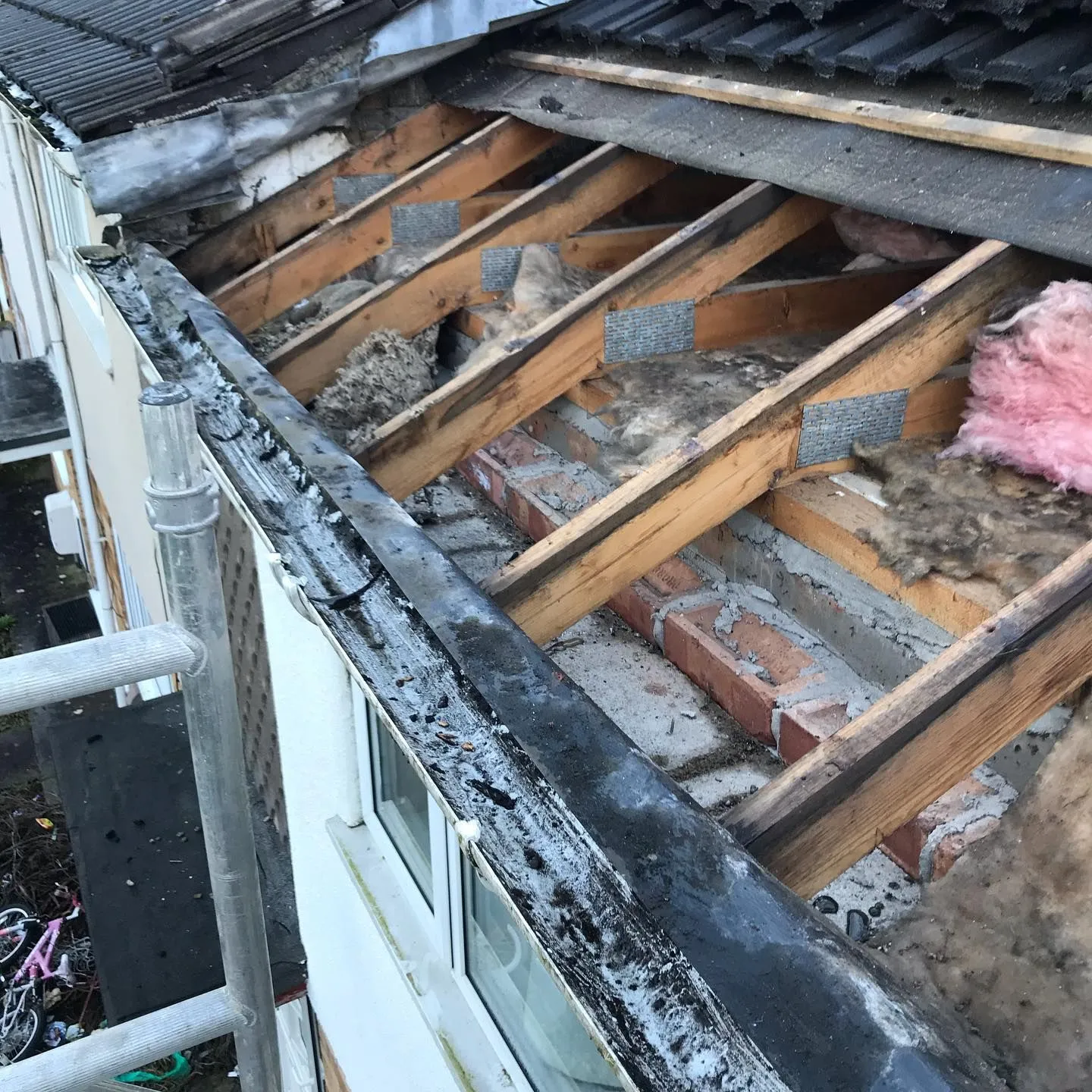
When water gets into open joints, it sits inside the brickwork. In Derby’s cold months, that water freezes, expands, and forces the face of the brick apart — a process called
frost spalling. Once spalling starts, you are no longer looking at a repoint. You are looking at a partial rebuild.
Here are the key warning signs to look out for on your chimney stack:
- Mortar that looks darker or stained — moisture is sitting in the joints
- Flaking, powdery, or soft mortar — the mix has broken down and lost its bond
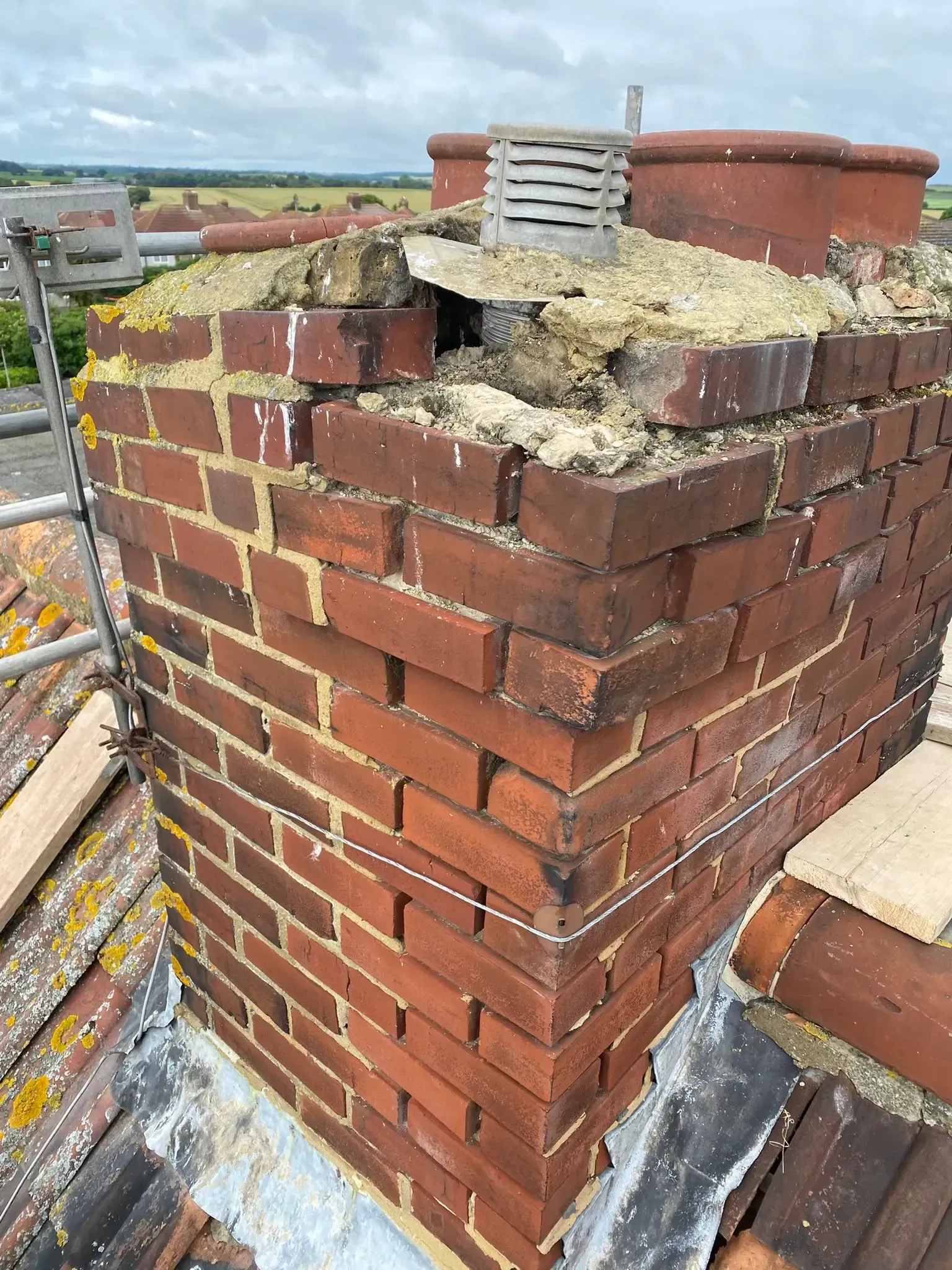
- Visibly recessed or missing joints — water has had open access through every rain shower
- White streaking on brickwork (efflorescence) — mineral salts drawn out by water movement
- Damp patches on the chimney breast wall inside — the stack above has open joints
- Debris or mortar dust falling into the fireplace — the stack is actively breaking apart
- A leaning chimney stack — a sign the mortar has failed structurally, not just cosmetically
Damp patches on the chimney breast wall inside your home are one of the most reliable signs that the stack above has open joints. In
Allestree and Littleover, where Victorian terraces with tall red-brick stacks are common, we see this pattern regularly — particularly after a wet Derby winter.
Acting early keeps the job straightforward. A repoint done before bricks are damaged is far less disruptive and far less expensive than a rebuild carried out after the stack has deteriorated.
How a Chimney Stack Inspection Reveals What Repair Your Stack Needs
Before any work goes ahead, we carry out a proper inspection of your stack. We look at the depth and condition of mortar joints, check for cracked or spalling bricks, examine the flaunching around your chimney pots, and assess the lead flashing at the base of the stack.
We also check for any signs of water ingress into the roof structure at the chimney junction.
Derby’s housing stock ranges from pre-1900 red-brick terraces to 1960s social housing and modern builds. Each type uses different bricks and was built with different mortar mixes. The repair specification has to match the original construction. Getting this wrong — fitting hard cement into soft Victorian brickwork, for example — causes more damage than the deteriorated mortar it replaces.
The inspection tells us which of these repairs your chimney needs:
- Full chimney repointing — when bricks are sound but mortar joints have failed across the stack
- Partial or localised repointing — where only one or two faces have significant joint deterioration
- Brick replacement — where individual bricks have cracked, spalled, or become structurally loose
- Flaunching repair — where the mortar cap holding the chimney pots is cracked or missing
- Lead flashing repair or replacement — where the seal between stack and roof has lifted or cracked
- Partial or full chimney rebuild — where bricks are moving, the stack is leaning, or structural damage is confirmed
You get a clear picture of the scope before scaffolding goes up — no surprises once work is underway.
We provide a written quote based on what we find, not a guesswork estimate given over the phone.
Scaffolding and Safe Access for Derby Chimney Repointing
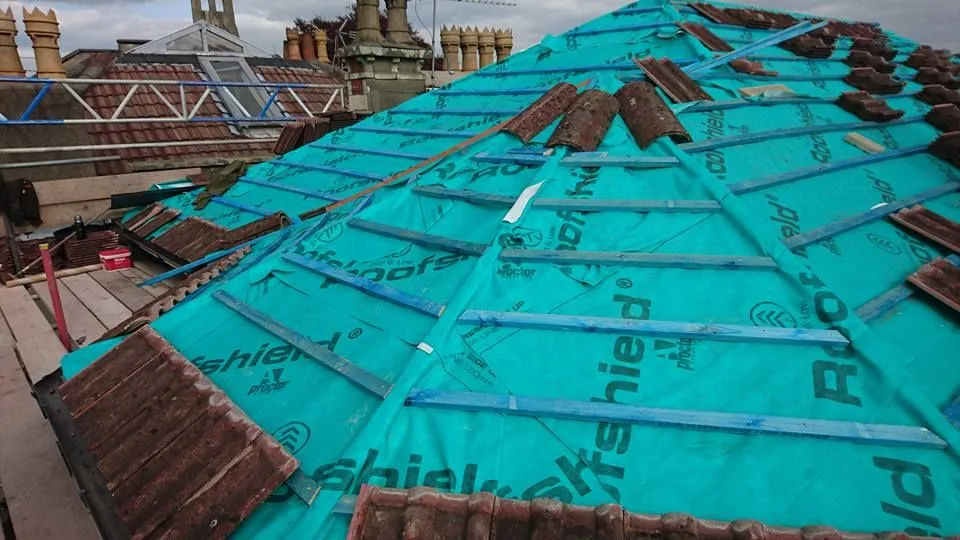
Any chimney repointing above single-storey height requires proper access equipment. We erect scaffold towers or tube-and-fitting scaffold to give a safe working platform around the stack. This is a legal requirement for working at height, and it also means the job is done properly — a repoint carried out from a wobbling ladder is not a repoint that will last.
Scaffolding around the chimney gives us several important advantages:
- Work on all four faces of the stack in a single visit
- Carry materials up safely without overloading or rushing
- Check the flaunching, lead flashing, and chimney pot condition at the same time
- Bring the scaffold down only once we are satisfied the repair is complete
In parts of Derby like Normanton and Pear Tree, narrow Victorian streets can require a temporary traffic management permit for scaffold that overhangs the pavement. We handle the paperwork and coordinate with Derby City Council where permits are needed — you do not have to chase this yourself.
For isolated repairs on accessible stacks, we assess whether a cherry picker or modular access tower is more practical than full scaffold.
If you have other roof maintenance due — such as fascia, soffit, or gutter work — it is worth considering combining it while the scaffold is already in place. It saves the cost of a second access setup. Either way, the access method is confirmed in your written quote before work starts.
Autumn Is the Right Time to Book Chimney Repointing in Derbyshire
Mortar needs sustained temperatures above 5°C to cure properly. Apply it in frost conditions and it will not bond — the repair fails within months. That makes timing important in Derbyshire, where the first hard frosts often arrive in October.
Late summer through to mid-October is the best window for chimney repointing in Derby. The weather is warm enough for mortar to cure fully before the cold sets in, and you are not racing against the calendar. Booking in August or September means the scaffold is up and down before the worst of the autumn rain arrives.
Homeowners who wait until January or February often find their stack has suffered further deterioration over winter. What might have been a clean repoint in autumn can become a repoint plus brick replacement by February. The repair is bigger, the scaffold time is longer, and the job costs more.
Can chimney repointing be done in winter? Yes — in mild spells where temperatures are reliably above 5°C and no frost is forecast within two weeks of completion. We assess weather conditions before scheduling any winter work and will not carry out a repoint in conditions that will compromise the mortar cure.
If a summer inspection flagged up your chimney, do not leave it sitting on the to-do list. Derbyshire’s cold fronts move in faster than most of the UK, and a stack that looks manageable in September can deteriorate significantly by December.
What a Qualified Roofer Does During a Chimney Stack Repoint
A properly carried out repoint is methodical work. Here is what we do on every chimney stack repoint in Derby:
- Scaffold erected — safe platform set up around the stack; all four faces made accessible
- Full close-range inspection — joints, bricks, flaunching, lead flashing, and chimney pot seating all checked and photographed
- Old mortar raked out — joints cut back to a minimum of 15–20mm using a plugging chisel and club hammer;
no angle grinders on older brickwork as they widen joints and damage brick faces - Joints brushed clean and dampened — loose dust removed; bricks dampened so they do not pull moisture from fresh mortar before it cures
- Mortar mixed to the correct specification — natural hydraulic lime (NHL) mortar for pre-1920 Derby stacks; appropriate sand and cement mix for post-war builds; mortar colour-matched to the original
- Joints filled and finished — mortar pressed firmly into joints and finished flush or with a slight weathered profile to shed water away from the face
- Flaunching and lead flashing checked — loose or cracked flaunching repaired; lead flashing reseated, re-dressed, or replaced where needed
- Chimney pot condition checked — pots reset if loose; cowls inspected where fitted
- Scaffold removed and site cleared — full tidy-up; final visual check from ground level before we leave
Why the Right Mortar Matters on Your Derby Chimney
This is one of the most important decisions in any chimney repoint — and one that homeowners rarely get told about.
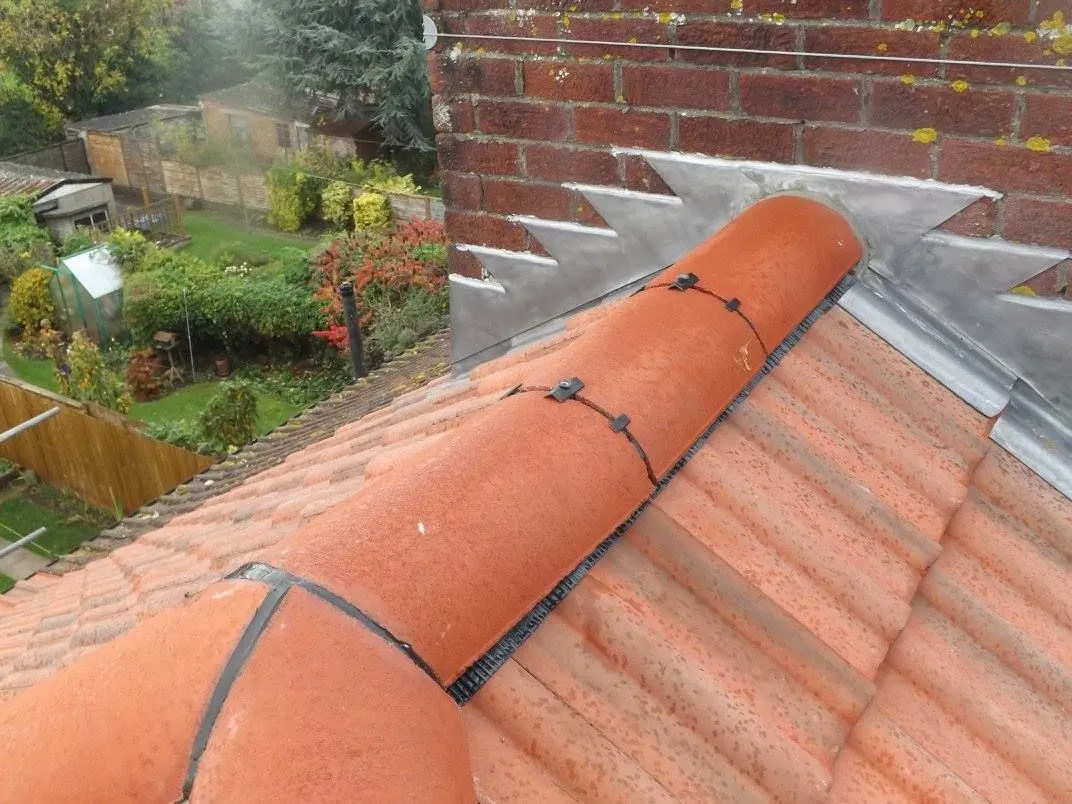
Hard cement on a soft Victorian brick stack is a common mistake made by contractors who do not specialise in chimney work. The cement is stronger than the brick. When the stack expands in summer heat or contracts in winter frost, the brick cracks rather than the joint. Soft lime mortar moves with the brick, protects it, and can be repaired again in future without causing further damage.
For Derby homes on pre-1920 terraces in areas like Normanton, Pear Tree, Spondon, and Chellaston, lime mortar is the correct specification — not a premium upgrade.
For Derby homes with active open fires or log burners, sulphur produced during burning also attacks mortar from inside the flue. This makes it worth inspecting not just the visible external joints but the condition of the flaunching and chimney pot seating at the same time.
How to Keep Your Chimney Stack Sound After Repointing
A well-executed repoint on a Derby chimney should perform well for many years. Keeping it in good condition after the work is done comes down to a few simple habits.
A quick annual visual check in spring — after winter has done its worst — is the most effective maintenance habit.
You are looking for:
- Any joints that appear to have opened or recessed since the repoint
- Bricks that look damp, stained, or have white deposits (efflorescence)
- Cracked or sunken mortar around the flaunching at the chimney pot base
- Lead flashing that has lifted, cracked, or pulled away from the brickwork

If your home in
Mickleover or Quarndon
has an active log burner or open fire, annual sweeping keeps soot and sulphur deposits from building up inside the flue. Sulphur from burning wood and coal attacks mortar from the inside, degrading joints you cannot see from the outside of the stack.
Lead flashing at the base of the stack should be checked at the same time as the joints. Cracked or lifted flashing lets water straight into the roof structure at the join between the chimney and the tiles. We check flashing condition as part of every inspection — it is a quick job to re-dress or replace before it becomes a leak and a much more expensive repair.
Most home insurance policies cover chimney damage caused by sudden events such as storm damage. Gradual wear — including mortar decay — is not typically covered.
Keeping a dated record of inspections and any repairs carried out is good practice and can support any future insurance claim if storm damage occurs.
Frequently Asked Questions About Chimney Stack Repair & Repointing in Derby
What are the signs that a chimney stack needs repointing?
The clearest signs are crumbling, recessed, or missing mortar joints, white staining (efflorescence) on brickwork, damp patches on the chimney breast wall inside the house, and mortar or brick debris falling into the fireplace. A leaning stack or visible cracks through bricks are more serious signs that a rebuild may be needed rather than a repoint alone.
How urgent is chimney repointing?
Chimney repointing should not be left once the mortar begins to visibly deteriorate. Open joints let water into the brickwork. In Derby’s freeze-thaw climate, that water expands in winter and begins forcing bricks apart — a process called frost spalling. What starts as a repoint can become a partial rebuild if left through one or two winters.
Do you need scaffolding to repoint a chimney stack in Derby?
Yes — for any chimney above single-storey height, proper scaffold or an equivalent safe access platform is required. A repoint carried out from a ladder is not safe for the operative and does not produce work that lasts. We arrange all access and include it in your written quote.
What time of year is best for chimney repointing in Derbyshire?
Late summer to mid-October is the best window. Mortar needs temperatures consistently above 5°C to cure properly, and Derbyshire frosts arrive early.
Booking in spring or summer gets you into the ideal curing window and keeps the job off the winter waiting list.
Can a roofer repoint a chimney, or do I need a separate chimney specialist?
A qualified roofer with chimney experience can carry out a full chimney repoint, including flaunching repair and lead flashing checks. The key question to ask any contractor is whether they will specify the correct mortar type for your brickwork. Wrong mortar — typically hard cement on older Victorian brick — causes long-term structural damage to the stack.
What happens if you don’t repoint your chimney?
Failing mortar lets water into the brickwork. Water freezes and expands in winter, cracking bricks from the inside (frost spalling). Internal damp spreads to the chimney breast wall. Eventually, the stack becomes structurally unstable — loose bricks, leaning sections, or collapse risk. A repoint costing hundreds of pounds can become a rebuild costing several thousand if left too long.
Is chimney repair covered by home insurance in the UK?
Home insurance typically covers sudden damage caused by events like storms, but not gradual mortar wear and decay. This means most standard repointing jobs are not covered. However, if a storm dislodges bricks or damages the stack, that repair may be claimable. Keeping records of inspections and maintenance can support a claim if storm damage occurs on a stack you have been maintaining.
What is the most expensive chimney repair?
A full chimney stack rebuild is the most expensive repair — this is required when the stack is structurally compromised, leaning, or the brickwork has deteriorated beyond what repointing can fix.
The best way to avoid rebuild costs is to repoint when the mortar first shows signs of wear, before frost spalling and structural movement begin.
Why is chimney repointing expensive?
The majority of the cost comes from safe access, not materials. Scaffold hire, two qualified operatives working at height, correct mortar specification, and a full inspection of the stack and its components all contribute to the job cost. Work done without proper scaffolding or with the wrong mortar type may appear cheaper upfront but typically fails within a few years, costing more in the long run.
How long does chimney repointing last?
A properly executed repoint using the correct mortar for the brickwork type typically lasts many years. Work done with mismatched mortar — particularly hard cement on older brick — can fail within five to ten years as the brick begins to crack at the joints. Annual visual checks help catch any early joint failure well before it requires a full repoint again.
Areas We Cover For Chimney Stack Repair & Repointing in Derby
Derby Roofers proudly serves homeowners and businesses throughout Derby city and the wider Derbyshire area. Our local teams cover:
Derby City Areas:
- Derby City Centre (DE1)
- Allestree, Mackworth & Quarndon (DE22)
- Mickleover (DE3)
- Littleover & Normanton (DE23)
- Chaddesden, Oakwood & Spondon (DE21)
- Alvaston, Crewton & Osmaston (DE24)
Surrounding Derbyshire Towns & Villages:
- Belper (DE56)
- Ripley (DE5)
- Ilkeston (DE7)
- Heanor (DE75)
- Swadlincote (DE11)
- Ashbourne (DE6)
- Matlock (DE4)
- Borrowash & Draycott (DE72)
- Etwall & Hilton (DE65)
- Melbourne & Chellaston (DE73)
- Duffield & Little Eaton (DE56 / DE21)
- Breadsall & Darley Abbey (DE21 / DE22)
- Long Eaton (NG10)
- Castle Donington (DE74)
Not sure if we cover your area? Call us on 01332-529704 and we’ll be happy to help.
What’s Included in a Derby Chimney Repoint — and What’s Priced Separately
- Full or partial mortar repointing across the affected faces of the stack
- Brick replacement where individual bricks have cracked, spalled, or come loose
- Flaunching repair around the chimney pots
- Lead flashing repair or replacement at the base of the stack
- Partial or full stack rebuild where structural damage is confirmed
- Chimney pot resetting and cowl inspection
- Scaffold, modular access tower, or cherry picker erected for the work, whichever suits the stack
- Free chimney inspection, photographed findings, and a written quote before any work starts
Not Included / Costed Separately
- Chimney sweeping and flue cleaning — an ongoing homeowner task separate from a repoint, though sulphur build-up from an unswept flue is checked for during inspection
- Fascia, soffit, and guttering work — can be bundled in while scaffold is already up, but is priced as a separate job
- Replacement chimney pots or cowls where the originals are too damaged to reset — priced once identified during the inspection, rather than assumed upfront
- Full roof re-covering or structural roof timber work unrelated to the chimney stack itself
How a Derby Chimney Repoint Runs From Call to Completion
- Booking and initial details: A call or enquiry gets basic details down — roughly how old the property is, what’s being seen (crumbling mortar, a damp patch, loose bricks), and where the stack sits — so the right access method can be planned before anyone arrives.
- Free inspection and access set-up: A roofer gets up to the stack itself, whether that means a tower, scaffold, or cherry picker, and checks the mortar joint by joint rather than judging it from the ground, photographing what’s found.
- Diagnosis and written quote: The photographs and findings decide the spec — lime mortar matched to the brick age, how much of the stack needs repointing versus rebuilding, and whether flaunching, flashing, or pot work needs including — all set out in a written quote before work starts.
- Raking out and repointing: Old, failed mortar is raked out to a consistent depth course by course, and new mortar is packed and finished to match the surrounding joints, working around the stack in sections rather than all at once.
- Flaunching, flashing, and pot work: Where the inspection flagged cracked flaunching, worn lead flashing at the base, or a pot that’s come loose, that work is done alongside the repointing while the access equipment is already up.
- Clean-down and sign-off: Debris and old mortar are cleared from the roof and gutters, the access equipment comes down, and the finished stack gets a final check before the job is signed off.
What a Chimney Repoint in Derby Tends to Cost
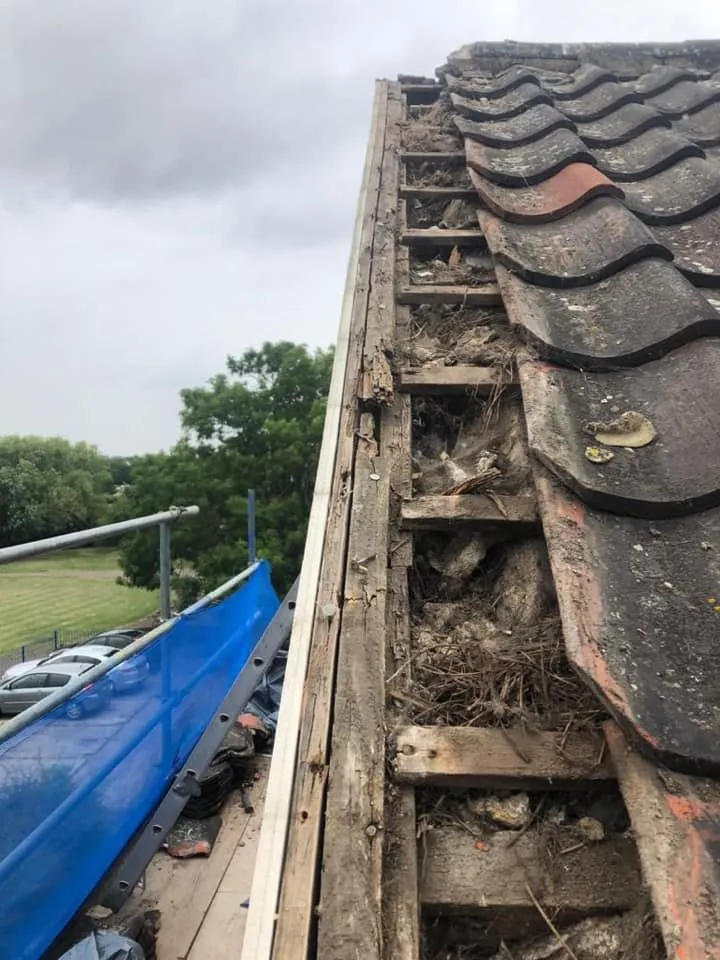
Partial repointing on one or two faces of a stack tends to sit in the low hundreds of pounds, while a full repoint around all four faces of a standard stack runs higher once access equipment, mortar mix, and the extent of raking out are factored in. A partial or full rebuild costs more again, since it involves taking down and relaying brickwork rather than just refreshing the joints, and any flaunching or lead flashing repair done alongside a repoint adds to the total depending on its condition. Access is often the biggest swing factor: a stack reachable from a straightforward tower costs less to get to than one needing a cherry picker or full scaffold on a terrace with no rear access. None of these figures replace a proper look at the stack — a fixed quote only follows a site visit, once the mortar’s been checked joint by joint and the right access method for that property has been worked out.
Lime Mortar vs Hard Cement: Getting the Repoint Spec Right on a Derby Chimney
| Lime mortar (correct for pre-1920 Derby brick) | Hard cement (wrong choice on older brick) | |
|---|---|---|
| How it behaves with the brick | Moves with the brick as it expands and contracts, protecting the brick face | Stronger than the brick itself, so the brick cracks under stress instead of the joint |
| Typical lifespan before it needs attention again | Performs well for many years when correctly specified | Can fail within five to ten years as brick faces start to crack |
| Can it be repaired again without further damage | Yes — lime mortar can be repointed again in future without harming the brick | Often needs brick replacement alongside the re-repoint, not just fresh mortar |
| Where it’s the right choice | Pre-1920 terraces in areas like Normanton, Pear Tree, Spondon, and Chellaston | Rarely appropriate on Derby’s older brick stock, though sometimes used by mistake |
Diagnosing Mortar Failure Before We Quote
Repointing gets judged wrong from the ground more often than any other chimney job — a stack can look tired from the pavement and still have years left in the mortar, or look fine from a distance while the joints have already opened enough to let water track in behind the brick face. Working out which one it actually is comes before anything gets priced: whether the damage is surface erosion built up over a few winters of freeze-thaw, or joints that have failed enough for water to reach the brick itself, because those two problems need different repairs and pricing them the same way does a customer no favours. Derby’s weather plays into it directly — a stack exposed on the west or north face takes the worst of the driving rain and repeat freezing through winter, and that’s usually where mortar starts to go first, even on a chimney that looks sound everywhere else. Getting close enough to check that properly, rather than guessing from a photo or the street, is where PASMA and IPAF certification held across the team earns its keep — a tower or cherry picker gets a roofer near enough to run a hand along the joints and feel for hollow mortar before a figure ever goes on a quote. On the older brick found around Normanton, Pear Tree, Spondon, and Chellaston, that close inspection is usually what decides between a straightforward repoint and telling a customer plainly that a section has moved past saving and needs a partial rebuild instead — a call that only holds up if someone’s actually been up there to make it. That same approach sits behind our wider chimney repair work across Derby and Derbyshire.
Chimney Repointing Across Derby’s Streets and the Surrounding Villages
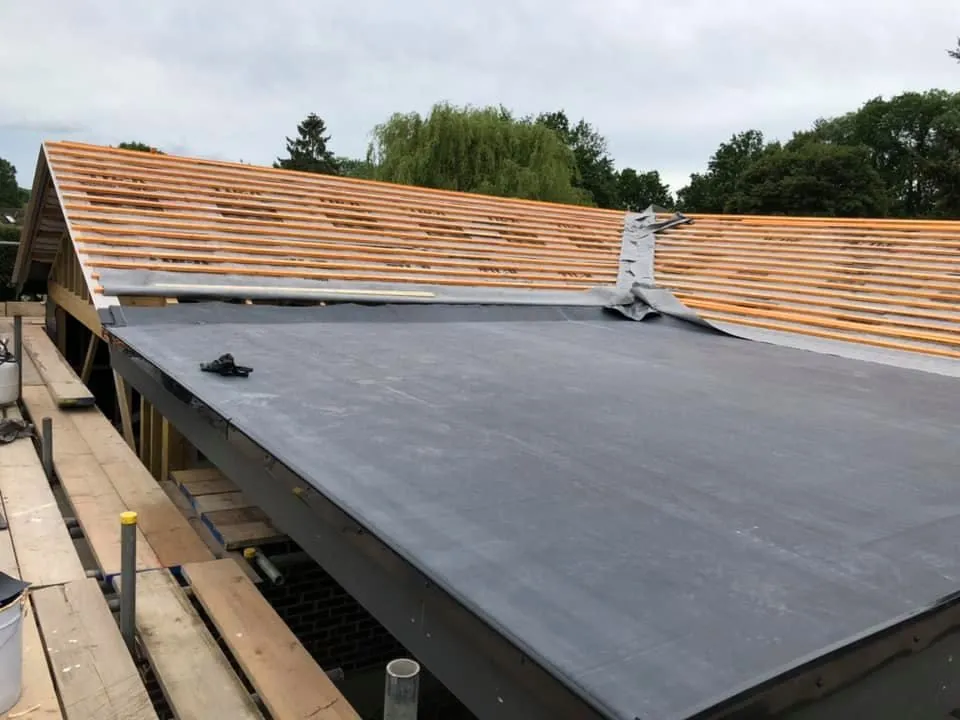
Most repoint call-outs come from Derby itself, and the terraced streets close to the centre — Pear Tree, Rose Hill, Normanton, and Chester Green — throw up the same access problem on job after job: two-up two-down rows with no rear entry, a shared party-wall stack, and a tower that has to go up from the pavement rather than a garden. Semi-detached streets further out in Chellaston, Oakwood, Allestree, and Mickleover are usually more straightforward — room for a tower or cherry picker on the drive and a stack that isn’t tied into next door’s. Outside the city the same repointing and rebuild work covers Spondon, Chaddesden, Littleover, Alvaston, Sinfin, and Breadsall, along with the wider Derbyshire villages around Ripley, Belper, and Ilkeston. Wherever the stack sits, the access method gets worked out from the property itself during the site visit rather than assumed before anyone’s seen it.
Get a Derby Chimney Stack Checked Before Winter Tests It Again
Mortar that’s already started crumbling doesn’t hold up better the next time it freezes, and a repoint booked in during a dry spell is far more straightforward than one arranged after water’s already tracked into the brick or the chimney breast inside. Get in touch for a free inspection and a written quote before anything’s decided.
Ready to Book Your Chimney Stack Inspection in Derby?
If your chimney stack has crumbling mortar, damp patches indoors, or brickwork that has not been inspected in several years, the right time to act is now — before Derby’s autumn frosts arrive.
A free chimney inspection from Derby Roofers gives you a clear picture of your stack’s condition, a written scope of work, and a fixed quote with no hidden extras. We have been repointing and repairing chimney stacks across Derby and Derbyshire for over 20 years. We are fully insured, locally based, and we only recommend work that is genuinely needed.
Call us today on 01332 529704 or complete our contact form at derbyroofers.co.uk/contact-derby-roofers — we will get back to you the same day.
“Very friendly and professional. They delivered my job on time and at a good price.”
DERBY ROOFERS - That is what we aim to hear from customers all the time.
Get a Free Quote
🔒 Your details are safe with us. No spam, ever.