Derby Roofers
Professional Chimney Removal Service
Call: 01332-52970
To Book A FREE Consultation
Chimney Removal Derby — Safe, Fully Managed & Insured
In Derby, more homeowners are choosing chimney removal to stop persistent leaks, free up loft space, or cut the cost of maintaining a stack they no longer use. We carry out chimney removal in Derby for both residential and commercial properties — handling everything from the first inspection through to a fully weathertight roof.
This page covers full chimney stack removal, partial chimney breast removal, structural checks, permitted development rules, and what to expect from us on the day. We work across all Derby postcodes, including DE1, Borrowash, Breadsall, and surrounding areas. If you would to book a chimney repair service then we can offer this also.
Our team is fully insured, and every job is carried out professionally from start to finish. Call us on 01332-529704 to book your free survey.
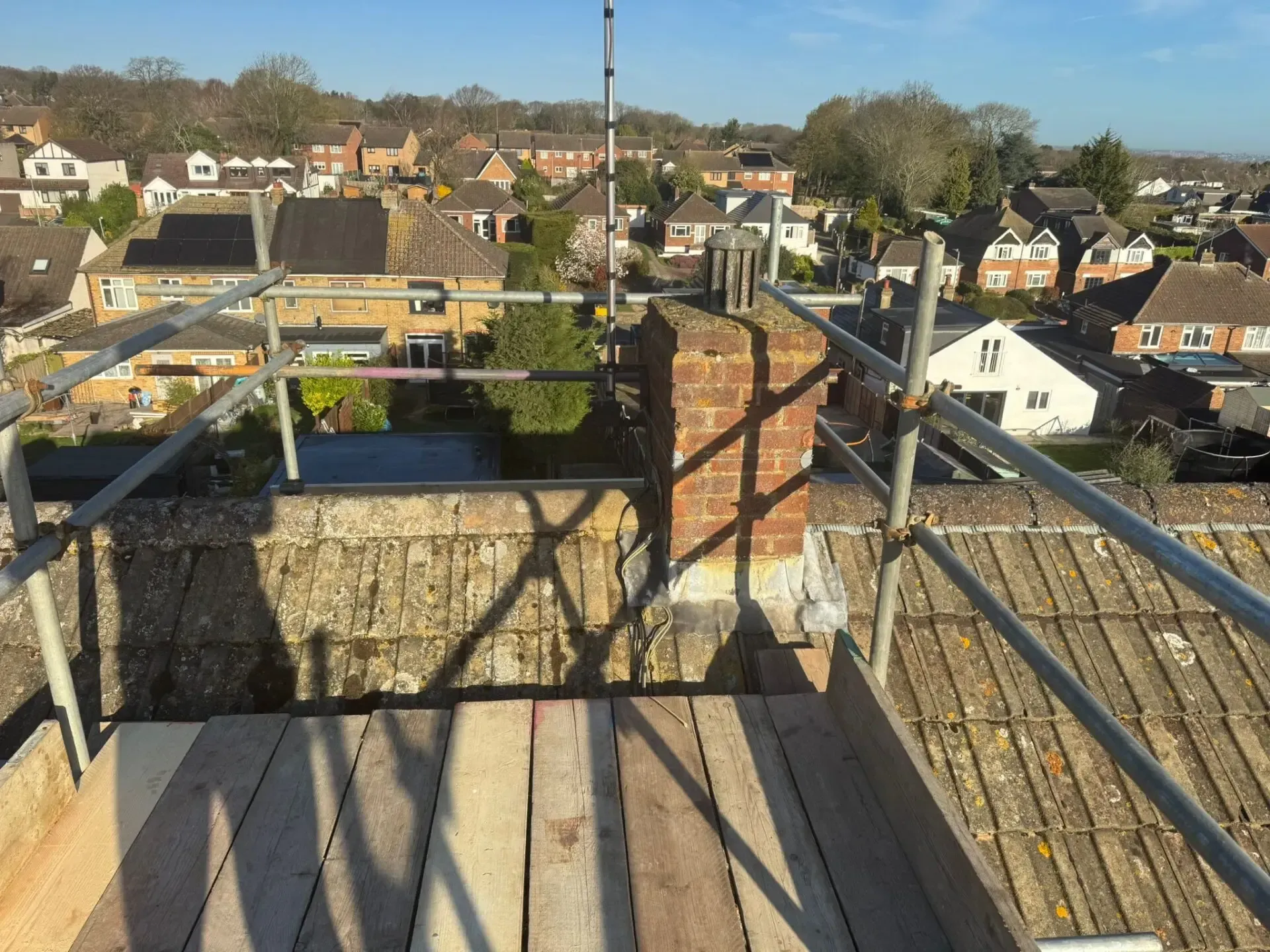
How to Tell If Your Derby Chimney Is Structural Before Work Starts
Not every chimney in Derby can be removed the same way. Before any brickwork comes down, we carry out a full inspection to confirm whether your chimney stack, breast, or both are load-bearing.
In many Derby terraces — particularly in Normanton and Pear Tree — chimney stacks sit on a shared party wall. This means your chimney may be supporting your neighbour's structure as well as your own. We check for this before touching anything.
Here is what our structural check covers:
- Whether the chimney breast is carrying load from floors, walls, or the roof
- Whether a steel beam or gallows brackets will be needed after removal
- Whether the Party Wall Act 1996 applies — relevant if your stack sits on a shared wall
- Whether building regulations approval is required for your specific job
If a structural engineer is needed, we will tell you clearly and help you arrange one. We do not start work until we know the job is safe to complete.
What Chimney Removal Actually Involves From Stack to Ceiling
Chimney removal in Derby is not one single job — it depends on how much of the structure you need taken out. We handle three main scopes of work.
Stack-only removal takes down the brickwork above the roofline. This is the most common request and does not require a building regulations application. It stops leaks, removes a falling hazard, and cuts future maintenance.
Full removal — stack and breast takes the chimney out from the top of the stack down through each floor to the hearth. This is a structural alteration and does require building regulations approval and a submission before work starts.
Partial breast removal removes the chimney breast on one floor only, leaving the stack above supported by a steel beam or brackets. This frees up room space without altering the roof.
Once we agree on scope, here is what happens on site:
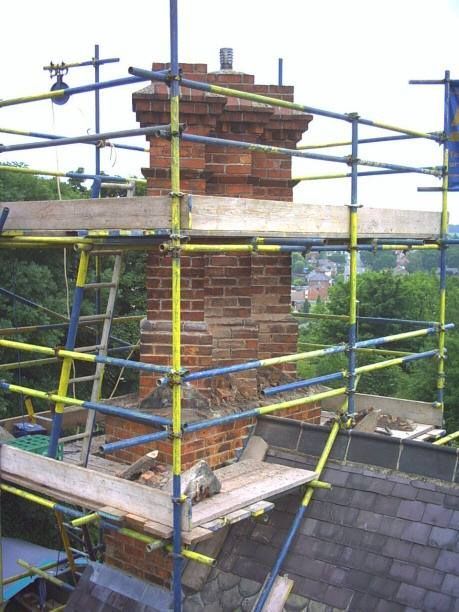
- Scaffold erected to roof height — required by law for safe chimney work
- Chimney stack dismantled brick by brick from the top down
- Breast removed floor by floor where applicable; RSJ beam fitted if load-bearing
- Roof timbers checked, repaired, and made weathertight with new felt and matching tiles
- Lead flashing and ridge line reinstated to a clean finish
- Internal ceiling and plasterwork made good where breast has been removed
- All debris cleared from site; job signed off
Permitted Development Rules Apply to Chimney Removal in Derby
Most chimney removals in Derby fall under permitted development. That means you do not need to apply for planning permission before work starts — but there are exceptions you need to know about.
If your property is a listed building, or sits within a conservation area in Derby — such as Darley Abbey or the Cathedral Quarter — you will need prior approval from Derby City Council before any chimney is altered or removed. We check this for you during the survey so there are no surprises.
Other rules that apply to Derby chimney removal:
- Party Wall Act 1996 — if your chimney sits on a shared wall, you must serve a Party Wall Notice on your neighbour before work begins
- Building regulations — required for any full removal involving the chimney breast; not required for stack-only removal above the roofline
- Gas and services isolation — any gas appliances connected to the flue must be safely isolated by a Gas Safe registered engineer before we start
We are professional, fully insured roofing contractors. We walk you through every requirement before a single brick is moved.
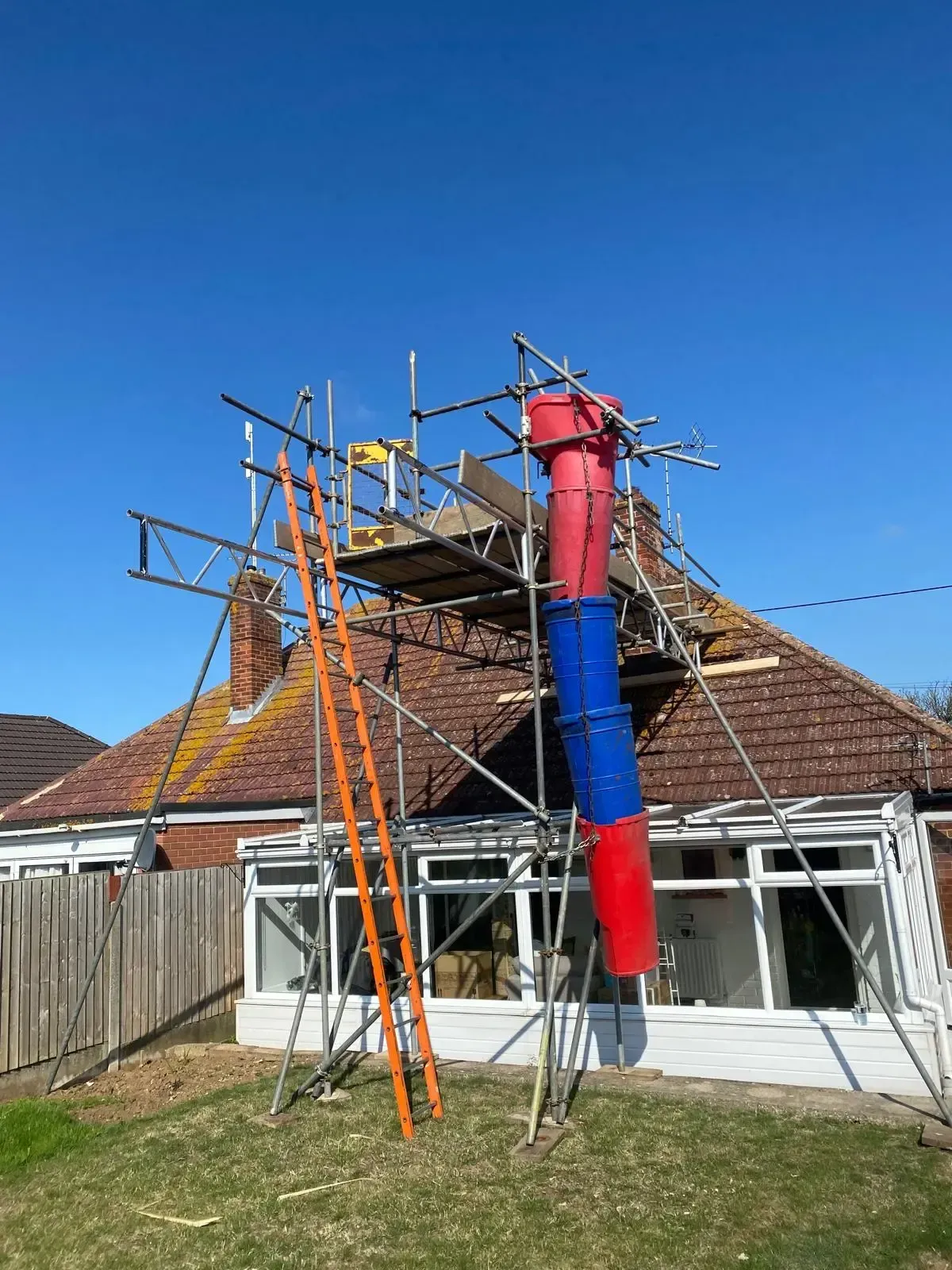
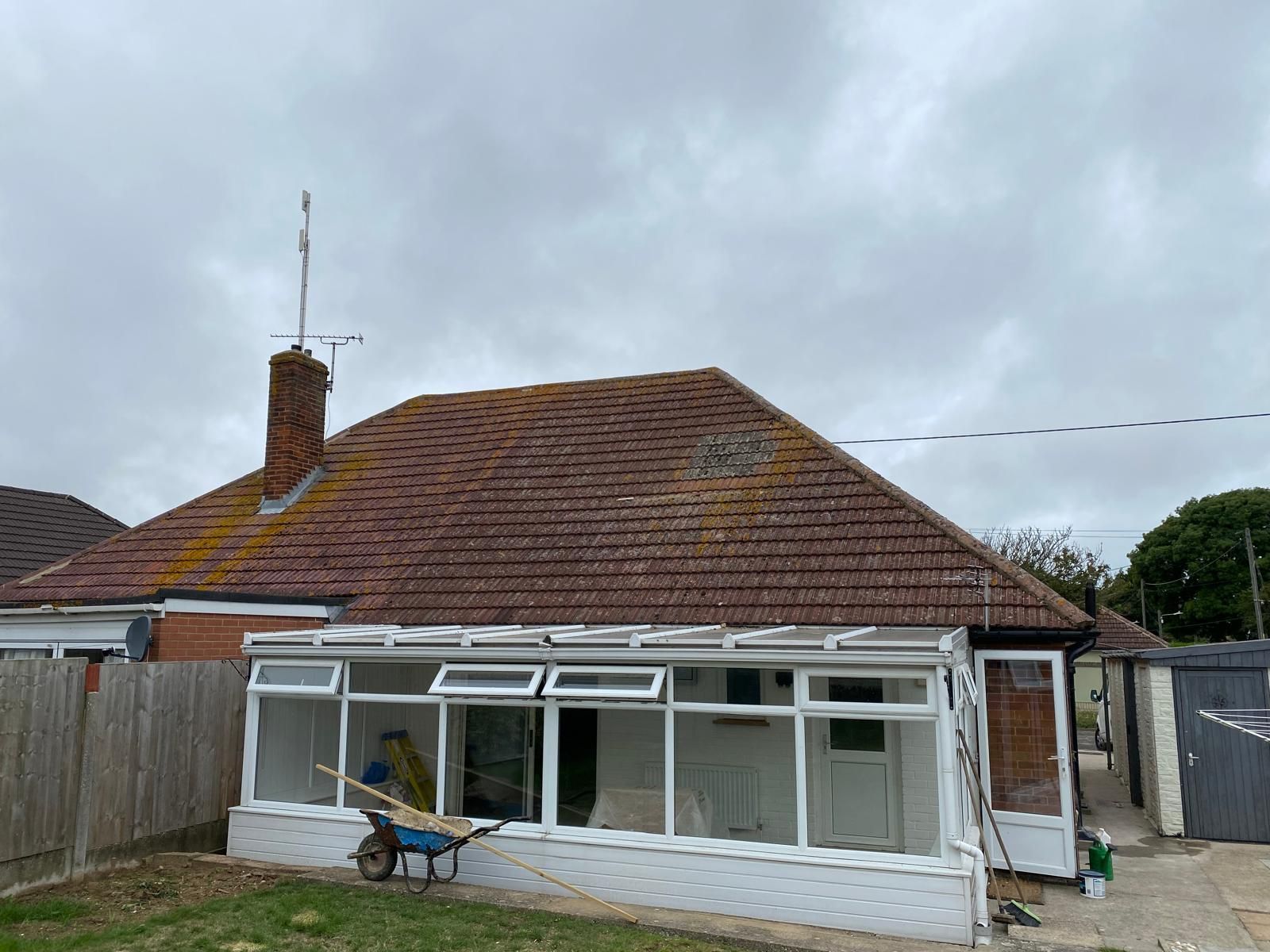
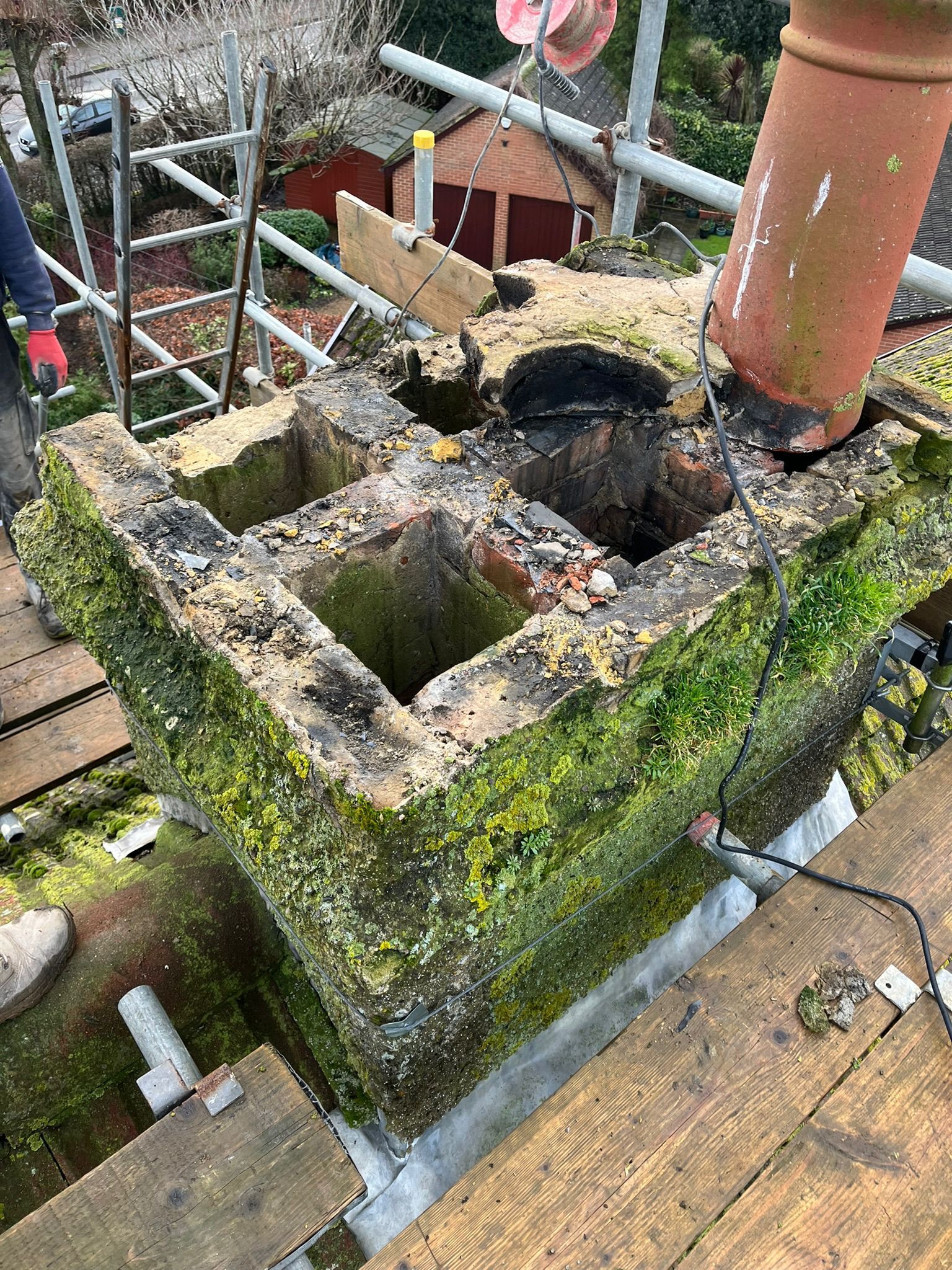
Removing a Chimney Protects Your Mickleover or Littleover Home From Water Damage
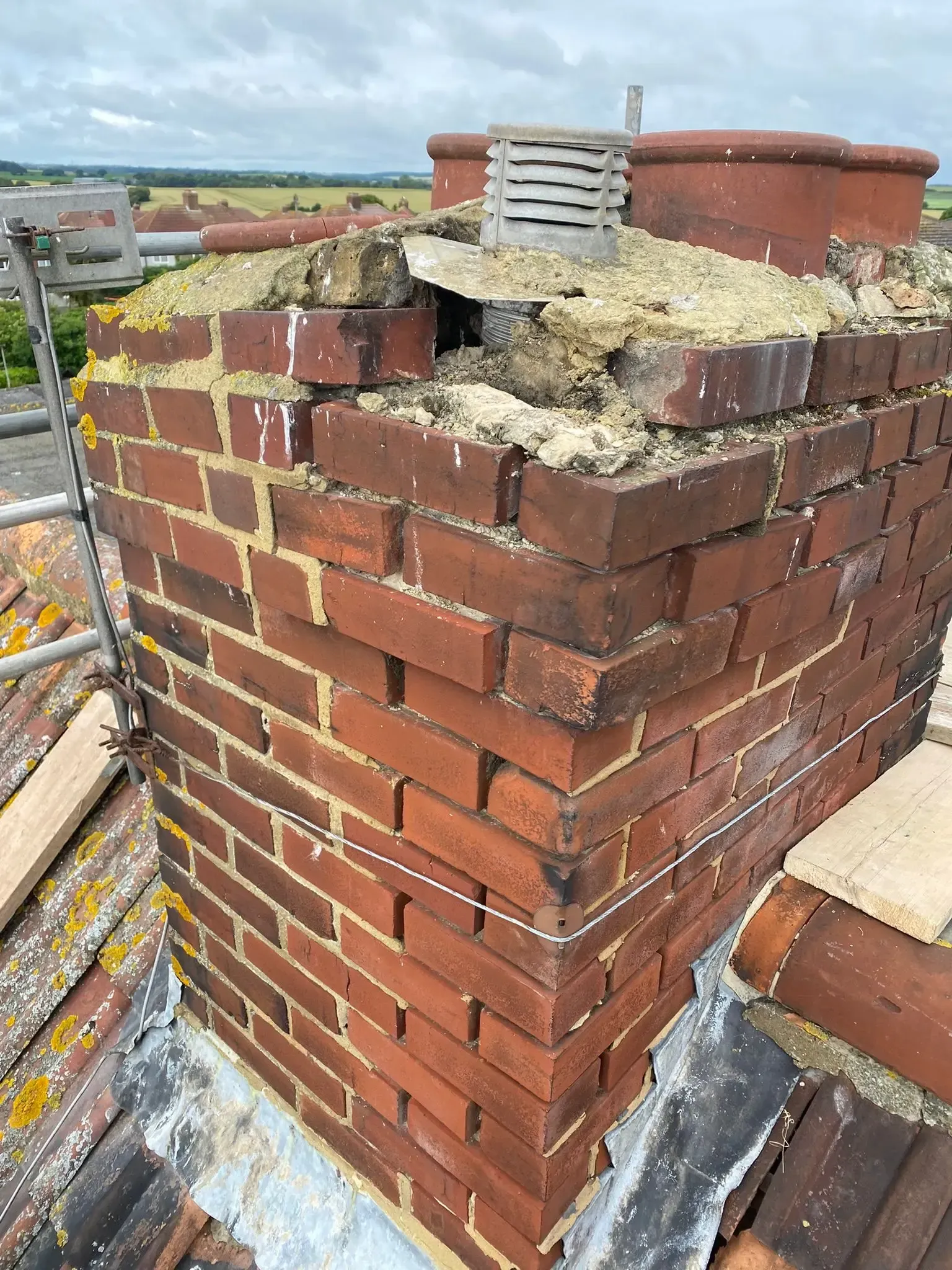
A damaged or unused chimney is one of the most common causes of water ingress in Derby homes. Mortar erodes, lead flashing fails, and bricks crack — often without any obvious warning signs inside the house.
Derby winters bring repeated freeze-thaw cycles that accelerate mortar decay on exposed stacks. By the time damp patches appear on ceilings or internal walls, the damage is already done. Removing the chimney eliminates the source entirely rather than patching the same problem year after year.
Homeowners in Mickleover, Littleover, and Borrowash with older clay-tile roofs often find that chimney removal also gives them the opportunity to replace surrounding tiles that have been disturbed by years of movement. We match replacement tiles as closely as possible to the existing roof and leave every surface fully weathertight.
Home Insurance Rarely Covers Chimney Removal — Know What It Does Cover
This is a question we hear regularly in Derby, and the answer depends on why the chimney needs to come down.
If a Derbyshire storm damages your chimney stack — cracking bricks, displacing the pot, or causing sudden structural movement — that event-based damage may be covered under your buildings insurance policy. You should contact your insurer and request a survey.
Planned chimney removal is a different matter. If you are removing a chimney because it is unused, deteriorating gradually, or you want more space, your insurer will not cover the work. That is a homeowner decision and a roofing job — and that is where we come in.
What insurance typically does not cover:
- Gradual mortar erosion or general weathering
- Removing a chimney for renovation or space reasons
- Repairing long-standing damp caused by a poorly maintained stack
If you are unsure whether your situation qualifies for a claim, speak to your insurer first. We are happy to provide a written report of the chimney's condition to support your case.
Book a Chimney Removal Survey in Derby Before Problems Get Worse
If you have noticed damp patches near a chimney breast, loose bricks on the stack, or crumbling mortar around the flashing, it is worth getting eyes on it quickly. Left alone, chimney deterioration causes roof damage, internal water damage, and in some cases a safety hazard.
We cover all Derby postcodes — from DE1 city centre through to Borrowash, Breadsall, and Mickleover — and offer same-week availability for chimney surveys. There is no charge for the survey and no obligation to book.
When you contact us, here is what to have ready:
- Whether your home is terraced, semi-detached, or detached
- Which floors the chimney breast runs through
- Any damp patches, roof leaks, or visible damage you have spotted
- Whether your property is in a conservation area or is listed
Call us on
01332-529704 or use the contact form on our website. We will arrange a survey, assess the full scope, and give you a clear written quote.
Areas We Work — Chimney Removal Across Derby & Derbyshire
Derby Roofers proudly serves homeowners and businesses throughout Derby city and the wider Derbyshire area. Our local teams cover:
Derby City Areas:
- Derby City Centre (DE1)
- Allestree, Mackworth & Quarndon (DE22)
- Mickleover (DE3)
- Littleover & Normanton (DE23)
- Chaddesden, Oakwood & Spondon (DE21)
- Alvaston, Crewton & Osmaston (DE24)
Surrounding Derbyshire Towns & Villages:
- Belper (DE56)
- Ripley (DE5)
- Ilkeston (DE7)
- Heanor (DE75)
- Swadlincote (DE11)
- Ashbourne (DE6)
- Matlock (DE4)
- Borrowash & Draycott (DE72)
- Etwall & Hilton (DE65)
- Melbourne & Chellaston (DE73)
- Duffield & Little Eaton (DE56 / DE21)
- Breadsall & Darley Abbey (DE21 / DE22)
- Long Eaton (NG10)
- Castle Donington (DE74)
Not sure if we cover your area? Call us on 01332-529704 and we'll be happy to help.
Frequently Asked Questions About Chimney Removal In Derby
How Much Does Chimney Removal Cost in Derby?
The cost depends on how much of the chimney needs to come out. Stack-only removal is the most affordable job. Full removal — stack, breast, and hearth across multiple floors — is a bigger structural project and costs more.
Here are typical price ranges for chimney removal in Derby and Derbyshire in 2025. Prices in the East Midlands generally sit below London and South East rates.
Stack-only removal (above the roofline, roof made good) £900 – £1,300 depending on chimney size and access
Partial chimney breast removal (one floor only, gallows brackets fitted) £1,455 – £2,120 depending on floor level and structural requirements
Full chimney removal (stack and breast, all floors, internal made good) £2,200 – £3,500 depending on property size and number of floors
These ranges include labour, scaffolding, roof reinstatement, and waste removal. They do not include a structural engineer's fee if one is required — that typically adds £300 – £800 depending on the scope of the assessment.
What affects the final price in Derby:
- Size of the stack — larger stacks take longer and produce more waste
- Number of floors the breast runs through
- Whether the chimney sits on a party wall — a Party Wall surveyor may be needed
- Roof tile matching — older Derby clay-tile roofs can require sourcing specific materials
- Whether building regulations approval and submissions are required
The only way to get an accurate figure for your property is a survey. We offer free, no-obligation surveys across all Derby postcodes. Call us on 01332-529704 to book yours.
Do I need a structural engineer before chimney removal in Derby?
It depends on the scope of work. Stack-only removal above the roofline does not require a structural engineer in most cases. Full removal including the chimney breast is a structural alteration — a structural engineer's design must be submitted to building control before work starts. We will advise you clearly during your survey.
Will removing my chimney affect my Derby home's value?
A professionally completed chimney removal, with a clean roof reinstatement and plastered internal finish, rarely reduces property value and can improve it. Buyers often see a well-finished removal as a positive — less maintenance, no leak risk, and more usable space. A poorly done removal is a different story, which is why using a fully insured professional matters.
How long does a chimney removal take in Derby?
Most stack-only removals complete in one to two days. A full removal including the chimney breast on multiple floors typically takes two to four days, depending on access and whether internal plastering is included. We will give you a realistic timeline before we start.
Can a chimney be removed without scaffolding in Derby?
No. Scaffolding is a legal requirement for any chimney work above roof height in the UK. Any contractor who quotes for chimney removal without scaffolding is not working safely or legally. Our team erects scaffold before any work begins on site.
What happens to the roof after my chimney is removed?
We reinstate the roof fully — new felt, matching tiles, and a clean ridge line. Our aim is to leave no visible trace of where the chimney stood. We source tiles to match your existing roof as closely as possible, which matters particularly on Derby's many older clay-tile properties.
Is chimney removal covered by home insurance in the UK?
Sudden storm damage to a chimney stack may be covered — always check with your insurer and get a condition report first. Planned removal for renovation, maintenance reduction, or space reasons is not covered by home insurance. That is a decision and a job for a professional roofing contractor.
Ready to Book Your Chimney Removal in Derby?
Derby Roofers has over 20 years of experience working on roofs and chimneys across Derby and Derbyshire. We are fully insured, and every chimney removal job is handled professionally from the first phone call to the final sign-off.
You will get a straight assessment of the work needed, a clear written quote, and a team that shows up when agreed and leaves the site clean. No hidden extras. No unnecessary work recommended.
If your chimney is leaking, deteriorating, or simply no longer needed, get in touch today. A free survey costs you nothing and gives you a clear picture of your options.
Call us on
01332-529704, email info@derbyroofers.co.uk, or fill in the contact form at derbyroofers.co.uk. We will get back to you the same day.