Derby Roofers
Tel: 01332-529704
Chimney Removal Holbrook near Belper Derbyshire
Holbrook is a hilltop village sitting about five miles north of Derby and two miles from Belper. Many homes here are older stone-built cottages and Victorian properties. A lot of them still have original chimney stacks that are no longer in use.
We carry out chimney removal Holbrook near Belper Derbyshire, covering the full village and surrounding areas. That includes Holbrook Moor, Coxbench, Milford, and Makeney. We travel to you — no need to come to us.
Stone and older brick homes in this part of Amber Valley need experienced hands. The materials are different, the road access can be tight, and some properties sit close to heritage-sensitive zones. We know what to check before we start, and we work cleanly and carefully from the first day to the last.
If you want to find out whether we can come to your Holbrook address, get in touch for a free site visit and no-obligation quote.
What Chimney Removal Actually Involves for Holbrook Stone Homes
Many Holbrook properties date back to the 1800s. The chimney stack and breast were built as part of the home's structure. That means removal is a structural job, not just a demolition task.
There are two main types of work. The first is external stack removal — taking down the stack above the roofline. The second is internal breast removal — clearing the chimney breast from one or more floors inside the home.
You may want one, the other, or both. What we recommend depends on the condition of your chimney, your reasons for removing it, and what you plan to do with the space.
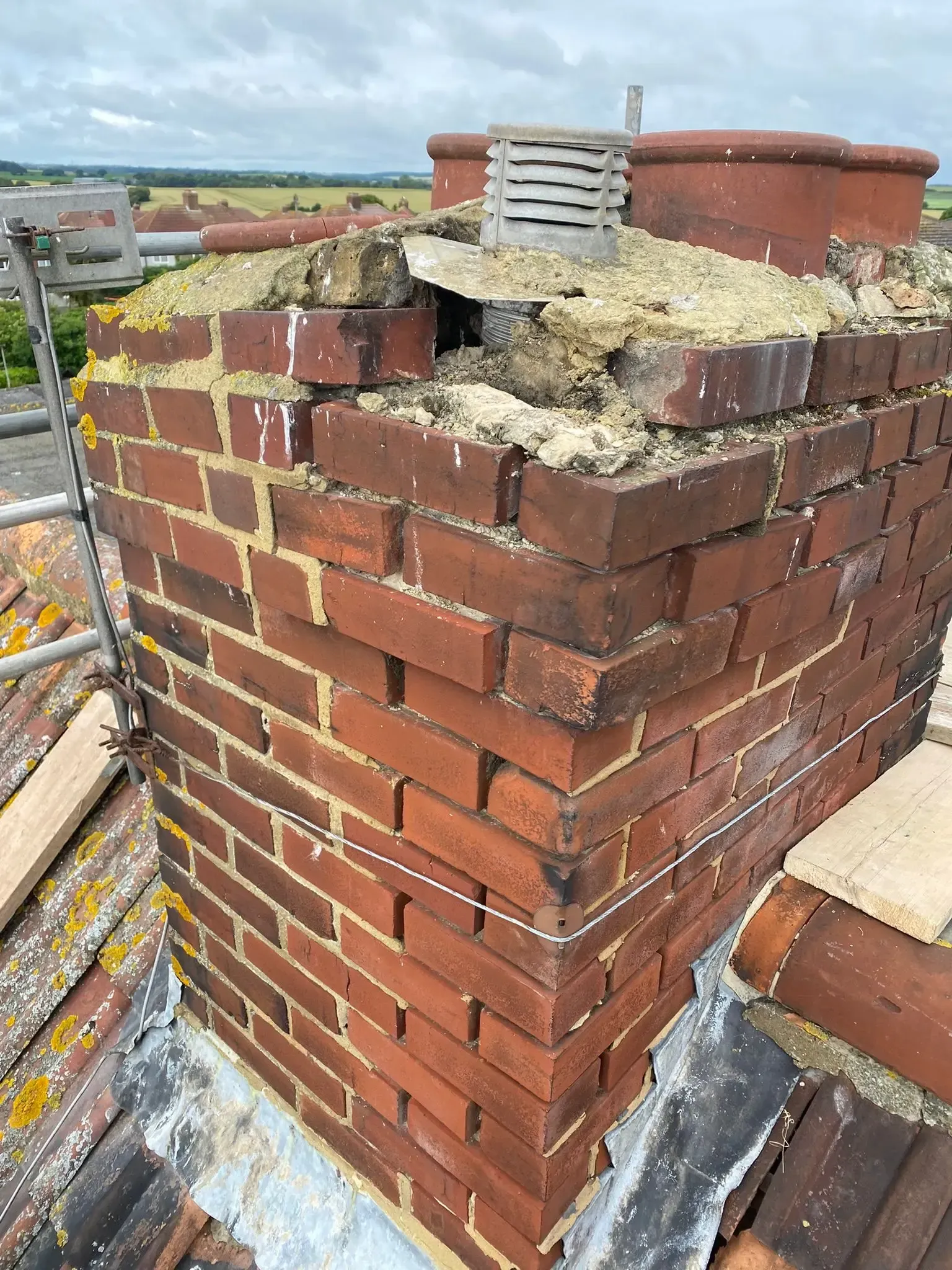
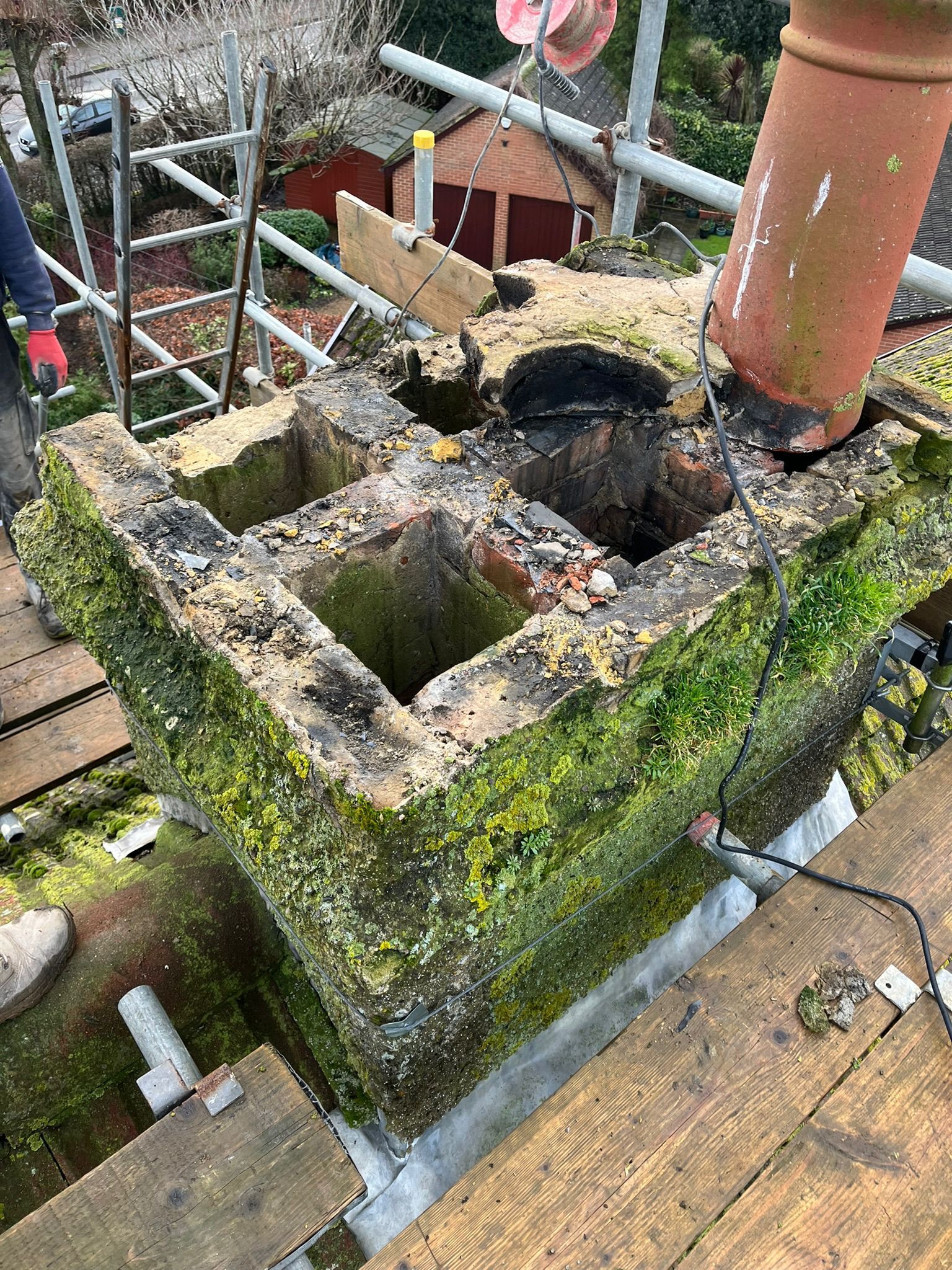
- External stack only: The visible part above the roof comes down. The roof is then made weatherproof and tiled to match. This is common when a stack is leaking, crumbling, or being removed as part of a re-roof
- Internal breast only: The breast is taken out from inside the room. The stack stays in place above and must be supported — usually with a steel RSJ beam fitted in the ceiling
- Full removal: Both the breast and stack come down entirely. More disruption, more work, but a cleaner result for major renovations
- Partial takedown: The stack is reduced to below roofline only. Common when the stack is damaged but internal work is not needed
Holbrook's stone construction means the rubble is heavier and the mortar type differs from standard new-build brickwork. We account for that at survey stage. Stone debris is removed from site as part of every job.
Homes near Holbrook village centre, along Belper Road and Town Street, often have original fireplaces intact on multiple floors. If your home has a breast on both ground and first floor, we assess the structure across both levels before starting.
How to Decide: Full Removal vs Partial Stack Takedown in Older Derbyshire Properties
Most homeowners in Holbrook and the surrounding villages — Duffield, Little Eaton, Horsley — are making this decision for one of a few reasons. They are converting a room and want the space back. Their stack is damaged and too costly to keep repairing. Or they are selling and want the property to look clean from the outside.
Here is a plain guide to help you decide before we visit:
Remove the external stack only if:
- The stack is crumbling, leaking, or tilting
- You are having a new roof put on at the same time
- The internal breast is in good condition and you want to keep the fireplace opening
Remove the internal breast only if:
- You want extra floor space in a living room or bedroom
- The fireplace has not been used for years and you plan to plaster over
- The stack above is sound and can be supported with a steel beam
Go for full removal if:
- The chimney is deteriorating throughout
- You are doing a major renovation and want a clean finish on all floors
- The stack is already at risk and repairs are not cost-effective
Edwardian and Victorian homes in Holbrook often have chimney breasts on both floors. Removing the ground floor breast while keeping the first floor and stack is common. The section left above must be properly supported. A steel RSJ beam fitted into the ceiling joists is the standard method. Gallows brackets are an alternative in some cases but are subject to building control approval — we advise on this at survey stage.
If your home is terraced or semi-detached and the chimney is on a shared wall with your neighbour, you will need to serve a Party Wall Notice before work begins. This is a legal requirement under the Party Wall Act 1996. We flag this at quote stage if it applies to your property.
Permit and Planning Checks You May Need Before Work Starts Near Belper
This section covers the checks that matter for Holbrook properties. It is not legal advice, but it tells you what to ask and who to contact before booking.
Building Regulations — almost always required
Removing a chimney breast is a structural alteration. That means a Building Regulations application is needed in almost every case. You will need approval from Derbyshire Building Control Partnership (DBCP), which handles building control for Amber Valley Borough Council. At the end of the job, you receive a completion certificate. This is important if you ever sell the property — buyers' solicitors will ask for it.
We advise on what is needed at survey stage and can guide you through the process.
Planning Permission — less common, but check first
For most standard removals, planning permission is not required. However, there are exceptions:
- If your property is a Listed Building, listed building consent is needed for any structural work, including chimney removal. Holbrook has Listed Buildings in the parish — including Grade II Listed structures around St Michael's Church. Check your property's status before booking
- If your property is within a Conservation Area, permitted development rights may be reduced. Holbrook itself is not currently within the Belper and Milford Conservation Area, but properties near Milford and Makeney may be. Amber Valley Borough Council can confirm your property's status at no charge
- Properties affected by an Article 4(2) Direction lose standard permitted development rights — check with Amber Valley Borough Council if you are unsure
Party Wall Act — applies to terraced and semi-detached homes
If the chimney breast sits on a shared wall with a neighbour, you must serve a Party Wall Notice before work starts. This is not related to planning — it is a separate legal requirement. We flag this when we survey your property.
Asbestos — worth checking in pre-2000 homes
Older properties in Holbrook and across this part of Derbyshire may have asbestos in flue liners, fire backs, or fireplace surrounds. If your home was built or renovated before 2000, it is worth arranging an asbestos survey before demolition begins. If asbestos is found during removal, work must stop and a licensed specialist must be brought in. We will not proceed with removal if there is a risk of disturbing unidentified materials.
Gas connections — isolate first
If a gas fire was ever connected to the chimney flue, a Gas Safe registered engineer must disconnect and isolate the supply before any removal work starts. This is not optional. We check for this at survey stage.
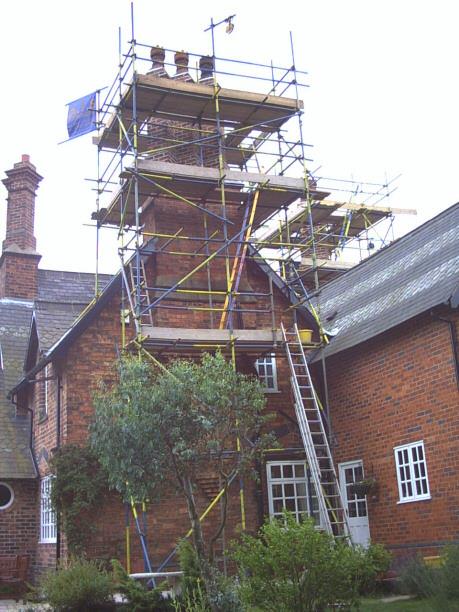
How the Removal Day Works: Preparing Your Holbrook Home
Knowing what to expect on the day makes the job go more smoothly for everyone. Here is what typically happens when we arrive at a Holbrook property.
Before we start:
- We confirm access to the property and the roof
- Dust sheets go down across floors and furniture is covered or moved
- The room where the breast is being removed is sealed off from the rest of the house as much as possible — this is a dusty job
- Scaffolding is erected where needed for external stack work; Holbrook's hilltop position means wind exposure is factored into how the scaffold is secured
During the job:
- For external stack work, we work from the top down, removing brick or stone carefully
- For internal breast removal, temporary props (acrow props) support the structure above while the breast is taken out
- If a steel beam is being fitted, this is done once the breast is clear
- Rubble is removed in stages — we do not let it build up in the room
Access on Holbrook's roads:
Village roads in Holbrook can be narrow. Town Street, Stoney Lane, and the junction at Belper Road have limited parking and tight turns for larger vehicles. We discuss access with you before the job date. If you have off-road parking or a driveway, let us know when you get in touch. We plan routes so we are not blocked by parked cars or narrow sections during the working day.
Some of the older cottage-style homes in Holbrook have large upper windows — a feature left over from the village's framework-knitting history. These can be close to scaffolding lines or debris chutes. We identify this during the survey and plan accordingly.
After the Stack Comes Down: Roof Repairs and Making Good
The removal itself is only part of the job. Once the chimney is down, the property needs to be made good — both on the outside and inside.
Roof and external finish:
Removing the external stack leaves a void in the roof. This must be weatherproofed before we leave the site. For Holbrook stone and tiled roofs, that means:
- New roof battens fitted where the stack passed through
- Lead flashing stripped and the area properly sealed
- Tiles relaid and matched to the existing roof — Holbrook properties often have pitched tiled roofs that require careful tile matching to existing Derbyshire stock
- Ridge tiles rebedded or replaced where affected
We do not consider a job finished until the roof is watertight and the exterior looks clean.
Internal making good:
Once the breast is removed and the steel support is in place, the internal finish work begins:
- Walls are replastered where the breast sat — this includes the chimney alcoves if the full breast is removed
- Ceilings are repaired or relined where the chimney passed through the floor above
- Floors are reinstated — many older Holbrook cottages have original flagstone or timber floors below the hearth; where possible, these are salvaged and relaid
- Joists that were built into the chimney structure may need replacing or extending — we flag this at survey stage if it applies
- The area is left plaster-ready and clean; decorating is the owner's next step
After completion:
Once the work is signed off, you will receive your building control completion certificate from DBCP. Keep this safe. It confirms the removal was carried out to regulation and will be required if you sell the property.
If any neighbouring areas in Milford or Little Eaton have similar older properties requiring this kind of finishing work, the same approach applies — tile matching, structural support, and a clean plaster-ready finish on every job.
How to Find Us and Get to Holbrook Village from Derby or Belper
We are based at Loscoe Grange, Loscoe, Heanor, DE75 7JY. We travel to Holbrook and the surrounding villages — you do not need to come to us.
From our base in Loscoe/Heanor to Holbrook:
Head south from Loscoe on the A608 towards Heanor. From Heanor, take the A6007 towards Langley Mill, then pick up the B600 heading south-west. Join the A38 heading south towards Derby. Come off the A38 at the Coxbench junction and follow the signs for Holbrook up the hill from Coxbench. Total journey from our base is around 20–25 minutes depending on traffic on the A38 corridor.
From Derby city centre to Holbrook:
Head north out of Derby on the A38. Stay on the A38 through Little Eaton. Take the exit for Coxbench/Holbrook — the village sits on the hill above Coxbench to the north. Drive up through Coxbench and into Holbrook village. Allow around 20–25 minutes from Derby city centre.
From Belper town centre to Holbrook:
Leave Belper heading south-east on the B6179 or Belper Road. Follow signs for Holbrook — the village is around two miles from Belper town centre, a 10-minute drive. The approach into Holbrook from the Belper direction takes you along Belper Road into the village.
There is no current train service to Holbrook — the old Coxbench station on the Midland Railway closed long ago. The nearest active stations are Belper (north) and Duffield (south), both a short drive from the village. If you are travelling by public transport to meet us on site, let us know and we will plan the timing around you.
Call us on 01332-529704 or email info@derbyroofers.co.uk to book a free site survey. We respond to every enquiry.
Frequently Asked Questions
Do I need planning permission to remove a chimney in Holbrook?
For most standard removals in Holbrook, planning permission is not required — but building regulations approval from DBCP almost always is. If your property is Listed or near the Belper and Milford Conservation Area, additional consent may be needed. Check with Amber Valley Borough Council before booking.
Can the chimney be removed in a single day?
Removing just the external stack above the roofline can often be done in a day. Full breast removal across two floors typically takes three to four days. A site survey confirms the exact timeline for your property.
What happens to the roof after the chimney stack comes down?
The void left by the stack is made weatherproof on the same visit. Tiles are relaid, lead flashing is stripped and replaced, and the roof is sealed before we leave. Tile matching to your existing Holbrook roof is discussed at quote stage.
Does the party wall with my neighbour affect the job?
If the chimney breast is on a shared wall with a neighbouring property, you must serve a Party Wall Notice before work begins. This applies to terraced and many semi-detached homes in Holbrook. We flag this at survey stage if it applies to you.
Is there an asbestos risk in older Holbrook properties?
Properties built or renovated before 2000 may have asbestos in flue liners, fire backs, or fireplace surrounds. We recommend an asbestos survey before any demolition if your home falls into this category. If asbestos is found during the job, work stops and a licensed specialist must be brought in.
Do you cover Holbrook Moor, Coxbench, and Milford as well as the main village?
Yes. We cover Holbrook, Holbrook Moor, Coxbench, Milford, Makeney, Horsley, and the wider Amber Valley corridor near Belper. Get in touch to confirm your address is within our service area.