Chimney Repair Duffield Belper Derby
A leaning pot, a cracked mortar cap, or a damp patch creeping down the chimney breast are usually the first signs a stack needs attention before winter finds the gap. We repair chimneys across Duffield, Belper and the wider Derwent Valley, working on everything from a 1930s semi near the River Derwent to the stone stacks on Strutt-era terraces below the Chevin, where the original mortar and detailing were never meant to be patched with a modern sand-and-cement mix.
Every stack gets looked at in person before we quote, because the same crack can mean a straightforward repointing job on one chimney and a rebuild on another. Below is what a repair actually involves, roughly what it costs, and how the job runs from first call to the last brush of dust off the roof tiles.
At a Glance
- Over 20 years repairing chimneys across Derby and Derbyshire, from Victorian terraces to Strutt-era stone cottages
- IPAF and PASMA qualified for safe access to tall or hard-to-reach stacks
- Free, no-obligation quotes with a written assessment before any work starts
Duffield and Belper sit in the Derwent Valley, just 5 to 8 miles north of Derby. Both villages are full of Victorian semis, stone cottages, and large period homes — and most of them have at least one chimney stack. Whether your stack is actively used or not, it still faces wind, rain, and frost every single season.
We carry out chimney repair across Duffield, Belper, and the surrounding Derby area. This page covers what we do, the types of homes we work on, and how to book a visit. If you’re searching for chimney repair Duffield Belper Derby, you’re in the right place. We cover this entire corridor and know the buildings here well.
Signs Your Chimney Needs Repair — Before the Problem Gets Worse
Most chimney problems start small. You might notice something on the outside of the stack or find damp inside the house near the chimney breast. Either way, acting early almost always means a smaller job.
Look for these signs from the ground:
- Cracked or crumbling mortar between the bricks
- White staining (efflorescence) on the chimney face — this means moisture is getting in
- Pieces of grit or mortar in the fireplace
- A chimney pot that has shifted or is sitting at an angle
- A visible lean or tilt in the stack
Look for these signs inside the house:
- Damp patches on the bedroom ceiling near the chimney breast
- Peeling wallpaper or paint bubbling close to the fireplace
- A damp or musty smell coming from an unused flue
- Water staining on the chimney breast after heavy rain
Many Duffield properties on Castle Hill and Chadfield Road were built for Midland Railway managers in the late 1800s. These homes often have tall stacks serving multiple fireplaces. When one part of the stack starts to move, it can affect the whole roofline. Don’t leave it until it becomes a bigger structural problem.
Check availability for a chimney inspection in Duffield or Belper →
What a Chimney Repair Survey Covers on Older Derwent Valley Homes
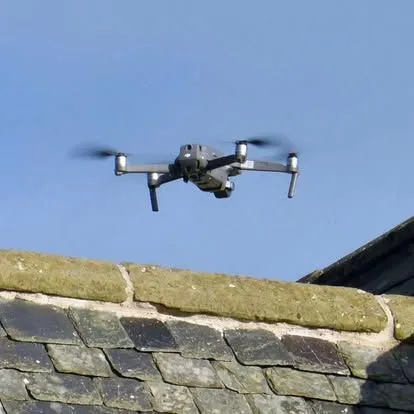
When we visit, we look at the whole chimney — not just the visible crack or damp patch that made you call us.
Our inspection checks:
- Stack alignment and whether there is any lean or movement
- The condition of the flaunching — the mortar cap at the top that holds the pots in place
- Lead or mortar flashings at the junction between the stack and your roof tiles
- The pointing between bricks and whether it has been previously done with hard cement
- Visible signs of water tracking inside on the chimney breast
- Whether the chimney pot is bedded correctly or has worked loose
- Structural condition of the breast itself, where accessible
The inspection lets us give you an accurate picture of what needs doing and why. We tell you what the job involves before any work starts. Quotes and advice are free.
Homes along the Derwent Valley corridor — including older streets in Milford and Hazelwood — often have lime-mortared chimneys from the 1800s. Hard cement repointing applied by a previous contractor is one of the most common causes of ongoing damage in these properties. We check for this on every visit to an older home.
Common Repair Jobs Carried Out Near Duffield and Little Eaton
Most chimney repair jobs fall into one of a few categories. Here are the most common ones we carry out in this part of Derby.
Repointing Old mortar gets raked out to a depth of around 25mm and replaced with fresh, properly mixed mortar. On older stone properties, we use a lime-based mix. On post-war brick homes, a sand-and-cement mix is typically correct. We match the colour and profile to the existing brickwork.
Flaunching repair or replacement Flaunching is the sloped mortar bed at the top of the stack that holds your pots in place and sheds rainwater. When it cracks or lifts, water gets into the stack and down into the loft. We remove the failed flaunching, re-form it with the correct falls, and re-bed the pots.
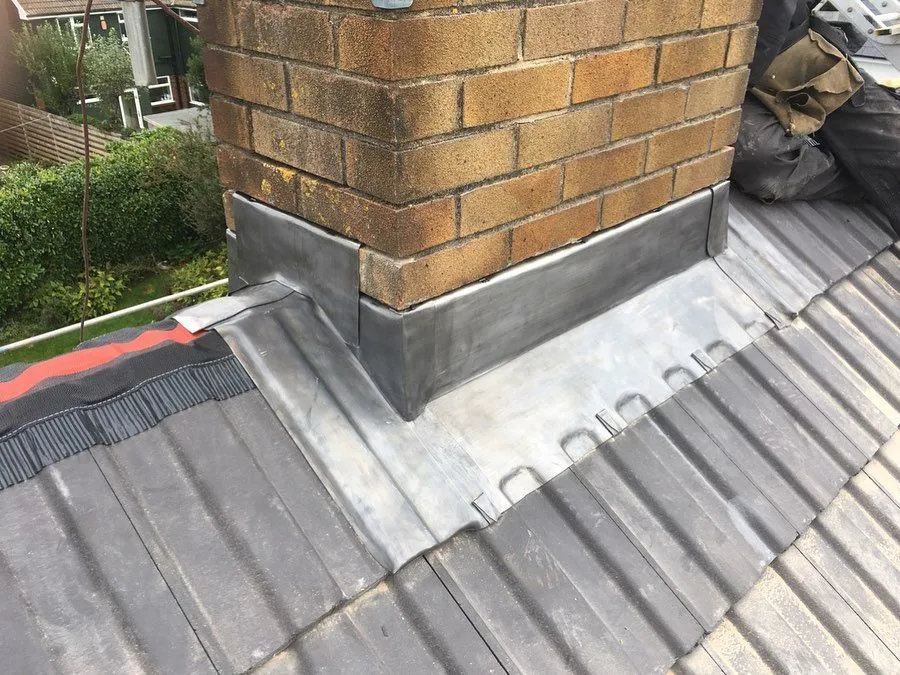
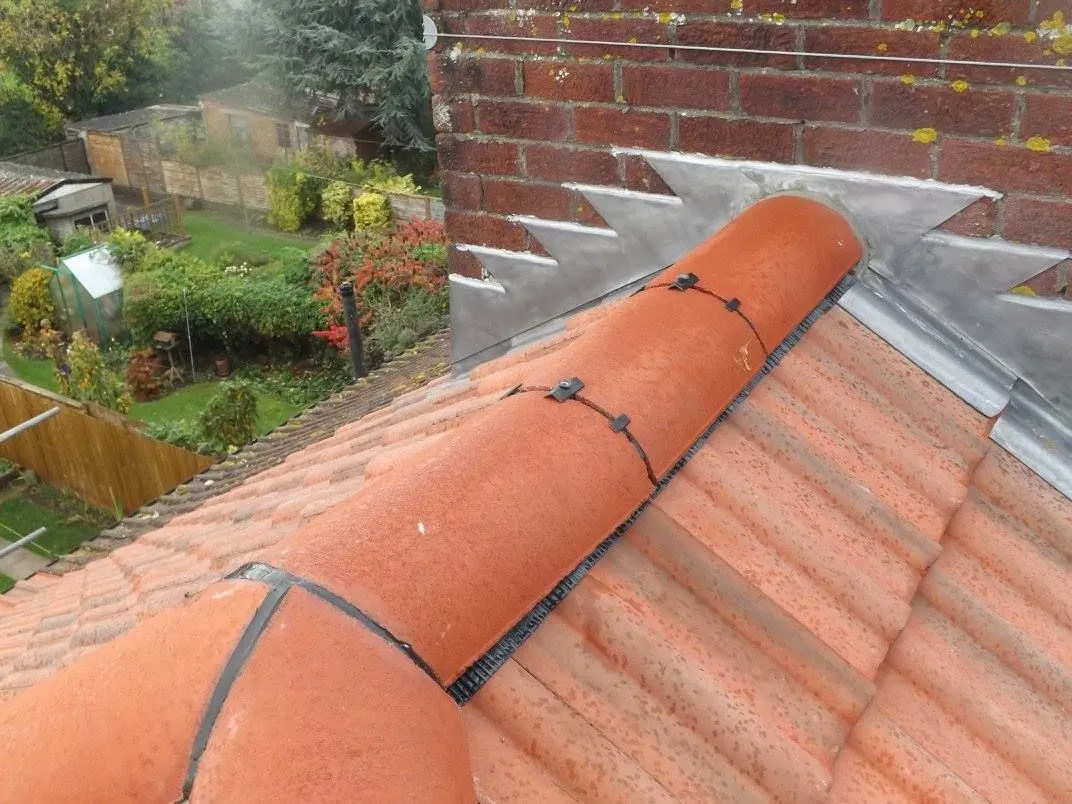
Lead flashing replacement Flashing seals the gap between the chimney and your roof. When it lifts, cracks, or rusts, water tracks straight into the roof space. We cut and fit new lead or stepped mortar flashing to make that joint watertight again.
Chimney pot re-bedding or replacement Pots work loose over time, especially after high winds. We re-bed pots securely or replace damaged ones with a matching style where needed.
Fitting cowls and bird guards If a flue is no longer used, leaving it open lets rain, birds, and cold air straight in. We fit cowls or bird guards to seal unused flues while still allowing ventilation. This is one of the most common jobs we do on Duffield’s Broadway estate and surrounding 1960s housing.
Capping unused chimneys Where a chimney is fully decommissioned, capping the pot entirely is the right approach. We can advise whether capping or removing the stack altogether is the better long-term option for your property.
Stack rebuilding above the roofline Where bricks have spalled badly or sections of the stack are unstable, a patch repair may not last. Rebuilding the failed section above the roofline is often the most durable solution. We advise on this honestly — we won’t recommend a rebuild if a repair will do the job properly.
We regularly work in Duffield village, Little Eaton, Makeney, and Holbrook. These villages have a mix of stone cottages with log-burning stoves and larger Victorian homes with open fireplaces — both of which put regular demand on chimney stacks.
Working on Listed and Heritage Properties Around Belper
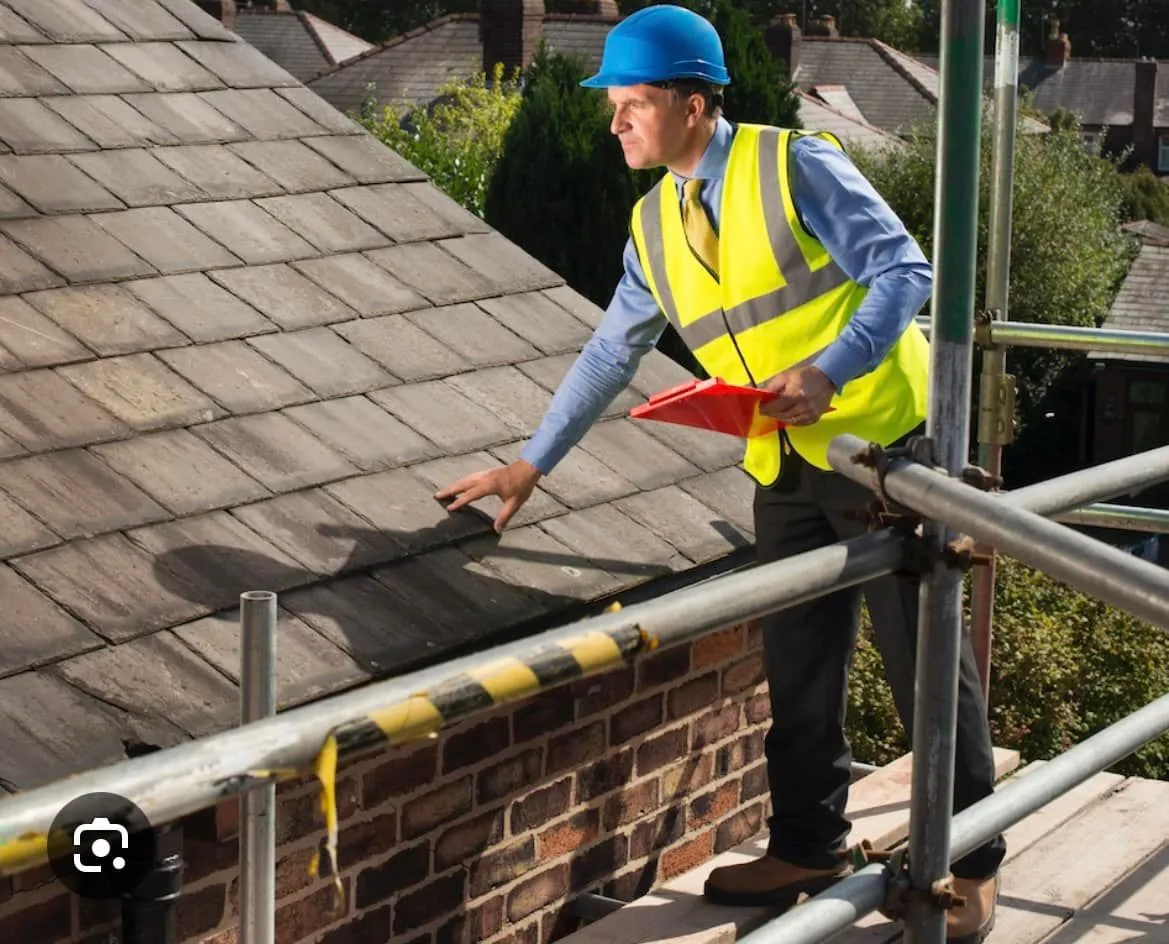
Belper sits inside the Derwent Valley Mills World Heritage Area. The town has a significant number of Grade II listed stone terraces built during the Strutt cotton-mill era, with chimneys dating back to around 1776 to 1820. Repairing these properly is not the same as repairing a standard modern brick chimney.
Why material choice matters here
Hard sand-and-cement mortar traps moisture inside old stone and brick. In cold Derbyshire winters, that trapped moisture freezes and expands — breaking the stone face from the inside. On listed and conservation-area properties, this causes serious damage and may put you in breach of your listing conditions.
We use breathable lime mortar on older stone and lime-bonded brickwork. This allows the wall to manage moisture naturally, which is how these buildings were designed to work.
What this means in practice when we work near Belper:
- We identify the original mortar type before starting any repointing
- On properties within the World Heritage Area, we advise whether a conservation officer needs to be notified before structural stack rebuilds
- We source like-for-like brick or stone for visible chimney faces where replacement is needed
- We take photographs before and after work on listed homes — useful for your records
This approach also applies to properties in Milford and the older terraced streets around Bridge Street in Belper. If you’re not sure whether your home falls inside the World Heritage Area boundary, we can advise when we visit.
How We Reach Duffield, Belper, Milford & Surrounding Villages
We travel to you — chimney repair is a service we bring to your property. Our base is in Loscoe, Heanor, which sits just a few miles to the east of the Derwent Valley corridor. We reach Duffield and Belper via the A609 and A6 routes regularly.
We cover the following areas for chimney repair:
- Duffield — Castle Hill, Town Street, Hazelwood Road, Broadway
- Belper — Bridge Street, Long Row, Kilbourne Road, Chesterfield Road
- Milford and Makeney
- Little Eaton and Holbrook
- Allestree, Darley Abbey, and the Kedleston Road corridor into Derby city
Getting to you from our Loscoe base:
From our base at Loscoe Grange, Loscoe, Heanor DE75 7JY, we head south-west on the A609 toward Heanor town centre. We then take the A6007 south through Kilburn, joining the A609 at Belper Road. At the A6 junction in Belper, we turn south toward Milford and Duffield. The full run from Loscoe to Duffield village takes around 20 minutes in normal traffic, with Belper town centre just 10 minutes from our base. For properties on narrow lanes near the River Derwent, we confirm road access with you at the time of booking so we arrive with the right equipment.
Booking a Chimney Repair Visit in the Derby Area
Booking is straightforward. You don’t need to know exactly what the problem is before you call — that’s what the inspection is for.
Here’s what happens when you get in touch:
- Tell us your postcode and describe what you’ve noticed — damp, a visible crack, a loose pot, or anything else that made you look at the chimney
- We confirm your location is covered and agree a visit date — most Duffield and Belper bookings can be scheduled within the week
- We attend, inspect the full chimney, and give you a clear written assessment of what we found and what we recommend
- If you want to go ahead, we confirm the work in writing before anything starts
We’ve been working on roofs and chimneys in Derby and Derbyshire for over 20 years. There is nothing on a chimney stack we haven’t dealt with — from a loose pot on a 1960s semi in Duffield to a full lime-mortar repoint on a Strutt-era terrace in Belper. Quotes and advice are free. Call us on
01332 529704 or use the contact form.
Book a chimney survey in Belper or Duffield →
Frequently Asked Questions — Chimney Repair Near Duffield and Belper
Do I need planning permission to repair my chimney in Belper?
Routine repairs like repointing, flaunching, or replacing pots do not need planning permission. If your property is listed or sits inside a Conservation Area and you are carrying out structural work such as a stack rebuild or removal, you may need consent from Amber Valley Borough Council. We can advise on this during our visit.
Can you work on chimneys in the Derwent Valley World Heritage Area?
Yes, we work on properties throughout the World Heritage Area. We use the correct materials for the building type — lime mortar on older stone and lime-bonded brickwork — and we advise if a conservation officer needs to be involved for structural work.
Is lime mortar necessary on my old stone cottage in Duffield or Belper?
Yes, on pre-1900 stone buildings, lime mortar is nearly always the right choice. Hard cement traps moisture inside the stone, which leads to spalling damage, particularly through Derbyshire winters. We check the original mortar type before starting any repointing.
How do I know if my chimney is safe to use this winter?
A visual inspection before first use each autumn is a good habit, especially on properties with exposed north-facing stacks. If you haven’t had the chimney checked in several years — or if you’ve noticed any damp or movement — book an inspection before you light the fire for the season.
Can you access chimneys on narrow streets near the River Derwent?
Yes. We work regularly on riverside properties and properties on narrow lanes. Confirm road access and any parking restrictions when you book so we arrive with the right access equipment.
Do you cover villages between Duffield and Belper — like Little Eaton and Milford?
Yes. We cover all villages along the A6 Derwent Valley corridor, including Little Eaton, Milford, Makeney, and Holbrook, as well as Allestree and Darley Abbey on the Derby side.
What is flaunching and why does it fail?
Flaunching is the sloped mortar bed at the very top of the chimney stack that holds your pots in place. It cracks and lifts over time due to freeze-thaw cycles and general weathering. When flaunching fails, rainwater tracks into the stack and can cause damp in the loft or on the chimney breast inside.
Should I repair or remove an unused chimney?
If the chimney is structurally sound but simply no longer in use, fitting a cowl or capping the pot is the most cost-effective approach. If the stack is significantly deteriorated and you have no plans to use the flue, removal may be the better long-term option. We give you a straightforward recommendation based on the condition we find.
What’s Included in a Chimney Repair Visit — and What Isn’t
- Repointing eroded or cracked mortar joints, using lime mortar on period stone stacks or a matching sand-and-cement mix on modern brick chimneys
- Removing a cracked or lifted flaunching cap and re-forming it with the correct falls before re-bedding the pots
- Replacing spalled, frost-damaged or missing bricks and stonework in the stack itself
- Fitting or replacing chimney pots, and fitting cowls or capping flues that are no longer in use
- Renewing lead flashing and soakers where the stack meets the roof — a common cause of internal damp when it fails
- Rebuilding the section of stack above the roofline where deterioration has gone too far for a patch repair
- Fitting a lead tray or damp course inside the stack where water is tracking down into the room below
Not Included / Costed Separately
- Chimney sweeping or flue cleaning — a separate trade, not part of a repair visit
- Fitting a new flue liner or installing a wood-burning stove
- Internal chimney breast work below roof level, such as plastering or fireplace removal
- Scaffold towers or powered access platforms for very tall or hard-to-reach stacks — we can arrange these, but they’re quoted separately once we’ve seen the access in person
- Listed building consent or conservation area applications — we’ll tell you if consent is needed, but the application itself is between you and Amber Valley Borough Council
From First Call to Finished Stack: How a Chimney Repair Runs
- Initial call or enquiry: Tell us what you’re seeing — a loose pot, cracked flaunching, a damp patch below the chimney breast, or a stack that’s been rattling in the wind — and roughly where the property sits between Duffield and Belper.
- On-site inspection: We look at the stack from the ground, the roof, and where needed from a tower or platform, checking mortar condition, flashing, pot condition, and whether the stack has moved or is leaning.
- Written quote and options: You get a written price for what the stack actually needs, with the repair-versus-rebuild decision explained rather than assumed, and nothing booked in until you’ve agreed it.
- Access and scheduling: Stacks reachable from a standard ladder or roof access get started straight away; taller or awkward stacks are scheduled around a scaffold tower or an IPAF/PASMA-certified platform once that’s arranged.
- The repair itself: Old mortar is raked out to the right depth, matching lime or sand-and-cement mortar mixed and applied, flaunching re-formed, pots re-bedded or replaced, and flashing renewed where it’s failed.
- Completion and clean-up: Access equipment comes down, the roof and guttering are checked for leftover debris, and the stack is left ready for the next fire or heating season.
How Much Does Chimney Repair Cost in Duffield and Belper
Price depends on what the chimney actually needs. A straightforward job — re-bedding a loose pot, fitting a cowl, or patching a small area of flaunching — costs less than a full lime mortar repoint or a stack rebuild above the roofline, which involves more time on site and often scaffolding or access equipment. Work on listed stone properties around Belper tends to cost more than a standard brick chimney, because sourcing matching stone and mixing lime mortar correctly takes longer than a standard sand-and-cement repointing job. We don’t publish a fixed price list because every stack is different — the only way to give an accurate figure is to see the chimney in person, which is why the inspection and quote are free with no obligation to go ahead.
Repair, Cap, or Rebuild — Working Out the Right Option
| Option | What It Involves | Best For |
|---|---|---|
| Repointing | Raking out old mortar to around 25mm and replacing it with a matching lime or sand-and-cement mix | Chimneys with cracked or crumbling mortar but a sound overall structure |
| Flaunching repair | Removing the failed mortar cap at the top of the stack and re-forming it with the correct falls before re-bedding the pots | Stacks letting water into the loft through a cracked or lifted cap |
| Cowl or capping | Fitting a cowl to ventilate an unused flue, or capping the pot completely | Chimneys that are sound but no longer used for a fire or stove |
| Stack rebuild | Taking down and rebuilding the section above the roofline where bricks have spalled or the stack has become unstable | Stacks too deteriorated for a patch repair to last |
Getting the Mortar Right on Belper’s Older Stacks
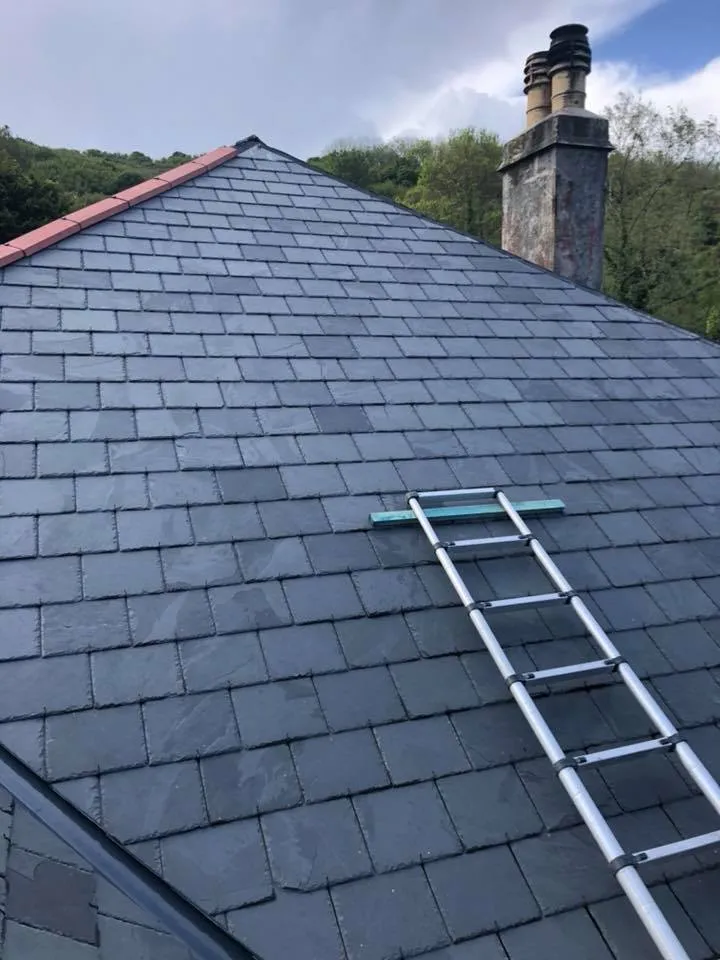
A chimney repair that looks fine in July can fail by the following January if the wrong mortar goes on. Stone stacks on Belper’s Strutt-era terraces and older Duffield cottages were built with lime mortar that lets moisture move through the joints and evaporate; repoint one with a hard modern cement mix instead and the water gets trapped, so the stone spalls and the same repair is needed again within a couple of winters. We mix mortar to match what the stack is actually built from rather than reaching for whatever’s quickest to buy, and we’ll tell you plainly when a stack only needs repointing rather than the flaunching-and-rebuild job it’s sometimes sold as elsewhere. That’s judgement built from two decades of stacks in this particular stretch of Derbyshire, not a standard script applied to every roof.
Where We Cover Chimney Repairs Around Duffield and Belper
Duffield and Belper are our home patch for chimney work, along with Milford, Makeney, Hazelwood, Little Eaton, Allestree and the rest of the Derwent Valley up towards Ambergate and Wirksworth. If your stack sits outside that stretch, get in touch anyway — we cover chimney repairs across Derby and Derbyshire more widely and can usually still fit a survey in.
Get Your Chimney Checked Before the Weather Turns
Small cracks and lifted flaunching get worse every time a Derbyshire frost sets in, and by the time damp shows up on the ceiling the repair is usually bigger than it needed to be. Get a chimney checked in Duffield or Belper now, rather than waiting to find out the hard way once the fire’s lit for the season.
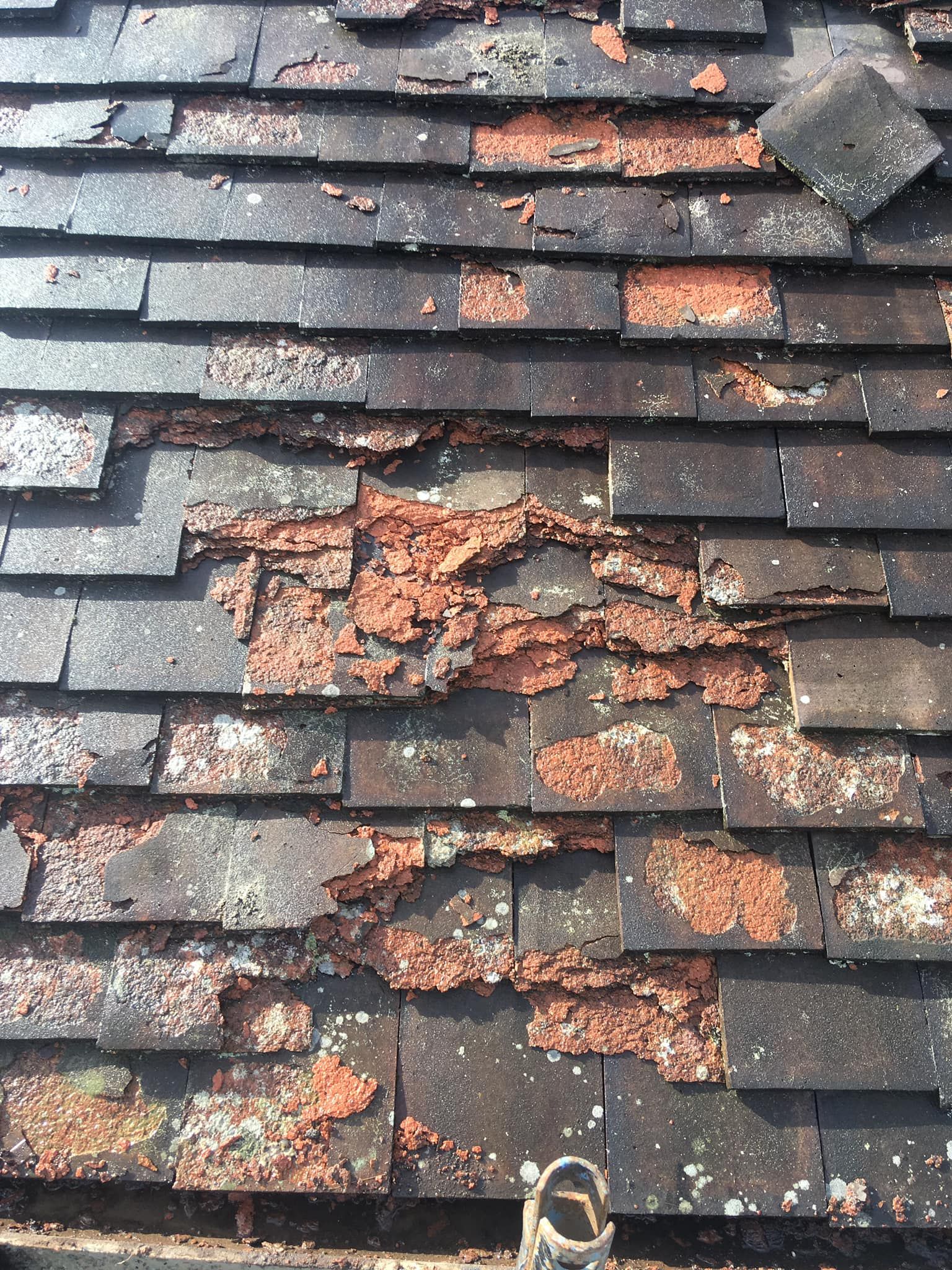
“Very friendly and professional. They delivered my job on time and at a good price.”
DERBY ROOFERS - That is what we aim to hear from you all the time.
Get a Free Quote
🔒 Your details are safe with us. No spam, ever.