Do I Need Planning Permission for a Flat Roof in Derby
At a Glance
- IPAF and PASMA certified team for powered access and mobile tower work on awkward flat roofs
- Free drone survey and planning check included before every quote
- Over 20 years fitting flat roofs across Derby and Derbyshire
Derby Roofers
EPDM Rubber Roofing Specialists
Call us now book a FREE consultation and FREE Quotation
FREE Drone Survey Available
Call: 01332-529704
Do I Need Planning Permission for a Flat Roof in Derby?
Most flat roof jobs in Derbyshire do not need planning permission. That is the short answer. But there are specific situations — conservation areas, listed buildings, boundary proximity, and certain Article 4 zones — where the rules tighten considerably, and starting work without checking can create serious problems down the line.
This guide covers the planning rules as they apply to flat roof work across Derby, Derbyshire Dales, the Peak District boundary, and the wider county. We cover permitted development rights, building regulations, what happens when you switch to a modern material like EPDM rubber, and the handful of local situations where the standard rules no longer apply.
If you want a straight answer on your specific property before you book a roofer, call us on 01332-529704. We carry out free roof surveys across Derby and Derbyshire and will tell you honestly what applies to your job.
What Are Permitted Development Rights and How Do They Apply to Flat Roofs?
Permitted Development (PD) rights are a set of national rules that allow certain building works to go ahead without a formal planning application. They are set out in the Town and Country Planning (General Permitted Development) (England) Order 2015, as amended. For most standard roofing work on a house, PD rights are what allow you to get on with the job without waiting for planning approval.
Replacing a flat roof like-for-like sits firmly within permitted development. You are maintaining the building as it stands. No formal application is needed.
Works that are generally permitted development for flat roofs:
- Replacing a worn or failed flat roof covering with a similar system
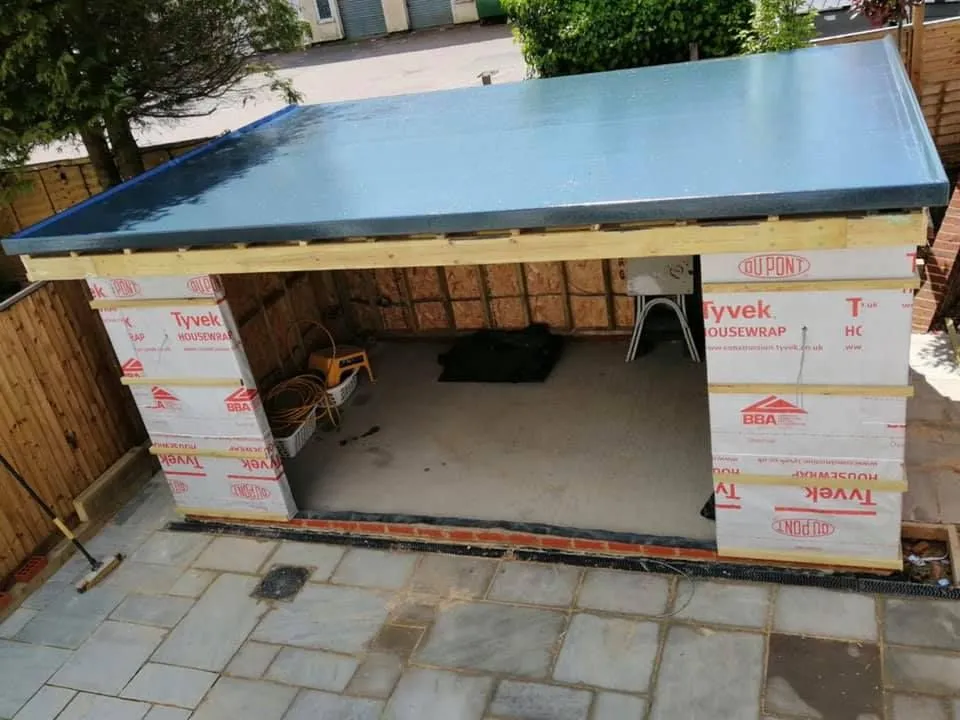
- Switching flat roof material (for example, from felt to EPDM) where the appearance does not materially change
- Repairing or patching a section of existing flat roof
- Replacing insulation or decking boards beneath the membrane during a re-roof
Works that fall outside permitted development:
- Adding a new storey or raising the roof height
- Building a new flat-roofed extension that increases the building’s footprint beyond PD size limits
- Any alteration where the roof projects more than 150mm above the existing roof plane
- Any work on a flat or maisonette — PD roof rights apply to houses only, not flats or converted dwellings
One thing worth knowing: even where work is clearly permitted development, PD rights can be removed in specific areas by an Article 4 Direction. We cover that in detail below.
We have been fitting flat roofs across Derby and Derbyshire for over 20 years. In the vast majority of straightforward residential replacements — garages, rear extensions, porches — no planning permission is involved at all. The job goes straight to building control notification and installation.
Does Replacing a Flat Roof with EPDM Need Planning Permission in Derbyshire?
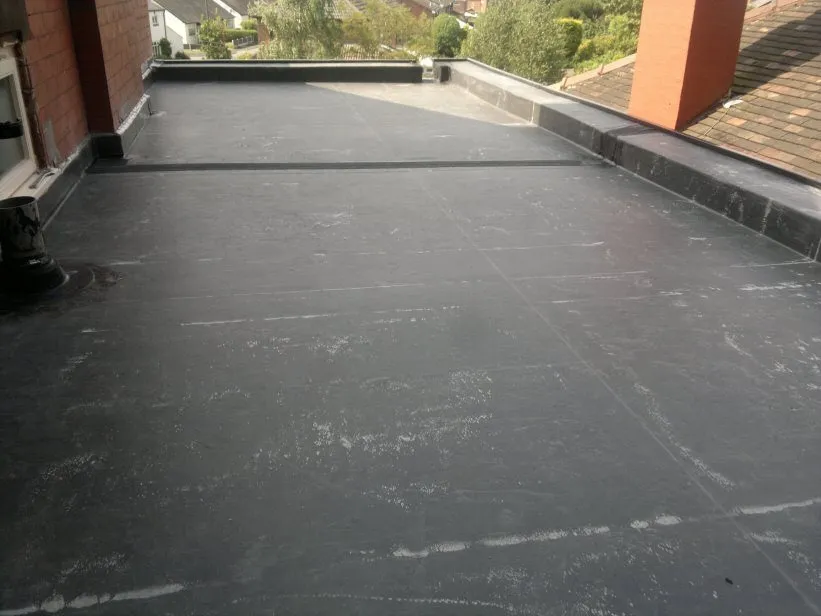
No — in most cases, replacing a flat roof with EPDM rubber does not require planning permission in Derbyshire. The key test under permitted development is whether the work materially changes the external appearance of the building. EPDM does not.
EPDM (Ethylene Propylene Diene Monomer) is a dark grey or black single-ply rubber membrane. Its colour and profile are broadly comparable to the felt systems it typically replaces. A planning officer looking at the property before and after would see the same flat roof plane, the same colour, and the same low-profile edge trims.
Why EPDM does not typically trigger a planning requirement:
- Colour: dark grey/black — consistent with existing felt and bitumen systems
- Profile: flush with the deck, no raised elements
- Finish: non-reflective and non-glossy — no visual impact on the streetscene
- No change to roof height, shape, or footprint
The same applies to GRP fibreglass in most residential settings. The material changes; the appearance does not.
The exception is conservation areas and listed buildings. In those settings, material choice can become relevant. A planning officer or conservation officer may have a view on what is appropriate, and EPDM — while usually acceptable — may need to be confirmed before work begins. We cover this in the next section.
For the majority of Derby homeowners replacing a failed felt roof on an extension or garage, EPDM is a clean permitted development replacement. No application needed — just building control notification.
Find out more about our EPDM rubber roofing service in Derby.
When Does a Flat Roof in Derbyshire Require Planning Permission?
Permitted development covers most standard flat roof work. These are the situations where it does not.
1. The flat roof is part of a new extension that exceeds PD size limits If you are building a new rear or side extension and the extension itself requires planning permission — because it exceeds height, depth, or half-plot coverage limits — then the roof is part of that application. The roof system does not need separate permission, but the extension does.
2. The new roof raises the height of the building Any work that takes the building higher than the existing roof ridge will need planning permission. This applies to flat-to-pitched conversions where the new pitch creates additional height visible from the street.
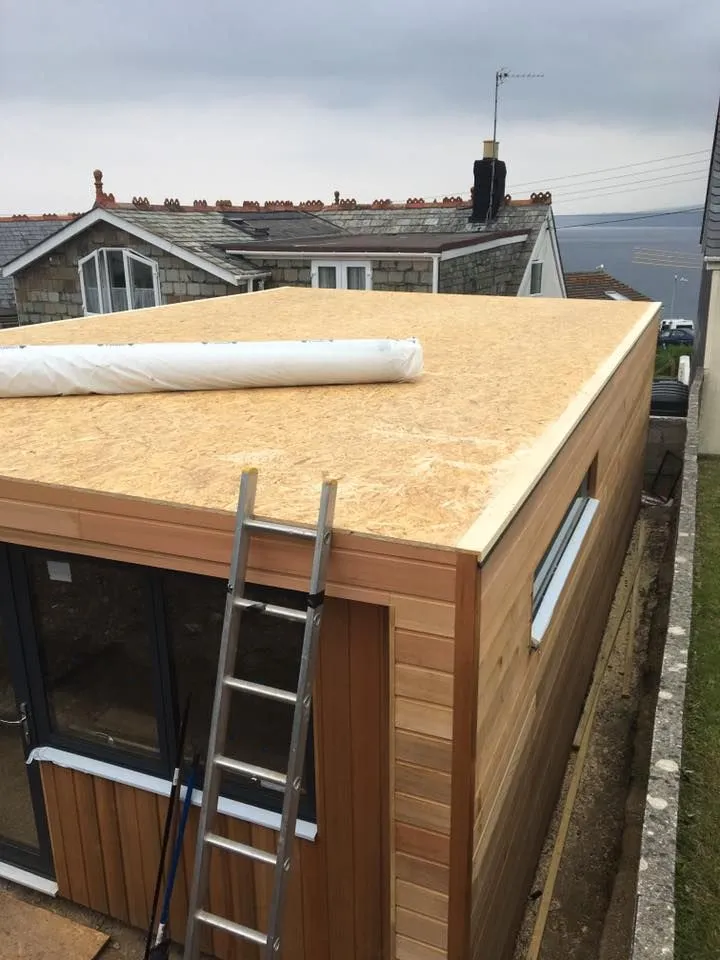
3. The roof plane projects more than 150mm from the existing surface Under permitted development, alterations to a roof must not project more than 150mm above the existing plane. This is most relevant for rooflights and roof lanterns on flat roofs rather than straight membrane replacements.
4. The property is a flat, maisonette, or converted dwelling Permitted development roof rights apply to houses only. If your property is a flat — including a ground floor flat with a flat roof above — or a building that was converted from commercial use under PD rights, the rules are different. Planning permission may be required for external roof alterations.
5. The work is on a listed building or in a designated area Listed building consent is needed for any external alteration to a listed building. Conservation areas and Article 4 zones impose additional restrictions. These are covered in the sections below.
If your project does not fall into any of these categories, you are almost certainly within permitted development. Call us on 01332-529704 if you are unsure — we will give you a straight answer based on your property.
Flat Roofs in Conservation Areas and Listed Buildings in Derbyshire
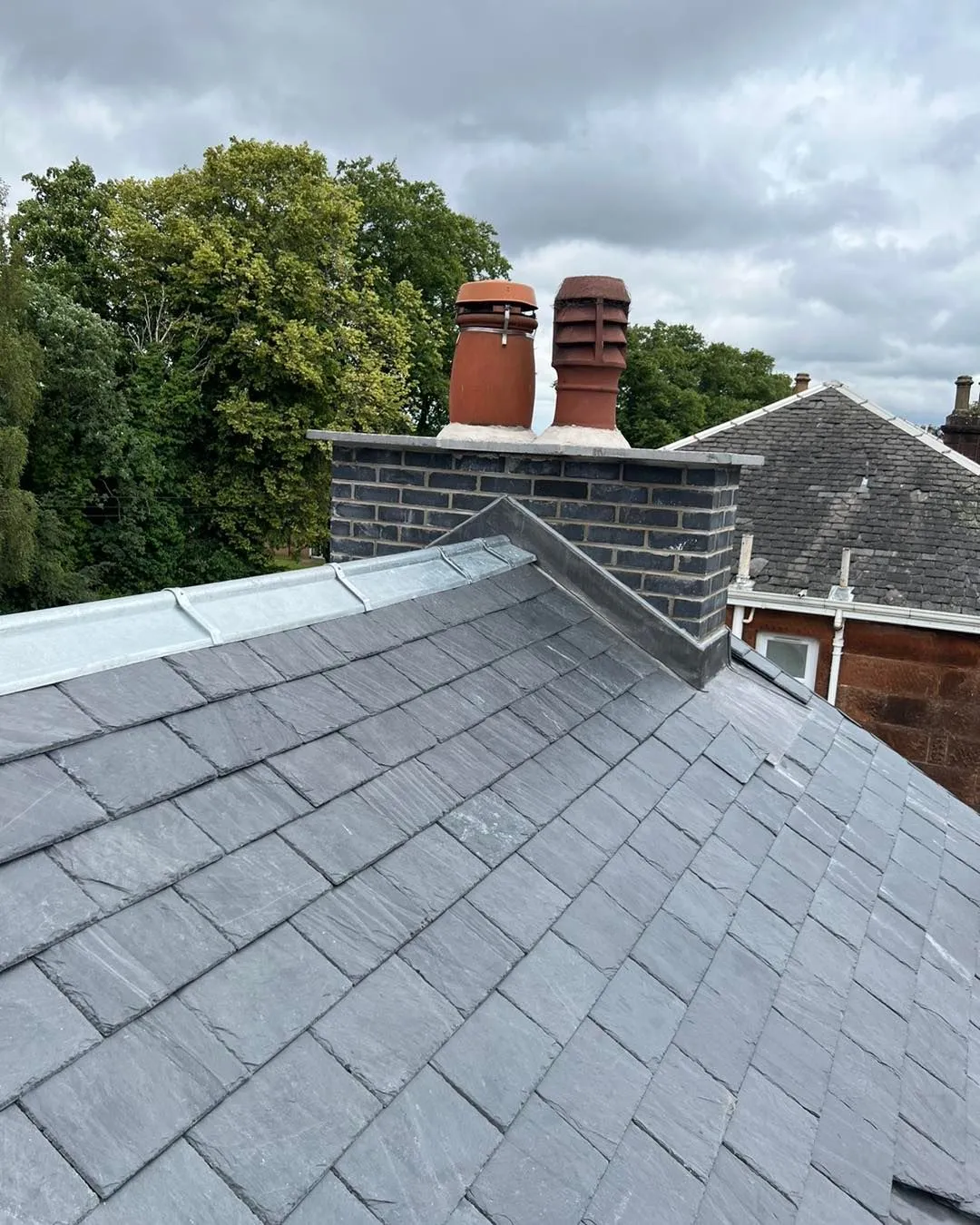
Derbyshire has a higher concentration of listed buildings and conservation areas than many English counties. Bakewell, Matlock Bath, Melbourne, Ashbourne, and parts of Derby city centre all contain listed properties and designated conservation zones. If your property sits in one of these areas, the planning rules are stricter.
Conservation areas
Being in a conservation area does not automatically remove your permitted development rights for flat roof work. However, it significantly increases the likelihood that material choice and appearance will be scrutinised. Some conservation areas in Derbyshire — particularly those managed by Derbyshire Dales District Council — have additional planning policies that specify appropriate materials for roof work.
Front-facing roof alterations in conservation areas are more likely to require consent than rear or hidden alterations. If your flat roof is visible from the street, check with the relevant local planning authority before proceeding.
Listed buildings
Listed building consent is required for any external alteration to a listed building, regardless of how minor the work appears. This applies to all three grades — Grade I, Grade II*, and Grade II. Replacing a flat roof covering — even like-for-like — on a listed building in Bakewell or Ashbourne requires consent.
Material choice matters significantly in listed building applications. A conservation officer may specify materials that complement the character of the building. EPDM is often acceptable, but it needs to be confirmed before work begins rather than assumed.
When we quote for flat roof work on properties in Bakewell, Matlock, or the older parts of Ashbourne, we always ask about listing status before recommending a system. It changes what we specify and how we approach the planning conversation.
What Is an Article 4 Direction and Does It Affect Derby or Derbyshire Dales?
Most homeowners have never heard of an Article 4 Direction. It is one of the most important — and most overlooked — planning considerations for roofing work in parts of Derbyshire.
An Article 4 Direction is a formal instruction issued by a local planning authority that removes specific permitted development rights in a defined area. It does not ban development. It means that works which would normally be permitted development require a full planning application instead.
Why it matters for flat roofs
If your property sits within an Article 4 zone that restricts roof alterations, you cannot replace your flat roof under permitted development — even if the work would be permitted development anywhere else in England. You need to submit a planning application first.
In Derbyshire:
- The Peak District National Park Authority has issued Article 4 Directions across multiple settlements and sites within the National Park. If your property is within or near the Peak District boundary — in areas like Hathersage, Hope, Castleton, or the villages around Buxton — this is worth checking before any roof work begins.
- Derby City Council and Derbyshire Dales District Council may also have Article 4 Directions in specific streets or conservation zone designations. These are not always widely publicised.
How to check whether an Article 4 Direction affects your property:
- Go to the Planning Portal (planningportal.co.uk) and use the interactive tools
- Check your local planning authority’s website — Derby City Council, Derbyshire Dales, North East Derbyshire, or the Peak District National Park Authority
- Call the planning department directly — it is a free enquiry and takes minutes
- Ask us — as part of our free survey, we flag any known planning constraints on your property
Do You Always Need Building Regulations Approval for a Flat Roof in Derbyshire?
Yes — in almost all cases. This is the point where many homeowners get caught out.
Planning permission and building regulations are two completely separate systems. Planning permission controls what you build and how it looks. Building regulations control how it is built — structure, fire safety, thermal performance, and waterproofing standards. You can need one, both, or in rare cases, neither.
For flat roof work in Derby and Derbyshire, building regulations approval is almost always required — even when planning permission is not.
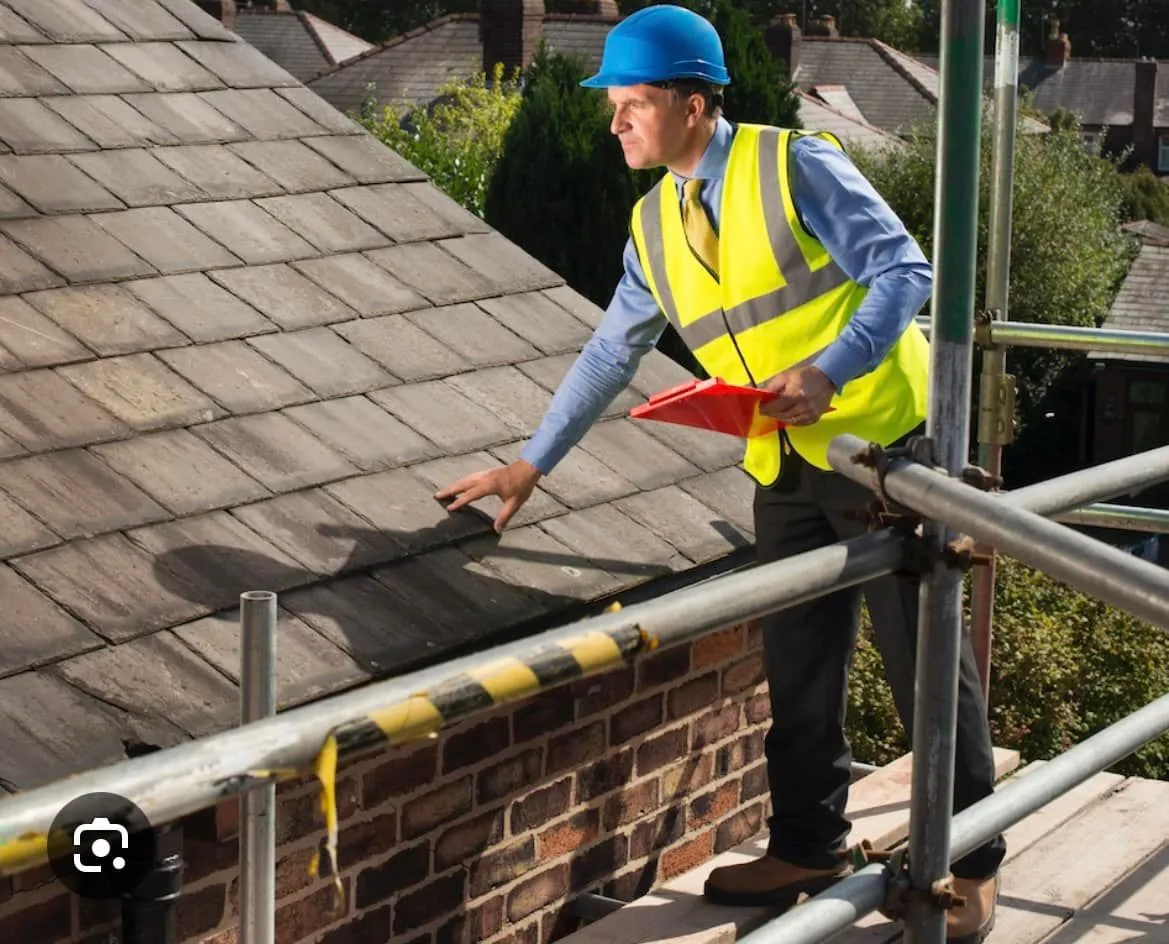
What building regulations cover on a flat roof replacement:
- Structural integrity of the deck and supporting structure
- Thermal performance — flat roofs must meet current U-value requirements under Part L
- Fire performance of the roof covering — particularly relevant for properties near boundaries
- Waterproofing and drainage adequacy
- Ventilation — relevant on cold roof builds
Who handles building control in Derbyshire?
The Derbyshire Building Control Partnership (DBCP) covers Derby City, Derbyshire Dales, North East Derbyshire, Bolsover District, Amber Valley Borough, and Chesterfield Borough. You submit your notification to DBCP, and a building control surveyor will inspect the work at key stages.
Failing to get building regulations sign-off can lead to prosecution, an unlimited fine, and enforcement action requiring alteration or removal of the work. It can also invalidate your home insurance and cause significant delays when you come to sell.
A reputable roofer will notify building control on your behalf and manage the inspection process. We do this as standard on every flat roof installation across Derby and Derbyshire. If a contractor does not mention building regulations at all, treat that as a warning sign.
Get a free flat roof survey in Derbyshire → contact us here
Should You Get a Lawful Development Certificate for Your Flat Roof in Derby?
A Lawful Development Certificate (LDC) is not a legal requirement. But for many Derby homeowners, it is one of the smartest optional steps they can take — particularly if they plan to sell or remortgage within the next decade.
An LDC is a formal written confirmation from your local planning authority that the work carried out was lawful at the time of completion. You apply to Derby City Council or the relevant Derbyshire district council after the work is done (or before, for proposed work). The process typically takes up to eight weeks.
When an LDC is worth getting for flat roof work:
- Your flat roof is on a prominent part of the property and a future buyer’s solicitor is likely to query it
- Your property is close to — but not within — a conservation area or Article 4 zone, and there is any ambiguity about the boundary
- You are planning to sell within the next five to ten years
- You upgraded from felt to EPDM and want documented confirmation the material change was lawful
- A mortgage valuer has flagged the roof as a query item
Even without an LDC, good documentation protects you. We provide a written specification, photographs of the completed installation, and building control completion certificates on every job. This paper trail supports any future LDC application or sale query and demonstrates that the work was carried out properly by a qualified contractor.
See our reviews and find us on Google Maps → Derby Roofers GBP
Customer Example: Allestree Homeowner Switches from Felt to EPDM — Here’s What Was Needed
A homeowner in Allestree, Derby, contacted us after noticing damp patches on the ceiling of their kitchen extension. The felt roof was original to the extension — installed in the late 1980s — and had been patched twice in the previous three years.
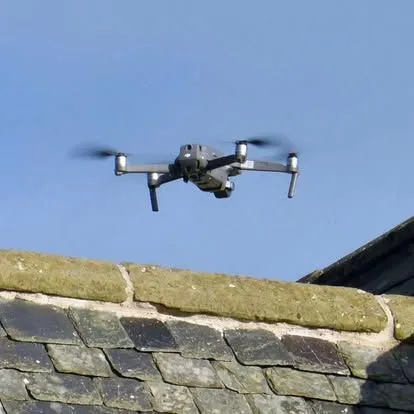
Before quoting, we carried out a free drone survey. The membrane had failed at two seams along the rear wall flashing and the decking boards beneath had softened in one corner.
The homeowner’s first question was whether they needed planning permission to switch from felt to EPDM.
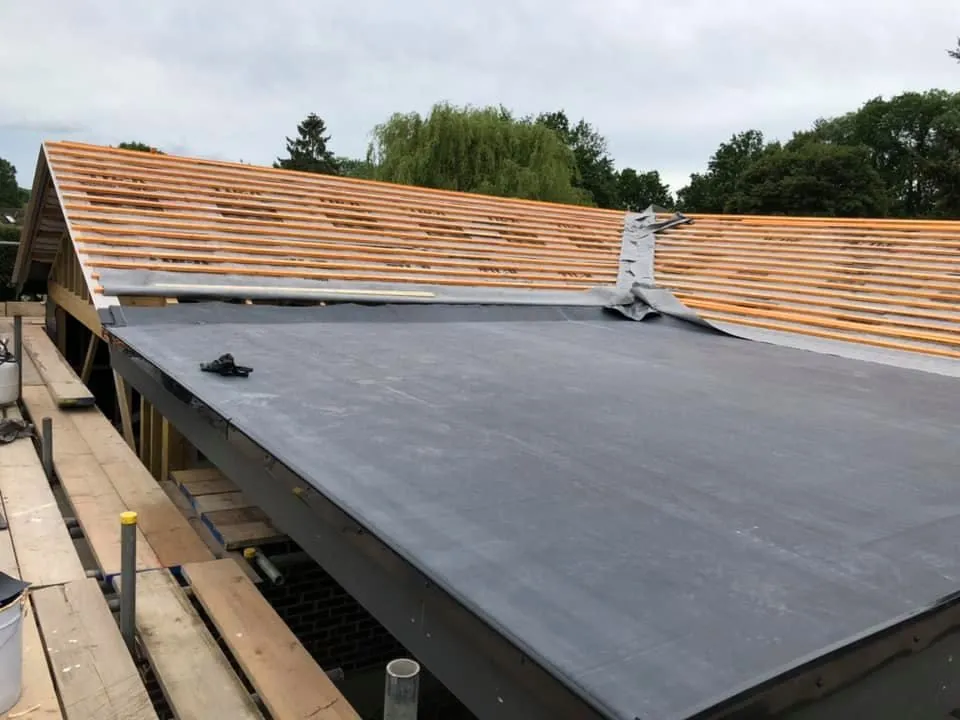
They did not. The extension was within permitted development limits and the property sat outside any conservation area. The material change from felt to EPDM did not alter the appearance of the roof in any way that required consent. We notified Derby City building control, replaced the decking in the affected corner, and installed a Firestone RubberCover EPDM warm roof system.
The job was completed in a day. The homeowner received a building control completion certificate and a full written record of the installation.
No planning permission needed. No surprises. Just a roof that will not need attention again for decades.
Call us on 01332-529704 for a free survey across Derby and Derbyshire.
Frequently Asked Questions About Flat Roof Planning Permission.
Do I need planning permission to replace my flat roof in Derbyshire?
In most cases, no. Replacing a flat roof in Derbyshire — including switching from felt to EPDM or GRP — falls under permitted development rights and does not require a planning application. Exceptions apply if your property is a listed building, sits within a conservation area, or is subject to an Article 4 Direction.
Does a flat roof extension need planning permission under permitted development rules?
It depends on the size of the extension. Single-storey rear extensions within permitted development size limits do not need planning permission. If the extension itself exceeds those limits — height, depth, or half-plot coverage — a planning application is required, and the roof is part of that application.
Do I still need building regulations approval even if planning permission isn’t required for my flat roof?
Yes — almost always. Building regulations approval is a separate requirement from planning permission and applies to the structural, thermal, fire, and waterproofing performance of the roof. DBCP handles building control across most of Derbyshire. We notify building control and manage the inspection process on every flat roof installation we carry out.
Can I convert my pitched roof to a flat roof without planning permission in Derby?
In most cases, yes — provided the conversion does not raise the overall roof height and the property is not listed or in a conservation area. The test is whether the change materially alters the external appearance of the building. If it does, a planning application may be needed.
Do I need planning permission for a flat roof in a conservation area in Derbyshire?
Possibly. Being in a conservation area does not automatically require planning permission for flat roof work, but it does increase scrutiny of material choice and appearance. Front-facing alterations and material changes visible from the street are more likely to require consent. Check with your local planning authority before proceeding.
Does being near the Peak District National Park affect the planning rules for my flat roof in Derbyshire?
Yes — potentially. Properties within the Peak District National Park boundary are subject to stricter planning controls, including Article 4 Directions that remove certain permitted development rights. If your property is in or adjacent to the National Park, check with the Peak District National Park Authority before starting any roof work.
My property is a listed building in Derbyshire — do I need listed building consent as well as planning permission for a flat roof repair?
Yes. Listed building consent is required for any external alteration to a listed building, including flat roof repairs and replacements. This applies regardless of grade. Contact your local planning authority — Derbyshire Dales District Council, Amber Valley, or the relevant district authority — before beginning any work.
What is an Article 4 Direction and could it affect my flat roof project in Derby or Derbyshire Dales?
An Article 4 Direction removes permitted development rights in a specific area, meaning works that would normally not need planning permission do require it. The Peak District National Park Authority has issued Article 4 Directions across multiple sites. Derby City Council and Derbyshire Dales may also have them in certain zones. Check before you start.
Should I get a Lawful Development Certificate for my flat roof even if I don’t need planning permission — and will it affect my house sale?
An LDC is optional but can be valuable. It provides written confirmation from the local planning authority that the work was lawful. Solicitors and mortgage lenders increasingly query flat roof work at the point of sale, and an LDC removes that uncertainty. We document every installation thoroughly so our customers are protected whether or not they choose to apply for one.
If I change my flat roof material from felt to EPDM or GRP in Derbyshire, does that count as a material change of appearance requiring planning permission?
In standard residential settings, no. EPDM and GRP both have a dark, low-profile, non-reflective finish that does not materially change the appearance of the building compared to felt. In conservation areas or on listed buildings, material choice may be scrutinised — confirm with your local planning authority before proceeding in those settings.
What Gets Checked Before We Ever Quote for Your Flat Roof
- A free drone survey of the existing flat roof, its condition, size, and boundary proximity
- A check of whether the property is listed, sits in a conservation area, or falls under an Article 4 Direction
- Confirmation of whether the planned work is permitted development or needs a formal planning application
- Notification to the Derbyshire Building Control Partnership (DBCP) and management of the inspection stages
- A written specification, installation photographs, and a building control completion certificate on every job
Not Included / Costed Separately
- Submitting a full planning application on your behalf — this goes to a planning consultant or architect if your project needs one
- Listed building consent applications
- Applying for a Lawful Development Certificate — this is an optional step you take with your local council after the work, though we provide the supporting documentation
- Design and drawings for extensions that exceed permitted development size limits
From Drone Survey to Building Control Sign-Off
- Call and free survey: You call us and we book a free drone survey of the existing flat roof, checking condition, size, and how close it sits to any boundary.
- Planning and building regs check: During the same visit we flag whether the property is listed, sits in a conservation area, or falls under an Article 4 Direction, and confirm whether the job is permitted development or needs an application.
- Written quotation: You get a written quote covering the material — EPDM, GRP, or felt — labour, and any decking or insulation replacement identified during the survey.
- Building control notification: Before work starts we notify the Derbyshire Building Control Partnership so the job is registered and inspected at the right stages.
- Installation: The old covering is stripped back, decking and insulation replaced where needed, and the new membrane fitted — most straightforward domestic jobs are finished within a day.
- Completion paperwork: You receive a building control completion certificate, installation photographs, and a written specification — the paper trail that supports any future Lawful Development Certificate application or house sale query.
Why the Check Is Free and What Actually Sets the Roofing Price
The planning check itself doesn’t add to your bill — it’s part of the free drone survey carried out before we quote. Notifying the Derbyshire Building Control Partnership and managing inspections is arranged by us and built into the price of the roofing job rather than charged as a separate line. Where a Lawful Development Certificate is worth applying for, the application fee is set by the council under the Gov.uk planning fee schedule and paid directly to them, not to us. What the roof replacement itself costs depends on the size of the roof, the material specified, and whether decking or insulation needs replacing under the membrane, so a firm figure needs a site visit rather than a phone estimate — that’s what the free survey is for.
Planning Permission, Building Regs, and Article 4 — What Each One Controls
| Requirement | What it controls | Applies to a standard flat roof replacement? | Who deals with it |
|---|---|---|---|
| Permitted Development rights | Whether the work can go ahead without a formal application | Yes, for most like-for-like replacements on houses | Confirmed as part of your free survey |
| Full planning permission | Size, height, or footprint changes beyond PD limits | Only if the roof is part of a larger extension or a height increase | Application to the local planning authority, arranged separately |
| Listed building consent | External alterations to a listed building, any grade | Only if the property is listed | Local planning authority — required alongside any planning permission |
| Building regulations approval | Structure, thermal performance, fire safety, and waterproofing | Yes — almost always, even when planning permission isn’t needed | Derbyshire Building Control Partnership, notified by us |
| Article 4 Direction | Removes PD rights in a defined area, such as parts of the Peak District | Only within a designated Article 4 zone | Checked against Planning Portal and local authority records during your survey |
| Lawful Development Certificate | Written confirmation the completed work was lawful | Optional, never required | Applied for by you to the local council after completion, using our documentation |
Twenty Years of Article 4 Zones, Listed Streets, and DBCP Sign-Offs Across Derbyshire
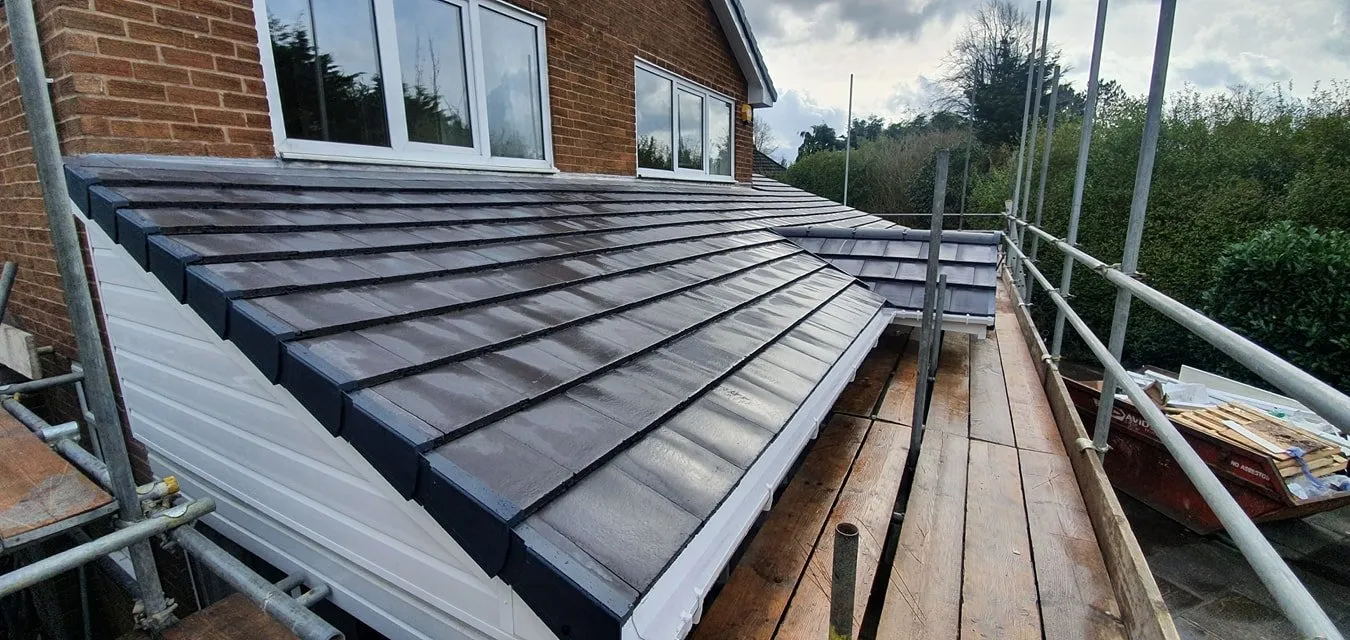
Article 4 Directions and conservation area boundaries don’t follow tidy lines on a map — they cut through some Derbyshire streets and stop short of the next one, and twenty years of fitting flat roofs across Derby and Derbyshire has meant learning where that catches people out: the conservation area running through parts of Derby city centre, the Article 4 restrictions that apply in Bakewell and Ashbourne, and the streets in Allestree where listed and unlisted properties sit side by side. That history is what lets us tell you before work starts whether your roof is a straightforward permitted development job or one that needs a call to the council first, and it’s why every quote includes the Derbyshire Building Control Partnership notification rather than leaving that step for you to chase up. Some of these jobs also call for powered access or a mobile tower rather than a ladder, which is where our IPAF and PASMA certification comes in — one fewer phone call for you to make to find someone qualified for that part of the work. What you’re left with once the roof is finished is a completion certificate and a paper trail that holds up if a future buyer’s solicitor or the council asks what was done and whether it was allowed.
Derby, the Derbyshire Districts, and the Peak District Article 4 Boundary
Our planning and building regulations checks are focused on Derby and the Derbyshire authorities — Derby City Council, Derbyshire Dales, North East Derbyshire, Amber Valley, Bolsover, and Chesterfield — plus the Peak District National Park boundary, where Article 4 Directions are most likely to apply. Beyond Derby and Derbyshire, we also carry out flat roofing work across Nottingham, Nottinghamshire, Sheffield, Leeds, Manchester, Doncaster, Wakefield, Rotherham, York, Hull, Newcastle, Sunderland, Durham, Glasgow, and Liverpool — planning rules vary by local authority outside Derbyshire, so check with the relevant council for those areas.
“Very friendly and professional service. They delivered my job on time and at a good price.”
DERBY ROOFERS - That is what we aim to hear from all of our customers all the time.
Get a Free Quote
🔒 Your details are safe with us. No spam, ever.