Derby Roofers
Roof Replacements & Re-Roofing Contractor
Call us now book a FREE consultation and FREE Quotation
FREE Drone Survey Available
Call: 01332-529704
Do I Need Planning Permission for a Roof Replacement in Derbyshire?
You've got quotes in hand, your roof is failing, and someone mentions planning permission. Suddenly you're not sure whether to pick up the phone to the council before any tiles come off.
For most Derby and Derbyshire homeowners, the answer is no — a standard re-roof does not require planning permission. But the full picture is more detailed than that. Planning permission and building regulations are two separate legal requirements. Both can apply. And certain properties in Derbyshire — conservation area homes in Derby City, listed buildings in the Derbyshire Dales, properties under Article 4 Directions in Matlock Bridge and Osmaston — face stricter rules than the national default.
This guide covers planning permission for roof replacement in Derbyshire in plain language. We explain when permission is and isn't needed, how building regulations apply even when planning permission isn't required, what the local Derby and Derbyshire rules actually say, and what you should check before signing a contract with any roofer.
We cover all of this as part of our free survey — you never have to guess.
In Short: Do I Need Planning Permission to Replace My Roof in Derbyshire?
No, in most cases. A like-for-like roof replacement on a standard residential property in Derbyshire does not require planning permission. It falls under Permitted Development Rights — a set of national rules that allow certain types of work to go ahead without a formal planning application.
You do not need planning permission if:
- You are replacing the existing roof covering with the same or similar material
- The height and shape of the roof will not change
- The property is not a listed building
- The property is not in a conservation area or covered by an Article 4 Direction
You may need planning permission if:
- Your property is a listed building (Listed Building Consent required)
- Your property is in a conservation area in Derby City, South Derbyshire, or Derbyshire Dales
- An Article 4 Direction applies to your property (common in Matlock Bridge and Osmaston)
- The work will increase the roof height or alter the roofline
- You are changing to a material that visibly alters the roof in a designated area
Even when planning permission is not required, Building Regulations approval is a separate legal requirement for most full roof replacements. These are two different systems. Sections 2 and 7 below explain why this matters.
Not sure which rules apply to your home? Call Derby Roofers on 01332-529704 for free, honest advice — we advise on planning considerations as part of every survey.
Planning Permission and Building Regulations Are Not the Same Thing
This is the most common misunderstanding we see when homeowners contact us about a new roof.
Planning permission controls how a building looks and its impact on the surrounding area. Building regulations control the technical quality and safety of the work itself. They are separate legal systems, operated by different departments at your local council.
You can need one, both, or neither — depending on the work.
For a full roof replacement in Derby, building regulations almost always apply, even when planning permission does not.
When Do Building Regulations Apply to a Roof Replacement in Derbyshire?
When 50% or more of your roof covering is replaced, you are legally required to notify Local Authority Building Control (LABC) and comply with the relevant Building Regulations. Failure to do so can result in prosecution and a fine of up to £5,000. This applies in Derby, Derbyshire Dales, South Derbyshire, Amber Valley, and every other Derbyshire district.
Building Regulations for roofing cover:
- Structural integrity — rafters, battens, and roof decking
- Thermal insulation (Part L) — legal U-value requirements for roofs in existing dwellings
- Fire safety — particularly near party walls and for certain roof materials
- Ventilation — to prevent condensation in the roof space
Two Routes to Building Regulations Compliance
There are two ways to satisfy building regulations for a roof replacement in Derby:
Route 1 — Notify LABC directly. You or your contractor submits a Building Notice to Derby City Council (or the relevant district council). An inspector visits to check the work at key stages and issues a Completion Certificate on sign-off.
Route 2 — Use an NFRC Competent Person Scheme (CPS) registered contractor. An NFRC CPS registered roofer can self-certify that the work complies with Building Regulations, without requiring a council inspection visit. Once the job is complete, you receive a Building Regulations Compliance Certificate directly. No LABC visit needed.
We are registered with the NFRC Competent Person Scheme. Every full re-roof we carry out in Derby and Derbyshire is self-certified, and you receive your compliance certificate on completion. There are no delays waiting for inspection appointments.
For full re-roofing services across Derby and Derbyshire, visit our roof replacement page or call 01332-529704.
Conservation Areas in Derby and Derbyshire — Where the Rules Change
Conservation areas are designated zones of special architectural or historic interest. In these areas, your Permitted Development Rights for roof work may be restricted or removed entirely. What you can do freely on a standard Derby street may require a planning application on a conservation area street one road away.
Derby City, Derbyshire Dales, South Derbyshire, and North East Derbyshire all contain conservation areas with additional roofing controls.
Derby City Conservation Areas
Derby City Council has Article 4 Directions covering properties within several of its conservation areas. These Directions remove standard Permitted Development Rights for roof alterations visible from a highway. Affected conservation areas include Little Chester, Strutt's Park, Arboretum, and Mickleover.
In these areas, changing roofing material on a highway-facing slope — even replacing concrete tiles with a similar concrete tile — can require a planning application.
South Derbyshire Conservation Areas
South Derbyshire District Council has Article 4 Directions in Swadlincote, Shardlow, Melbourne, and Ticknall. Planning permission may be required for most alterations and extensions in these zones, including changes to roof coverings.
Derbyshire Dales
Derbyshire Dales has the most specific Article 4 restrictions for roofing in the county. These are covered in detail in the next section.
How to check: Derby City Council's online webmap lets you search your property by address. The Derbyshire Dales planning portal and South Derbyshire's mapping service do the same. If you are unsure, a pre-application enquiry to the relevant council is free and gives you a written response.
We carry out work across all of these areas. When we survey your property, we flag conservation area controls before any work is priced or agreed.
Listed Buildings in Derbyshire — You Always Need Listed Building Consent
If your property is a listed building, standard Permitted Development Rights do not apply. Any alteration to the roof — including a like-for-like replacement using identical materials — requires Listed Building Consent (LBC) from your local planning authority.
LBC is separate from planning permission. Both may be required for the same project.
Derbyshire has a high density of listed buildings, particularly in the Derbyshire Dales, the Peak District National Park, and historic market towns such as Ashbourne, Bakewell, and Matlock. Properties in these areas are regularly affected.
Properties in the Peak District National Park are subject to the Peak District National Park Authority, not the standard district council. This authority has its own planning policies and, in practice, applies stricter standards around heritage and material choice.
Carrying out unauthorised work to a listed building is a criminal offence. It can result in prosecution and an enforcement notice requiring the work to be reversed at your own cost. The local planning authority has unlimited time to pursue listed building enforcement — there is no statute of limitations.
If you own a listed building in Derbyshire, always confirm consent requirements with your LPA before any roofing work is commissioned. Do not rely on a contractor's verbal assurance that consent is not needed.
We have experience working on properties in conservation areas and can advise on the correct planning route before your project begins. Call us on 01332-529704.
What Is an Article 4 Direction — and Does One Cover Your Derbyshire Property?
An Article 4 Direction is a formal instruction from a local planning authority that removes specific Permitted Development Rights from a defined area or group of properties. Once an Article 4 Direction applies, you need planning permission for the types of work it covers — even if those same works would be permitted development on an identical house three streets away.
This catches homeowners off guard because Article 4 Directions can apply to perfectly ordinary, unlisted houses. The property does not have to be listed or in a conservation area to be affected — though in practice, most Article 4 Directions in Derbyshire are tied to conservation area designations.
Derbyshire Dales: Osmaston Conservation Area
An Article 4 Direction covering four unlisted historic properties (Coronation Cottages, numbers 1 to 4) within Osmaston Conservation Area has been in place since 1991. Under this Direction, planning permission is required for any alteration to the roof, including any change in roofing material. The properties affected were notified in writing at the time the Direction was made — but ownership changes over three decades mean many current owners are unaware.
Derbyshire Dales: Matlock Bridge Conservation Area
A wider Article 4 Direction covering over 100 unlisted historic properties within Matlock Bridge Conservation Area was approved in 2006. The same roof alteration rules apply — any change to the roof covering, including material changes, requires planning permission on affected properties.
Derby City
Derby City Council has made Article 4 Directions covering properties within its conservation areas. These restrict highway-facing alterations including, in some areas, changes to roof covering on slopes visible from a public road. The full list of affected properties is searchable via the council's webmap at derby.gov.uk.
How to check if an Article 4 Direction applies to your property:
- Use your council's online planning webmap and search your address
- Contact the Development Control team at your relevant district council
- Request a pre-application enquiry in writing — this gives you a formal, written response and costs nothing for straightforward questions
We check Article 4 constraints as part of our standard survey process. If your property is affected, we tell you before any quote is issued.
Can You Change Roofing Material Without Planning Permission in Derbyshire?
This is one of the most common practical questions we receive. A homeowner wants to upgrade from worn concrete tiles to natural slate, or switch from an ageing felt flat roof to EPDM rubber. Whether this is permitted without planning permission depends on where the property is.
Outside Conservation Areas and Article 4 Zones
For a standard residential property in Derby or Derbyshire that is not in a conservation area, not listed, and not subject to an Article 4 Direction, changing roofing material generally does not require planning permission — provided the height and shape of the roof remain the same.
This means:
- Concrete tiles to natural slate — typically permitted
- Concrete tiles to clay tiles — typically permitted
- Felt flat roof to EPDM rubber — typically permitted
- Felt flat roof to GRP fibreglass — typically permitted
Inside Conservation Areas and Article 4 Zones
Material changes are assessed against whether they preserve or harm the character of the area. In conservation areas, a switch from traditional clay tiles to concrete interlocking tiles — even if physically similar — can be refused on appearance grounds. A switch to a material that alters the visual character of a highway-facing slope is particularly likely to trigger a requirement for permission.
A real example from our Derbyshire Dales work: We surveyed a farmhouse in a Derbyshire Dales conservation area where the owner wanted to replace failing concrete tiles with natural slate. The aesthetic case was strong — original properties in the area had always been slated. Before pricing the job, we recommended a pre-application enquiry to the Derbyshire Dales planning team. The council confirmed approval was likely, the formal application was granted, and the work went ahead cleanly. The two-week pre-application process saved the homeowner from the risk of an enforcement notice on an otherwise straightforward re-roof.
If you are in any doubt about whether a material change on your Derbyshire property requires permission, a pre-application enquiry is the correct first step. We can help you identify which authority to contact and what information to provide.
Solar Panels and Roof Lights
Solar panels and roof lights have their own Permitted Development rules. These are not the same as the standard re-roofing rules. Key restrictions include a 150mm maximum projection from the existing roof plane, and a prohibition on installation on any wall or roof slope facing a highway in a conservation area or on a listed building. If you are planning solar panel installation as part of a re-roof in Derbyshire, we advise checking permitted development limits before the system is designed.
How We Reassured the Tate Family About Replacing Their Clay Tile Roof in Borrowash
The Tate family contacted us with a concern we hear fairly often across older Derbyshire properties. Their home in Borrowash had an original clay tile roof that had served the house well for decades. Several tiles had cracked and a section near the valley was letting water through. A previous contractor had told them the clay tiles were no longer available and recommended concrete as a straight swap.
They weren't comfortable with that advice and wanted a second opinion.
We understood their hesitation immediately. Clay tiles and concrete tiles are not the same product. Clay is lighter, more breathable, and on a period property in a village like Borrowash, significantly more appropriate aesthetically. Fitting concrete tiles on a roof designed for clay can also place different load demands on the roof structure.
Our survey confirmed two things. First, matching clay tiles for their specific profile were available through our suppliers — this is not always straightforward but it is achievable on most common clay profiles. Second, the roof structure itself was in good condition and did not warrant a full replacement. A targeted repair using matched clay tiles, combined with new lead work in the valley and re-bedding of the affected ridge section, was the right approach.
The Tate family had a repaired roof that matched the original, preserved the character of their home, and cost a fraction of a full replacement.
We saved them an unnecessary job — and gave them the honest answer the first contractor hadn't.
This is the kind of detail that matters on period properties across Borrowash, Draycott, and Breaston.
→ Book your free drone roof survey — call 01332-529704 or visit derbyroofers.co.uk/contact-derby-roofers
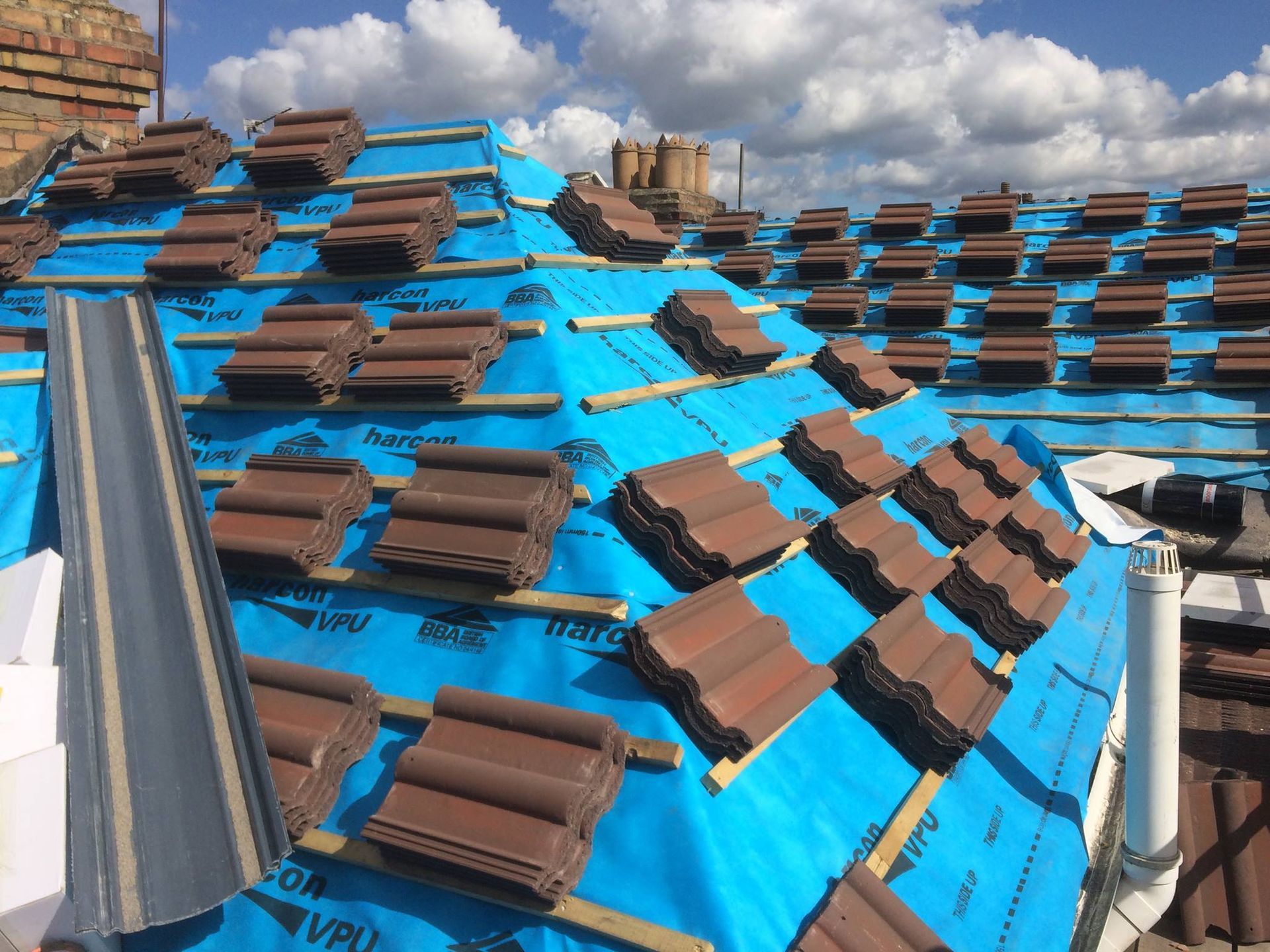

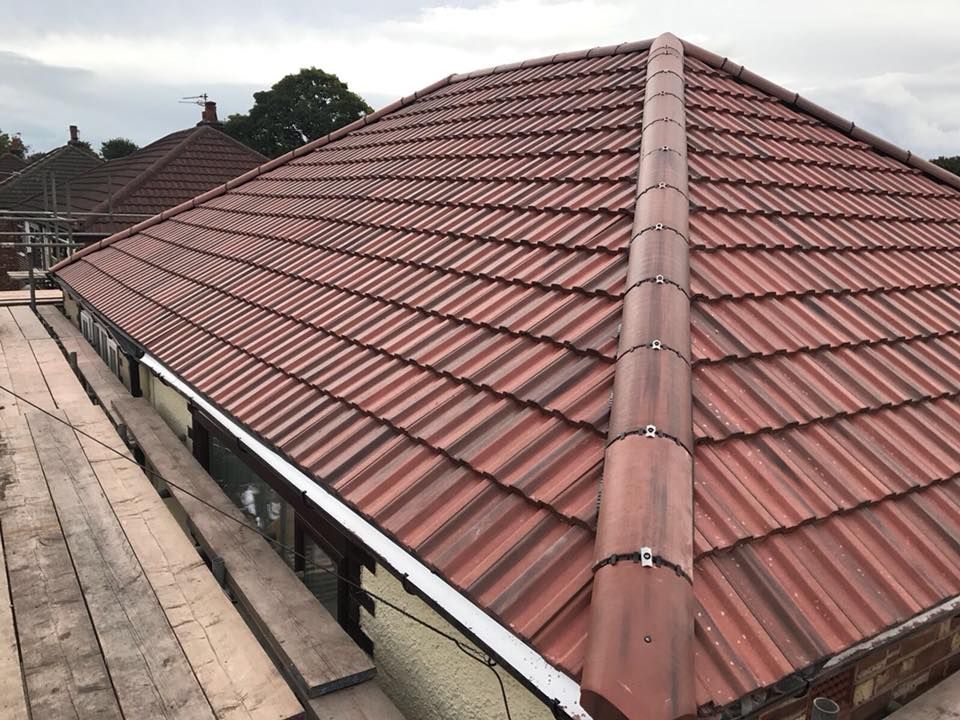
What Happens If Your Roofer Doesn't Get Building Regulations Right — and You Later Sell Your Derby Home?
This is the question almost no local roofer talks about. It directly affects your ability to sell your property, your mortgage lender's position, and your legal standing with your solicitor. We raise it because it is important.
When you sell a property in Derby, your solicitor will raise enquiries about any significant building work carried out during your ownership. A full roof replacement is on that list. Your buyer's solicitor will ask for evidence that the work was carried out with Building Regulations compliance and that a completion certificate was issued.
What Happens If There Is No Certificate?
Without a Building Regulations Compliance Certificate, the most common outcome is that the buyer's solicitor requires indemnity insurance to cover the absence of the certificate. This does not confirm the work was done to the correct standard. It only provides limited financial protection against enforcement action. Some mortgage lenders will not accept indemnity insurance in place of a certificate, particularly on recent works.
In practice, missing building regulations documentation can:
- Delay your sale while legal discussions take place
- Give your buyer grounds to renegotiate the price downwards
- Cause your buyer's mortgage lender to withdraw their offer
- Leave you liable for the cost of remediation if the work is later found to be non-compliant
The Rogue Contractor Risk
Some roofing contractors in Derby — and across the UK — will tell homeowners that building regulations do not apply to a roof replacement, or that they "will sort it" without ever notifying the council or self-certifying through a recognised scheme. We have taken on jobs in Derby where a homeowner was preparing to sell and discovered the previous roofer had provided no paperwork at all.
If a contractor cannot clearly explain whether your project requires building regulations compliance, and cannot confirm how that compliance will be documented, treat that as a serious warning sign.
Questions to Ask Your Derby Roofer Before Work Starts
1. Does this job require Building Regulations compliance? You should get a clear yes or no, with a plain explanation of why.
2. Are you registered with the NFRC Competent Person Scheme? A registered contractor can self-certify the work and issue your compliance certificate directly.
3. Will you provide a Building Regulations Compliance Certificate on completion? This certificate is what your solicitor will ask for when you sell the property.
4. Will the roof insulation be upgraded to meet current Part L requirements? Where the scope of the work requires it, insulation must meet the legal U-value standard.
5. Will you notify the relevant authority before work begins? Either through an LABC Building Notice or NFRC CPS registration — this should be handled by the contractor.
6. Will you provide written documentation of the materials used? Insurers, estate agents, and conveyancers all ask for this. A reputable roofer provides it as standard.
FAQs — Planning Permission and Roof Replacement in Derbyshire
Do I need planning permission to replace my roof in Derby?
No, in most cases planning permission is not required for a like-for-like roof replacement in Derby — it falls under Permitted Development Rights. Exceptions apply if your property is listed, sits within a conservation area such as Little Chester or Strutt's Park, or is covered by an Article 4 Direction. We confirm the planning position for your property during the free survey.
Does replacing a flat roof on a garage or extension in Derbyshire require planning permission?
Replacing the covering on an existing garage or extension flat roof does not normally require planning permission, provided the footprint and height remain unchanged. Building Regulations may still apply depending on the scope of the work. If you are replacing the roof covering and upgrading insulation — which is often the right thing to do — the Part L insulation requirements apply to the new thermal element.
Will I need planning permission if I switch from concrete tiles to natural slate in Derbyshire?
Outside conservation areas and Article 4 zones, switching from concrete tiles to natural slate generally does not require planning permission, provided the roof height and shape are unchanged. Inside conservation areas — including parts of Derby City, Derbyshire Dales, and South Derbyshire — a material change can require a planning application. We recommend a pre-application enquiry to your local planning authority before proceeding in any designated area.
What is the difference between planning permission and building regulations for a roof replacement in Derbyshire?
Planning permission is about how the property looks and its impact on the surrounding area — it is decided by the planning department. Building regulations are about the technical safety and quality of the work — they are checked by building control. A full roof replacement typically does not require planning permission but does require building regulations compliance. Both are operated by your local council but are completely separate processes.
What happens if I replace my roof in Derby without the correct building regulations paperwork?
Without a Building Regulations Compliance Certificate, you may face difficulties when selling the property. Your buyer's solicitor will ask for it. In its absence, they will typically require indemnity insurance, which some mortgage lenders will not accept. Indemnity insurance does not confirm the quality of the work. A reputable, NFRC CPS registered roofer self-certifies the work and issues the certificate directly on completion.
I live in a conservation area in Derbyshire. Do I need planning permission to repair a few broken tiles?
Minor repairs — replacing individual broken or missing tiles with matching material — generally do not require planning permission even in conservation areas, because they do not alter the roof's appearance. The threshold shifts when work becomes a material change (different tile type or colour) or involves a significant proportion of the roof area. If you are in a conservation area and planning anything beyond basic like-for-like repairs, check with your local planning authority or contact us and we will advise you as part of the survey.
Talk to us at Derby Roofers Before You Start Any Roofing Work in Derbyshire
We are a local Derby roofing contractor with over 20 years of experience across Derby City, Derbyshire Dales, South Derbyshire, Amber Valley, and the wider Derbyshire area. We know the local housing stock, the local planning rules, and the specific constraints that apply to conservation areas and listed buildings in this county.
When you book a free survey with us, we check planning constraints for your property as standard. If your home is in a conservation area, we tell you. If an Article 4 Direction applies, we tell you. If building regulations require an insulation upgrade under Part L, we tell you — and we price it into the job from the start, not as a surprise addition after work begins.
We are registered with the NFRC Competent Person Scheme. Every full re-roof comes with a Building Regulations Compliance Certificate, written documentation of materials, and a workmanship warranty of up to 20 years.
Call us on 01332-529704, email info@derbyroofers.co.uk, or complete the form at derbyroofers.co.uk/contact-derby-roofers. We get back to you the same day.
Derby Roofers · Loscoe Grange, Loscoe, Heanor, DE75 7JY · 01332-529704