Derby Roofers
GRP Fibreglass Roof Specialists
Call us now book a FREE consultation and FREE Quotation
FREE Drone Survey Available
Call: 01332-529704
GRP Fibreglass Roofing Derby — Tough, Seamless, and Built to Last
We Are Your Trusted, Local Roofing Contractor Serving Derby & Derbyshire
Don't wait — contact Derby Roofers today for a FREE quote and a FREE drone roof survey.
📞
Call Now: 01332-529704
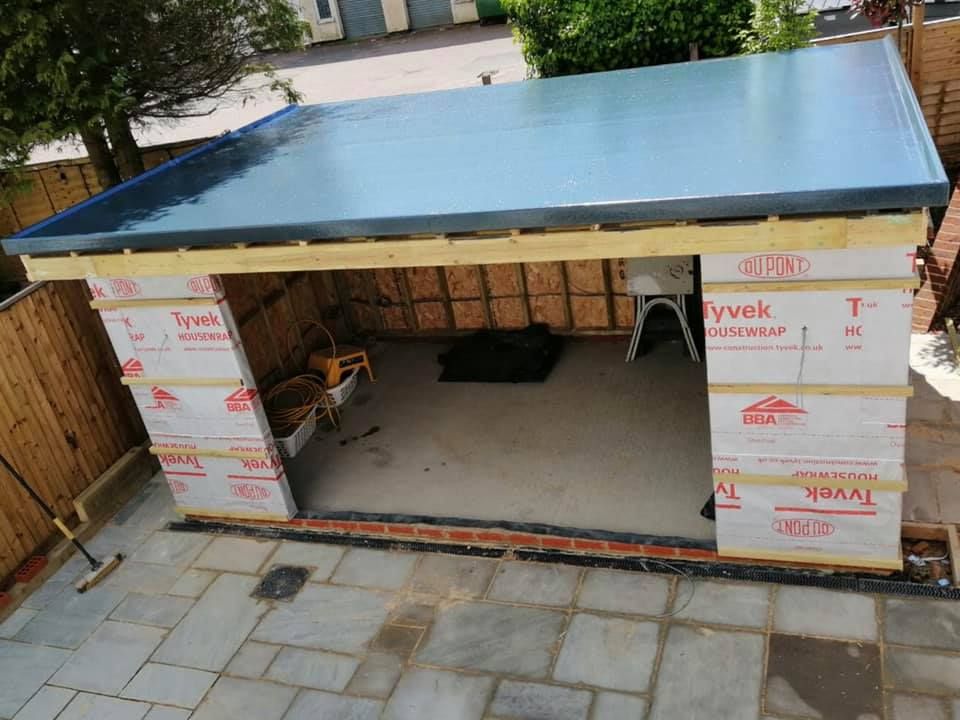
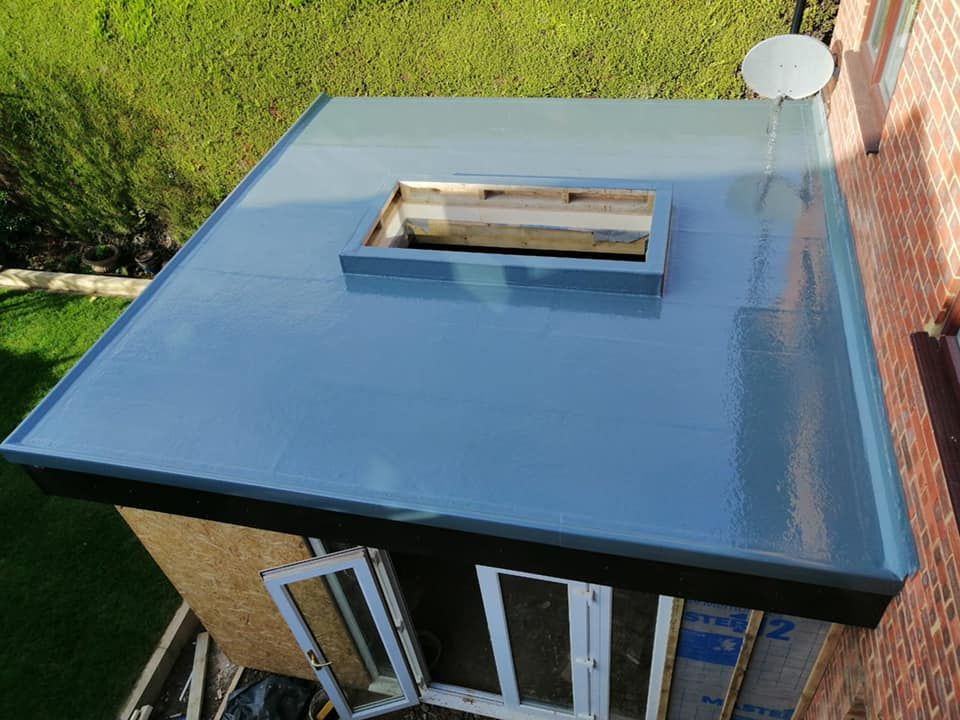
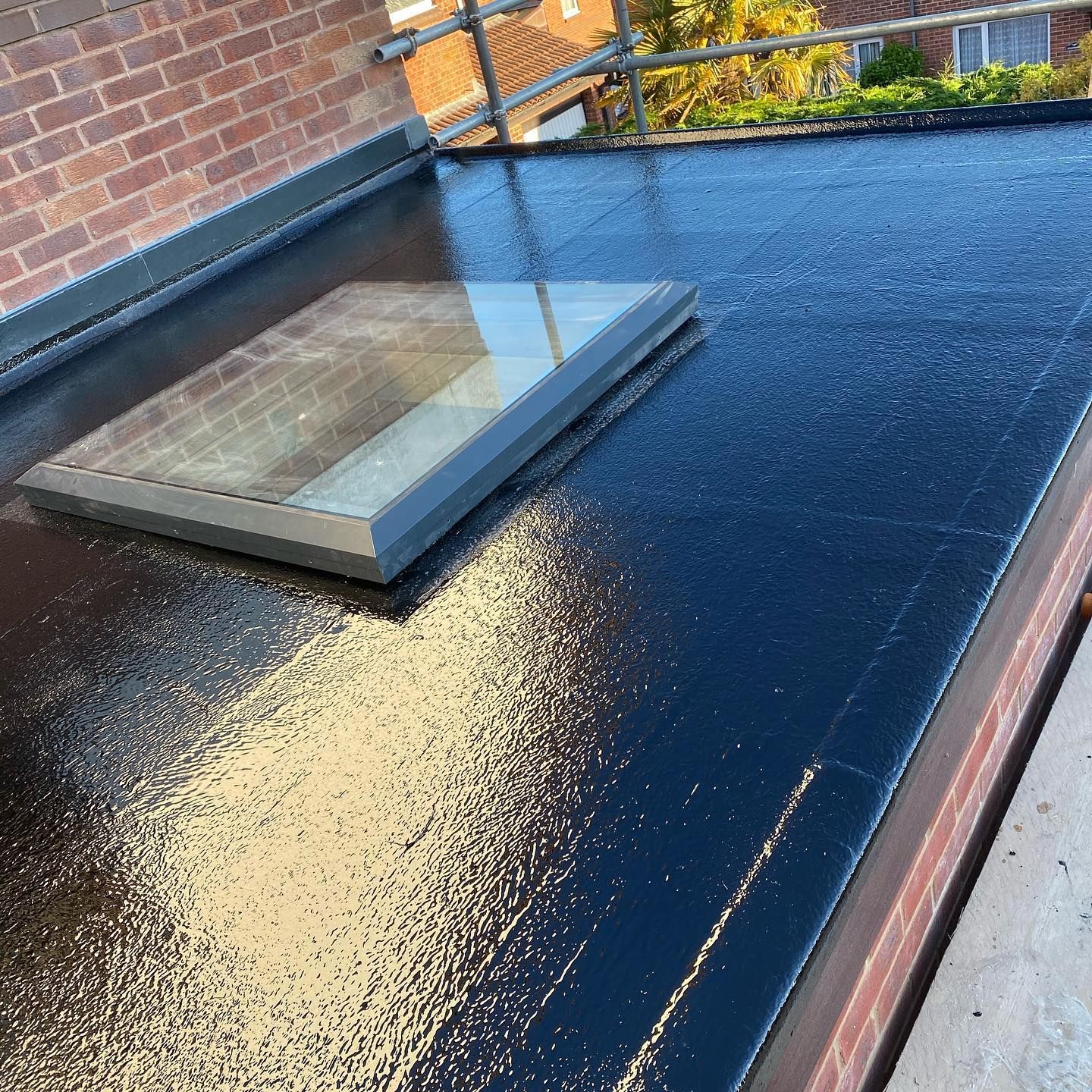
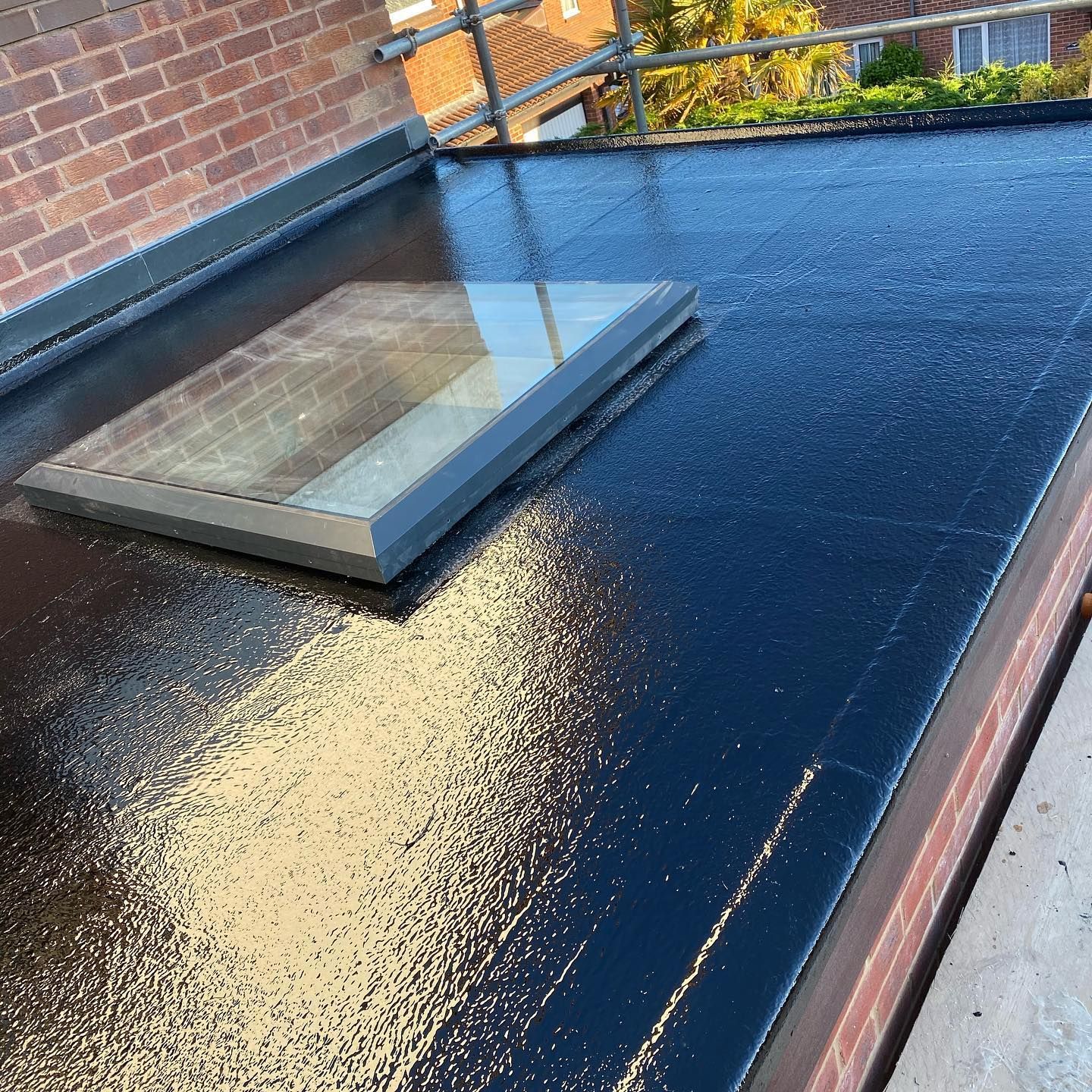
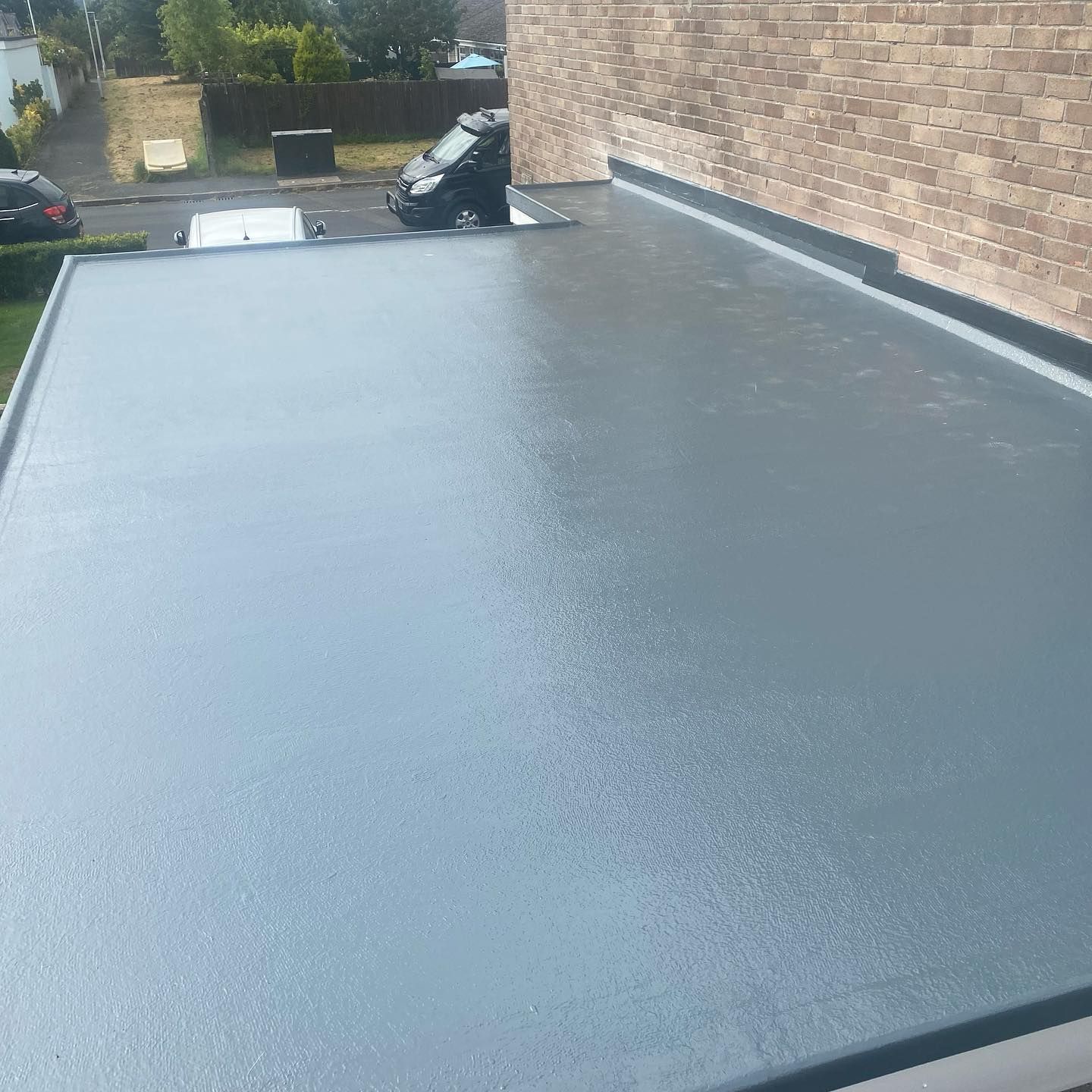
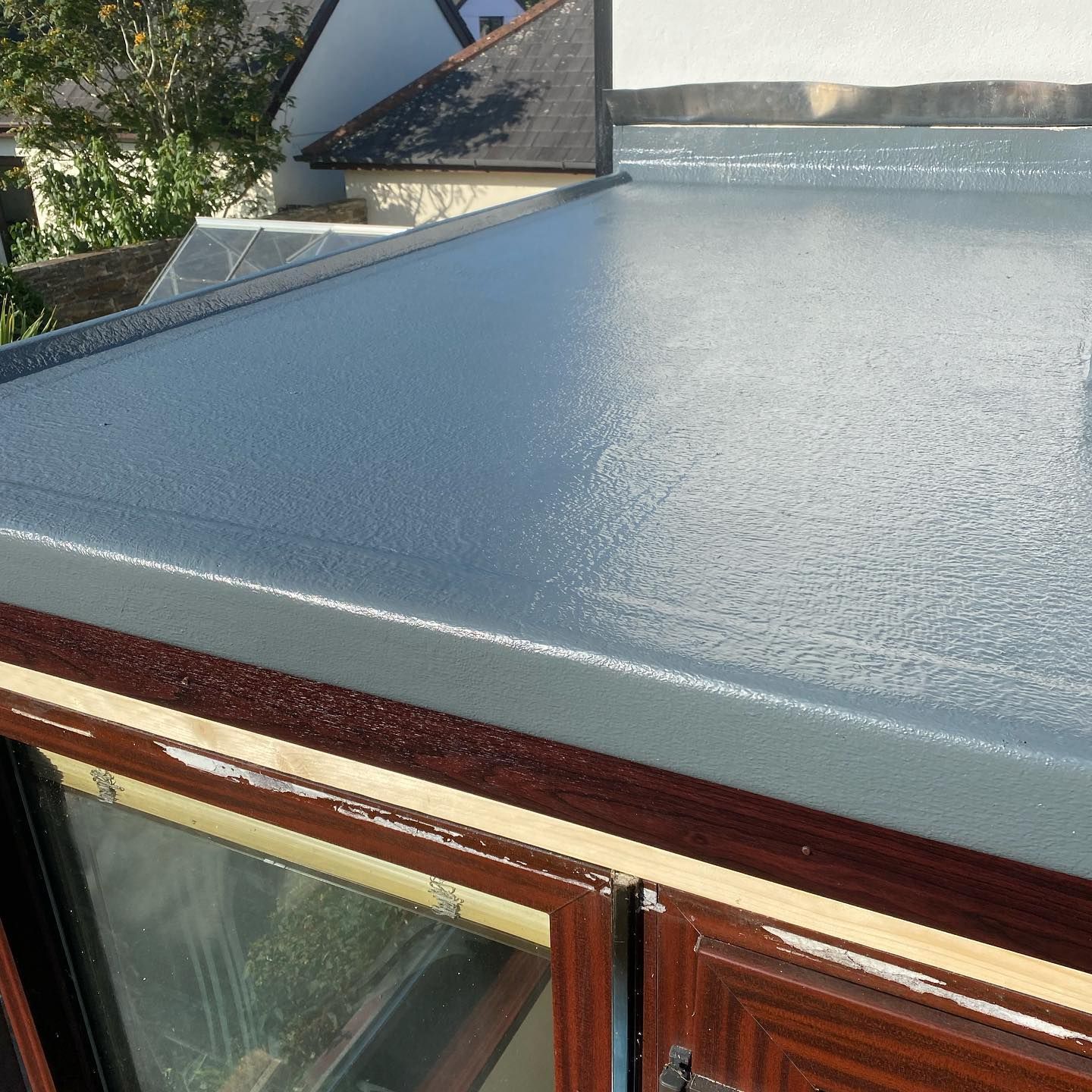
GRP fibreglass roofing is one of the most popular flat roof systems chosen by Derby homeowners and businesses — and it's easy to see why. GRP fibreglass roofing in Derby gives you a seamless, waterproof finish with a lifespan that far outlasts traditional felt.
We install GRP roofs on extensions, garages, bay windows, porches, flat roof conversions, and commercial flat roofs across Derby and Derbyshire. If your current flat roof is leaking, aging, or failing, we carry out a full survey first and then get to work. Our team has over 20 years of roofing experience — you get a solid, weatherproof finish backed by real-world knowledge of Derbyshire properties.
Whether you're searching for a fibreglass roofer in Derby, a GRP flat roof replacement, or a fibreglass roof repair near me — you're in the right place.
What Is GRP Fibreglass Roofing?
GRP stands for Glass Reinforced Plastic — also called fibreglass roofing. It's the same product, just two different names for the same system. A GRP fibreglass roof is built from layers of glass fibre mat and polyester resin. Once cured, it forms a single, hard, waterproof shell with no joints across the main surface.
It's one of the most specified flat roofing materials in the UK for good reason:
- Completely seamless — no laps or joins for water to track through
- Resistant to UV rays, frost, and Derby's wet winters
- Lightweight yet extremely strong — far less strain on roof joists than lead or felt
- Available in a range of colours to suit your property
- Minimal maintenance — an annual check and gutter clean is usually enough
GRP is used across Derby on garage roofs, kitchen and dining room extensions, bay window roofs, flat roof porches, balconies, and commercial buildings.
Why Choose Derby Roofers for Your GRP Fibreglass Roof?
Choosing the right contractor matters more with GRP than with almost any other flat roof system. The material itself is proven. What separates a roof that lasts 40 years from one that fails in five is the quality of the installation. Here's why Derby homeowners and businesses choose us.
We've Been Working on Derby Roofs for Over 20 Years
We're not a national franchise or a firm bussed in from out of area. Derby Roofers is a local Derbyshire roofing company with over 20 years of hands-on experience. We know the housing stock — the post-war semis in Alvaston, the Victorian terraces near the Arboretum, the 1980s extensions in Allestree. We've worked on all of them. That local knowledge shapes how we survey, how we spec, and how we install.
We Survey First — Every Time
We don't quote from a photo or a phone call. We come to your property, inspect the deck, check for rot, assess the drainage and upstands, and then give you a clear written quote. If your roof boards need replacing, we'll tell you before we start — not halfway through the job.
Honest Advice — Repair or Replace
Not every GRP problem needs a full replacement. If a targeted repair will do the job properly, we'll say so. We only recommend a full installation when the deck or existing system genuinely calls for it. Our business runs on repeat work and referrals from Derby customers — that only happens when we give straight advice.
Fully Insured, Qualified Tradespeople
Every installation is carried out by our own qualified team. We don't subcontract GRP work to third parties. All our roofers are fully insured, and we operate safely at height on every job — residential or commercial.
We Work Around Derby's Weather
GRP must be laid in dry conditions. We check the forecast before booking every installation day. If the weather turns, we reschedule — because rushing a GRP installation in damp conditions causes the exact failures people call us to fix.
Quality Materials on Every Job
We use quality GRP systems with UV-stable topcoats specified for the British climate. The resin grade, mat weight, and topcoat we specify are matched to your roof's size, shape, and how it will be used. You won't find us cutting corners on materials to win a cheaper quote.
Free Survey. No Obligation. No Pressure.
If you are looking for
GRP Roof Installation Contractors near me or more information on our GRP fibreglass roofing installation service, please contact us today for a free consultation! We look forward to hearing from you soon. Call now to book your free appointment to see how we can help you. We answer the phone. We respond to emails. We show up when we say we will. If you want a second opinion on a quote you've already received, we're happy to take a look and give you an honest view. Call us on 01332-529704 or get in touch using our contact form below.
How Long Does a GRP Fibreglass Roof Last in Derby?
A correctly installed GRP roof in Derby typically lasts between 30 and 50 years. That's a significant step up from traditional torch-on felt, which often needs replacing within 10–15 years in British conditions.
Three things drive that lifespan:
- A clean, dry, properly prepared deck before laminating begins
- Correct resin mix and adequate curing time
- Expansion joints built in to handle Derby's seasonal temperature swings
Derby winters bring regular freeze-thaw cycles. Derby summers push surface temperatures high enough to cause thermal expansion in rigid materials. GRP handles both — but only when the installation is done right. We don't cut corners on deck prep or curing time, because that's where most early failures begin.
A GRP roof installed today by a qualified contractor is a long-term investment — not a short-term fix.
GRP and Fibreglass Roofing Are Exactly the Same Thing
If you've had quotes that use both terms, don't let it confuse your decision. GRP stands for Glass Reinforced Plastic. Fibreglass roofing is the common name for the same product. Both refer to a composite material — glass fibre strands embedded in polyester resin — that cures into a hard, durable surface. You may also hear the terms "glass reinforced polyester" or "GRP flat roof" — all the same system.
When you're comparing quotes from Derby roofers, ask for the resin grade and topcoat specification. That tells you more about quality than the name used on the quote.
We use the same GRP specification across all our Derby installations — whether that's a domestic garage in Mickleover or a commercial flat roof in Derby city centre.
What Are the Disadvantages of GRP Roofing?
Being open about this matters — no roofing system is perfect. Here's an honest look at where GRP has limitations:
- Higher upfront cost than felt — GRP typically costs more to install initially than traditional felt, though the longer lifespan usually makes it more cost-effective over time
- Rigid surface — GRP doesn't flex as freely as EPDM rubber on very large roofs, which can cause cracking if expansion joints aren't correctly fitted
- Temperature-sensitive installation — it must be laid in dry conditions; moisture during curing causes delamination
- Not suited to very large commercial spans — on big warehouse or factory roofs, single-ply or EPDM systems are often better suited
- Thermal expansion noise — on hot days, GRP can make creaking sounds as it expands and contracts; expansion joints fitted during installation significantly reduce this
The good news: most GRP problems come from poor installation, not the material itself. Using a qualified, experienced Derby roofer who understands resin grades, deck prep, and expansion requirements will prevent the majority of these issues.
A Correctly Laid GRP Roof Handles Wet Weather Without Cracking or Lifting
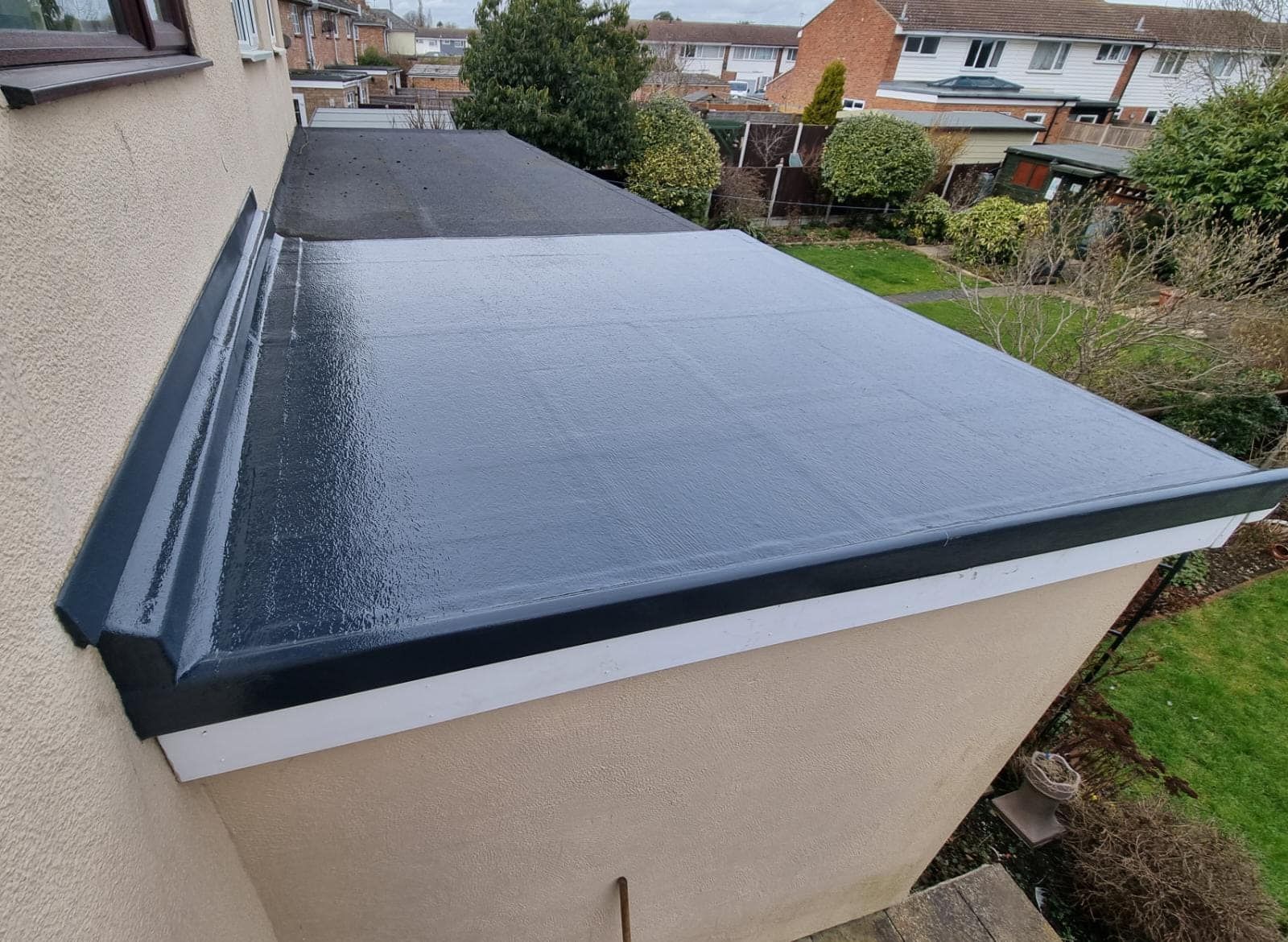
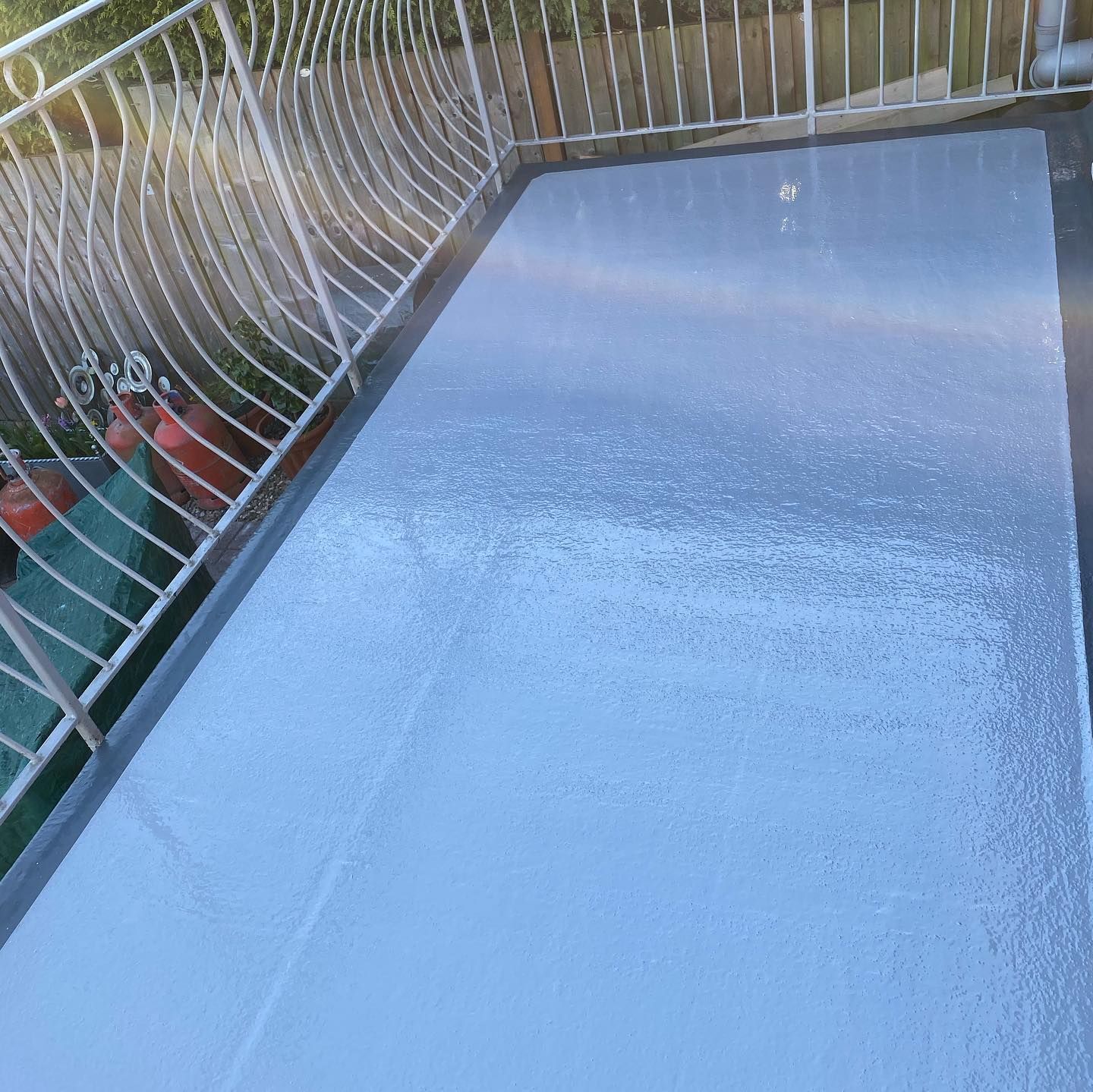
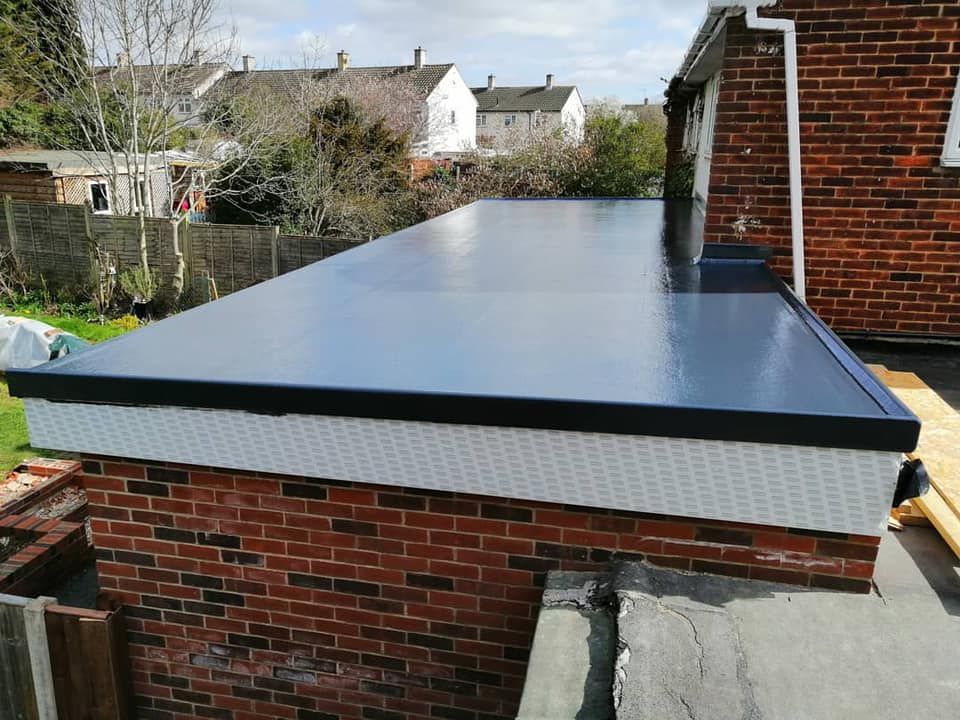
Derby gets significant autumn and winter rainfall. Older felt roofs develop seam failures and blistering when water works its way under the surface. GRP solves this by bonding directly to the deck and curing into one continuous membrane — there are no laps or overlaps for water to track through.
The most common causes of GRP failure in wet conditions are:
- Moisture during cure — laminating in wet weather prevents proper resin adhesion; we schedule installations around Derby's weather forecast
- Poor substrate prep — dust, damp, or contamination on the deck causes delamination
- Missing upstand detail — water ingress at roof edges and around roof lights, not through the flat field
- Topcoat applied too quickly — applying the topcoat before the laminate has cured leads to surface flaking and pinholes
Properties in Chaddesden and Spondon with older extensions are some of the most common jobs we see — aging felt systems that have started to pond and lift. GRP replaces those cleanly and bonds around roof lights, soil pipes, and edge upstands without gaps.
If you've noticed pooling water, blistering, or damp patches on your ceiling below a flat roof, it's time to get a free survey booked.
GRP vs EPDM: Which Flat Roof Is Right for Your Derby Property?
Both GRP and EPDM are solid flat roof options. The right choice depends on your roof's shape, use, and what matters most to you.
Where GRP Wins
- No seams — EPDM uses adhesive-bonded seams that can lift over time; GRP has none
- Harder surface — GRP handles light foot traffic and ladder contact better
- Cleaner finish — GRP looks better on visible roofs, bay windows, and balconies
- Better for complex shapes — GRP laminates neatly around upstands, angles, and roof lights
- Moss and algae resistant — unlike felt, GRP doesn't harbour organic growth
Where EPDM Wins
- Better for large, simple flat roofs where movement accommodation matters
- Faster to install on big commercial decks
- More forgiving of minor substrate imperfections
Derby's Victorian and post-war terraced houses often have smaller, detailed flat roofs — exactly where GRP performs best. For a large warehouse or factory roof, EPDM or single-ply systems may suit better. We'll tell you which is right after surveying your roof, not before.
Derby Homes and Extensions Are Well-Suited to GRP Flat Roofing
Much of Derby's housing stock — particularly the semi-detached and terraced properties across Littleover, Mackworth, and Oakwood — includes low-pitch or flat-roof extensions added in the 1960s through to the 1990s. These roofs were typically finished in torch-on felt. Many are now at or past the end of their useful life.
GRP is well-matched to these roofs because:
- It laminates over timber and OSB3 decks, which are standard in Derby's residential extensions
- It handles the smaller, detailed shapes typical of kitchen and dining room extensions
- It can be colour-matched to complement brick and render finishes common across Derbyshire
- It requires no regular retreatment — an annual visual inspection and gutter clean is enough
- It can be laid over an existing sound roof in some cases, reducing waste removal costs
We start every job with a full survey of your deck. If boards are rotten, we replace them before laminating. There's no point laying GRP over a failing substrate — the roof will fail early, and the deck will cost more to fix later.
GRP is also a popular choice for Derby landlords managing rental properties in areas like Normanton, Arboretum, and Alvaston — low maintenance means fewer call-outs over the years.
Walking on a GRP Fibreglass Roof — What You Need to Know
A standard residential GRP installation — two layers of fibreglass mat with a UV-stable topcoat — handles light foot traffic without damage. You can walk on it to clean gutters or inspect a soil pipe. It won't flex or dip under normal foot pressure the way an aging felt roof might.
For roofs that see more regular access — roof terraces, plant maintenance areas, or properties in Derby city centre where upper flat access is routine — we specify thicker fibreglass mat. An anti-slip grit finish can also be applied to the topcoat for balconies and walkways. Access boards are also recommended for frequent use on any flat roof, GRP included.
What GRP is not designed for: regular heavy foot traffic, concentrated point loads from ladders placed directly on the surface, or vehicle access. If your roof doubles as a terrace, tell us at the survey stage so we can spec accordingly.
How We Install GRP Fibreglass Roofing in Derby
Knowing what to expect makes the whole process less stressful. Here's how we work:
- Free roof survey — we inspect your existing deck, check for rot, assess upstands and drainage
- Deck preparation — any rotten or damaged boards are replaced; the surface is cleaned and dried
- Edge trims fitted — GRP trims are secured around the perimeter to create a clean, watertight edge
- Fibreglass mat and resin applied — layers are rolled out and consolidated to remove air bubbles
- Curing time — we wait for the laminate to fully cure before applying the topcoat
- UV-stable topcoat applied — finished in your chosen colour, this protects the roof from sun and frost
- Final inspection — we check upstands, edges, roof lights, and drainage points before signing off
Most residential GRP installations in Derby are completed in one to two days, depending on size and deck condition.
GRP Fibreglass Roof Repairs in Derby
Not every GRP problem requires a full replacement. If your fibreglass roof is cracking, showing pinholes, or has a section of delamination, a targeted repair is often all that's needed.
Common GRP repair jobs we handle across Derby:
- Topcoat cracking or flaking — caused by thermal expansion on poorly installed roofs; the affected area is cut out and re-laminated
- Pinholes in the surface — a fresh coat of resin seals small holes before they develop into leaks
- Delamination — where the GRP has lifted from the deck; we remove the affected section and re-bond
- Edge trim failure — perimeter trims can lift over time; we re-secure and re-seal
- Ponding water — if standing water is pooling, we assess whether firring pieces or re-grading the deck will resolve it
If you're unsure whether you need a repair or a full replacement, our free survey will give you a clear, honest answer — no upselling.
Frequently Asked Questions About GRP Fibreglass Roofing
How long will a GRP fibreglass roof last on a Derby home?
A correctly installed GRP roof in Derby typically lasts between 30 and 50 years. Derby's freeze-thaw winters and warm summers create thermal movement — proper deck prep and expansion joints at the edges are what allow GRP to handle that movement without cracking.
Is GRP fibreglass roofing right for my Derby garage or extension?
GRP is well-suited to garages, kitchen extensions, bay windows, and outbuildings — the smaller, detailed flat roofs common across Derby properties. We survey your deck condition first; if the boards are sound, GRP is usually the best long-term solution.
Can I walk on my GRP fibreglass roof after installation?
Light foot traffic is fine on a standard two-layer GRP installation. For roof terraces or areas with regular access, we specify a heavier fibreglass mat build-up and can advise on access boards to protect the surface.
What happens if my GRP roof gets wet before it cures?
Moisture during curing prevents the resin from bonding correctly to the deck. This causes delamination and early failure. We only laminate in dry conditions and check Derby's weather forecast before scheduling installation days — this is not optional, it's part of doing the job properly.
How is GRP different from the EPDM rubber roof I've been quoted?
GRP is a rigid, hard-surfaced laminate with no seams. EPDM is a flexible rubber membrane bonded with adhesive seams. Both waterproof effectively. GRP suits smaller, detailed roofs and visible finishes; EPDM suits large, simple decks. We'll recommend the right system for your specific roof after the survey.
Do I need planning permission for a GRP flat roof in Derby?
A like-for-like flat roof replacement on an existing structure rarely needs planning permission in Derby. If you're adding a new extension or altering the roofline, permitted development rules apply and we'll advise at the survey stage. Derbyshire's conservation areas may have additional requirements — we flag these as part of the assessment.
How do I know if my flat roof needs replacing or just repairing?
Signs your flat roof needs replacing include widespread cracking, large areas of delamination, persistent leaks after repairs, or a roof that's over 25 years old and showing visible deterioration. Single-point damage, small cracks, or isolated pinholes are usually repairable. Our free survey will give you a straight answer.
How long does it take to install a GRP fibreglass roof in Derby?
Most domestic GRP installations — a garage, extension, or bay window roof — take one to two days. Larger or more complex jobs may take longer, particularly if deck boards need replacing. We'll give you a clear timeframe when we survey.
Does moss grow on a GRP fibreglass roof?
No. Moss and algae cannot take hold on a cured GRP surface the way they do on felt or concrete tiles. This is one of the practical advantages of GRP over traditional flat roofing materials in Derbyshire's damp climate.
Are GRP fibreglass roofs waterproof?
Yes, GRP fibreglass roofs are waterproof. This is because the material has a membrane coating that prevents water infiltration and helps keep the roof area dry. The membrane also adds strength to the roof structure while increasing its fire resistance.
Can repairs be made to GRP Roofing?
Yes, GRP can be repaired. Many of the components used for creating GRP structures are non-rusting and will not corrode - meaning that repairs to any damage caused by wear or exposure to extreme weather conditions can be easily done. Depending on the severity of the damage, roof repair may range from simple patching to completely replacing damaged parts. As GRP is a strong and durable material, it can easily be restored to its original condition after repair work.
However, it’s important that the most appropriate techniques are used when carrying out repairs - including using correct
roofing products that are specifically designed for use with GRP materials. When done correctly, this can help ensure that any repair jobs will last for many years. In some cases, it may be necessary to enlist the services of a professional in order to ensure that repairs are done properly and safely. Regardless of how experienced you are when it comes to DIY projects, seeking professional help can provide peace of mind and ensure that the job is done right. With the right approach, fibreglass material can be repaired and restored to its former glory.
Areas We Work — GRP Fibreglass Roofing Across Derby & Derbyshire
Derby Roofers proudly serves homeowners and businesses throughout Derby city and the wider Derbyshire area. Our local teams cover:
Derby City Areas:
- Derby City Centre (DE1)
- Allestree, Mackworth & Quarndon (DE22)
- Mickleover (DE3)
- Littleover & Normanton (DE23)
- Chaddesden, Oakwood & Spondon (DE21)
- Alvaston, Crewton & Osmaston (DE24)
Surrounding Derbyshire Towns & Villages:
- Belper (DE56)
- Ripley (DE5)
- Ilkeston (DE7)
- Heanor (DE75)
- Swadlincote (DE11)
- Ashbourne (DE6)
- Matlock (DE4)
- Borrowash & Draycott (DE72)
- Etwall & Hilton (DE65)
- Melbourne & Chellaston (DE73)
- Duffield & Little Eaton (DE56 / DE21)
- Breadsall & Darley Abbey (DE21 / DE22)
- Long Eaton (NG10)
- Castle Donington (DE74)
Not sure if we cover your area? Call us on 01332-529704 and we'll be happy to help.
Ready to Get Your GRP Fibreglass Roof Sorted in Derby?
If your flat roof is leaking, aging, or you're planning an extension and want a roofing system that will genuinely last — GRP fibreglass is worth a serious look.
Here's what happens next:
- Call us on 01332-529704 or fill in our contact form at derbyroofers.co.uk/contact
- We book a free, no-obligation roof survey at a time that suits you
- You receive a clear, written quote — no pressure, no surprises
- We schedule your installation around a dry weather window
Derby Roofers has been working on Derbyshire roofs for over 20 years. We know the housing stock, the weather, and what lasts.
Call us today and let's get your roof sorted.