Derby Roofers
01332-529704
Flat Roof Problems: Common Causes, Costs, and When to Call a Roofer in Derby
Flat roofs are everywhere across Derby and Derbyshire. Extensions in Chaddesden, garages in Mickleover, bay windows in Normanton — they are part of the housing stock here. And when a flat roof develops a problem, it rarely fixes itself.
A small damp patch on your ceiling can be the first sign. Left alone, that patch grows. Water works its way into the deck, the insulation, and eventually the structure below. What starts as a £200 repair can become a £2,000 job inside a single Derby winter.
This guide covers the most common flat roof problems we see across Derby, what causes them, how much repairs typically cost, and when to call a professional. If you want an honest assessment of your specific roof, call Derby Roofers on 01332-529704 — we offer a free drone roof survey with no obligation.
Why Do Flat Roofs Cause Problems in Derby?
Flat roofs are not inherently flawed. A well-installed flat roof with the right materials will protect your Derby home for decades. Problems arise from a combination of factors — and Derby's climate is one of the biggest.
Derby sits in the East Midlands with damp autumns, cold winters, and wet springs. Freeze-thaw cycles through December, January, and February put real stress on flat roof membranes. Water gets into a small crack, freezes overnight, and widens the gap. By spring, you have a leak.
Temperature swings also cause membranes to expand and contract. Over years, this movement weakens seams and pulls flashings away from walls. Derby properties with south-facing extensions see this accelerated by sun exposure in summer, followed by hard frosts in winter.
The other major cause is poor original installation. A flat roof must have a slight fall — a gentle slope toward the drainage outlet. Without it, water pools. Pooled water adds weight, stresses the membrane, and finds every weak point. We regularly inspect Derby roofs where the original contractor did not get the fall right, and the homeowner has been dealing with ponding water ever since.
Derby's housing stock adds its own challenges. Post-war extensions in Spondon and Chaddesden often have original felt roofs now well past their expected lifespan. Victorian terraces in Normanton frequently have small bay window roofs with lead or felt that has never been replaced. Garages in Allestree and Littleover are among the most common flat roof call-outs we receive. Knowing the local housing type helps us diagnose problems quickly — and that local knowledge is something a national roofing call centre simply does not have.
The 6 Most Common Flat Roof Problems
The most common flat roof problems we find on Derby properties are:
1. Leaks and water ingress Water coming through the ceiling is the clearest sign of a flat roof failure. The entry point is often not directly above the stain — water travels along joists and deck boards before it drips. A proper inspection is the only way to find the true source.
2. Ponding water Water should drain from a flat roof within 48 hours of rainfall. If you can see a puddle on your roof two days after rain, your roof has a drainage problem. This might be a blocked outlet, a sagging deck, or an incorrect fall from the original installation. Ponding water accelerates membrane breakdown and adds stress to the structure below.
3. Blistering and bubbling Blisters form when moisture or air becomes trapped beneath the membrane. On older felt roofs across Derby, this is a very common sight. Small blisters are not always urgent. Once they begin to crack or pop, water gets in and the damage spreads fast.
4. Cracked or splitting membrane Felt and modified bitumen membranes become brittle over time. UV exposure, thermal movement, and age all cause cracking and splitting. Once the membrane splits, there is a direct route for water into the deck and insulation below.
5. Failed flashings Flashings seal the joint where your flat roof meets a wall, parapet, or chimney stack. On Derby properties, lead and mortar flashings around chimney stacks and dormer walls are a frequent source of leaks. Flashings can lift, crack, or pull away from the surface over time. This is often repairable without a full roof replacement.
6. Blocked drains and gutters Autumn in Derbyshire means falling leaves, and flat roofs collect them quickly. A blocked outlet stops the roof from draining. Water backs up, sits on the membrane, and eventually finds a way in. Clearing your flat roof drainage outlets in October and again in March is one of the most effective things you can do to extend your roof's life.
If you have spotted any of these signs on your Derby property, contact Derby Roofers for a free assessment. Call 01332-529704 or visit derbyroofers.co.uk/contact-derby-roofers
How Long Should a Flat Roof Last?
The lifespan of a flat roof depends on the material and the quality of installation. Here is a realistic guide for Derby conditions:
Traditional felt (built-up): 10–20 years — best for garages and outbuildings Modified bitumen (torch-on): 15–25 years — common on garages and commercial roofs GRP fibreglass: 20–30 years — ideal for extensions and bay windows EPDM rubber: 25–40 years — excellent for extensions and garages Single ply PVC/TPO: 30–40+ years — preferred for commercial flat roofs
Derby's freeze-thaw winters are particularly hard on older felt roofs. A felt roof that may have lasted 20 years in a milder southern climate often shows failure signs closer to 12–15 years on an exposed Derby property.
The single biggest factor in how long your flat roof lasts — more than the material — is the quality of the original installation. We regularly survey Derby roofs where a cheap job has failed within five years. A correctly installed EPDM or GRP roof, on the other hand, will handle Derby weather without issue for decades.
If your flat roof has needed multiple repairs in a short period, that is usually a sign of system failure rather than isolated damage. At that point, repair is no longer the cost-effective route.
Felt, EPDM, or GRP Fibreglass — Which Is Best?
There is no single answer. The right material depends on your roof, your budget, and how you use the space.
Felt (torch-on / built-up) The lowest upfront cost and the shortest lifespan. Fine for a Derby garage or outbuilding where budget is the main priority. Not our recommendation for a habitable extension or any roof you want to last 20+ years.
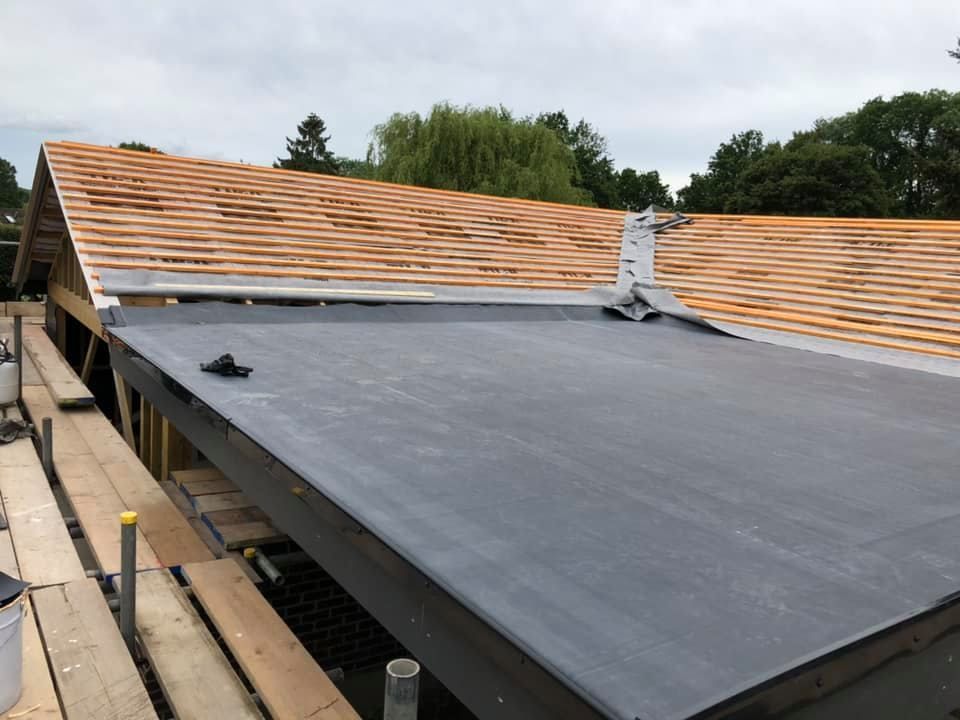
EPDM rubber A flexible synthetic rubber membrane that handles Derby's temperature swings and wet winters very well. Cold-applied during installation, so no flame is needed near your property. EPDM suits large, simple deck shapes — extensions, garages, and commercial flat roofs. With correct installation, EPDM lasts 25–40 years. This is our most commonly recommended material for domestic flat roofs across Derby.
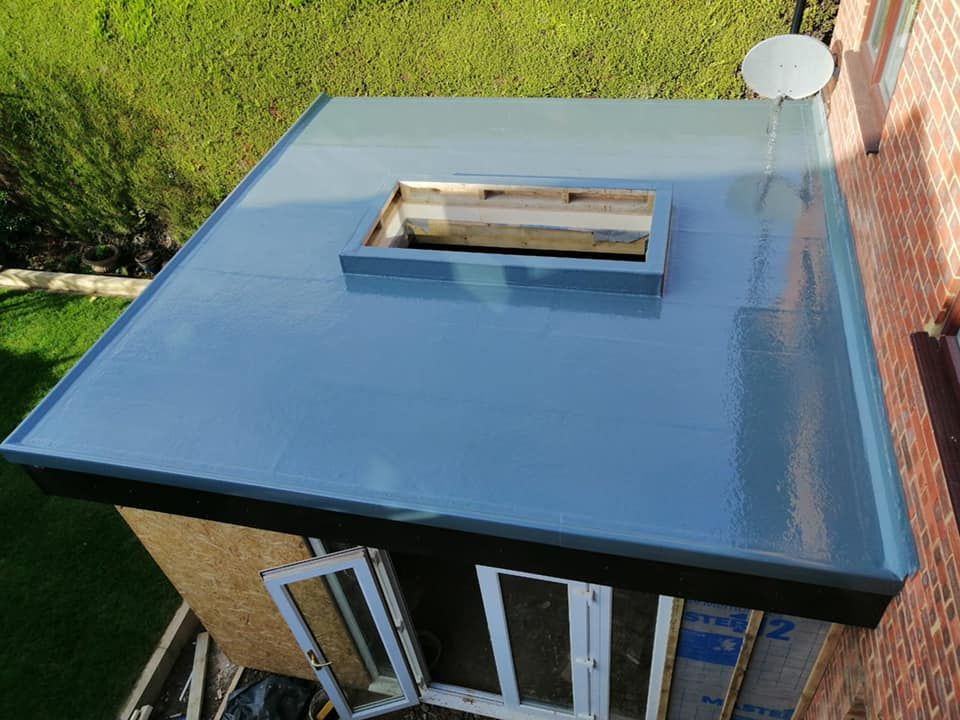
GRP fibreglass A rigid, seamless surface that looks clean and professional. GRP is the best choice for small, detailed roofs — bay windows, complex shapes, roofs with upstands and pipe penetrations. It does not support moss or algae growth, which matters on Derbyshire properties surrounded by trees. A correctly installed GRP roof lasts 20–30 years and requires very little maintenance.
One important note on GRP: installation conditions matter. GRP cannot be laminated in wet weather or below a certain temperature. We only schedule GRP installations on confirmed dry days — this is not optional, it is how the job is done properly.
Building Regulations require a warm roof construction for any new flat roof installation or replacement of more than 25% of the existing deck. A warm roof places the insulation above the structural deck, preventing condensation and meeting current Part L energy efficiency standards. We advise you on Building Regs compliance as part of every free survey.
How Much Does Flat Roof Repair or Replacement Cost in Derby?
Flat roof costs vary depending on the size of the roof, the material, the condition of the existing deck, and access. These are realistic Derby price guides for 2025:
Repairs:
- Patch repair (blister, small split): £150–£400
- Flashing repair or replacement: £200–£500
- Section replacement (1–3 m²): £400–£800
- Blocked outlet clearance and minor reseal: £100–£200
Full Replacement:
- Small porch or bay window (up to 5 m²): £600–£1,500
- Garage or standard extension (15–30 m²): £1,500–£4,500
- Larger residential flat roof (30–60 m²): £4,000–£8,000+
These figures include materials and labour. Additional costs to budget for:
- Deck replacement — if the existing boards are rotten or soft, they must be replaced before the new membrane goes on. This is common on Derby properties with older felt roofs.
- Scaffolding — required for two-storey or difficult-access roofs. Add approximately £300–£600 per week.
- Insulation upgrade — if Building Regs Part L applies to your project, a new insulation layer is needed.
One thing we hear regularly from Derby homeowners is that they received a quote without anyone visiting the property. That is a red flag. No roofer can accurately price a flat roof job without inspecting the deck condition, the drainage setup, and the existing flashings. We survey every job before quoting, and we use our drone for roofs that are difficult to access safely.
For a free, no-obligation quote on flat roof repairs or replacement in Derby, call 01332-529704.
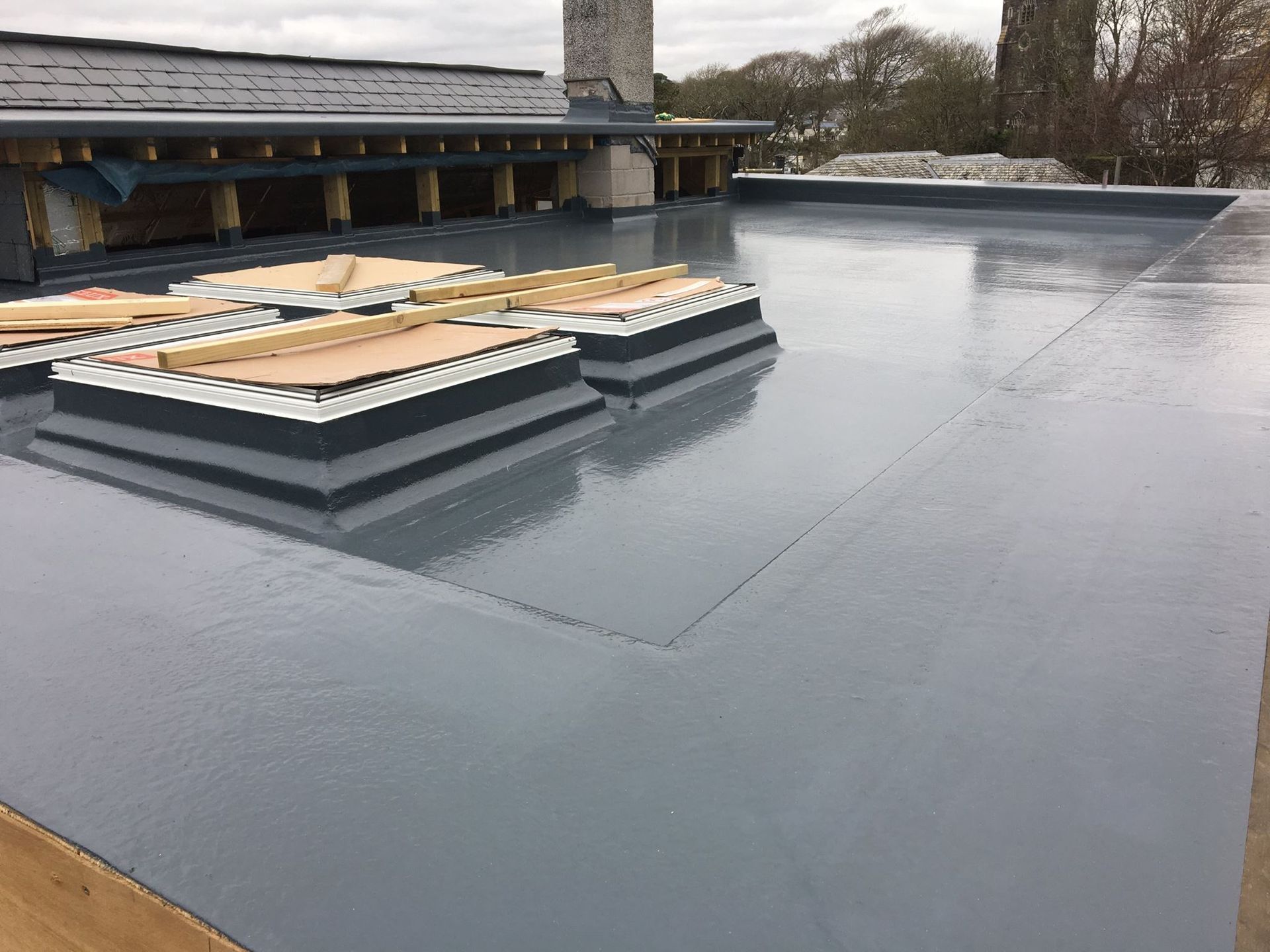
Should You Repair or Replace Your Flat Roof?
Consider a repair if:
- The damage is localised to one area
- The roof deck feels firm with no soft spots
- The roof is under 12–15 years old (felt) or under 20 years old (EPDM/GRP)
- You have not had repeat leaks from the same area
Consider a replacement if:
- Leaks are recurring or appearing in multiple locations
- The deck has soft or spongy areas when walked on
- Large sections of the membrane are cracked, blistered, or separating
- Your roof is over 20 years old and has never been replaced
- The original installation was poor quality and repairs have not held
A useful rule of thumb: if the cost of a repair is more than half the cost of a full replacement, the replacement usually offers better long-term value. A new flat roof also gives you the opportunity to upgrade insulation, correct the drainage falls, and start with a fresh warranty — up to 20 years with Derby Roofers.
Does a flat roof replacement need Building Regs approval in Derby? In most cases, a like-for-like repair does not. If you are replacing more than 25% of the existing roof deck, Building Regs Part L requires an insulation upgrade. Planning permission is not normally needed for a flat roof replacement in Derby. However, if your property is in a conservation area — such as parts of Derby city centre or Darley Abbey — or is a listed building, additional checks may apply. We advise you on this at the survey stage.
Is a Flat Roof Covered by Home Insurance — and When Should You Call a Roofer?
Insurance
Most home insurance policies will cover sudden, accidental damage to your flat roof — storm damage after high winds, or impact from a fallen tree branch. Gradual wear and tear, poor maintenance, and pre-existing defects are typically excluded.
Flat roofs can also affect your insurance premium or the terms of your policy. If your home has a flat roof, declare it when taking out cover and confirm the insurer's expectations around maintenance and inspection frequency. Some insurers require flat roofs to be inspected and maintained by a qualified contractor at regular intervals.
If your flat roof is damaged in a storm, report it to your insurer promptly. Document the damage with photographs before any emergency work is carried out.
When to call a roofer immediately:
- You have an active leak during rain
- You can see daylight through your ceiling or into the roof space
- Large areas of standing water are present after heavy rain
- The ceiling feels soft or is showing signs of structural stress
- You have had storm damage — fallen branches, displaced flashings
When to book a routine inspection:
- Once a year as a minimum — we recommend spring and autumn
- After any significant storm event in Derby or Derbyshire
- Before purchasing a property with a flat roof
- If your flat roof is approaching the end of its expected lifespan
Derby Roofers offers free drone roof surveys for new enquiries across Derby and Derbyshire. Our drone gives you a clear view of your flat roof without the need for scaffolding or ladders. You receive a written report and honest recommendations — with no obligation to proceed.
Call 01332-529704 or visit derbyroofers.co.uk/flat-roofing-derby to book your free survey.
Frequently Asked Questions — Flat Roof Problems in Derby
Why does my flat roof keep leaking? Repeat leaks on a Derby flat roof usually point to one of three things: failed flashings where the roof meets a wall or chimney, a membrane that has aged beyond repair, or an incorrect original fall that causes water to pool and find a weak point. A single localised repair can fix a one-off leak, but if the problem keeps returning, a full inspection is needed to assess whether the whole system needs replacing.
How long should a flat roof last in the UK? A flat roof's lifespan depends on the material: traditional felt lasts 10–20 years, GRP fibreglass 20–30 years, and EPDM rubber 25–40 years. In Derby's climate, poorly maintained felt roofs often fail earlier than their rated lifespan. A correctly installed modern flat roof system, properly maintained, will give you decades of trouble-free performance.
What is the best flat roof material in the UK? For most domestic properties in Derby — extensions, garages, and bay windows — EPDM rubber and GRP fibreglass are the two strongest choices. EPDM suits large, simple shapes and handles thermal movement well. GRP suits smaller, detailed roofs and complex shapes. For commercial flat roofs, single ply PVC membranes are often preferred. We recommend the right system for your specific roof after a free survey.
How much does it cost to repair or replace a flat roof in Derby? Minor flat roof repairs in Derby typically start from around £150–£400. A full flat roof replacement on a garage or standard extension generally runs from £1,500 to £4,500 depending on size, material, and deck condition. We provide itemised written quotes before any work starts — no hidden costs.
What causes water to pool on my flat roof — and is it dangerous? Ponding water is caused by blocked drainage outlets, a sagging deck, or an insufficient fall on the original installation. Standing water adds weight to the roof structure, accelerates membrane breakdown, and increases the risk of leaks. Water pooling for more than 48 hours after rainfall means something needs attention.
Should I repair my flat roof or replace it completely? Repair is the right choice when damage is localised, the deck is structurally sound, and the roof is not approaching the end of its lifespan. Replacement makes more sense when leaks are widespread or recurring, the deck is soft or rotten, or the roof is over 20 years old. If you are not sure, a free survey from Derby Roofers will give you a straight answer — we never push replacement when a repair will do the job.
Does a flat roof replacement require building regulations approval in Derby? A like-for-like repair does not usually require Building Regs approval. Replacing more than 25% of the roof deck requires compliance with Part L, meaning a warm roof insulation upgrade. Planning permission is not normally needed for flat roof replacements in Derby, but conservation area or listed building restrictions may apply. We advise on all of this at the survey stage.
Is a flat roof covered by home insurance in the UK? Most policies cover sudden accidental damage — storm damage, fallen branches, and similar events. Gradual wear and tear is typically excluded. If your flat roof is damaged, report it to your insurer quickly and document it with photographs. Some insurers ask for flat roofs to be maintained and inspected regularly by a qualified contractor.
How often should a flat roof be inspected and maintained? We recommend inspecting a flat roof at least once a year, ideally in spring and autumn. Clearing drainage outlets before winter is one of the most important maintenance tasks for any Derby flat roof. After significant storms or extended periods of heavy rain, a visual check is also advisable. Derby Roofers offers annual inspection plans for landlords and commercial property managers across Derbyshire.
What are the signs that my flat roof is failing and needs urgent attention? The main warning signs are: active leaks during rain, damp patches or staining on ceilings below the roof, visible cracking or blistering across large areas of the membrane, water pooling that does not drain, soft or spongy areas on the deck surface, or flashings that are visibly lifting or cracking. If you are seeing any of these on your Derby property, call us on 01332-529704 for a free inspection.
Ready to get your flat roof assessed by a local Derby specialist?
Derby Roofers has been working on flat roofs across Derby and Derbyshire for over 20 years. We offer free drone roof surveys, honest diagnosis, and no-obligation written quotes. No subcontractors. No pressure. Just clear, practical advice from a local team who knows Derby roofs.
Call: 01332-529704
derbyroofers.co.uk/flat-roofing-derby
info@derbyroofers.co.uk Derby Roofers · Loscoe Grange, Loscoe, Heanor, DE75 7JY