Derby Roofers
GRP Fibreglass Roof Specialists
Call us now book a FREE consultation and FREE Quotation
FREE Drone Survey Available
Call: 01332-529704
GRP Fibreglass Roof vs Felt vs EPDM Rubber: Which Is Best for Derby Homeowners?
A large proportion of Derby's housing stock — from post-war semis in Chaddesden and Spondon to terraced properties near the Arboretum — was built with flat-roofed garages and rear extensions as standard. Most of those roofs were finished in bitumen felt. Felt has a design life of 10–15 years. Many of these roofs are now 40–60 years old.
If you are reading this, there is a good chance you are looking at a flat roof that has been repaired more than once and is ready for proper replacement. The question most Derby homeowners ask at this point is which material to choose: GRP fibreglass, EPDM rubber, or felt.
This guide gives you a straight comparison of all three — covering real costs, realistic lifespans, and how each system performs in Derby's specific conditions. We also cover two topics that no other local roofing contractor is addressing: whether a flat roof upgrade can improve your EPC rating, and whether GRP makes a cracking noise — a question that keeps coming up on forums and is worth answering honestly.
Contents: The Three Contenders · Lifespan Compared · Flat Roof Costs in Derby · How Derby's Climate Affects Your Choice · Which System Is Right for Your Specific Roof? · Repair or Replace? · Two Things Most Derby Roofers Won't Tell You · Frequently Asked Questions
What is the best flat roof material for Derby homes — GRP fibreglass, EPDM rubber, or felt?
For most Derby homeowners, GRP fibreglass is the strongest choice. It is fully seamless, handles Derby's freeze-thaw winters without cracking at joints, resists foot traffic, and carries a 25–40 year lifespan. EPDM rubber is a reliable alternative — particularly on larger, simpler roofs — and stays flexible in cold conditions.
Felt is the lowest cost upfront but has the shortest lifespan of the three and performs worst in Derbyshire winters. The right choice depends on your roof's size, shape, and how long you plan to stay in the property.
➡ Not sure which system suits your Derby roof? Book a free flat roof survey with Derby Roofers — no obligation, no pressure.
The Three Contenders — What GRP, EPDM, and Felt Actually Are
Before comparing them, it helps to understand what you are actually buying.
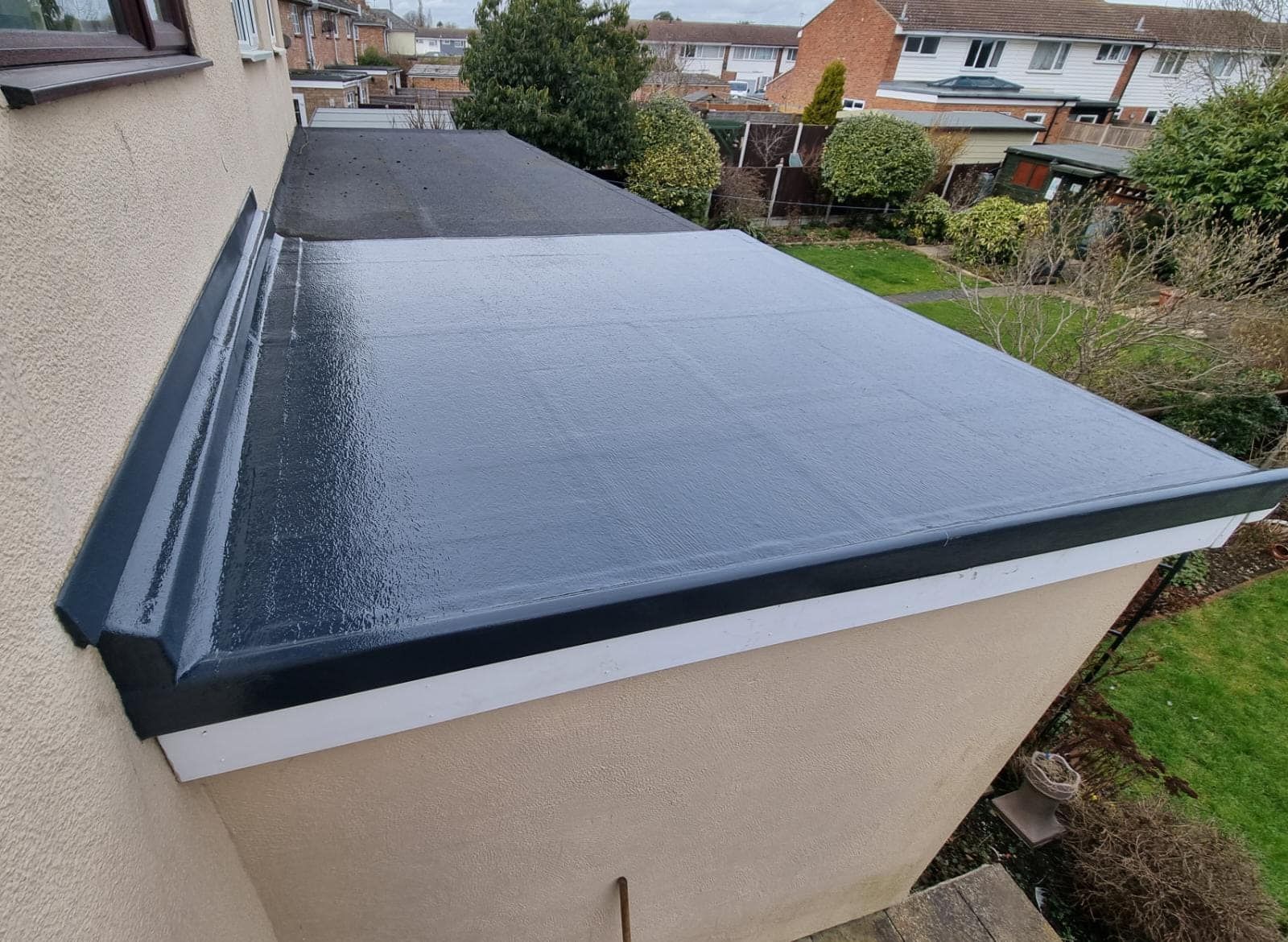
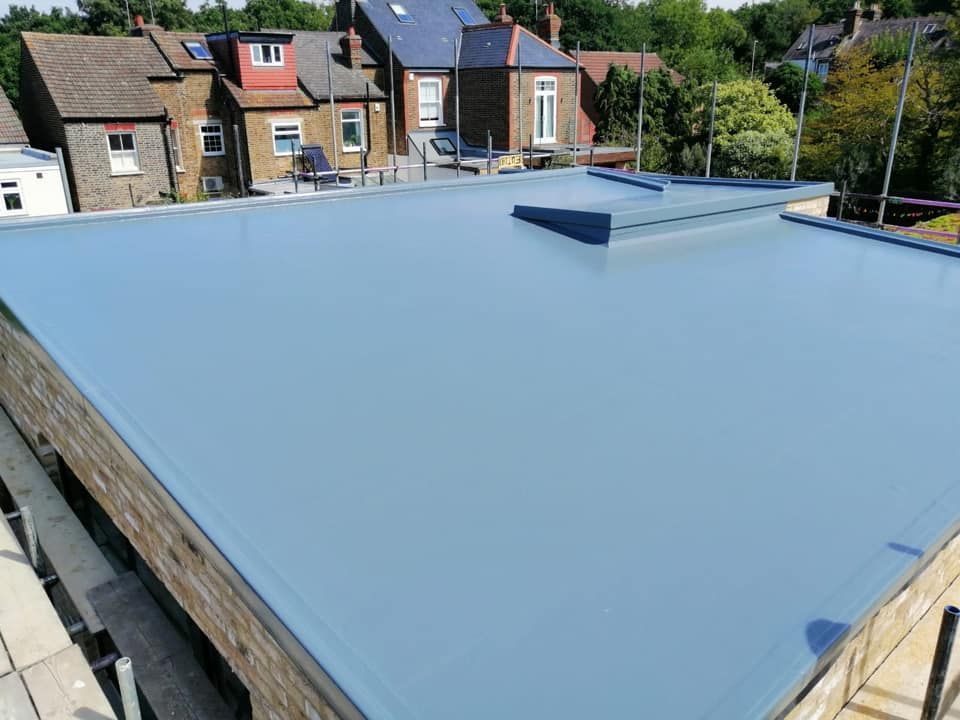
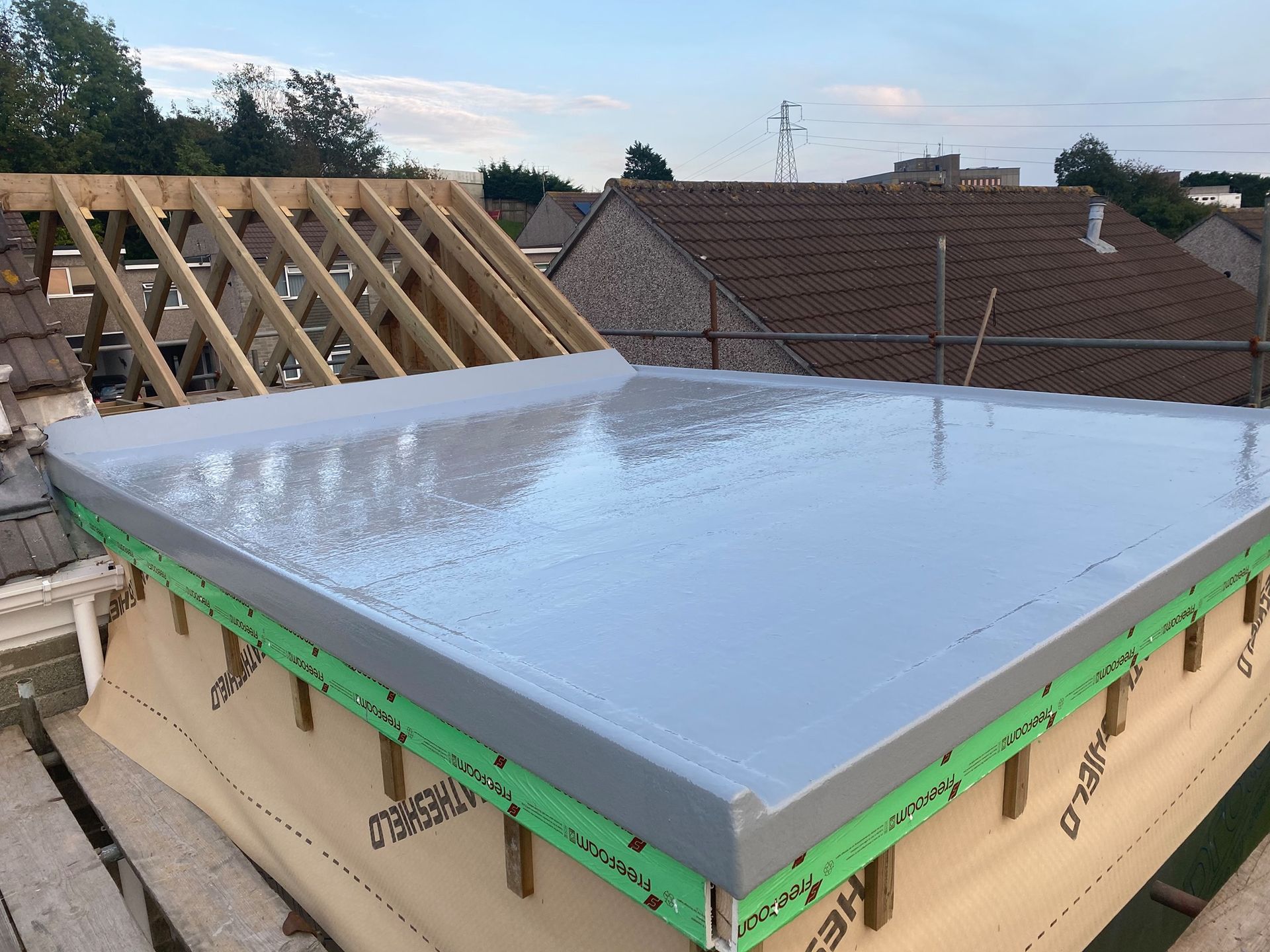
GRP (Glass Reinforced Plastic) — also called fibreglass roofing — is built from layers of glass fibre matting saturated in polyester resin. It cures into a single, hard, seamless shell. There are no laps or overlaps. The same base material has been used in boat hulls and water tanks for decades.
EPDM (Ethylene Propylene Diene Monomer) is a single-ply rubber membrane bonded to the roof deck with cold-applied adhesive. No heat or open flame is needed. The membrane stays flexible in very low temperatures, which matters in a Derbyshire winter.
Felt (torch-on bitumen) is the traditional option. It uses multiple layers of bitumen-impregnated material, bonded using a gas torch. It has been the standard flat roof covering on UK homes since the 1960s. Modern polymer-modified versions perform better than older three-layer systems, but lifespan still falls short of GRP and EPDM.
One thing applies to all three: material quality alone does not determine how long your roof lasts. In our experience working across Derby for over 20 years, the biggest factor in early failure is deck preparation — not the product on top. A well-installed felt roof will outlast a poorly installed GRP every time.
Which System Is Right for Your Specific Roof?
The material comparison is useful, but it only gets you so far. The right system also depends on what your roof is, how it is used, and what your deck is made of.
Garages
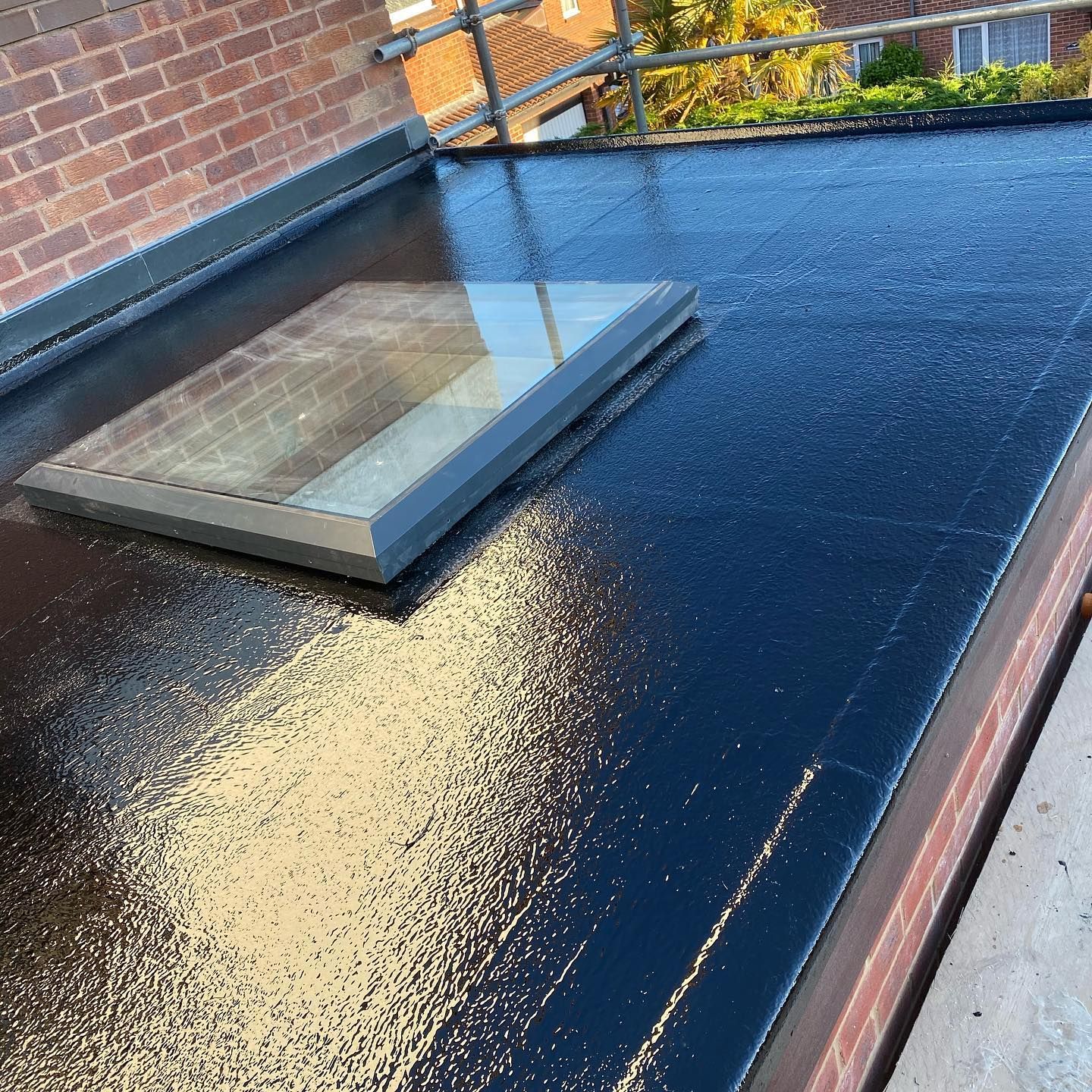
For a standard garage roof — a simple, single-level flat deck with no foot traffic — both GRP and EPDM perform well. EPDM is slightly more cost-effective on larger open spans; GRP is better where the roof has multiple upstands, internal angles, or a roof light. For garages that will occasionally be walked for maintenance, GRP's harder surface has an advantage.
House Extensions and Kitchen Roofs
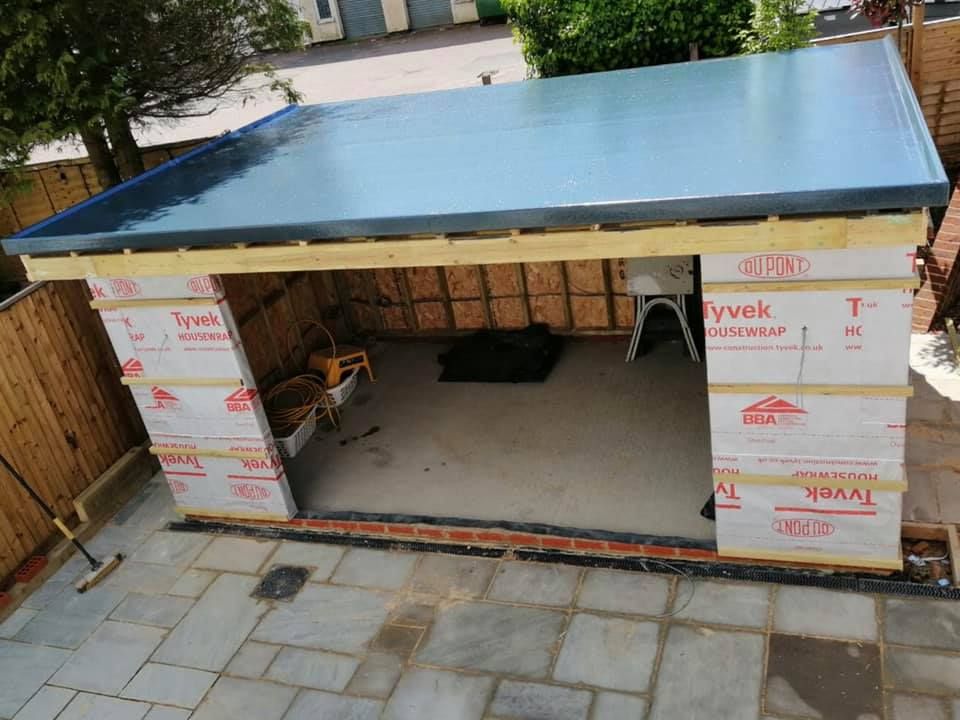
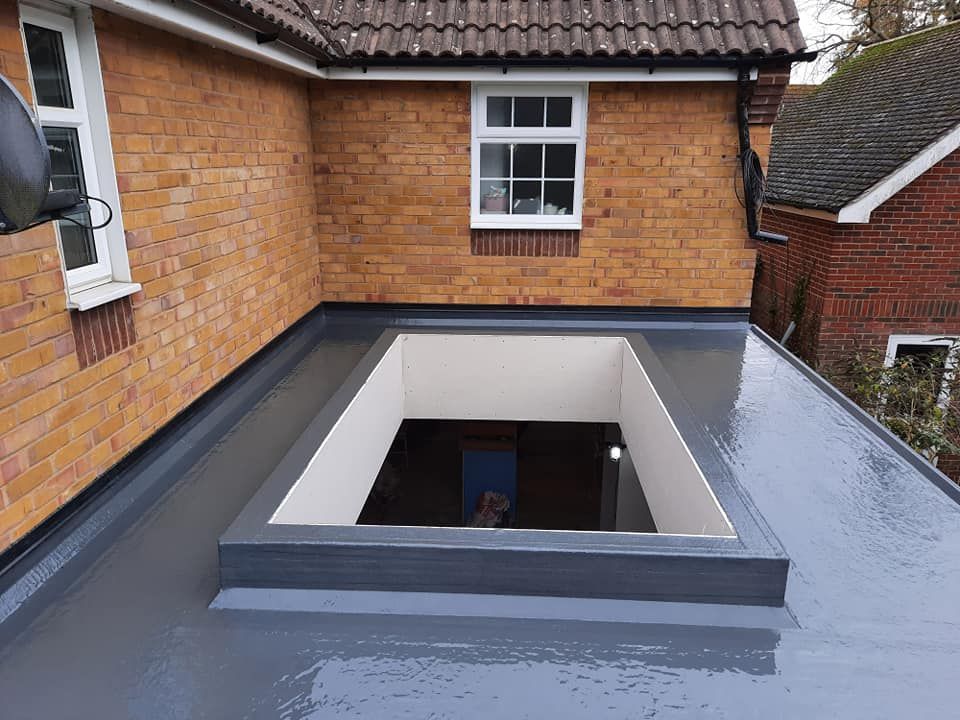
GRP is our preferred system for kitchen and dining room extensions across Derby. The reason is detailing. Extensions typically involve roof lights, soil pipe penetrations, internal corners, and upstands where the roof meets an external wall. GRP laminates neatly around all of these without gaps. EPDM can handle them too, but GRP's rigid finished surface sits flatter against these details and is easier to inspect visually.
Balconies and Accessible Roofs
GRP only. EPDM and felt are not designed for regular foot traffic. If your flat roof doubles as a terrace or walkway, GRP with an anti-slip grit finish in the topcoat is the right choice. We specify a heavier fibreglass mat build-up for these applications.
When Felt Is Still Appropriate
Felt remains a reasonable choice for outbuildings, sheds, and garages where budget is the primary driver and the structure does not need to last more than 15–20 years. For a main house extension that you want to perform for three or four decades without callbacks, felt is not the sensible option.
Can You Lay a New Roof Over an Existing One?
No — not as standard practice. Laying new material over an old felt roof masks any deck rot underneath and will void the warranty on the new system. We strip the old material first on every job and inspect the deck before deciding what goes back down. There is no way to know what condition the deck is in without removing the old covering first.
Quick decision guide:
- Standard garage — GRP or EPDM. Both perform well; GRP for complex details.
- Kitchen or dining extension — GRP. Best for roof lights and upstand detailing.
- Balcony or accessible roof — GRP with anti-slip topcoat. Only system suitable for regular foot traffic.
- Large commercial flat roof — EPDM or single-ply. Better for large spans and movement tolerance.
- Shed or outbuilding on a budget — Felt. Acceptable where lifespan is not a priority.
See our GRP fibreglass roofing service in Derby — full details on materials, installation, and areas we cover: www.derbyroofers.co.uk/fibreglass-roof-derby
Two Things Most Derby Roofers Won't Tell You
Will a New Flat Roof Improve Your EPC Rating?
Your EPC (Energy Performance Certificate) rating affects how easy your property is to sell, how much you can borrow against it, and how it performs against the government's coming minimum energy standards. Most Derby roofers talk about waterproofing. Almost none talk about EPC.
Here is the connection. When replacing a flat roof, you have a choice between two build-ups:
Cold roof — insulation sits between the joists beneath the deck. This was the standard on pre-1980s properties across Derby. It is less effective thermally and prone to condensation on the underside of the deck.
Warm roof — rigid insulation board sits above the structural deck and beneath the waterproofing membrane. This is now the Building Regulations standard for new and replacement flat roofs in most cases. It prevents condensation, delivers better thermal performance, and can contribute to an improved EPC band.
Current Building Regulations (Part L, England) require insulation to be upgraded when replacing more than 25% of a flat roof. If you are replacing a whole garage or extension roof, this applies to you.
The extra cost of upgrading to a warm roof build at the same time as your flat roof replacement is modest compared to the cost of doing it as a separate project later. We price both options — warm roof and cold roof — on every flat roof survey we carry out in Derby, so you can make an informed decision.
Why I Chose GRP Fibreglass for My Derby Home
Customer: Bradley Kay.
Semi-detached property, Mickleover, Derby. Rear kitchen extension flat roof replacement.
Our kitchen extension roof had been patched twice in five years. Every winter, the same damp patch appeared on the ceiling below. We knew it needed replacing properly this time.
Derby Roofers came out and surveyed the deck before giving us any price. They found the boarding underneath was soft in two areas — something the previous roofer had never mentioned. They replaced the damaged boards, then laid the GRP fibreglass over a fresh deck.
We had three quotes. One was for felt, one for EPDM rubber, and Derby Roofers recommended GRP. They explained that our roof had a roof light and two internal corners — details that GRP handles more cleanly than rubber. The price was higher than felt, but the cost-per-year argument made sense when they laid it out.
That was two winters ago. No leaks, no callbacks, no noise issues. The finish looks better than the old felt ever did.
We chose GRP because it was the right material for our specific roof — and because someone actually surveyed it properly before telling us what we needed.
Frequently Asked Questions About Flat Roofs in Derby
What is the best flat roof material for a Derby home?
GRP fibreglass is our recommendation for most Derby homes. It is seamless, handles Derby's freeze-thaw winters without joint failures, and has a 25–40 year lifespan. EPDM rubber is the better choice on larger or simpler flat roofs, and on commercial buildings. Felt remains appropriate for sheds and outbuildings where cost is the main driver.
How long does a GRP fibreglass roof last in Derby?
A correctly installed GRP fibreglass roof in Derby typically lasts between 25 and 40 years. Derby's seasonal temperature swings and winter frosts create thermal movement — proper deck preparation, correct resin grades, and expansion joints at the perimeter are what allow GRP to handle that movement without cracking. We do not cut corners on these details.
Which flat roof system handles Derby's winters best?
EPDM rubber and GRP fibreglass both handle Derby's winters well. EPDM is the most flexible and tolerates freeze-thaw cycles without cracking. GRP has no seams to fail, which removes the most common failure point in cold weather. Both significantly outperform felt in Derbyshire winters. Felt seams and lap joints are vulnerable to the freeze-thaw pattern that Derby's inland climate produces each year.
Can I walk on my GRP fibreglass roof?
Light foot traffic — for gutter cleaning or visual inspection — is fine on a standard two-layer GRP installation. For roof terraces, balconies, or areas with regular access, we specify a heavier mat build-up and can apply an anti-slip grit finish to the topcoat. Tell us at survey stage how the roof will be used, and we will specify accordingly.
Is a GRP or EPDM roof better for a Derby garage?
For most Derby garages — a simple flat deck with no regular foot traffic — both GRP and EPDM are solid long-term choices. GRP handles complex details better; EPDM is more cost-effective on large open spans. If the garage has a roof light, an internal corner, or any upstand detail, GRP gives a cleaner finish. We will recommend the right system after surveying your specific roof.
Will replacing my flat roof improve my EPC rating in Derby?
It can. The key is the insulation specification, not just the membrane. Upgrading to a warm roof build — rigid insulation board above the deck — improves thermal performance and can contribute to an improved EPC band. Current Building Regulations require insulation to be considered when replacing a significant portion of a flat roof. We discuss warm roof and cold roof options on every survey so you can make an informed decision.
Does a GRP roof crack or make noise in temperature changes?
GRP can make audible cracking or popping sounds as it heats and cools, particularly if expansion joints are poorly fitted or missing. On a correctly installed roof with proper perimeter expansion joints and a sound deck, this is rarely significant. On older Derby properties with pre-1990s timber decking, we inspect deck stability carefully before specifying GRP — and replace decking where there is movement. EPDM does not exhibit this characteristic.
Can a new flat roof be laid over an existing felt roof?
Not as standard practice. Laying new material over old felt masks any deck rot beneath and will void the warranty on the new system. We strip the old covering on every job and inspect the deck before deciding what goes back. Any rotten boards are replaced before the new system goes down. There is no way to properly assess the deck without removing the old material first.
Ready to Get Your Derby Flat Roof Sorted?
Derby Roofers has been working on flat roofs across Derby and Derbyshire for over 20 years. We install GRP fibreglass, EPDM rubber, and felt systems on garages, extensions, bay windows, balconies, and commercial buildings. Every job starts with a free survey — we inspect your deck, assess the drainage, check for rot, and give you a clear written quote with no hidden costs.
We use Firestone RubberCover EPDM on all rubber installations. We use quality GRP systems with UV-stable topcoats on every fibreglass roof. We replace decking that needs replacing, we build in expansion joints, and we check the weather forecast before booking every GRP installation day.
Call Derby Roofers on 01332-529704 or complete our contact form to book your free flat roof survey. We cover Derby, Mickleover, Allestree, Chaddesden, Spondon, Normanton, Mackworth, Alvaston, Littleover, Long Eaton, Borrowash, Belper, Ilkeston, Heanor, and throughout Derbyshire.