Derby Roofers
EPDM Rubber Roofing Specialists
Call us now book a FREE consultation and FREE Quotation
FREE Drone Survey Available
Call: 01332-529704
How Long Does an EPDM Rubber Roof Last? What Derbyshire Homeowners Need to Know
How long does an EPDM rubber roof last in the UK?
A professionally installed EPDM rubber roof lasts 40–50 years in the UK. Many Firestone RubberCover installations from the 1970s are still in service. Manufacturer warranties typically run to 20–25 years. In Derbyshire, the material performs well through freeze-thaw winters and heavy Peak District rainfall — provided the membrane is correctly bonded and the edge details are properly dressed. With an annual visual check and prompt repair of any minor damage, an EPDM roof fitted today should still be waterproof well into the 2070s.
👉 Want an EPDM rubber roof built to last? Get a free EPDM rubber roofing quote in Derbyshire → Call Derby Roofers on 01332-529704 or visit derbyroofers.co.uk/epdm-roofing-derby
Why Flat Roofs Fail Early in Derbyshire
Most felt flat roofs in the UK need replacing within 10–20 years. A rubber roof — properly installed — can last more than twice that. For Derbyshire homeowners asking how long a rubber roof lasts in the UK, the honest answer is: a long time, if the right material is fitted correctly and the right roofer installs it.
What Derbyshire's Climate Does to a Flat Roof
Derby and the wider Derbyshire area gets a specific kind of weather punishment. Cold air rolling down from the Peak District, wet autumns, and hard frosts through January and February create exactly the conditions that expose weak flat roofs early. Felt joints crack. Mortar crumbles. Water gets in. EPDM rubber roofing is built to handle all of that.
What This Guide Covers
We have been fitting EPDM roofs across Derby, Mickleover, Allestree, Chaddesden, and the surrounding Derbyshire areas for years. In this guide we cover real lifespan figures, what affects them in this climate, how EPDM compares to felt and GRP fibreglass, what a warranty should include, and how to spot when a roof needs attention versus replacement.
How Long Does an EPDM Rubber Roof Really Last in the UK?
A correctly installed EPDM rubber roof lasts 40–50 years in UK conditions. This is not a marketing claim. Firestone RubberCover installations from the 1970s are still performing today.
The membrane does not rust, grow moss, or degrade under UV radiation. EPDM resists ozone and oxidation — the two main enemies of older roofing materials. It stays flexible across a wide temperature range, which matters in Derbyshire winters when a rigid material would crack under freeze-thaw stress.
One thing worth knowing: lifespan and warranty period are not the same thing. The Firestone RubberCover manufacturer warranty runs to 20 years. That is the period the manufacturer stands behind the product. The actual working life of the membrane is considerably longer — often two to three times the warranty period on a well-installed roof.
EPDM vs Felt vs GRP — At a Glance
- EPDM Rubber — 40–50 year lifespan / 20–25 year warranty / Very low climate risk in Derbyshire
- GRP Fibreglass — 25–30 year lifespan / 10–25 year warranty / Low risk, can crack on flexing structures
- Felt (torch-on) — 10–20 year lifespan / 5–10 year warranty / Higher risk, seams vulnerable to freeze-thaw
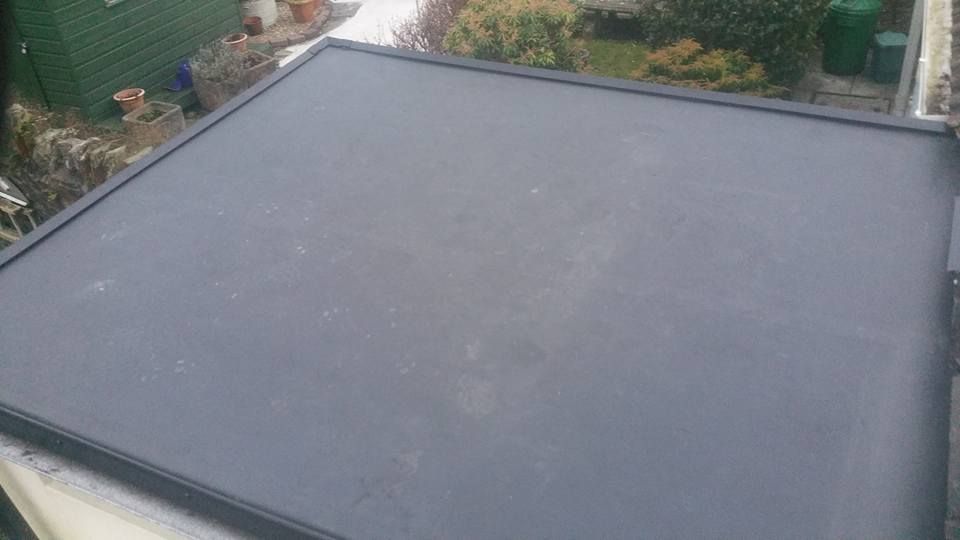
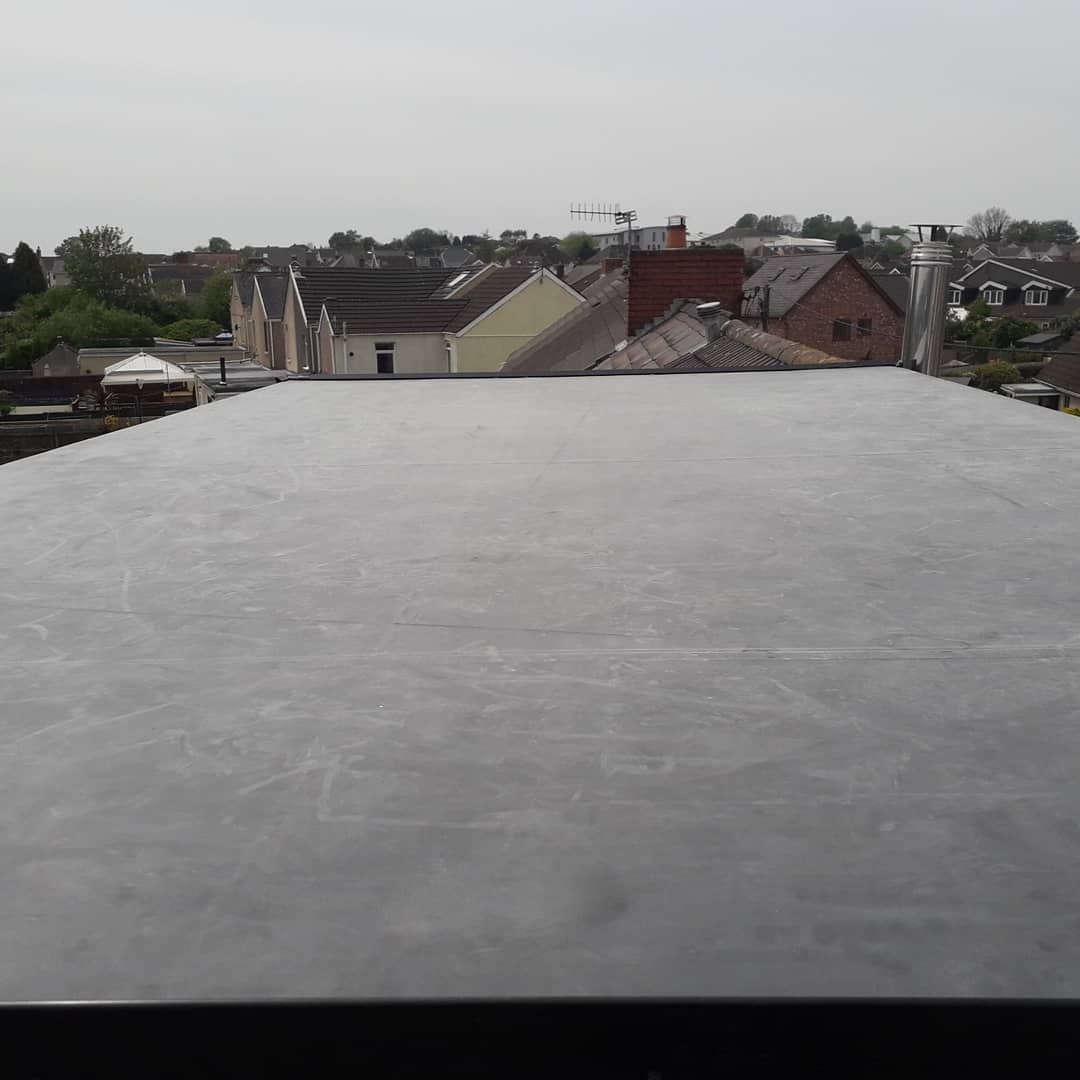
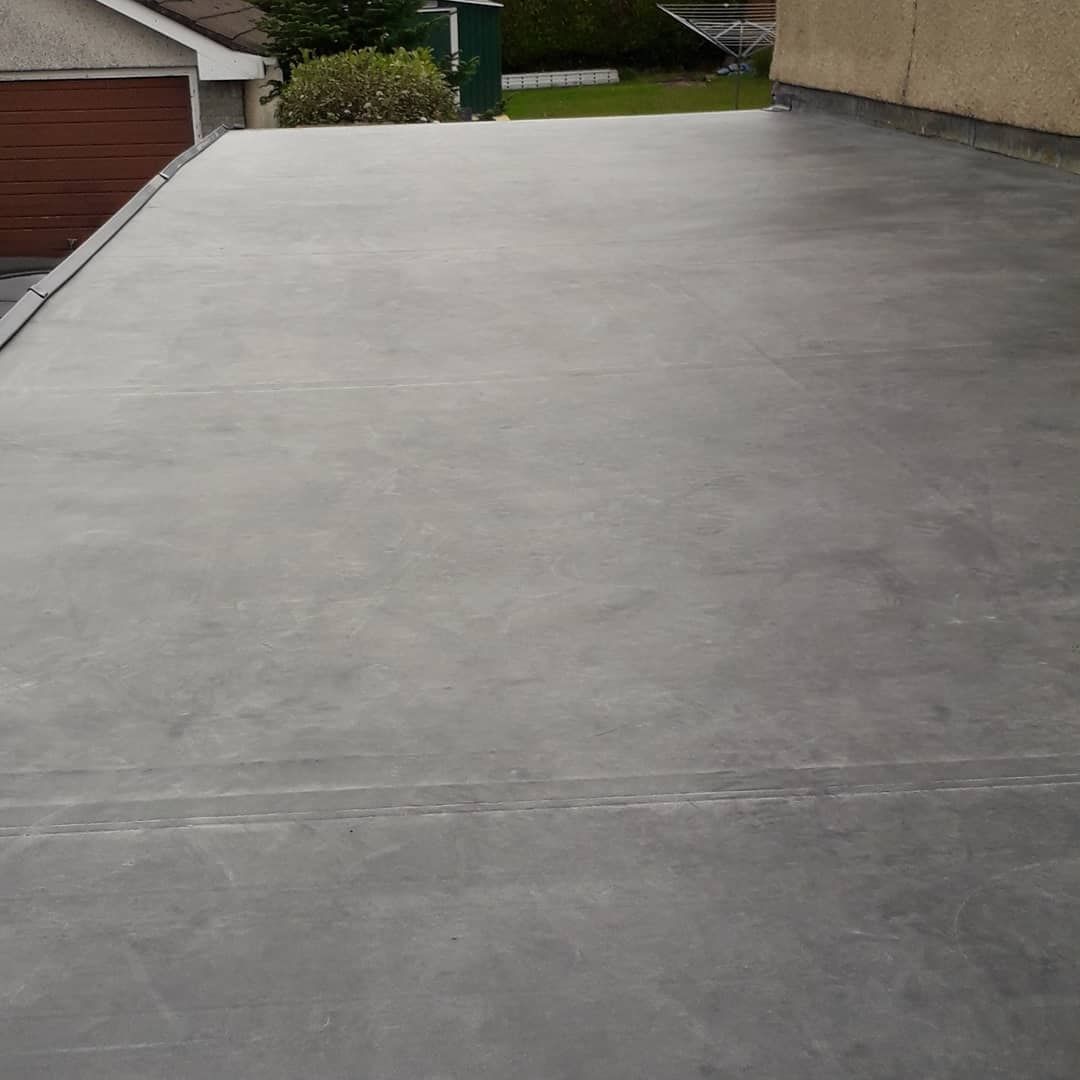
We fitted a Firestone RubberCover membrane on a rear kitchen extension in Allestree in 2011. It was inspected during a drone survey in 2023 — fully intact, no edge lifting, no blistering. Twelve years in and performing exactly as expected.
What Affects the Lifespan of an EPDM Roof — and What Cuts It Short?
EPDM is not immune to failure. The material itself rarely fails. What fails is the installation — specifically, the edge details and flashings where the membrane meets a wall, parapet, or upstand. Get those right, and you have a roof that needs very little attention for decades. Get them wrong, and you will see problems within a few years.
The Biggest Lifespan Factors
- Installation quality — The adhesive must reach the correct tack before the membrane is bonded. In variable Derbyshire weather — which can drop below 5°C in autumn and spring — rushing this step risks poor adhesion. Firestone's cold-applied system has specific temperature windows that trained installers follow. DIY-fitted or poorly supervised EPDM membranes frequently fail within a few years at the edges and corners.
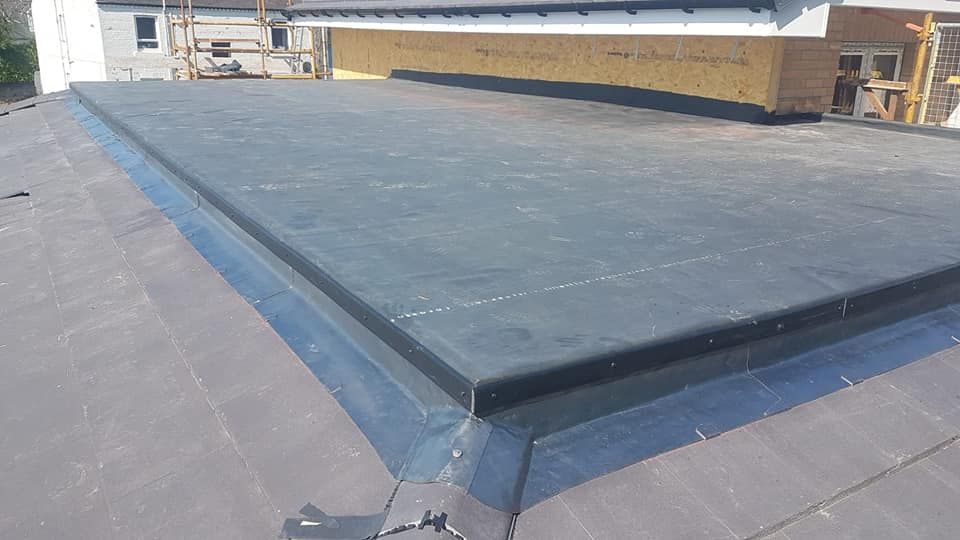
- Edge and flashing detail — Most EPDM leaks do not come through the main field of the membrane. They come from the edges — where the membrane terminates at a wall, a parapet, or a roof light. Poorly trimmed or poorly bonded edges allow water to track underneath the membrane.
- Drainage — A flat roof that holds standing water puts sustained stress on every joint and seal. Flat roofs should be designed with a minimum fall to ensure water moves toward the outlet. This is particularly relevant on older Derby properties where the deck may have settled over time.
- Derbyshire's freeze-thaw cycle — Cold air from the Peak District reaches Derby and Chesterfield regularly through November to March. Water that enters any weak joint freezes, expands, and widens the gap. EPDM itself handles this well — it stays flexible well below 0°C. But a poorly dressed flashing or an edge that was not fully bonded will be exposed every winter.
- Maintenance neglect — Blocked gutters and downpipes cause ponding. Debris — leaves from gardens, moss from pitched sections of the same building — holds moisture against the membrane surface. Neither causes immediate failure, but both accelerate wear over time.
The areas around Amber Valley — Heanor, Ripley, Belper — have a significant number of properties with older felt-to-EPDM conversions carried out by different contractors over the years. When we survey those roofs now, the membranes that fail early almost always have one thing in common: rushed or incorrect edge detailing at installation.
From a leaking garage roof in Chaddesden to a 50-year fix — in two days.
Janet noticed the damp patch on her garage ceiling in October. She had ignored it through summer, assuming it was condensation. By autumn it was spreading.
She called Derby Roofers on a Tuesday morning. We were on site the same afternoon with the drone. The survey took 20 minutes and showed exactly what we expected — a 14-year-old felt roof with seam failure along the back edge and water tracking underneath toward the party wall.
We explained the options clearly. Patch the felt and repeat the cycle in a few years, or fit a Firestone RubberCover EPDM membrane and be done with it.
Janet chose EPDM.
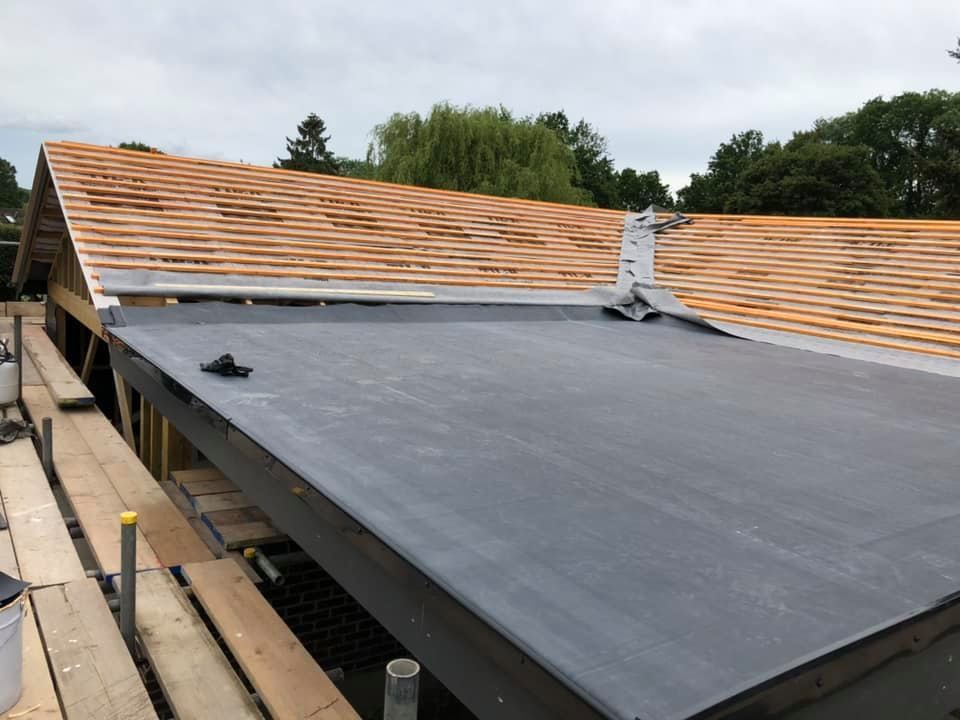
We started Thursday. New OSB deck, warm roof insulation board, Firestone membrane bonded in a single sheet with no joints across the main field. Edge trims dressed, wall flashings sealed. Finished and cleared up by Friday afternoon.
Janet sent us a message six weeks later after the first heavy November rainfall. No damp patch. No drips. Nothing.
That is the job done properly.
Free drone survey available across Derby and Derbyshire — call 01332-529704.
Repair or Replace? Signs Your EPDM Roof Needs Attention
EPDM is repairable. Unlike GRP fibreglass — where repairs can be more involved — a puncture, tear, or localised seam failure on an EPDM membrane can be fixed quickly using specialist EPDM flashing tape and primer. You do not need to replace the whole roof every time something goes wrong.
Signs of a Repair Job
- Isolated blister — A small bubble, usually caused by a pocket of trapped moisture or gas. Can be cut, dried, and re-bonded if the surrounding membrane is sound.
- Seam lifting at an edge — The most common early-stage problem. If caught before water has tracked underneath, a re-bond with contact adhesive and seam tape resolves it cleanly.
- Hairline crack around a penetration — Around a soil pipe, roof light, or upstand. Repairable with EPDM patch or liquid flashing compound if confined to a small area.
- Single area of ponding — If water is pooling in one spot, a drainage correction or slight level adjustment fixes the symptom before the membrane suffers prolonged stress.
Signs It Needs Replacing
- Widespread cracking or shrinkage — When the membrane has pulled away from multiple edges and is showing cracking across the main field, repair becomes uneconomical. This is rare on EPDM but common on older felt systems that were never properly replaced.
- Multiple active leaks after rainfall — More than one entry point suggests the membrane has deteriorated beyond targeted repair.
- Membrane shrinkage across the whole surface — Shrinkage is typically caused by poor installation or the use of inferior materials. A competently installed Firestone RubberCover membrane should not shrink.
When to Inspect — Derbyshire Timing
The best time to carry out a flat roof inspection in Derbyshire is March or early April. Winter's freeze-thaw cycles will have revealed any weak points — blisters that have grown, edges that have lifted, and flashings that have begun to separate. Catching these in early spring means repairs can be made before the wet weather of late autumn returns.
After any significant Derbyshire storm — particularly from October through January — a quick ground-level check is worthwhile. Look for visible edge lifting, debris build-up against upstands, or water marks below the roof on internal ceilings. If you spot anything, call us before a small issue becomes a larger repair.
Maintaining Your EPDM Roof — Simple Annual Steps
- Clear gutters and downpipes in autumn before leaf fall builds up.
- Check for debris around any penetrations or upstands after heavy storms.
- Look for ponding water 24–48 hours after significant rainfall.
- Inspect edge trims and wall flashings visually from ground level each spring.
- For commercial flat roofs or larger residential roofs, a professional inspection every 5 years is recommended.
👉 Not sure if your EPDM roof needs a repair or replacement? Our team offers free roof surveys across Derbyshire — call Derby Roofers on 01332-529704 or visit derbyroofers.co.uk
Frequently Asked Questions — EPDM Rubber Roof Lifespan in Derbyshire
Is rubber roofing better than felt for a Derby garage or extension?
EPDM rubber roofing significantly outperforms felt in Derby conditions. Felt typically lasts 10–20 years and is vulnerable to freeze-thaw damage at its seams and joints. EPDM is a single, seamless membrane that stays flexible in cold temperatures, lasts 40–50 years with professional installation, and requires minimal maintenance. For any Derby homeowner replacing a felt roof, EPDM is the most cost-effective long-term option in most cases.
What is the actual lifespan of an EPDM rubber roof in the UK?
A professionally installed EPDM rubber roof lasts 40–50 years in UK conditions. The membrane does not degrade under UV radiation, ozone, rain, or frost. Firestone RubberCover installations from the 1970s are still in service. Lifespan is most affected by installation quality — particularly the edge bonding and flashing details.
Does my Derbyshire flat roof need insulation?
Current Building Regulations require insulation on most new or replacement flat roofs in the UK. A warm roof build — with rigid insulation board above the deck and below the EPDM membrane — is the current standard. It improves thermal performance, prevents condensation on the roof structure, and meets compliance requirements. If you are replacing an older felt roof on a Derby extension, upgrading to a warm roof build at the same time is strongly advisable.
Will an EPDM rubber roof affect my home insurance?
Home insurance policies treat flat roof materials differently from standard pitched roofs. EPDM is increasingly recognised by UK insurers as a high-durability flat roofing material. A 20-year manufacturer warranty and documented professional installation are the two things most insurers want to see. Notify your insurer on completion and provide the warranty documentation. General wear and tear is not covered by home insurance — sudden storm damage typically is.
If my EPDM roof was installed by an uncertified roofer, is the warranty void?
Most manufacturer warranties for EPDM systems — including Firestone RubberCover — require installation by a trained and approved applicator. An uncertified installation typically means no manufacturer warranty coverage, even if the membrane itself is genuine product. If you are unsure whether your existing roof was installed by a certified contractor, call us for a survey. We will assess the installation quality and advise you on your options.
How do I know if my EPDM roof needs repairing rather than replacing?
Small blisters, isolated seam lifting, and localised cracking around penetrations are all repairable. Widespread membrane cracking, multiple active leaks after rainfall, or visible shrinkage across the whole surface usually means replacement is more cost-effective. The best time to have this assessed in Derbyshire is March or April, after the freeze-thaw season has revealed any weak points. Call us for a free survey and we will give you a straight answer.
Can EPDM rubber roofing be repaired if it is damaged?
Yes — EPDM is one of the most repairable flat roofing systems available. Tears, punctures, and localised seam failures can be fixed using specialist EPDM flashing tape and primer without replacing the full membrane. This is one of EPDM's significant practical advantages over GRP fibreglass, where repairs require more materials and preparation.