Derby Roofers
Lead Flashing For Chimney Service
Call us now book a FREE consultation and FREE Quotation
FREE Drone Survey Available
Call: 01332-529704
Lead Flashing Around Chimneys Derby — Repairs, Replacements & Expert Advice
We Are Your Trusted, Local Roofing Contractor Serving Derby & Derbyshire
Don't wait — contact Derby Roofers today for a FREE quote and a FREE drone roof survey.
📞
Call Now: 01332-529704
Lead flashing around chimneys in Derby is the number one cause of roof leaks we attend across Derbyshire. When it fails, rainwater silently gets behind your tiles and into the roof structure — causing damp, rot, and staining long before you notice a single drip inside.
At Derby Roofers, we inspect and repair chimney lead flashing across Derby and the surrounding Derbyshire area every week. We carry out all leadwork directly — no subcontractors, no shortcuts.
Whether your chimney is leaking in heavy rain, you have damp on your chimney breast, or a surveyor has flagged a problem — this page explains exactly what to do next. Call Now: 01332-529704
What Is Lead Flashing Around a Chimney and What Does It Do?
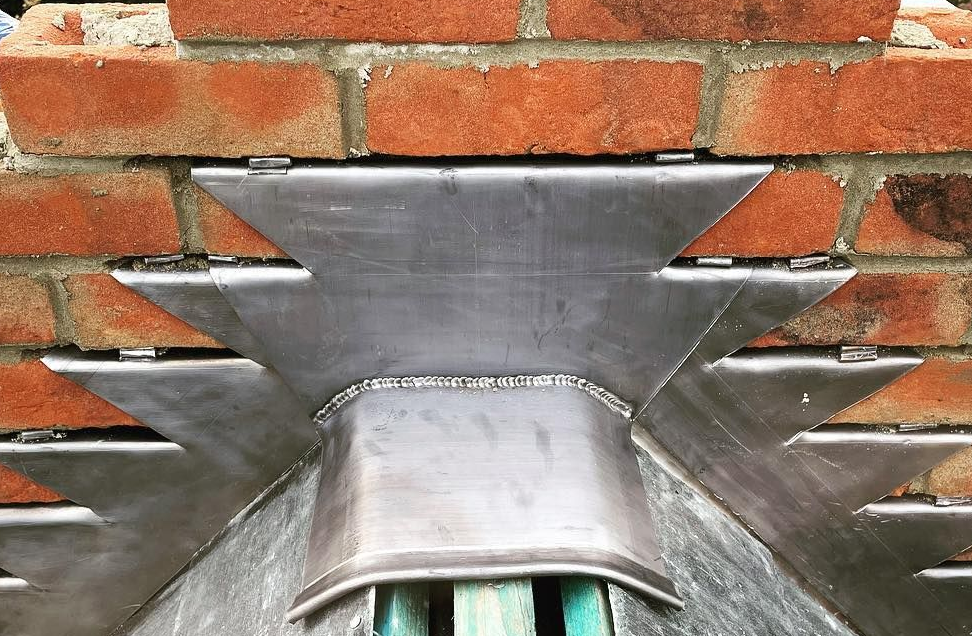
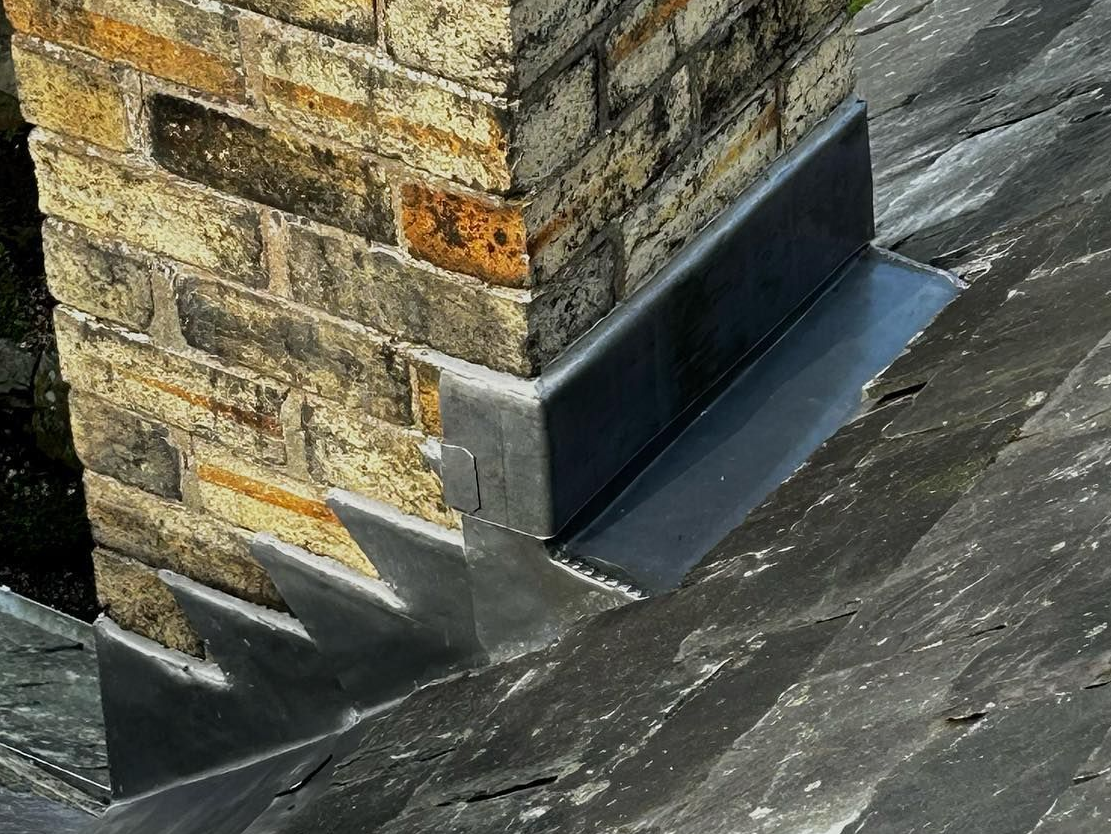
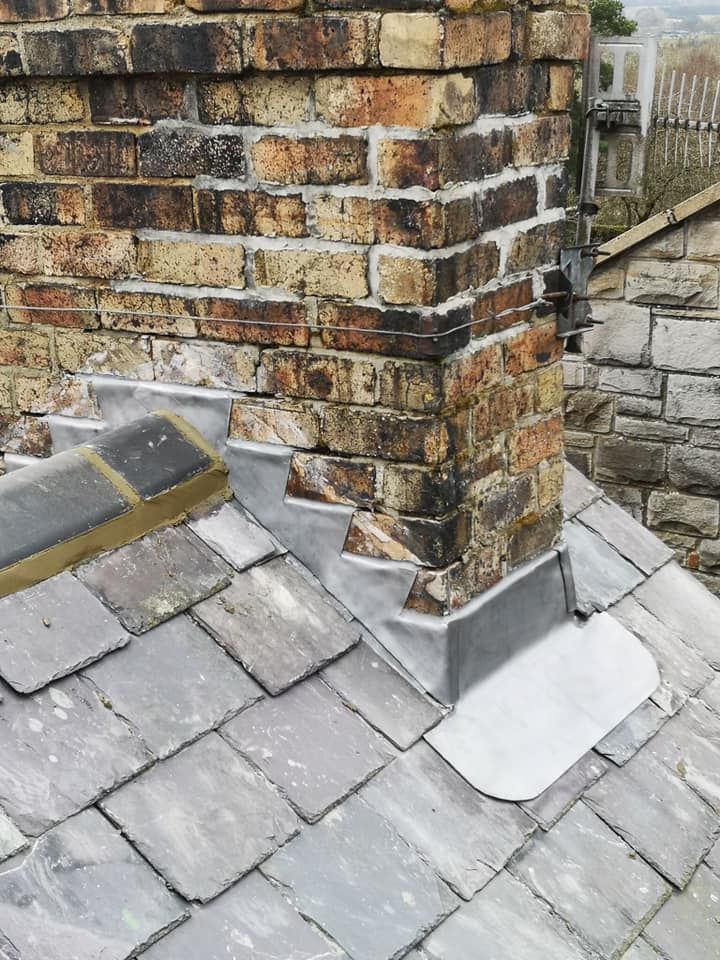
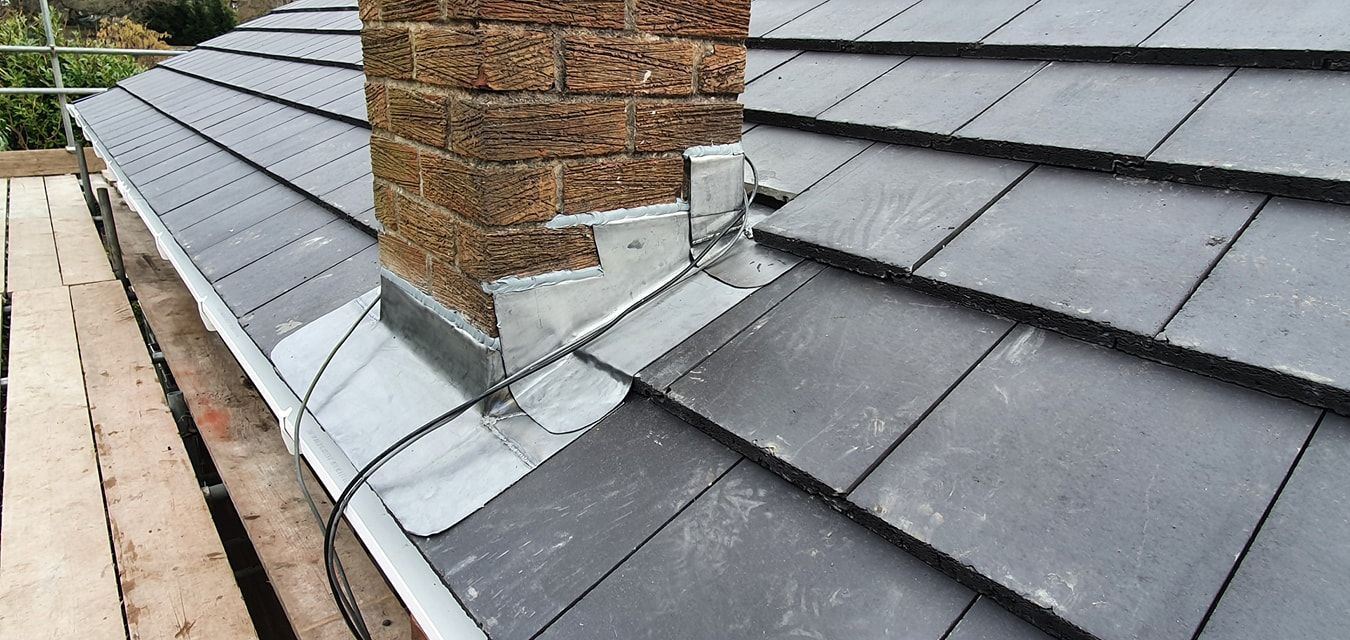
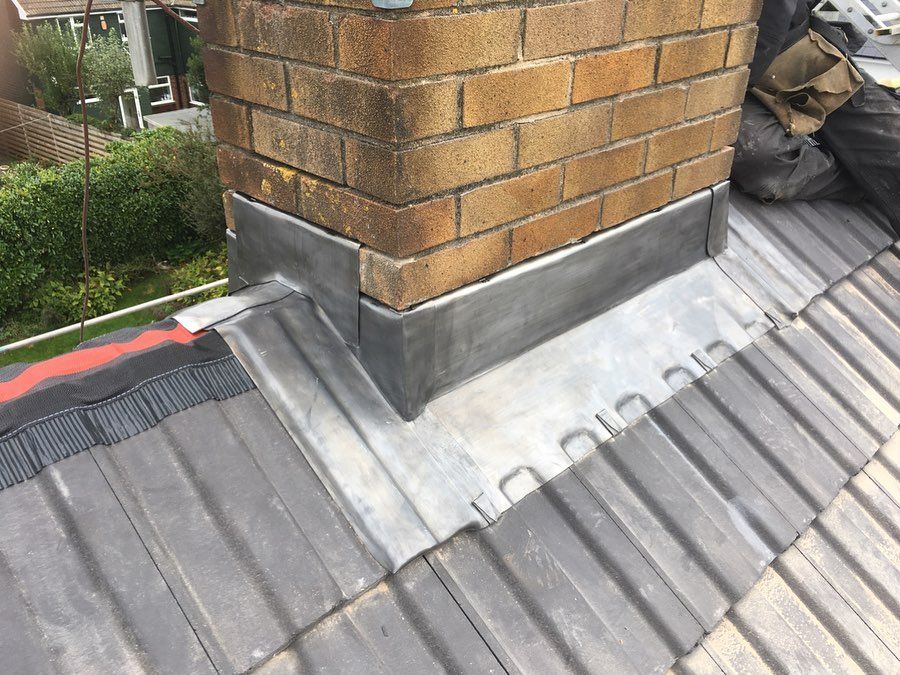
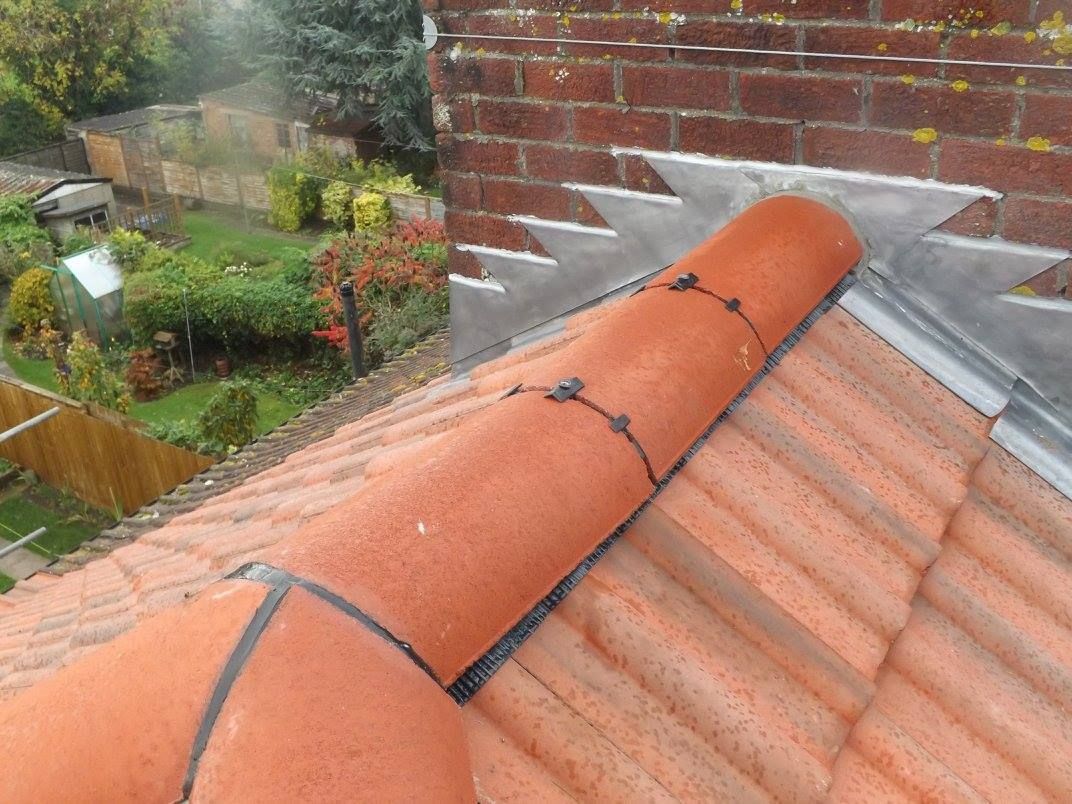
Lead flashing is a Code 4 or Code 5 lead sheet sealed into the join between your chimney stack and the surrounding roof tiles. Its job is simple: stop rainwater running down the chimney face and into the roof structure below.
Without it — or when it fails — water finds its way into the roof void, soaks your timbers, and eventually works its way into your home as damp patches or brown ceiling stains.
A correctly installed chimney lead flashing system has four components:
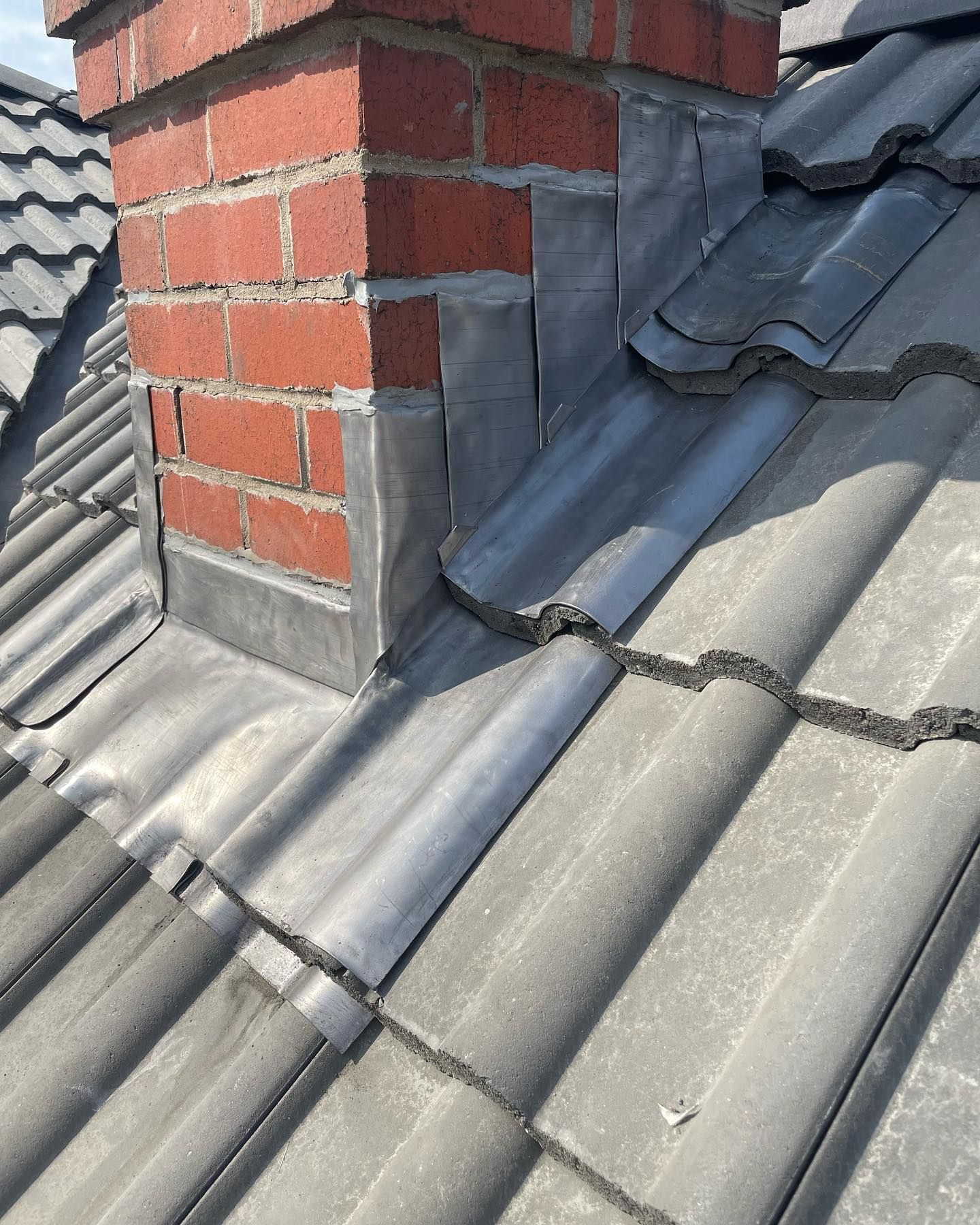
- Apron flashing — the front-facing piece, dressed over the tiles at the base of the chimney stack
- Soakers — small individual lead pieces fitted under each tile course up both sides of the chimney
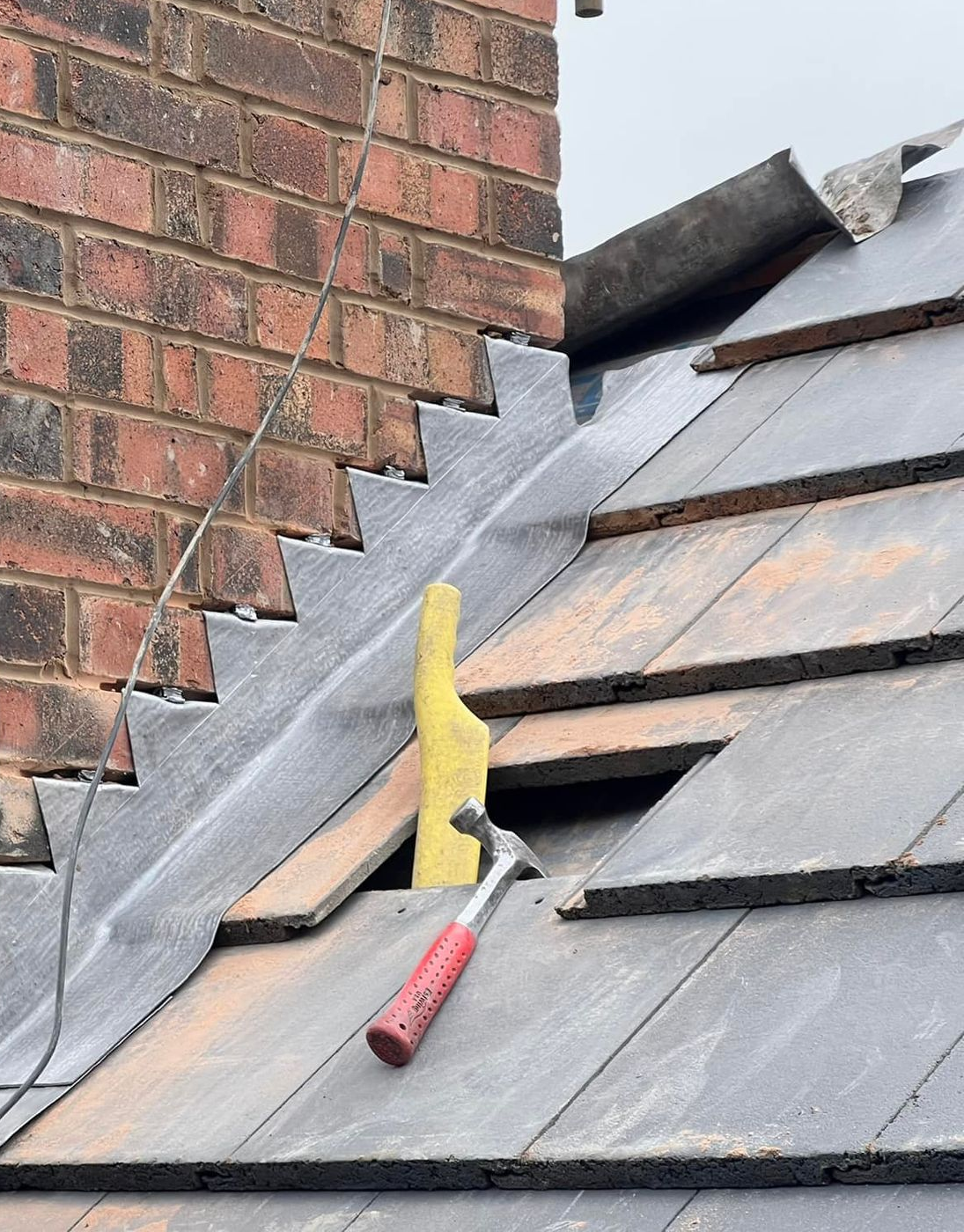
- Step flashing — the visible stepped lead strips over the soakers, chased into the mortar joints
- Back gutter — the lead channel at the uphill rear face, channelling water around the stack
All four parts must be present and correctly fitted. If any one of them fails, the whole system is at risk. Lead is the gold standard for chimney flashing in the UK because it flexes with temperature changes, resists corrosion, and — when installed correctly — lasts 50 to 70 years.
Derby's large stock of Victorian and Edwardian terraced housing means many chimney stacks sit mid-slope on clay tile roofs. That puts the back gutter under heavy water load every time Derbyshire gets prolonged rainfall — which makes correct installation, and the right lead code for each component, critical.
How Do I Know If My Chimney Lead Flashing Is Failing?
Catch it early and the repair is small. Leave it and the damage spreads fast. Here is what to look for before you call us.
From outside — checking from ground level
- Lead that has visibly lifted or pulled away from the chimney face
- Cracks or splits in the lead surface
- Lead that has been painted over with black bitumen tar — a classic short-term bodge that is almost certainly failing by now
- Crumbling or missing mortar at the base of the chimney stack where it meets the tiles
- A grey or white cement band instead of lead — this is a cement fillet and will be cracking
From inside the loft
- Daylight visible around the chimney brickwork at roof level
- Damp staining or tide marks on chimney breast timbers
- Wet or soft timber at the rear of the stack — a strong sign the back gutter is failing
Inside the house
- Damp patches or brown staining on the chimney breast wall
- Watermarks or staining on ceilings directly below the chimney
- Peeling wallpaper near the fireplace, particularly on upper floors
Homeowners across Chaddesden and Spondon regularly contact us after spotting these internal signs first. The chimney stacks on the DE21 terraced housing stock are often carrying original lead that has never been replaced. If your home was built before 1970 and the flashing has never been touched, a professional inspection is overdue.
Why Does My Chimney Only Leak When It Rains Heavily?
This is one of the most common questions we hear — and the answer almost always points back to the flashing.
Heavy rainfall: A small gap that stays dry in light rain cannot cope with the volume of water a sustained downpour sends down the chimney face. Water backs up behind lifted lead or into a partially open mortar chase and finds a way through.
Wind-driven rain: Derbyshire's westerly weather pushes rain horizontally against the chimney face. This forces water under any flashing edge that is not fully bedded into the mortar joint. Exposed ridge-line stacks across parts of Mickleover are particularly vulnerable.
Saturated mortar: After days of wet weather, the mortar around the flashing chase becomes waterlogged. Even with no visible gap, water wicks through the joint and into the roof structure. This is why a chimney leak can creep up gradually rather than appearing all at once.
It is also worth checking beyond the flashing. Water at the chimney breast can also come from:
- Cracked or missing flaunching around the chimney pot
- Failed pointing on the stack brickwork
- A missing or broken chimney cap
- Porous brickwork absorbing water directly through the stack face
We check all of these during every inspection — not just the lead.
Can Chimney Lead Flashing Be Repaired, or Does It Need Replacing?
When we inspect a chimney in Derby, we look at the whole system — not just the part that is visibly failing. The answer depends on what we find.
Repair is usually the right call when:
- A single section of step flashing has lifted out of its mortar chase
- The lap on the apron flashing has opened slightly but the lead itself is sound
- The mortar in the chase has crumbled but the lead is in good overall condition
Full replacement is needed when:
- The lead shows widespread cracking, thinning, or corrosion across more than one component
- Previous repairs have been made with bitumen tar, sealant, or mortar fillet — these materials cannot flex with the lead and will keep failing
- The original installation was never a complete system — soakers missing, back gutter absent, or lead chased in incorrectly
- The flashing is original to a 1960s or 1970s build and has never been replaced
In Littleover and Mackworth, we frequently work on post-war semi-detached properties where the original leadwork is well past its service life. On roofs of that age, a full re-lead is almost always the better investment. Patching lead that is already thin and fatigued rarely holds for more than a season.
One point worth knowing:
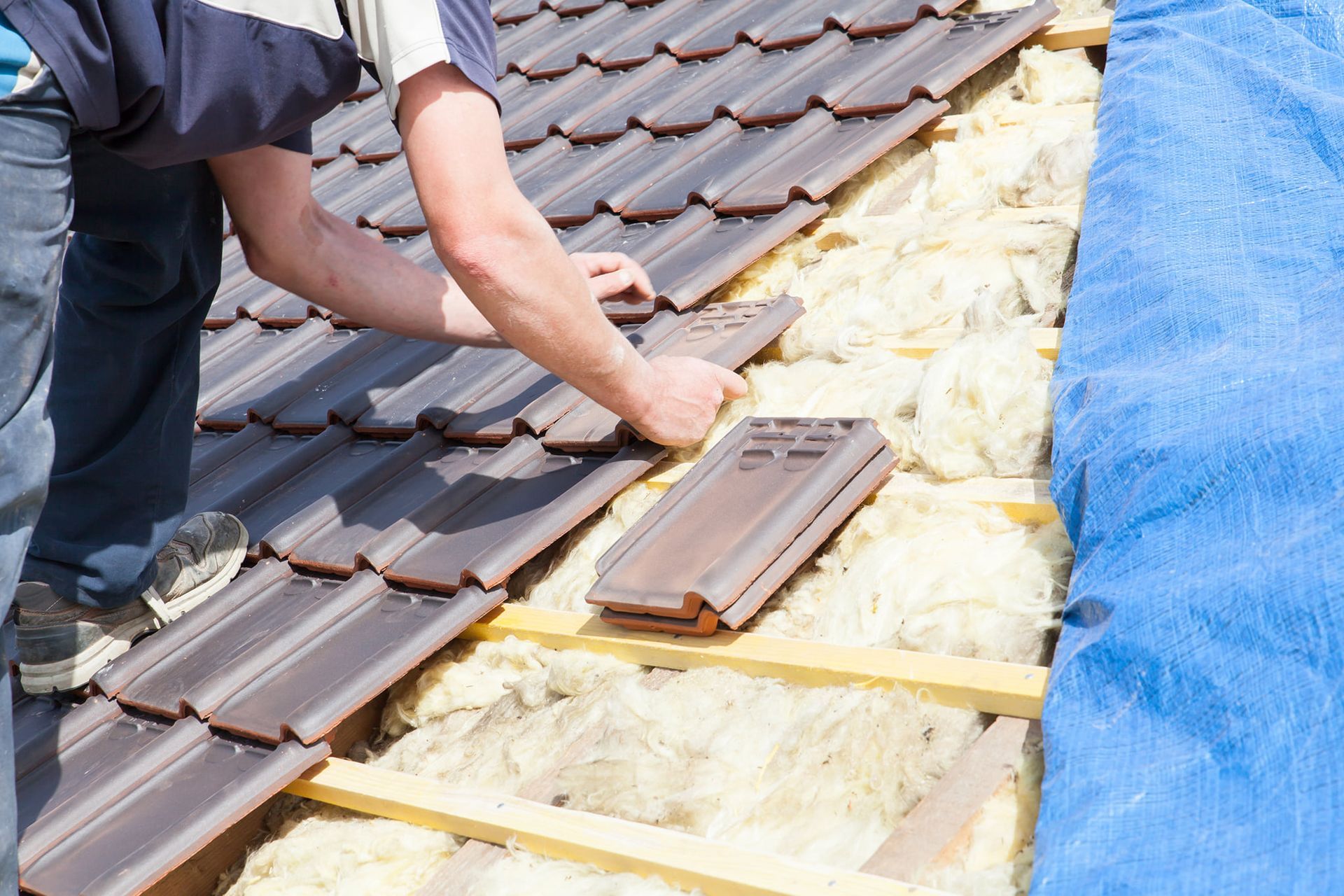
replacing the flashing does not mean replacing the chimney. The leadwork is completely independent of the stack. In most cases we lift the surrounding tiles, re-lead, and relay — without touching the brickwork above.
What Is the Difference Between Lead Flashing, Soakers, and a Back Gutter?
If a surveyor's report has flagged these terms and you are not sure what they mean, here is a plain-language breakdown of each component.
Soakers are small pieces of lead hidden under each course of tiles or slates up the sides of the chimney. You cannot see them without lifting tiles. Their job is to catch water dripping off each tile and direct it down to the next course. If soakers are missing — which is common on older Derby roofs — step flashing alone cannot stop the sides of the chimney leaking.
Step flashing is the visible lead running up the chimney sides in a stepped pattern, chased into the mortar joints. It sits over the soakers and provides the outer waterproof layer. It fails most often when mortar in the chase crumbles and the lead pulls free.
Back gutter is the lead channel at the rear of the chimney — the uphill face that takes the greatest volume of water running down the roof slope. It is the component that fails most often and is the most frequent cause of chimney leaks. We use Code 5 lead for back gutters because of the water volume this area handles.
Apron flashing covers the front lower face of the chimney where it meets the tiles. It is generally the last component to fail.
On chimney stacks in Darley Abbey and Park Farm — where slate roofs are more common — soakers are always required alongside step flashing. We regularly see jobs where previous roofers fitted step flashing without soakers, which fails quickly on a slate roof.
When we quote for a chimney re-lead in Derby, all four components are included as standard.
My Chimney Has Cement Fillets Instead of Lead Flashing — Is That a Problem?
Yes — and it is more common across Derby than most homeowners realise.
A cement fillet is a strip of sand and cement mortar applied directly to the join between the chimney and the roof tiles. It was widely used on houses built between the 1950s and 1980s as a cheaper alternative to lead, and it is still found on a large number of properties across Mickleover, Allestree, Mackworth, and Chellaston.
The fundamental problem is that cement cannot flex. As the chimney stack and roof expand and contract through the seasons, the fillet cracks. Derby's freeze-thaw winter cycles accelerate this — frost gets into hairline cracks, expands, and opens them further. Once cracked, water gets in.
Signs your chimney has cement fillets rather than lead:
- A grey or white mortar band running around the base of the chimney stack
- No visible strip of lead along the chimney sides or front face
- Cracks or gaps in the mortar join between the stack and the tiles
When we replace a cement fillet, we remove all old mortar, cut proper chases into the brickwork, and install a full Code 4/5 lead flashing system — soakers, step flashing, apron, and back gutter.
This is not a patch repair — it is the correct installation that should have been done originally, and it will outlast cement fillet by several decades.
Is Lead Flashing Around a Chimney a DIY Job?
We would not recommend it — and here is why.
Lead has to be cut accurately to size, dressed into shape using proper lead dressing tools, and chased into the brickwork at the correct depth. Getting the lap depths wrong, skipping soakers, or failing to seal the chase correctly will cause the repair to fail within one season of Derbyshire rain.
The most common "DIY fix" we replace is black bitumen paint or roofing sealant applied over failed flashing. It holds briefly — sometimes a few months — then cracks as the lead moves beneath it, and the leak returns. This often leaves the homeowner paying twice: once for the sealant, once for us to strip it off and do the job properly.
Working at height safely also requires proper equipment and risk management. A chimney flashing job is
not a ladder-and-hope situation — it requires correct access and, on taller stacks, scaffolding.
Frequently Asked Questions About Lead Flashing Around Chimneys
How long does lead flashing around a chimney last?
Correctly installed Code 4 or Code 5 lead flashing lasts 50 to 70 years. Early failure is almost always the result of poor original installation — wrong lead code, soakers omitted, or chases not cut to the correct depth. Cement fillets used in place of lead typically start cracking within 10 to 20 years.
Why is my chimney leaking even though the lead looks fine from the ground?
The most common reason is that the back gutter — at the rear of the chimney — has failed. You cannot see it from ground level. Soakers beneath the tiles may also have slipped or be missing entirely. We inspect the full flashing system, not just the visible sections.
Can chimney lead flashing be repaired without replacing the whole chimney stack?
Yes. In most cases the leadwork is completely independent of the stack brickwork. We lift the surrounding tiles, replace or re-seat the flashing, and relay — without needing to touch the brickwork above unless pointing or flaunching has also failed.
What is the correct lead code for chimney flashing?
Code 4 is the standard for step flashing, apron flashing, and soakers on chimney stacks. Code 5 should be used for back gutters, which handle the greatest volume of water. Using the wrong code — particularly anything lighter than Code 4 — significantly shortens the lifespan of the installation.
Will failing chimney flashing cause damp inside my house?
Yes. Water tracking through failed flashing soaks into roof timbers and chimney breast plasterwork — often for months before a visible damp patch appears. Catching it early avoids structural timber damage and expensive internal replastering.
Do I need scaffolding to repair chimney lead flashing in Derby?
It depends on the height and pitch of the roof. Low, accessible chimney stacks can often be reached safely by ladder with proper equipment. Taller stacks on steeper roofs require scaffolding for safe access. We assess this during the inspection and will be straight with you about what is needed.
How do I know if my chimney flashing needs repairing or replacing?
If the failure is localised — one section of step flashing has lifted, for example — a repair is often appropriate. If the lead is cracked across multiple sections, is thin with age, or was previously patched with bitumen or sealant, full replacement is the right call. We will tell you clearly which applies after our inspection.
Can I just use sealant or roofing tar to fix a leaking chimney flashing?
This is a temporary measure at best.
Sealants and bitumen tar cannot move with the lead as it expands and contracts. They crack within months in the British climate and the leak returns — often worse than before. A proper lead repair is the only lasting solution.
Areas We Cover for Chimney Lead Flashing Repairs
Derby Roofers proudly serves homeowners and businesses throughout Derby city and the wider Derbyshire area. Our local teams cover:
Derby City Areas:
- Derby City Centre (DE1)
- Allestree, Mackworth & Quarndon (DE22)
- Mickleover (DE3)
- Littleover & Normanton (DE23)
- Chaddesden, Oakwood & Spondon (DE21)
- Alvaston, Crewton & Osmaston (DE24)
Surrounding Derbyshire Towns & Villages:
- Belper (DE56)
- Ripley (DE5)
- Ilkeston (DE7)
- Heanor (DE75)
- Swadlincote (DE11)
- Ashbourne (DE6)
- Matlock (DE4)
- Borrowash & Draycott (DE72)
- Etwall & Hilton (DE65)
- Melbourne & Chellaston (DE73)
- Duffield & Little Eaton (DE56 / DE21)
- Breadsall & Darley Abbey (DE21 / DE22)
- Long Eaton (NG10)
- Castle Donington (DE74)
Not sure if we cover your area? Call us on 01332-529704 and we'll be happy to help.
Book a Chimney Lead Flashing Inspection in Derby
A leaking chimney does not fix itself — and the longer it is left, the more it costs to put right.
Water that starts as a small gap in the flashing will eventually soak into roof timbers, rot the back gutter board, stain your chimney breast plasterwork, and work its way into ceiling joists. What starts as a straightforward lead repair becomes a much larger job.
At Derby Roofers, we inspect chimney lead flashing across Derby and Derbyshire and give you a straight answer — repair or replace, what is involved, and how long it will last. We carry out all leadwork ourselves, use the correct lead codes for every component, and do not patch over problems with sealant.
If your chimney is leaking, or you have not had your flashing inspected and your home was built before 1980, call us today:
📞 01332-529704 🌐 derbyroofers.co.uk 📧 info@derbyroofers.co.uk
Derby Roofers — Loscoe Grange, Loscoe, Heanor, DE75 7JY
We always answer the phone or call back. We respond to every email. You are our business.