Derby Roofers
Professional Lead Work
Call: 01332-529704
FREE Drone Roof Survey
Lead Work Derby | Lead Flashing Repairs & Installations
Lead work in Derby is one of the most common reasons homeowners call us. A failed lead flashing around a chimney or valley can let water into your home within days. We carry out lead flashing repairs, replacements, and full lead installations across Derby and Derbyshire — on all property types, from Victorian terraces in Normanton to newer extensions in Mickleover.
Whether your lead has cracked, lifted, been stolen, or is simply showing its age — we diagnose the problem correctly and fix it properly the first time.
Call us on 01332-529704 for a free, no-obligation quote. We answer every call.
What Is Lead Work and What Does It Do on Your Roof?
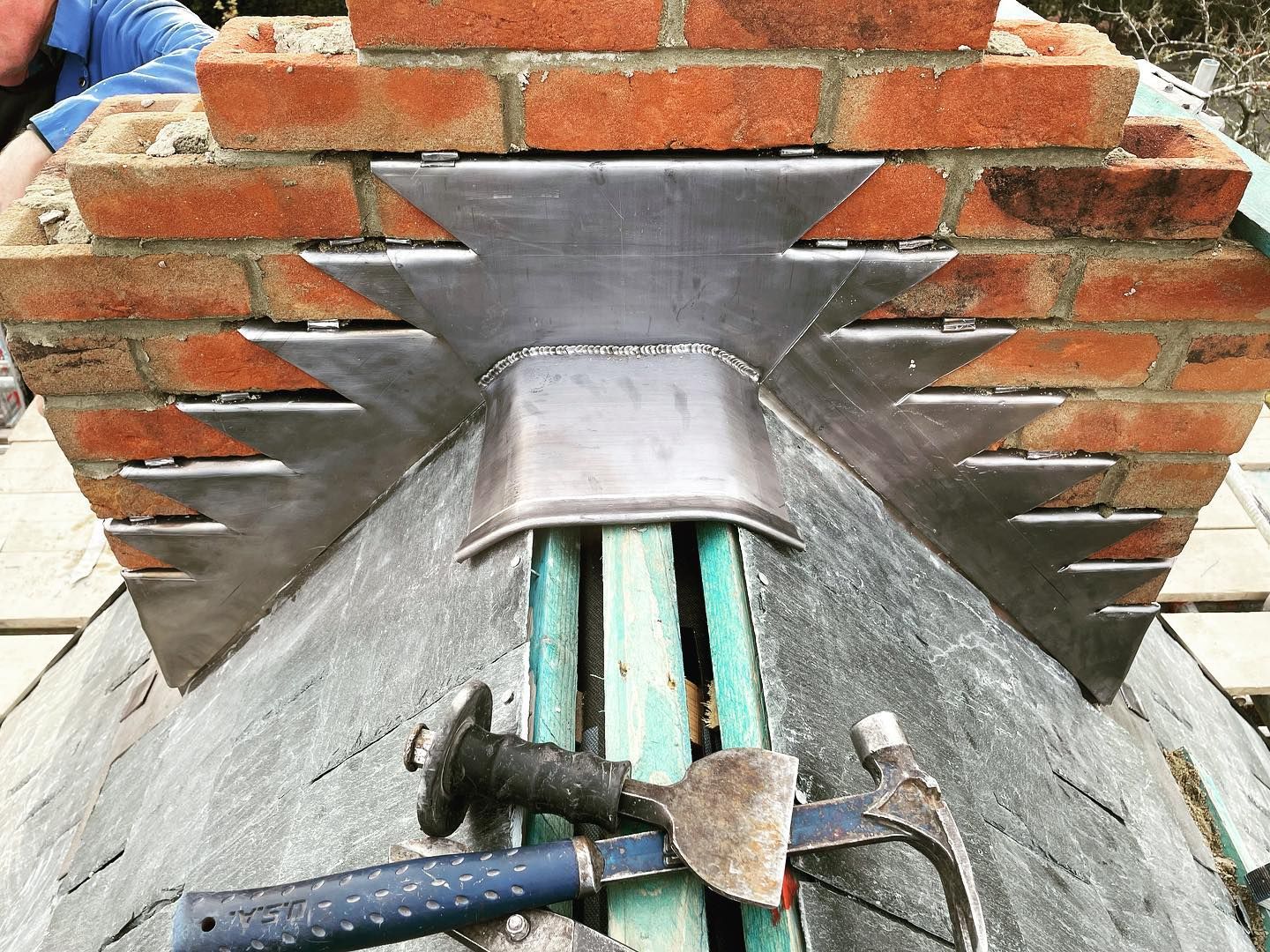
Lead is the material used to seal the joints on your roof where two surfaces meet. Without it, rainwater runs straight into your home at every chimney, valley, wall abutment, and skylight. Lead is shaped and pressed into these junctions to form a permanent, watertight barrier.
The practice of using lead on roofs goes back centuries — and it remains the most durable roofing material available today. When installed correctly, lead flashings can last 60 to 100 years or more.
Derby has a high proportion of Victorian and Edwardian housing — in areas like Darley Abbey, Spondon, and Normanton — where lead has been in continuous use for decades. These properties have chimneys, bay windows, and complex roof junctions that rely entirely on lead to stay watertight. When that lead fails, leaks follow quickly.
The Main Areas Where We Install and Repair Lead Work
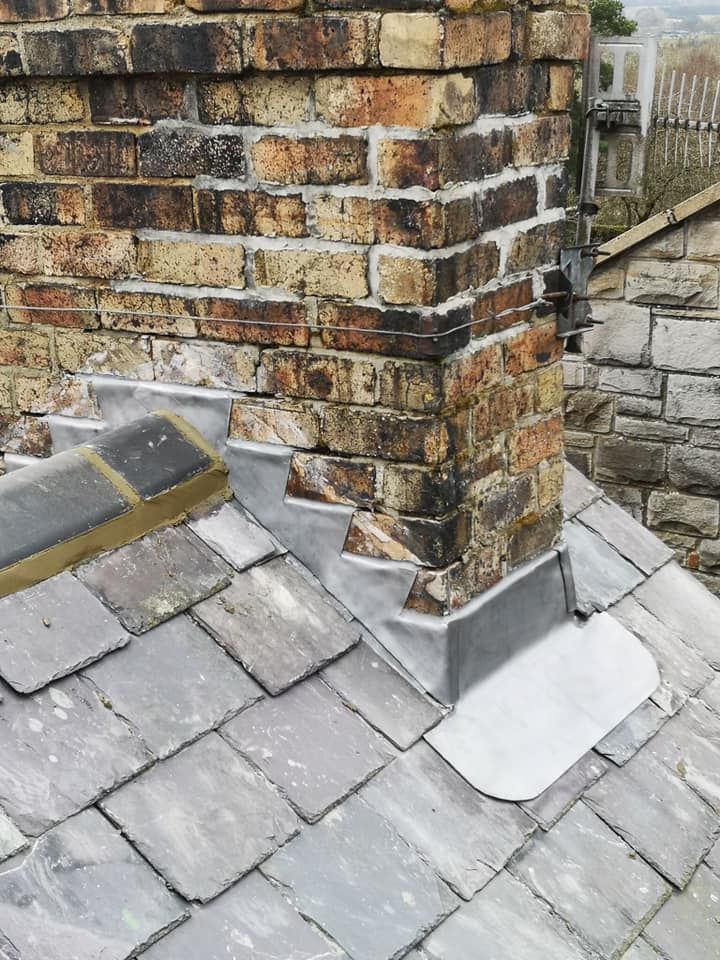
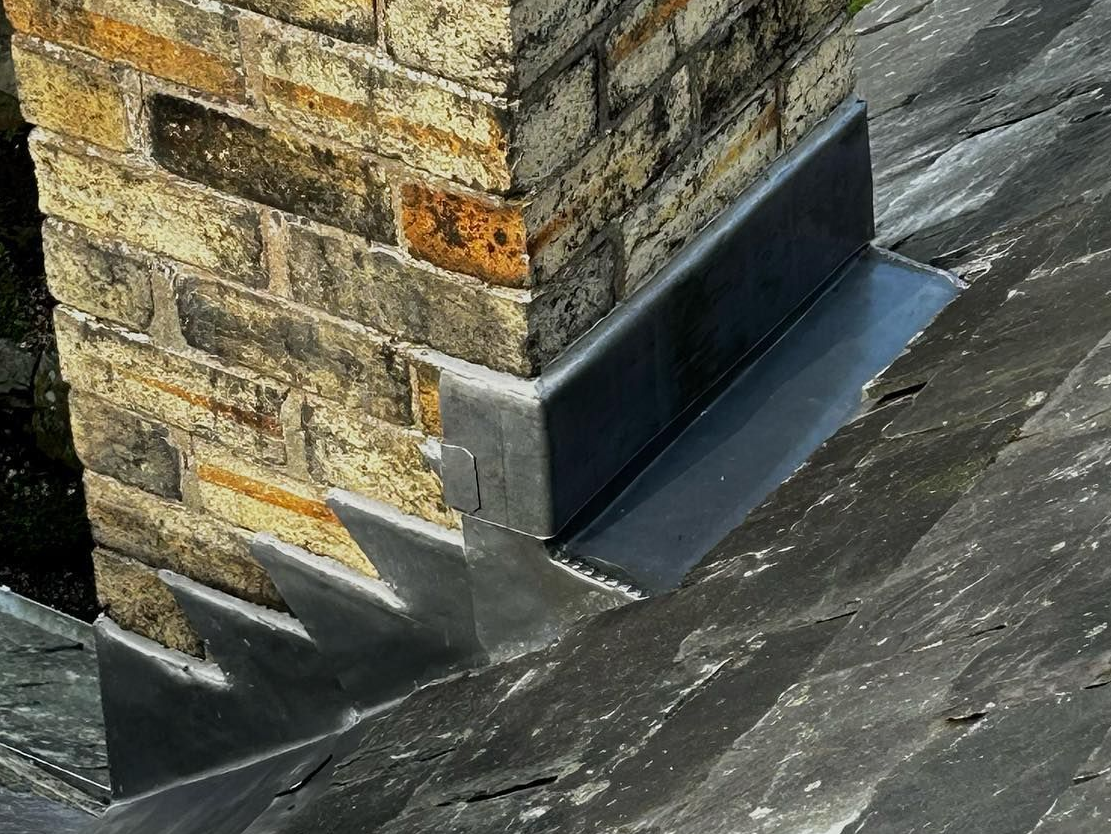
- Chimney flashings — apron, step, back gutter, and saddle pieces around the full chimney stack
- Lead valleys — lining the channel where two roof slopes meet
- Step flashings and soakers — where a pitched roof meets a wall or extension
- Dormer flashings — cheek and apron pieces around dormer windows
- Bay window lead roofs — flat lead covering over bay window roofs
- Parapet gutters — lead-lined gutters behind parapet walls
- Skylight and rooflight flashings — sealing around Velux and similar windows
- Wall abutment flashings — where a roof slope runs alongside a vertical wall
If your roof is leaking near any of these areas, the lead is the first place we check. Book a free drone roof survey and we will tell you exactly what is happening — no ladders, no scaffolding, no obligation.
Clear Warning Signs Your Lead Flashing Needs Attention
You do not always need to get on the roof to spot a lead problem. Many lead failures show up inside the house first — often well before you notice any visible damage outside.
Derby's winters bring freeze-thaw cycles that put real pressure on older lead. Properties in Allestree, Chaddesden, and Littleover with chimneys or extensions are especially worth checking after a cold spell or heavy rainfall.
Signs That Your Lead Work May Need Repair or Replacement
- Damp patches or water stains on ceilings near the chimney breast
- Staining on an upstairs wall below a roof junction or valley
- Lead that is visibly cracked, split, or has pulled away from the brickwork
- Mortar holding the lead in a wall chase has crumbled or fallen out
- Lead has dropped out of its chase entirely and is sitting on the tiles
- White powdery deposits on the surface of the lead — normal patination, but heavy deposits near joints can signal movement and water ingress
- Moss growing directly on lead flashings — a sign of standing moisture
- A persistent dripping sound in the loft after heavy rain
Any of these signs means water has a route into your property. The longer it is left, the more damage builds up inside the roof structure — including rot to roof timbers, damaged insulation, and mould growth that affects air quality inside your home.
Call us on 01332-529704 and we will come out to take a look — free of charge.
Why Lead Splits, Lifts, and Fails — and How We Fix It Properly
Most lead failures we see in Derby are not caused by the lead itself. Lead is one of the most durable roofing materials available. Failures almost always come down to how the lead was installed.
Fixing it properly means addressing the root cause, not just patching over the visible split. A patch repair that ignores the underlying fault will fail again — often within a couple of years.
Derby's temperature swings between cold Derbyshire winters and warm summers cause lead to expand and contract significantly. If the installation does not allow for that movement, the lead cracks and splits.
The Most Common Causes of Lead Failure We Find in Derby
- Bays cut too long — lead fixed in lengths over 1.5m without a lap joint cannot move freely and will crack
- Lead fixed too rigidly — over-nailed or set in hard mortar that grips the lead and tears it as it moves
- Wrong lead code used — too thin for the application; it degrades faster and splits under pressure
- Mortar failure in the chase — the lead loses its fixing point and lifts away from the wall
- Patch repairs over failed sections — covering the symptom without fixing the design fault
- Poor ventilation beneath flat lead bays — condensation forms on the underside and corrodes the lead from within
When we repair lead work on a Derby property, we inspect the full detail — not just the visible split. If the bay sizing is wrong or the fixing method is the problem, we redesign the detail so the repair lasts. We also check ventilation beneath flat lead sections on bay roofs and extensions, a step that many repair jobs miss entirely.
Lead Codes Explained: Choosing the Right Thickness for the Job
Every lead flashing on your roof should be a specific thickness, known as its code. Using the wrong code is one of the most common mistakes we see on Derby properties — particularly where a cheaper, thinner lead has been used to cut costs.
All rolled lead sheet we install meets BS EN 12588 — the British Standard for roofing lead. In Mickleover and Littleover, where Derby's housing stock ranges from 1930s semis to modern new-builds, the correct code varies by roof type, pitch, and application.
When we quote your lead work in Derby, we specify the correct code for each part of the job — in writing, before any work starts. You know exactly what is being installed and why.
Code 3 — 1.32mm Used for soakers on slated and tiled roofs.
Code 4 — 1.80mm Used for flashings, soakers, chimney aprons, and wall abutments.
Code 5 — 2.24mm Used for flashings, pitched roof bays, dormers, and valley gutters.
Code 6 — 2.65mm Used for flat roof bays, parapet gutters, and exposed valley gutters.
Code 7 — 3.15mm Used for dormers, flat roofs, and tapered valley gutters.
Code 8 — 3.50mm Used for heavy-duty flat roofs, large dormers, and valley gutters.
Lead Work on Listed and Older Buildings in Derby
Derby has a significant number of listed and heritage properties — particularly around the Cathedral Quarter, Darley Abbey, and parts of the city centre. On these buildings, lead work is not simply a repair job. It is part of preserving the fabric of the building, and the rules around it are specific.
Any lead repair or replacement on a listed building in Derby may require Listed Building Consent from Derby City Council before work begins. This applies even to small repairs. Carrying out work without consent can result in enforcement action — so always check before anything is touched.
How We Approach Lead Work on Heritage and Listed Properties
- We advise you on whether Listed Building Consent is needed before we quote
- All replacement lead is like-for-like in code and profile — no cheaper substitutes
- We use traditional techniques where the specification requires it, including hand bossing and welding around complex architectural details
- Re-pointing of flashing chases uses lime mortar, not cement — cement is too rigid and causes lead to lift over time
- Where original lead has been in place for many decades, we assess whether sections can be repaired rather than fully replaced
If you own a listed property or a home in a conservation area in Derby, call us first. We will give you an honest view on the consent position and the correct repair approach — at no charge.
What Happens When Your Roof Lead Gets Stolen
Lead theft is a persistent problem across Derbyshire. Flat roof sections, bay window lead, chimney flashings, and valley linings are all targeted — sometimes stripped overnight, leaving the roof completely open to the weather.
If you wake up to find lead missing from your Derby property, the first priority is getting the roof temporarily covered. Every hour it stays open, the risk of water damage to timbers, ceilings, and internal walls increases.
What To Do If Lead Has Been Stolen From Your Roof in Derby
- Call Derby Roofers on 01332-529704 — we can attend quickly and make the roof temporarily weathertight
- Report the theft to the police and obtain a crime reference number
- Photograph the damage before any temporary covering is applied — your insurer will need this
- Contact your home insurer with the crime reference number
- Once a temporary cover is in place, we survey the full extent of the damage and provide a written quote for replacement
- Replacement lead is installed to the correct code with proper fixings — we do not simply replace like-for-like if the original installation had faults that made theft easier
We carry out post-theft lead replacements across Derby and surrounding Derbyshire areas regularly. We can provide a clear written report to support your insurance claim.
Repair or Replace? How We Make the Right Call
One of the most common questions we get from Derby homeowners is whether their lead needs a repair or a full replacement. There is no one-size-fits-all answer — it depends on the condition of the lead, the extent of the damage, and how it was originally installed.
Here is how we approach the decision:
- Repair is appropriate when: damage is isolated, the lead is otherwise in good condition, and the original installation is sound
- Replacement is the better option when: the lead is heavily corroded, bays are badly oversized, the same section has been repaired repeatedly, or the original installation has design faults that will continue to cause problems
- We never recommend replacement when a repair will genuinely do the job — and we never patch over a fault that needs a proper fix
Every assessment starts with a free inspection. We tell you honestly what the roof needs, explain our reasoning, and leave the decision with you.
Why Derby Homeowners Choose Derby Roofers for Lead Work
We have been carrying out lead work across Derby and Derbyshire for over 20 years. In that time, we have worked on everything from a simple chimney flashing repair in Chaddesden to full heritage lead replacements on Victorian properties in Darley Abbey.
Here is what you get when you choose us:
- Over 20 years of lead work experience across Derby and Derbyshire
- No subcontractors — the team that surveys your roof carries out the work
- Free drone roof survey — see your roof clearly before any work starts
- Written, itemised quotes — no vague estimates, no hidden costs
- Fully insured — public liability cover on every job
- All work guaranteed — up to 20 years on installations
- We answer the phone — or we call you back the same day
Get a Free Quote | Call 01332-529704
Areas We Cover for Lead Work in Derby & Derbyshire
We carry out lead work across Derby city and the wider Derbyshire area. Our regular working locations include:
Derby City Centre — DE1 Mickleover — DE3 Allestree and Darley Abbey — DE22 Littleover and Normanton — DE23 Chaddesden and Spondon — DE21 Borrowash — DE72 Breadsall and Oakwood — DE21 Markeaton and Mackworth — DE22 Alvaston and Chellaston — DE24 Willington and Findern — DE65 Long Eaton — NG10 Belper — DE56 Ilkeston — DE7 Heanor — DE75 Ripley — DE5 Alfreton — DE55 Matlock — DE4 Ashbourne — DE6 Swadlincote — DE11 Burton on Trent — DE13 Chesterfield — S40 Buxton — SK17 Nottingham — NG
Not sure if we cover your area? Call 01332-529704 and we will confirm straight away.
Frequently Asked Questions — Lead Work in Derby
What is lead work and what is it used for on a roof?
Lead work is the use of shaped lead sheet to waterproof the joints on your roof — anywhere two surfaces meet and water could get in. It is used on chimneys, valleys, wall abutments, dormers, skylights, bay windows, and parapet gutters. Lead has been used on UK roofs for centuries because it is flexible, durable, and forms a permanent watertight seal around complex shapes.
How long does lead flashing last on a Derby roof?
Correctly installed lead flashing lasts 60 to 100 years — and can outlast the building itself. Failures almost always come from poor installation: bays too long, lead fixed too rigidly, or the wrong code used for the application. When we install lead work in Derby, we follow correct bay sizing, fixing methods, and code selection so the lead performs for the long term.
What are the signs that my lead flashing needs replacing?
The most common signs are: damp patches or water stains on ceilings near chimneys, lead that is visibly cracked or lifted away from the brickwork, mortar around the flashing chase that has crumbled, lead sitting on the tiles having fallen from its fixing, and moss growing directly on the lead surface. Any of these signals a leak route into your property.
Can I repair lead flashing myself, or do I need a professional?
Lead flashing repair is not a safe DIY job. Working at height on a Derby roof without proper equipment is dangerous. Beyond the access risk, DIY repairs — using the wrong materials, wrong fixing method, or skipping ventilation details — cause repeat failures. We inspect the full installation and fix the root cause, not just the visible split.
What is the difference between lead flashing codes — Code 3, 4, 5, 6?
Lead codes refer to the thickness of the sheet. Code 3 (1.32mm) is used for soakers. Code 4 (1.80mm) covers most standard chimney flashings and wall abutments. Code 5 (2.24mm) is used for pitched roof bays, dormers, and valley gutters. Code 6 (2.65mm) and above are for flat roof bays, parapet gutters, and heavier applications. Using the wrong code is one of the most common causes of early lead failure.
Why does my lead roof keep cracking or splitting?
Lead cracks and splits when it cannot move freely. The most common causes are bays cut too long without a lap joint, lead fixed too rigidly in hard mortar, and incorrect code selection. Derby's seasonal temperature swings make this worse — lead expands and contracts significantly between winter and summer. We identify the design fault and correct it, not just patch over the crack.
What are the alternatives to lead flashing on a roof?
Zinc, copper, aluminium, and proprietary synthetic flashings exist as alternatives. For most Derby properties — particularly older housing stock in Normanton, Spondon, or Darley Abbey — lead remains the most durable and appropriate choice. It is the only material that combines flexibility, longevity, and compatibility with traditional roofing materials over the long term. On listed buildings, lead is almost always the required specification.
Do I need planning permission or listed building consent to replace leadwork in Derby?
For most Derby homes, replacing lead flashing does not need planning permission — it falls under permitted development rights. However, if your property is a listed building or sits within a conservation area, you may need Listed Building Consent from Derby City Council before any work starts. We advise you on this as part of every survey, at no charge.
What should I do if the lead has been stolen from my roof?
Call Derby Roofers immediately on 01332-529704 to make the roof temporarily weathertight. Then report the theft to the police and get a crime reference number, photograph the damage before any covering goes on, and contact your insurer. We can provide a written damage report to support your insurance claim and carry out the full replacement once cover is arranged.
How much does lead work cost in Derby?
Lead work costs vary depending on the scope, access, and code of lead required. A straightforward chimney flashing repair typically starts from a few hundred pounds. A full chimney lead set — apron, step flashings, back gutter, and saddle — costs more, and scaffolding adds to the total where access requires it.
We provide a free, written, itemised quote before any work begins — no hidden costs, no vague estimates. Call 01332-529704 to arrange a visit.
Ready to Book Your Lead Work in Derby?
If you have a leak near a chimney, valley, bay window, or roof junction — or you can see that your lead is cracked, lifted, or missing — do not leave it. Water finds the smallest gap, and the longer a lead failure is left, the more damage it causes inside your property.
Derby Roofers has been protecting homes and businesses across Derby and Derbyshire for over 20 years. We carry out lead work properly — correct code, correct bay sizing, correct fixing method — because that is the only way it lasts.
Call us now on 01332-529704, or complete our contact form for a free survey and no-obligation written quote. We respond the same day.
Derby Roofers · Loscoe Grange, Loscoe, Heanor, DE75 7JY ·
01332-529704 · info@derbyroofers.co.uk