Derby Roofers
Roof Repair By Professional Roofing Contractor
Call us now book a FREE consultation and FREE Quotation
FREE Drone Survey Available
Call: 01332-529704
My Roof Is Leaking — What Should I Do? A Derby Homeowner's Emergency Guide
Water coming through your ceiling is one of the most stressful things a Derby homeowner can face. A drip you spot tonight can become serious structural damage within days if you don't act. Derby Roofers has been dealing with roof leaks across Derby, Mickleover, Allestree, Normanton, Spondon, Chaddesden, and the wider Derbyshire area for over 20 years. We know what needs doing — and in what order.
This guide walks you through exactly what to do when your roof is leaking. From the first 10 minutes of damage control through to understanding costs, insurance, and when to call us out. If your roof is actively leaking right now, start at the section below and call us on 01332-529704 — we prioritise emergency call-outs across Derby.
What To Do Right Now — Your First 10 Minutes
Deal with electrics before anything else. If water is near a light fitting, ceiling rose, switch, or consumer unit, turn off the electricity at the mains immediately. Water and live wiring are a serious safety risk. Do not skip this step.
Once electrics are safe, move quickly through these steps:
- Catch the water. Place buckets, bowls, or large containers under any drip points. An old towel in the bottom reduces noise and splash.
- Relieve the ceiling. If your ceiling is bulging, water is pooling above the plasterboard. Carefully pierce the lowest point with a screwdriver to release it. A controlled drip is better than a ceiling collapse.
- Move your belongings. Get furniture, rugs, documents, and electronics clear of the wet area. Water travels further than you expect along joists.
- Photograph everything. Take clear photos of the leak point, any ceiling staining, and any visible damage. You will need these for an insurance claim.
- Do not go on the roof. Wet tiles are extremely dangerous. This applies whether it is a pitched clay tile roof in Darley Abbey or a flat felt extension in Littleover. Leave the external inspection to us.
Once you have done these five things, call Derby Roofers on 01332-529704. We cover Derby and the surrounding Derbyshire area and will get to you as fast as possible.
Get emergency roof repair in Derby → derbyroofers.co.uk/roof-repairs-derby
How To Find Where Your Roof Is Leaking
The drip point on your ceiling is almost never directly below where water entered. Water travels along roof timbers, felt, and insulation before it drops. Understanding this saves a lot of unnecessary tile replacement.
Start in the loft. If it is safe to do so — dry underfoot, no electrical hazards — take a torch and look for damp patches on rafters, staining on the felt, or wet insulation. Mark what you find with chalk and measure from fixed points like the chimney stack or a soil pipe. That gives us an accurate reference when we inspect from outside.
The five most common sources of roof leaks in Derby homes
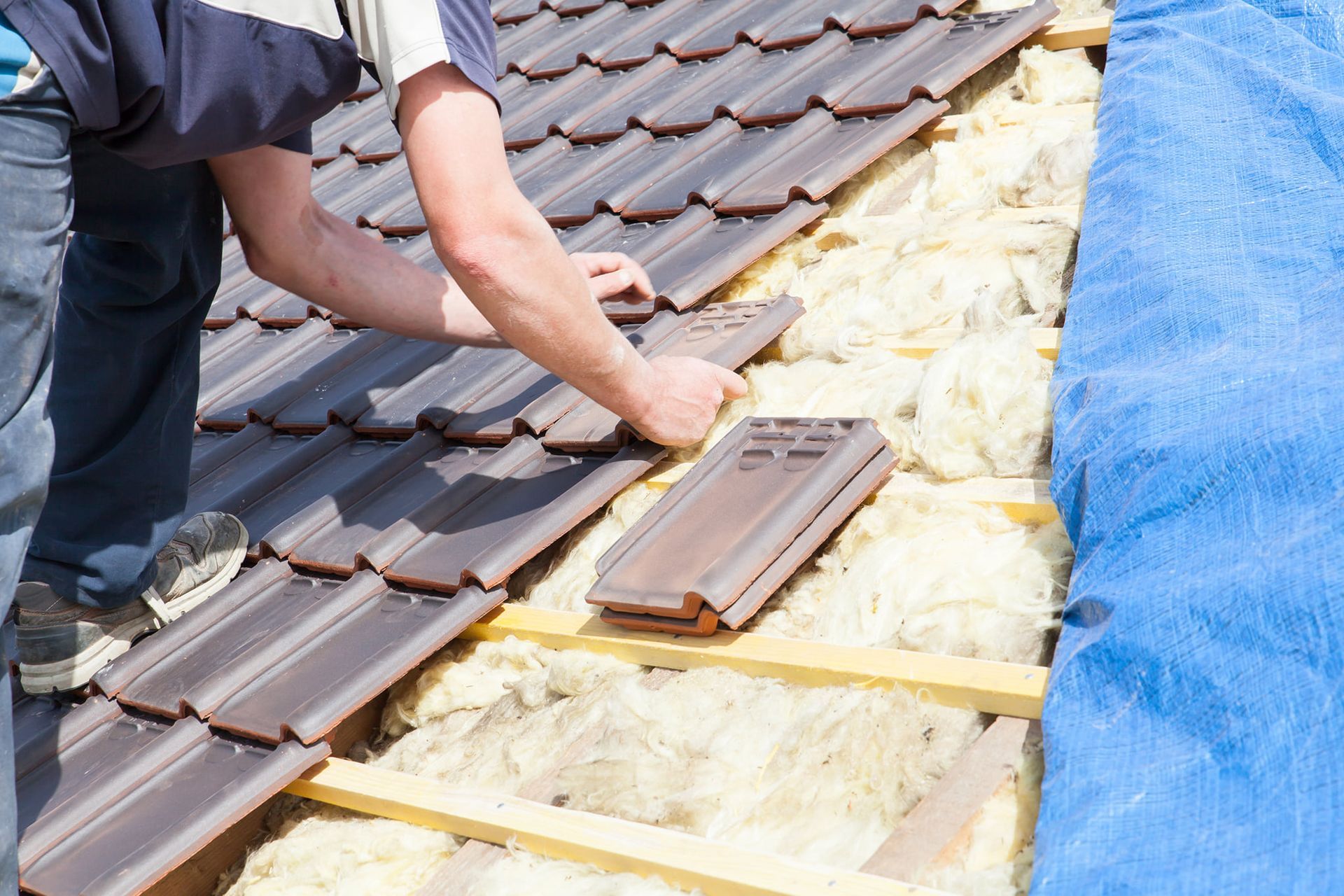
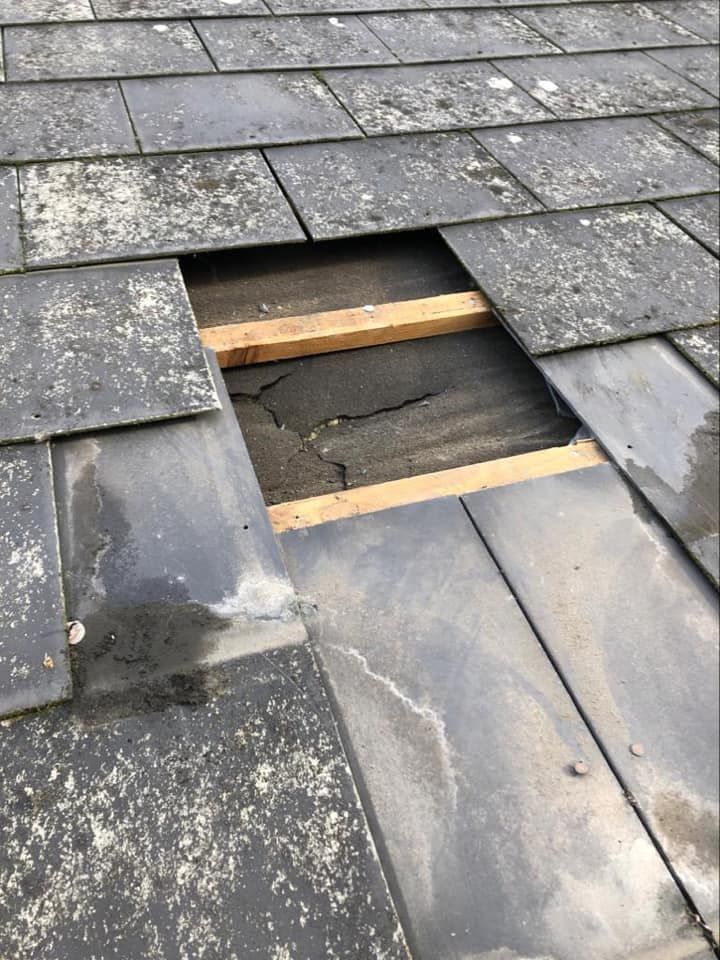
Slipped or cracked tiles are very common on concrete tile roofs in Chaddesden and Spondon, particularly after freeze-thaw cycles in winter.
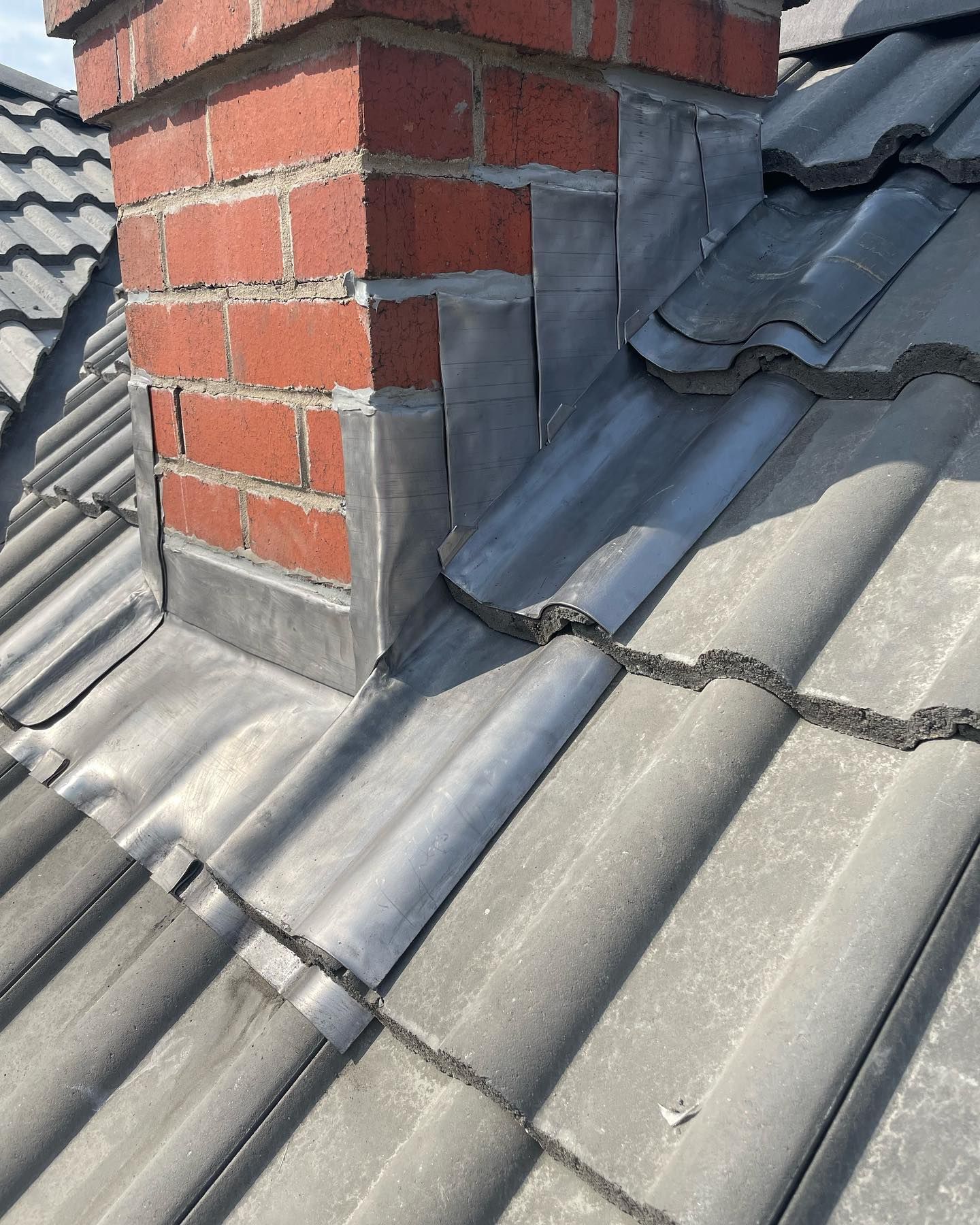
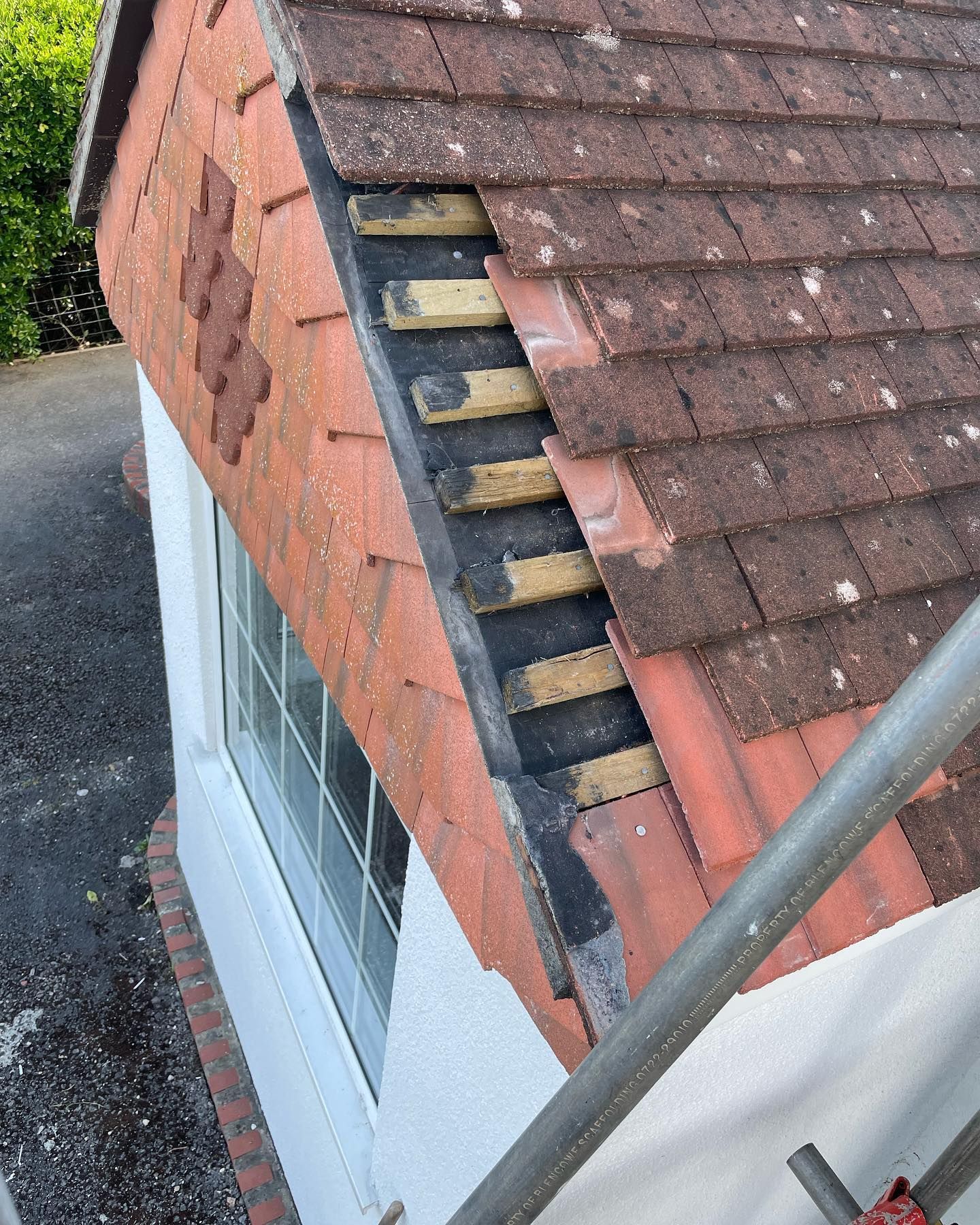
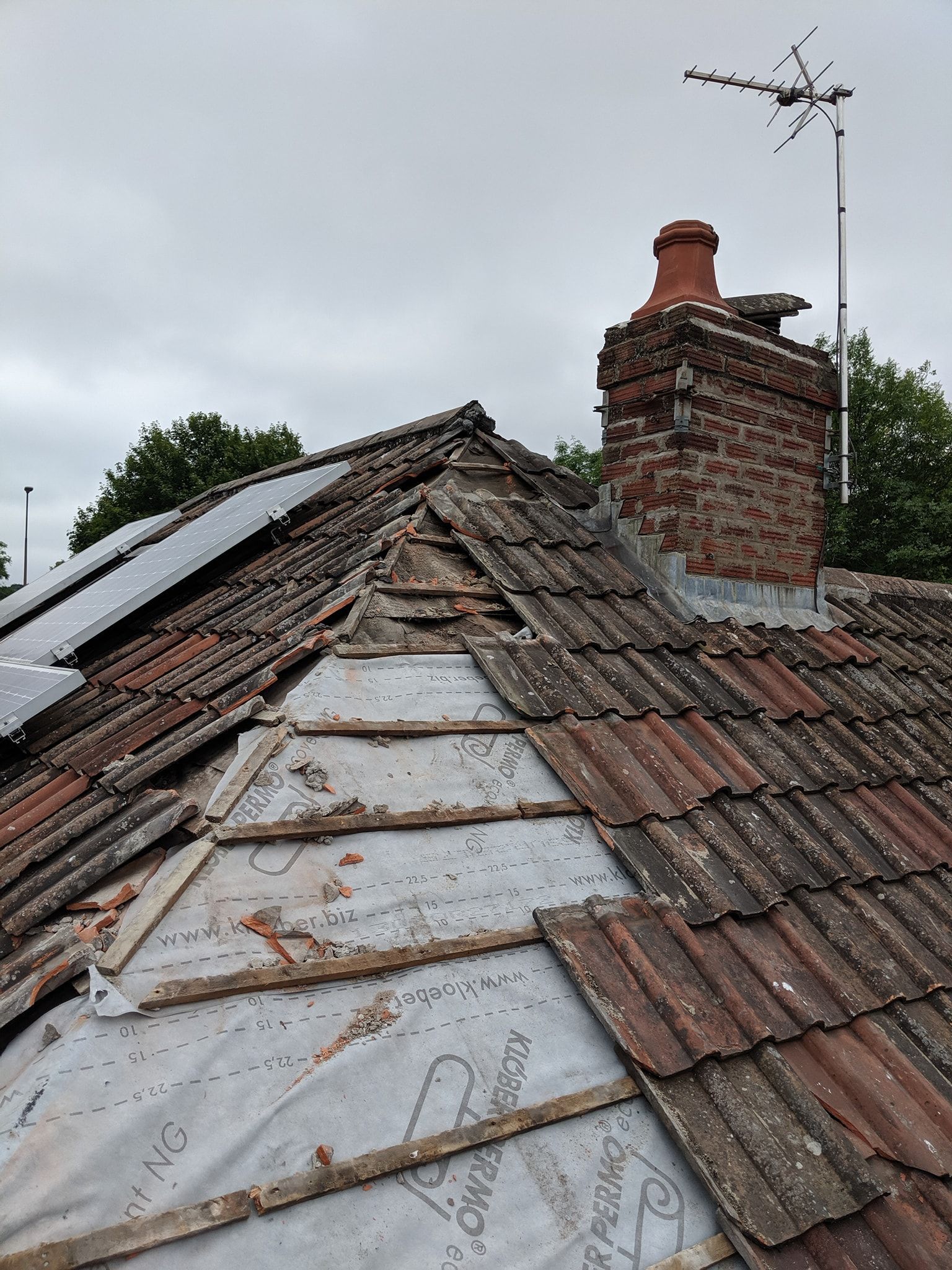
Failed chimney flashing is the single most misdiagnosed roof leak in Derby. The lead seal around the base of the chimney stack fails silently and is routinely blamed on tiles.
Cracked mortar on the chimney stack allows water to soak into the pointing during prolonged rain and travel down inside the breast wall.
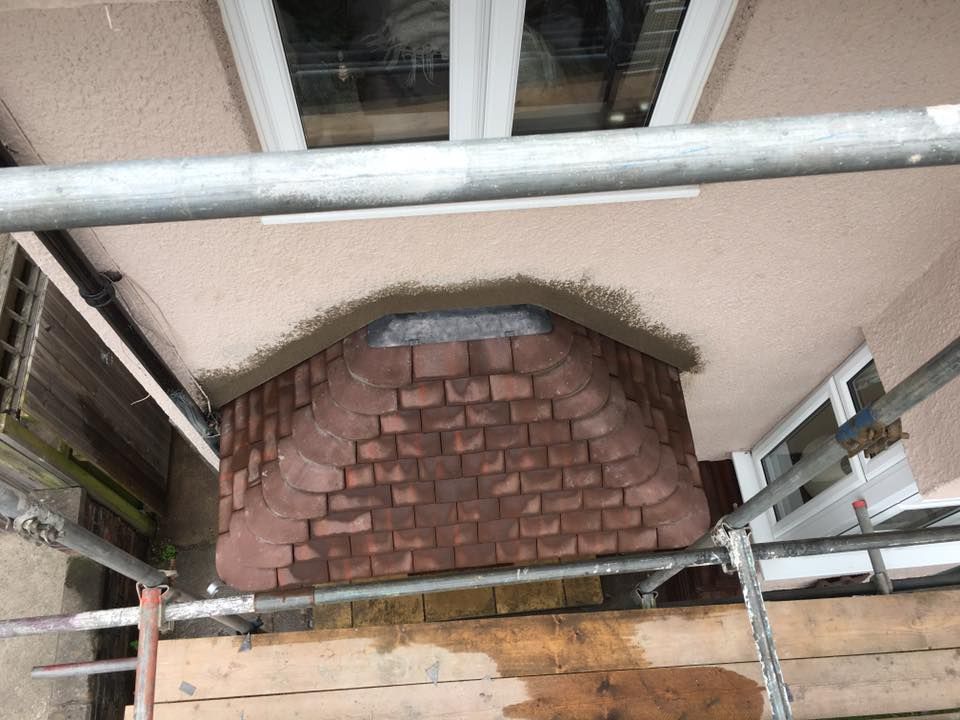
A failed flat roof membrane is a common cause of leaks on bay window extensions and single-storey rear extensions across Normanton and Allestree.
Blocked valleys or gutters cause water to back up and find any weak point in the roof covering.
Quick guide to likely causes
- If you have a damp patch on your ceiling after rain, the most likely cause is a slipped or cracked tile.
- If the damp is appearing on your chimney breast wall, the most likely cause is failed flashing or cracked mortar.
- If the leak only happens in heavy rain or high winds, look at the flashing, valley, or pointing.
- If you have wet patches but there has been no recent rain, it may be condensation rather than a roof leak — see the section below.
- If your flat roof extension is leaking, the most likely cause is a split or blistered felt or GRP membrane.
We offer a free drone roof survey across Derby — no scaffolding, no ladders, a full written report with photographs. It is the fastest and safest way to find the source of a leak.
Learn about our free drone roof survey → derbyroofers.co.uk/roof-drone-survey-derby
Is It a Roof Leak or Condensation? How To Tell the Difference
This catches a lot of Derby homeowners out. Paying for a roof repair when the problem is actually condensation wastes money and leaves the real issue unsolved. We see this regularly, particularly in older Victorian and Edwardian terraced properties in Normanton and Pear Tree that have poor loft ventilation.
Signs it is a roof leak:
- Damp patches appear during or immediately after rainfall
- Staining is brown or yellow — mineral deposits from roof water
- The damp is concentrated in one area
- You can see daylight in the loft space
- There is visible damage to tiles or flashing
Signs it is condensation:
- Damp appears in cold weather, particularly on winter mornings
- Multiple areas affected at once
- The loft feels cold but the roof itself looks intact
- No obvious link to a rainfall event
- Mould growth on loft timbers or insulation
A simple ridge vent or improved loft ventilation can often solve a condensation problem without any tile work at all. We assess both possibilities on every inspection — we will not quote you for a repair you do not need.
If you are unsure which you are dealing with, our free roof inspection will give you a clear answer. Call 01332-529704.
Is Your Roof Leak an Emergency?
Not every roof leak needs a same-day response. But some do. Knowing the difference stops you from either panicking unnecessarily or leaving a serious problem until it gets much worse.
Call us immediately if:
- Water is near any electrical fitting, wiring, or the consumer unit
- Your ceiling is bulging or showing signs of collapse
- A large section of roof covering has been displaced by storm damage
- Water is entering at a rate you cannot contain
- You can see the sky through the roof from inside the loft
Urgent but not immediate — get it booked within 48 hours:
- A single tile has slipped or cracked
- There is a contained drip in one area with no electrical risk
- You have noticed a damp patch that is growing slowly
The reason the 48-hour window matters is timber. Water sitting on the same rafter through repeated rainfall events begins the process of rot. A minor repair that costs a few hundred pounds today can become a structural timber job costing significantly more if left for weeks. We have seen this pattern in Derby properties many times — and it is always cheaper to act early.
Derby Roofers offers emergency call-outs across Derby, Mickleover, Allestree, Alvaston, and the surrounding Derbyshire area. We aim to attend the same day wherever possible.
📞 Call now: 01332-529704
Why Does My Roof Only Leak in Heavy Rain or High Winds?
This is one of the most frustrating situations a homeowner can face — especially if a roofer has already done repair work and the leak keeps coming back. The explanation is straightforward once you understand how water behaves on a roof.
Light rain falls vertically. It runs off tiles and channels cleanly through gutters. Heavy or wind-driven rain is different. It hits the roof at an angle. It forces water behind flashing that would normally shed vertical rain. It saturates mortar joints in ridge tiles and chimney stacks. It backs up in valleys when gutter flow cannot keep pace.
The three most common causes of heavy-rain-only leaks in Derby:
- Chimney flashing lifted at the edges — fine in light rain, but wind-driven rain forces water behind the lead and down into the roof space. This is particularly common on Derby's older semi-detached and terraced properties with original chimney stacks.
- Saturated chimney mortar — the pointing soaks up water during prolonged rainfall and transfers it through the masonry. It dries out between showers, so the leak appears to come and go.
- Blocked or undersized valley — debris builds up and creates a dam. In heavy rain, water backs up past the tile edge and enters the roof.
If you have had repairs done and the leak returns every time it rains hard, the original cause was likely not correctly identified. We use drone surveys and detailed inspection to find the actual entry point — not just the visible damage.
Book a free roof inspection in Derby → derbyroofers.co.uk/contact-derby-roofers
How Much Does a Roof Leak Repair Cost in Derby?
Repair costs in Derby vary depending on the cause, the type of roof, and how long the problem has been left. These are realistic ranges based on the work we carry out regularly across Derby and Derbyshire.
- Single slipped or cracked tile — £80 to £200
- Chimney flashing repair or replacement — £300 to £800
- Chimney repointing — £300 to £800
- Flat roof repair (felt, GRP, EPDM) — from £100 per m²
- Ridge tile rebedding or repointing — £300 to £600
- Valley repair or replacement — £200 to £600
- Emergency out-of-hours surcharge — £100 to £300 additional on top of the repair cost
Why the range is wide
A slipped tile on a low single-storey extension costs far less than flashing work on a tall chimney stack requiring scaffolding. Access is always a cost factor. The size of the affected area, the roof material, and the time of year all affect the final price.
The cost of waiting
A minor leak left untreated allows water to reach roof timbers. Once rot sets into rafters or wall plates, the repair scope changes significantly. Acting on a small leak now is almost always cheaper than acting on the same leak after another winter. We have seen this pattern in Derby properties many times.
What to expect from us
We provide a full, itemised written quote before any work begins. No vague estimates. No surprise additions. If your roof needs work, we will tell you exactly what and exactly what it will cost.
Book a free inspection: call 01332-529704 or visit derbyroofers.co.uk/roof-repairs-derby
Does Home Insurance Cover a Leaking Roof in the UK?
The short answer is: it depends on the cause.
Usually covered:
- Roof leak caused by a storm, high winds, or a fallen tree
- Sudden, unexpected damage from an insured event
- Damage to contents caused by an insured roof leak
Usually not covered:
- Wear and tear — tiles that have deteriorated over time
- Poor maintenance — a roof that has been neglected
- Gradual deterioration that could have been prevented
- Pre-existing damage that was not reported
The test your insurer applies is simple: was this sudden and unexpected, or was it foreseeable? An old clay tile roof on a Normanton terrace that has not been inspected in a decade and develops a slow leak will not generally be covered. A tile blown off by a named storm the night before is a different matter.
What helps your claim:
- A professional roofer's written inspection report
- Photographs taken immediately after the damage
- Weather reports confirming storm conditions at the time
- Evidence that the roof was maintained before the event
We provide written inspection reports that can be used directly with insurers. If you are unsure whether your leak qualifies as an insured event, call us — we will give you an honest assessment.
Read our guide on roof insurance claims → derbyroofers.co.uk/roof-insurance-claims
Frequently Asked Questions - My Roof Is Leaking — What Should I Do
What should I do first if my roof is leaking?
Turn off the electricity at the mains if water is near any electrical fittings, then place containers to catch water, pierce any bulging ceiling areas to release trapped water, move valuables clear, and call Derby Roofers on 01332-529704.
Is a leaking roof an emergency in Derby?
A leaking roof is an emergency if water is near electrics, the ceiling is at risk of collapse, or a large area of roof covering has been displaced. For contained drips with no electrical risk, arrange a repair within 48 hours to prevent timber damage.
Why does my roof leak in heavy rain but not light rain?
Wind-driven and heavy rainfall hits the roof at an angle, forcing water behind flashing and into saturated mortar joints that would shed normal vertical rain. The three most common causes are lifted chimney flashing, saturated ridge or chimney mortar, and a blocked or undersized valley.
How can I tell if it is a roof leak or condensation?
A roof leak produces damp patches during or immediately after rainfall, often with brown or yellow staining. Condensation appears in cold weather across multiple areas without a direct link to rain, and is common in older Derby properties with poor loft ventilation.
How much does emergency roof repair cost in Derby?
Emergency callouts in Derby typically carry a surcharge of £100–£300 on top of the standard repair cost. A single tile repair starts from around £80–£200. Chimney flashing work typically ranges from £300–£800. We always provide a written quote before starting work.
Do Derby Roofers offer a free inspection?
Yes. We provide a free roof inspection and free drone survey for every new enquiry across Derby and Derbyshire. Call 01332-529704 or visit derbyroofers.co.uk/contact-derby-roofers.