Derby Roofers
Professional New Roof Installations
Call us now book a FREE consultation and FREE Quotation
FREE Drone Survey Available
Call: 01332-529704
New Roof Installation in Derby: What's Involved and What to Expect
Getting a new roof fitted is one of the biggest investments a Derby homeowner makes. Most people have never been through it before. You want to know what will happen, how long it will take, and how to make sure the job is done properly.
Derby's housing stock ranges from Victorian terraces in Normanton and Alvaston to post-war semis in Allestree and modern builds in Littleover. This guide walks you through the full journey — from initial survey to final sign-off — including the questions many roofers never raise: bats, insurance, planning rules, and what a genuine guarantee actually looks like.
We are Derby Roofers. We have been installing roofs across Derby and Derbyshire for over 20 years.
Get your free roof assessment in Derby → Call 01332-529704
The Step-by-Step Process: What Happens During a New Roof Installation in Derby
A full new roof installation in Derby involves ten stages:
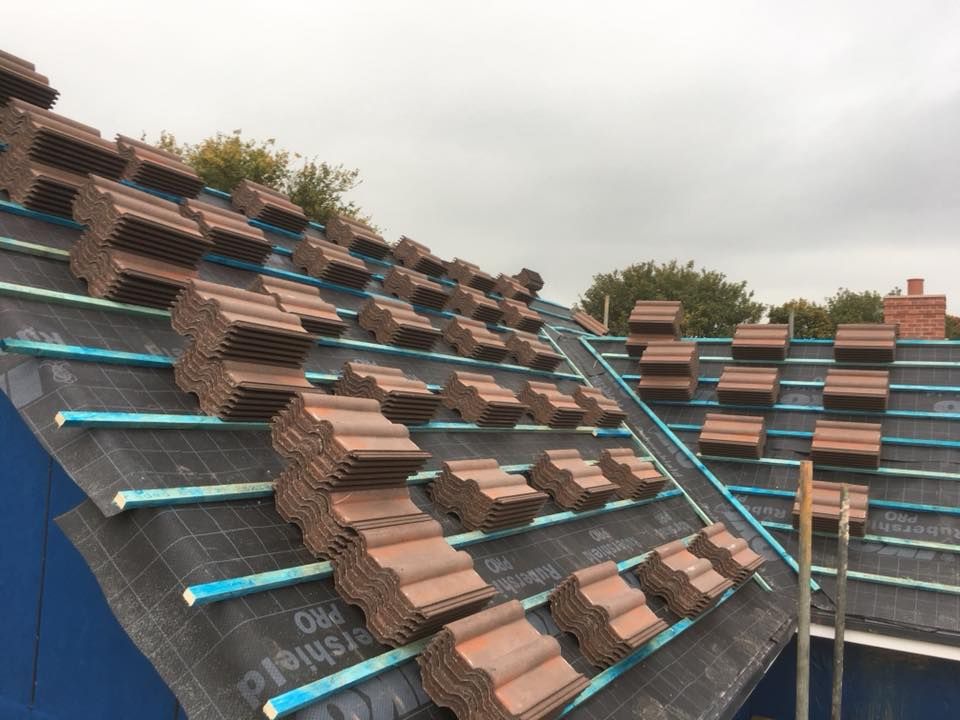
- Initial roof survey — We inspect tiles, underlay, battens, timbers, chimney, flashings, and guttering. For difficult-to-access properties, we use our CAA-compliant drone to capture high-resolution images before the report is written up.
- Scaffolding erection — Safe access is set up one to two days before stripping starts.
- Strip-out — All existing tiles, battens, and underlay are removed. Waste is disposed of by a licensed carrier. Sound natural slate or quality clay tiles may be set aside for reuse — we flag this at survey stage.
- Timber inspection and repair — Every rafter, ridge board, and purlin is checked. Rotten or damaged timbers are replaced before anything new goes on. On Derby terraced properties, we also check the shared fire-stop wall at this stage.
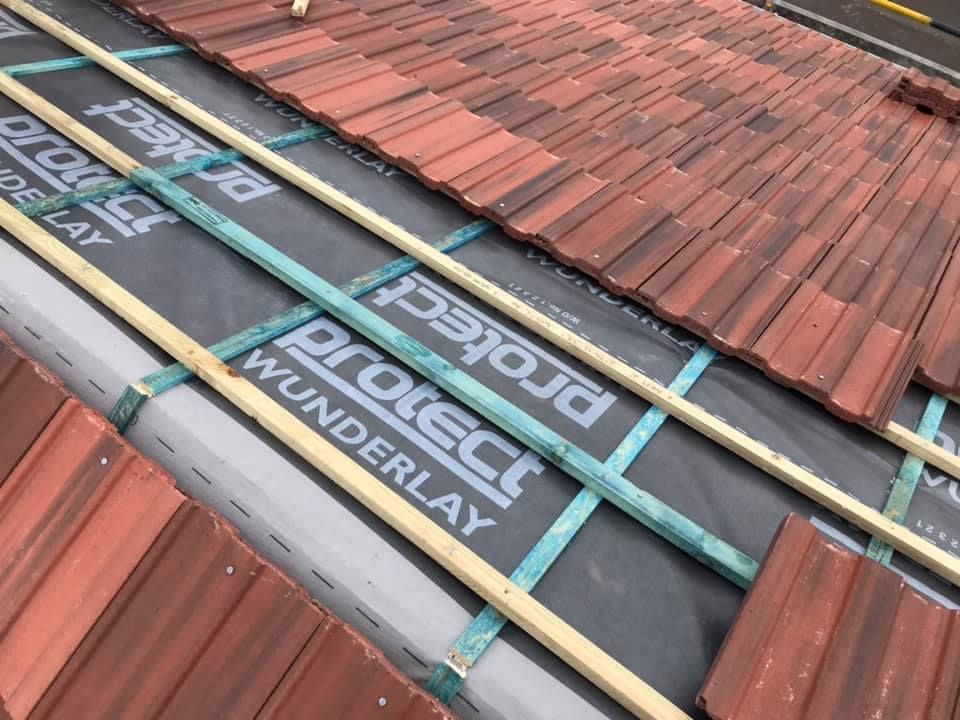
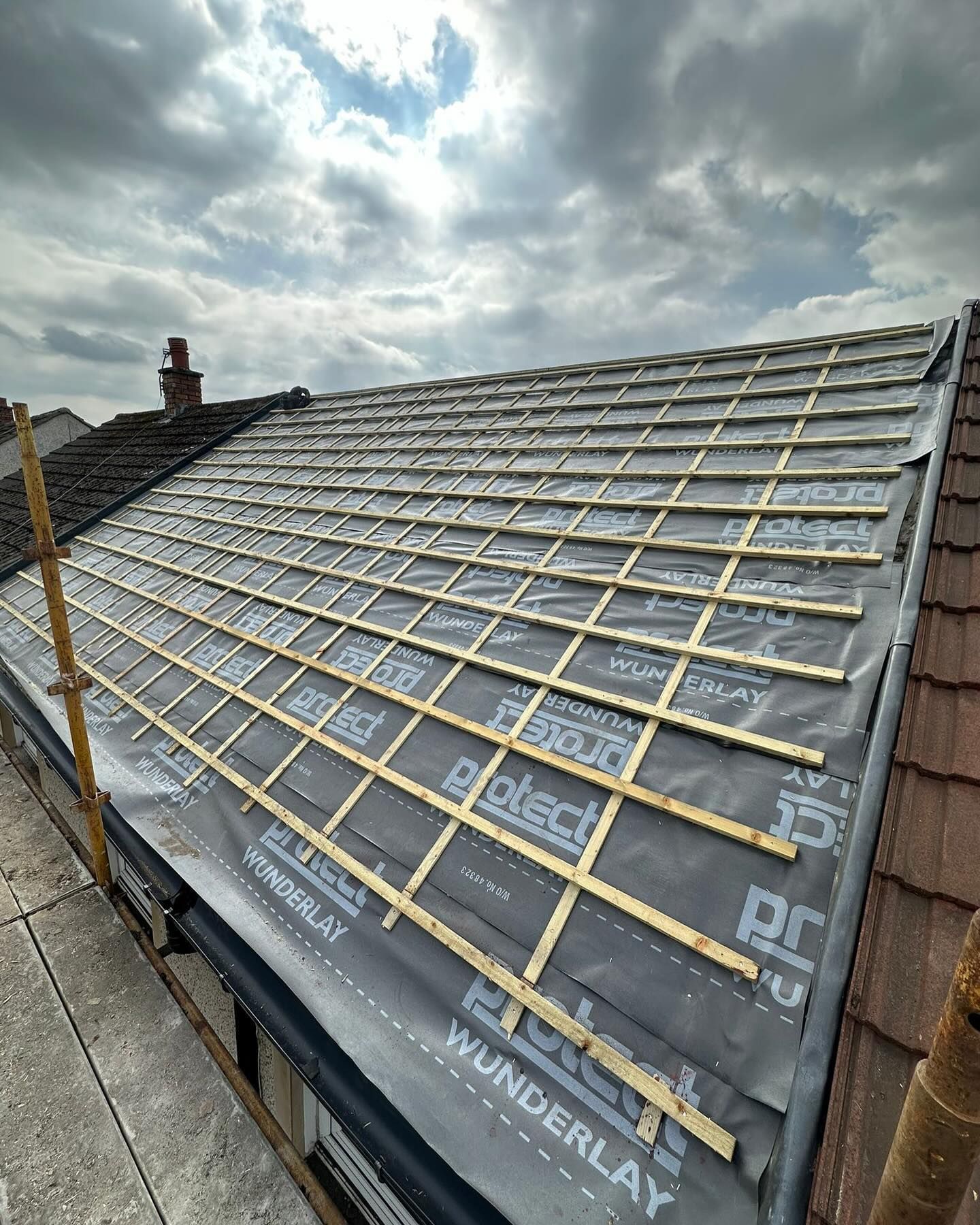
- Breathable underlay — A new breathable membrane is fitted across the full deck, replacing the old felt.
- Battens — New treated timber battens are fixed at the correct gauge for your chosen tile or slate.
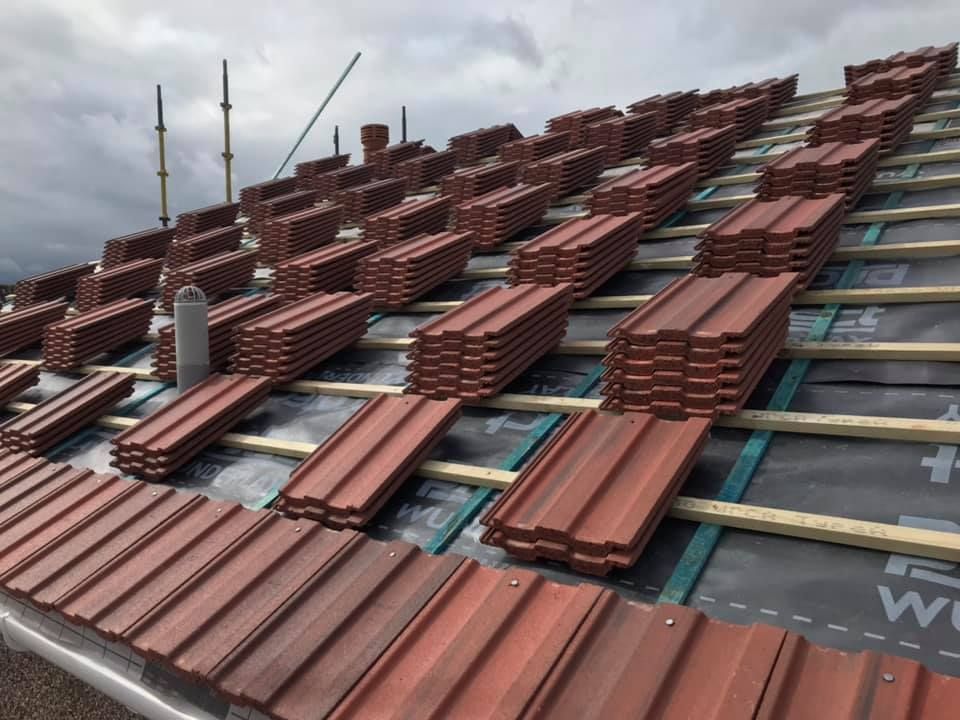
- Tiling or slating — Material is laid row by row from eaves to ridge, mixed from multiple pallets to avoid colour banding.
- Drip edge, ridge, verge, hips, and flashings — A drip edge goes in first to direct water into the guttering. Ridge tiles, hips, and verges are completed. Lead flashings around chimney stacks, valleys, and abutments are cut, dressed, and sealed.
- Insulation check and upgrade — Under Building Regulations, re-roofing a pitched roof requires insulation to be checked and upgraded to Part L standards. We handle this as part of every installation.
- Final inspection, clean-up, and documentation — Every section is checked before the scaffold comes down. You receive written Building Regulations confirmation and your workmanship guarantee.
From the field: On a terrace in Alvaston last summer, our survey picked up three snapped rafters invisible from the loft hatch — only visible once the tiles came off. We replaced them the same day. The homeowner would have had a new roof laid on a failing structure without that check.
Scaffold is also the right time to replace fascias, soffits, and guttering. Doing it now avoids a separate hire later.
How Much Does a New Roof Cost in Derby in 2025/2026?
Cost is the first question most Derby homeowners ask. The price depends on your property, your roof, and the materials you choose — but here are clear ranges to work from.
- A 2-bed terraced house typically costs between £4,500 and £6,500 for a full roof replacement, depending on the number of chimney stacks and material choice.
- A 3-bed semi-detached — the most common Derby roof replacement job — generally comes in between £5,500 and £8,000.
- Larger 3 to 4 bed detached properties start from around £7,500 and can exceed £12,000 on complex roofs with hips, dormers, or multiple stacks.
- Garage and extension flat roofs typically range from £1,500 to £3,500 depending on the system specified.
All figures cover complete replacement: scaffold, strip-out, timber repairs, underlay, tiles, and all finishing work.
Several things affect where your job lands within these ranges. Material choice makes the biggest difference — concrete tiles are the most cost-effective option, natural slate adds significantly to the cost but lasts far longer, and synthetic slate sits between the two. Roof complexity matters too: hips, valleys, dormers, and chimney stacks all require more cutting, leadwork, and skilled labour time. Timber condition is the variable most homeowners don't account for — rotten or damaged rafters found during strip-out are replaced at a day-rate, and we identify likely issues at the survey stage where possible. Always confirm whether the quote you receive includes VAT, skip hire, and licensed waste disposal — these are included in ours.
Two quotes for the same job can differ by £2,000 or more. The difference is usually in what one contractor has left out. Always ask for a written, itemised quote that specifies materials, disposal, timber allowance, and warranty terms before comparing prices.
Any quote significantly below these ranges — particularly if given verbally or accompanied by a request for a large cash deposit — should be treated with caution.
We provide free, written, itemised quotes for every Derby job. What we quote is what you pay. Request your no-obligation Derby roofing quote by calling 01332-529704 or visiting derbyroofers.co.uk/contact-derby-roofers.
Do I Need Planning Permission or Building Regulations for a New Roof in Derby?
These are two separate questions and the answers are different. Most Derby homeowners mix them up — and some roofers don't clarify the distinction.
Planning permission
Like-for-like roof replacement is permitted for development in England. In most cases, you do not need planning permission to replace your roof in Derby if you are using the same or similar materials and not changing the roof's shape or height.
You will need to check with Derby City Council's planning department if your property is in a conservation area. Parts of Darley Abbey and the Cathedral Quarter fall within designated conservation areas, and changing roof material or tile colour in these areas may require consent. You will also need to check if your property is a listed building, or if you are changing the roof form — for example, converting a flat roof to pitched or altering the ridge height.
If you are unsure, the Planning Portal at gov.uk has a free permitted development guidance tool. We also check your property's planning status as part of the free survey and will tell you before any work is booked.
Building Regulations
Building Regulations apply to almost all re-roofing work in England, regardless of whether planning permission is needed. This is the area most homeowners overlook — and some contractors fail to mention entirely.
The two regulations most relevant to a new roof installation are Part L and Part F. Part L covers the conservation of fuel and power — if you are replacing more than 25% of the roof covering, insulation must be upgraded to current standards. Part F covers ventilation — adequate roof ventilation must be confirmed or improved. This is particularly relevant for Derby's older terraced properties, which were built without any roof ventilation provision. We handle both as part of every installation.
Signs Your Derby Home Needs Full Replacement (Not Just a Repair)
- Widespread tile failure or slippage across multiple roof sections
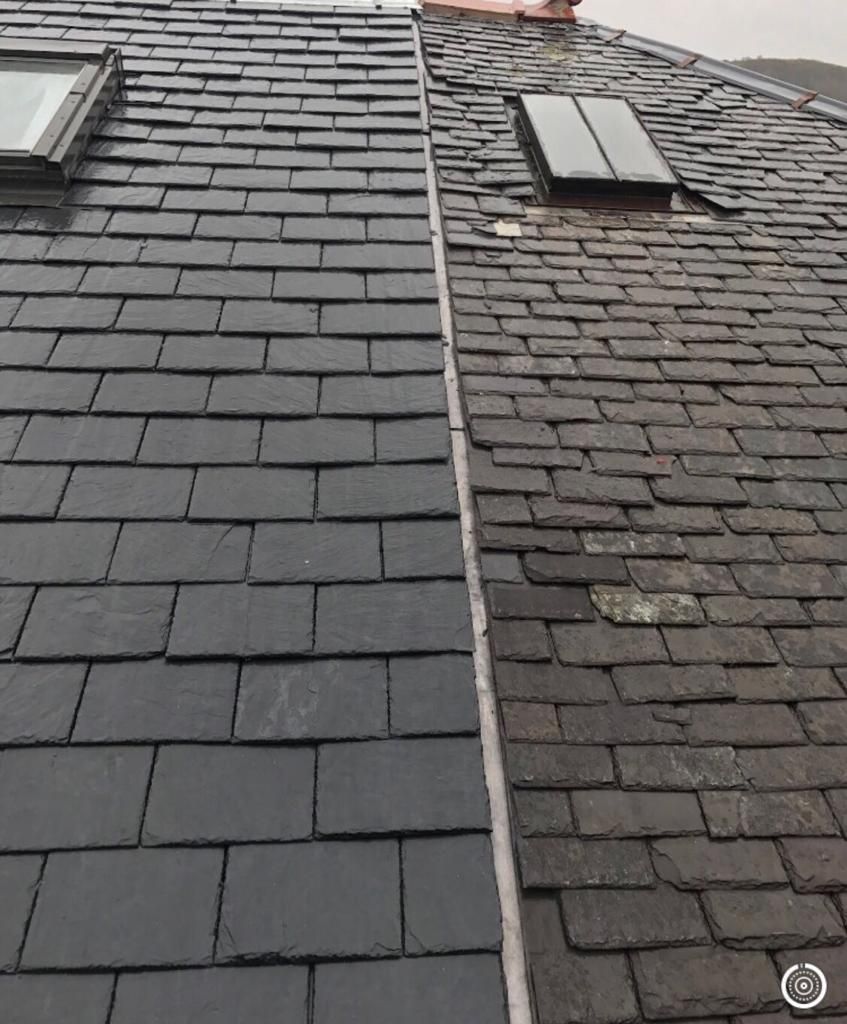
- Nail sickness — iron cut nails on Victorian and Edwardian slated roofs corrode over time, causing widespread slippage that cannot be fixed by re-nailing
- A sagging or uneven roofline indicating structural timber failure
- Failed or torn underlay — water is reaching the timbers even when tiles look intact
- Persistent leaks in more than one location
- Daylight visible through the roof from inside the loft
- A roof over 30 years old with a recurring repair history
From the field: We regularly survey Derby semis where homeowners have spent several thousand pounds on repeat repairs over a few years. A free drone survey is often the moment they see — in photographs — that the whole surface has deteriorated, not just the sections that have leaked.
How Long Does a New Roof Take in Derby, and How Disruptive Will It Be?
Most Derby homeowners want a straight answer on this. Here it is.
How long does it take?
A 2-bed terraced house typically takes 2 to 3 working days on site once scaffolding is in place. A 3-bed semi-detached — the most common job we carry out across Derby — takes 3 to 5 days. Larger 3 to 4 bed detached properties generally take 5 to 7 days. Add 1 to 2 extra days for roofs with hips, dormers, or multiple chimney stacks, as these require more cutting, leadwork, and finishing time.
On top of the installation itself, add one to two days for scaffolding to go up before work starts and one day for it to come down afterwards. From scaffold erection to scaffold removal, most Derby terraced and semi-detached jobs take seven to ten calendar days in total.
What will each day feel like?
The strip-out day is the noisiest. Tiles, battens, and old felt come off, and the skip gets filled. After that, the job becomes significantly quieter — timber repairs, underlay, and battens are followed by the steady, methodical work of tiling. The final days are spent on ridge tiles, leadwork, and flashings before the site is cleared completely.
Do you need to leave your home?
In the vast majority of cases, no. Our team works from scaffold above the roofline and the inside of your home is not accessed. If loft access is needed for insulation checks, we will let you know in advance. If you work from home, have young children, or have vulnerable occupants, the strip-out day is the one worth planning around. We always give you advance notice of the programme before work begins.
What about bad weather?
Derby and Derbyshire have unpredictable weather, particularly in autumn and winter. We monitor forecasts and plan around them where possible. Your roof is never left exposed overnight — we fit heavy-duty temporary protection at the end of every working day where the deck is not yet fully covered. Rain can pause tiling or leadwork but your property is always protected before we leave site.
Spring and early summer slots book up faster than winter. If you have a replacement in mind for the warmer months, it is worth booking your survey early to secure a date that works for you.
Which Roofing Materials Are Best for Derby Homes?
The right material depends on your property type, roof pitch, any planning constraints, and your budget. Derby's housing stock is varied — and so are the correct answers.
Concrete interlocking tiles
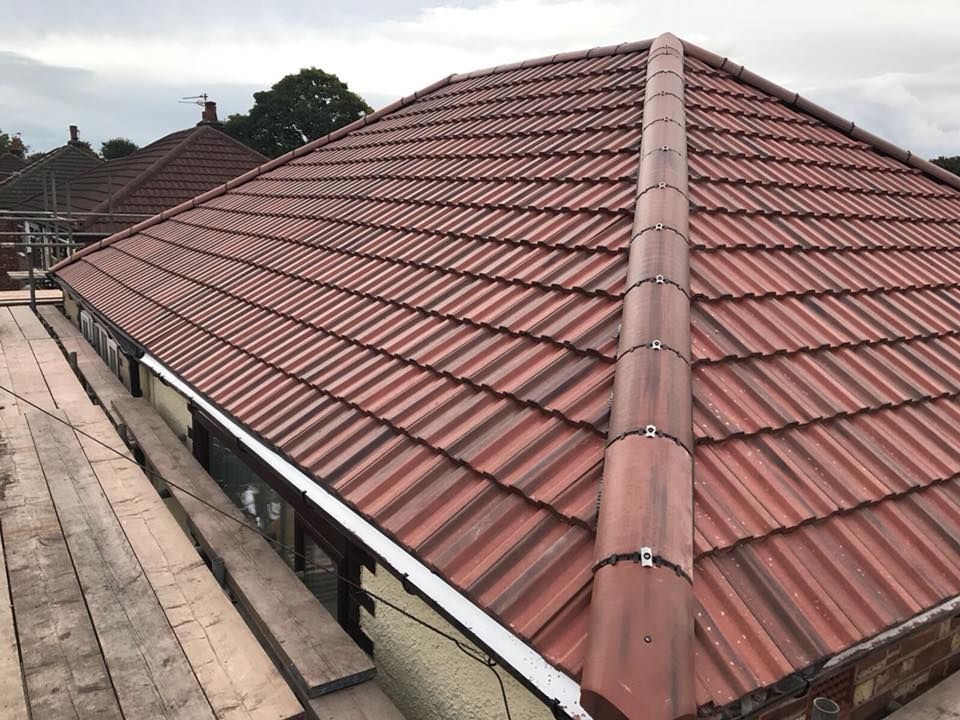
The most widely used material on Derby's post-war housing stock. Fast to lay, durable, and available in a wide range of profiles and colours. A practical, cost-effective choice for most semi-detached and detached properties across Derby. Standard lifespan of 30 to 40 years.
Clay plain tiles
Traditional on Derby's Victorian terraces and Edwardian properties. Clay tiles are required in several conservation areas where planning restrictions apply. They are highly resistant to Derbyshire's wet winters and temperature swings, and when correctly installed, clay plain tile roofs routinely last 60 years or more.
Natural slate (Welsh or Spanish)
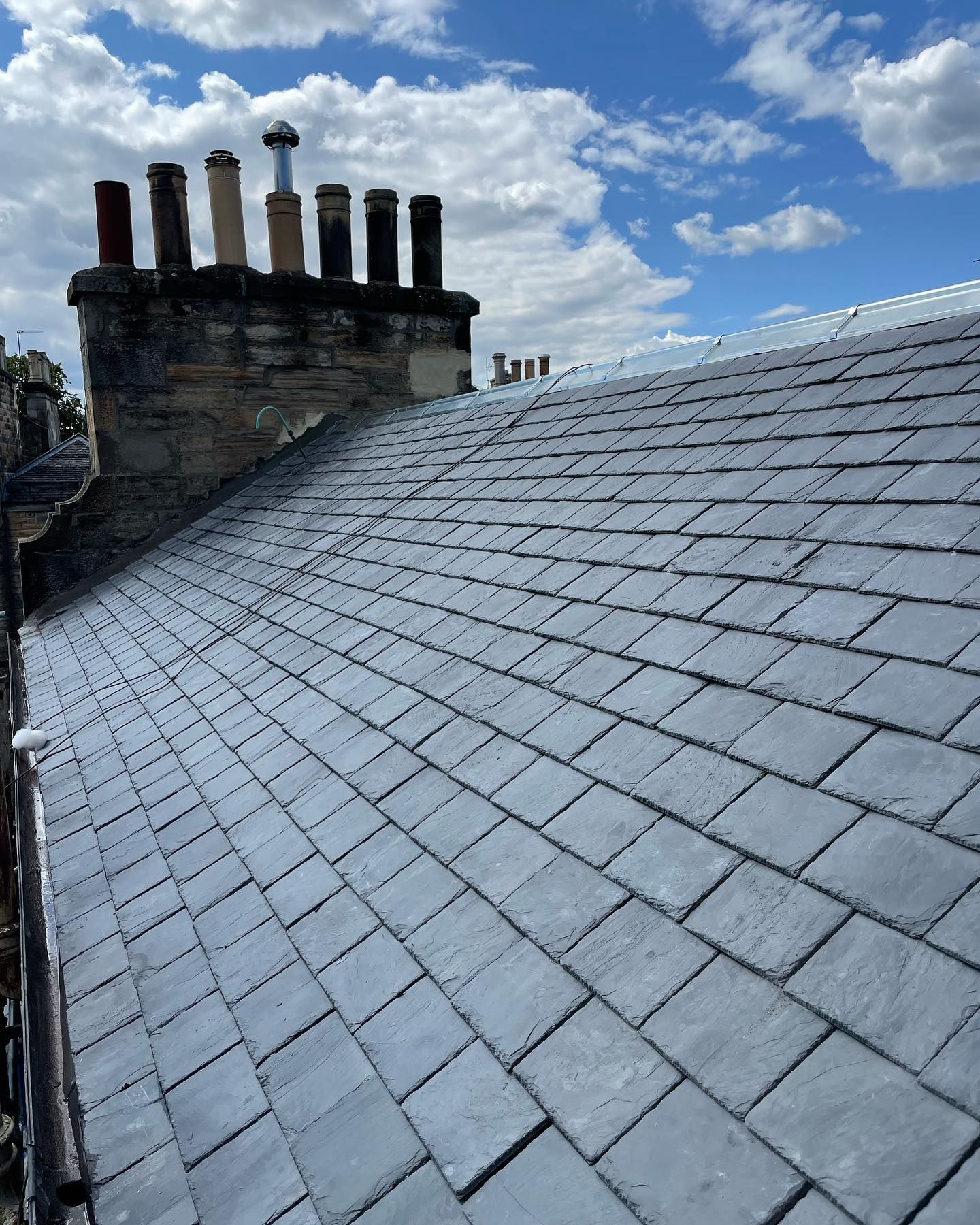
A premium material with a long lifespan. Natural Welsh slate, when correctly installed, can last well over 100 years. It is required on some period properties and often preferred in Derbyshire's stone belt villages. Natural slate is heavier than other options — rafter condition must be checked before specifying it. The material and labour cost is higher, but the long-term replacement frequency is significantly lower.
Synthetic slate
A lightweight composite material that closely replicates the appearance of natural slate. A good option for properties where the timber structure cannot carry the weight of natural stone, or where budget makes natural slate impractical. Better-quality synthetic slates carry manufacturer warranties of 30 to 40 years.
Fibre cement slate
A lighter, cost-effective alternative to natural slate. Popular on Victorian terrace replacements in Derby where budget is a factor but the aesthetic of a plain tile is not the preference. Typically carries a 30-year manufacturer guarantee.
Flat roofing systems
For extensions, garages, bay roofs, and commercial properties. We install EPDM rubber roofing, GRP fibreglass, and felt flat roofs across Derby. EPDM systems, when correctly installed, can last 50 years or more. GRP fibreglass is the most popular choice for residential extensions — seamless, low-maintenance, and UV-resistant.
A note on ventilation
Ventilation is part of the material decision, not an afterthought. Under current Building Regulations, adequate roof ventilation must be confirmed or upgraded when re-roofing. Many of Derby's older properties have no ventilation at all. We specify the correct ventilation provision for your chosen tile and roof construction as standard on every job.
Clay tiles are required in several Derby conservation areas, so if your property sits within one, material choice may not be entirely open. Natural slate is heavier than all alternatives — we always confirm rafter condition before specifying it. We advise on the right material for your property, pitch, and planning status at the free survey, with no obligation to proceed.
Victorian and Edwardian Terraces in Derby: Special Considerations
Derby has a large stock of pre-1919 terraced housing across Normanton, Alvaston, Spondon, and Pear Tree. These properties need specific attention before any roof work begins.
Nail sickness: Original iron cut nails corrode over 80–100 years. Once widespread, individual re-nailing is not a fix — the roof needs stripping and relaying with new fixings.
Original Welsh slate: If sound, it is worth reusing. We assess original slates at survey and include our recommendation in the written report. Recycled tiles weather to match the streetscape better than new alternatives.
Shared chimney stacks and fire-stop walls: We inspect the fire-stop wall condition before stripping and always communicate with neighbours before work starts. Lead flashing on a shared stack must be correctly detailed on both sides.
Ventilation retrofitting: Pre-1919 roofs were built without ventilation. We install appropriate eaves and ridge ventilation to meet current Part F requirements on every terrace re-roof.
Conservation areas: Replacing Welsh slate with concrete tiles on a conservation area street may require planning consent from Derby City Council. We check your property's planning status before the survey.
From the field: On terrace jobs in Derby, we carry out a full fire-stop wall check before stripping. It takes five minutes and has saved several very awkward conversations with neighbours mid-job.
Bats and Your Roof in Derby — What You Legally Need to Know
⚠️ Read this before any roofing work begins if your property is pre-1960.
All UK bat species are European Protected Species. It is a criminal offence to disturb, injure, or destroy a bat roost — even if bats are not present when work begins. Penalties include an unlimited fine and up to six months' imprisonment. Both the contractor and the homeowner can face prosecution.
Derbyshire has well-documented bat populations in older building stock — common pipistrelle and brown long-eared bats are regularly found in pre-1960 Derby properties, particularly near the River Derwent.
Signs of bat roost activity:
- Small dark droppings near the ridge or eaves that crumble to powder when rubbed
- Grease marks around gaps at the eaves or beneath ridge tiles
- Squeaking sounds from the roof space at dusk between May and September
If you suspect bats: Stop. Do not start work. Contact Natural England on 0300 060 3900. Commission a survey from a licensed bat consultant — surveys must be carried out between April and October. If bats are confirmed, a European Protected Species mitigation licence is required before roofing work can legally proceed.
We check for bat indicators at every pre-roof survey on older Derby properties. If we see signs, we stop and advise you before any work is scheduled.
Will a New Roof Affect My Home Insurance?
Most standard home insurance policies require you to notify your insurer of major building works. A full roof replacement meets that threshold. If your roof is stripped back and a weather event occurs before it is re-covered — and you have not notified your insurer — a claim could be rejected.
Before work starts:
- Call your insurer and notify them of the works, the contractor's name, and the expected dates
- Ask to see your contractor's public liability insurance certificate (minimum £2m) and employers' liability insurance before work begins
- Confirm weatherproofing arrangements for each day the deck is open
We provide insurance documentation on request. Your property is never left exposed overnight — heavy-duty temporary protection is fitted at the end of every working day as standard.
After completion, ask your insurer whether the new roof and updated insulation affect your premium. Some policies offer reductions.
Guarantees, Warranties, and How to Choose a Trustworthy Derby Roofer
Workmanship guarantee — Covers the quality of the installation. Derby Roofers provides written workmanship guarantees of up to 20 years, and longer on certain products.
Manufacturer product warranty — Separate from workmanship, covering the tile or roofing material against defects. We use BBA-approved materials with full manufacturer warranties.
Insurance-Backed Guarantee (IBG) — A policy from a specialist insurer that protects you if the contractor ceases trading during the warranty period. Without an IBG, your guarantee is only as good as the business behind it. Ask any roofer who underwrites theirs and how you would make a claim.
Accreditation to check: NFRC membership (nfrc.co.uk), CompetentRoofer registration (competentroofer.co.uk), TrustMark (trustmark.org.uk).
Red flags:
- Verbal quote with no site visit
- Full payment required upfront
- Same-day pressure to sign
- Cash only, no written contract, no physical address
We provide a written, itemised quote on every Derby job. We do not use subcontractors. The team that surveys your roof is the team that fits it.
See our reviews and credentials on Google → Call 01332-529704 or complete our contact form at derbyroofers.co.uk/contact-derby-roofers
Derby Roofers · Loscoe Grange, Loscoe, Heanor, DE75 7JY · 01332-529704 · info@derbyroofers.co.uk
Frequently Asked Questions About New Roof Installation
What is involved in a new roof installation in Derby?
A full new roof installation involves ten stages: survey, scaffolding, strip-out, timber inspection, breathable underlay, battens, tiling or slating, ridge and flashing work, insulation upgrade, and final inspection with documentation. Most Derby terraced and semi-detached homes take three to five working days on site.
How much does a new roof cost in Derby in 2025/2026?
A 3-bed semi-detached typically costs £5,500 to £8,000 for a full replacement including scaffold, strip-out, and finishing work. Terraced houses generally come in at £4,500 to £6,500. We provide free written, itemised quotes for every Derby property.
Do I need planning permission for a new roof in Derby?
In most cases, no. Like-for-like replacement is permitted development. Exceptions apply for conservation areas, listed buildings, or changes to roof form. Building Regulations do apply — we handle Part L and Part F compliance as standard.
What guarantees should I expect from a Derby roofer?
A written workmanship guarantee, a manufacturer product warranty on your chosen material, and ideally an Insurance-Backed Guarantee. Derby Roofers provides workmanship guarantees of up to 20 years. All materials are BBA-approved.