
Emergency Call-Out Services & Planned Maintenance Derby
This page sets out exactly what happens on an emergency call-out and on a planned maintenance visit, from the moment you get in touch through to the written report you’re left with afterwards. If you would rather book online than pick up the phone, you can also reach the team through our contact form, and someone gets back to you the same way we answer the phone — a real person, not an automated queue.
At a Glance
- IPAF and PASMA certified team, so working safely at height on steep pitches and chimneys is never skipped
- Same-day emergency attendance target across Derby and Derbyshire
- Written report with photos after every emergency and maintenance visit
Derby Roofers
Emergency Call-Out Services
and Planned Maintenance Services
Call us now book a FREE consultation and FREE Quotation
FREE Drone Survey Available
Call: 01332-529704
We Are Your Trusted, Local Roofing Contractor Serving Derby & Derbyshire
Don’t wait — contact Derby Roofers today for a FREE quote and a FREE drone roof survey.
📞
Call Now: 01332-529704
When your roof is letting in water, every hour matters. We are Derby Roofers, a roofing contractor based in Derbyshire with over 20 years of experience on local roofs. If you need an
emergency roofer in Derby for
storm damage, an
active roof leak, or
missing tiles, call us now on
01332-529704. If you want to book a planned inspection, the same number gets you straight to our team.
We answer the phone. We call back. We show up.
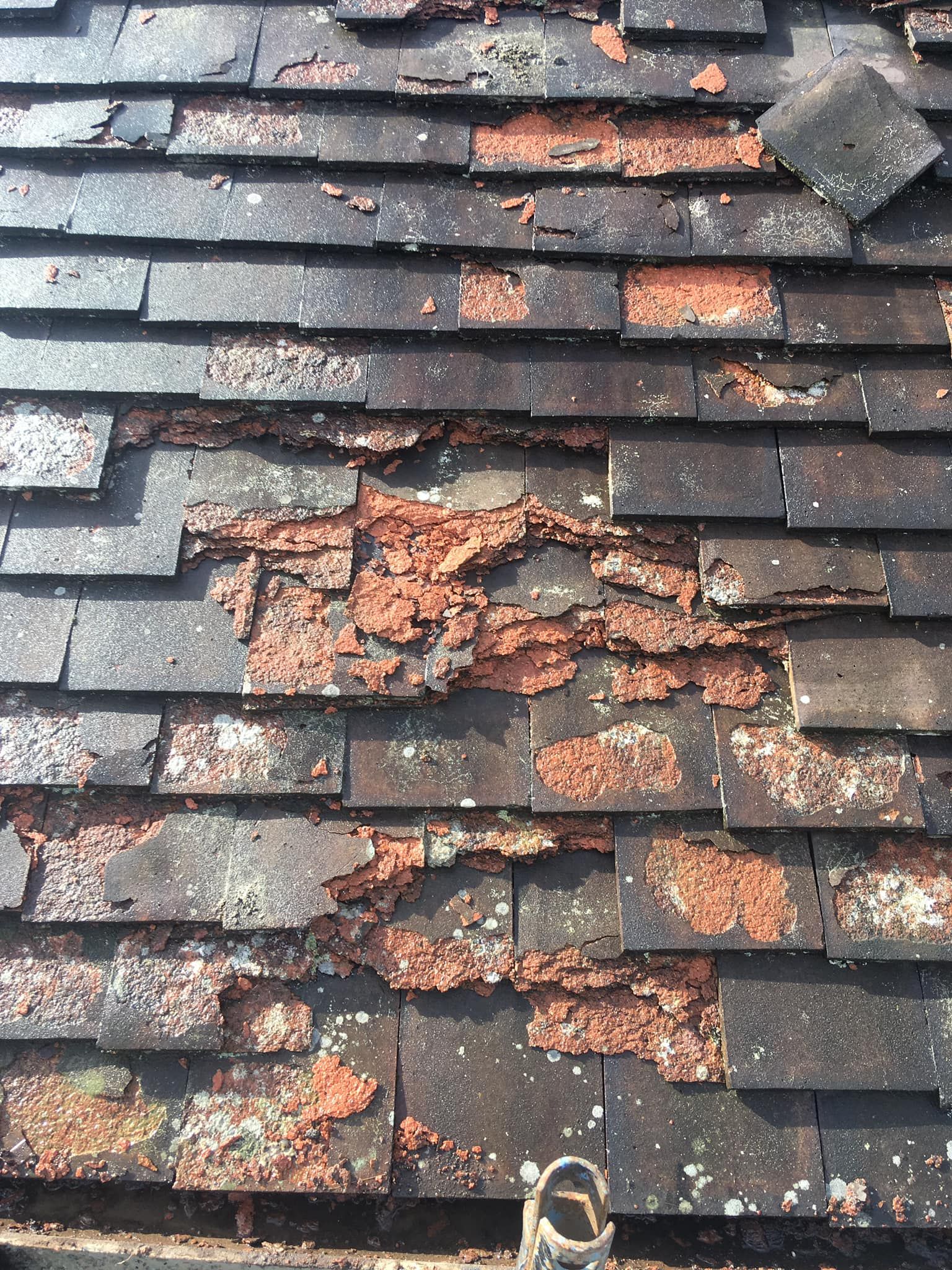
This page covers our emergency call-out service and our planned maintenance visits — so you know exactly what to expect before you pick up the phone.

What Counts as a Roofing Emergency — and When to Call Right Away
Not every roof problem needs a same-day visit. But some do — and waiting can turn a small repair into a much bigger job.
A roofing emergency is any situation where your roof is letting in water, has suffered structural damage, or poses a safety risk to anyone inside or outside the property. If you are unsure, call us. We will tell you honestly whether you need us out the same day.
Call us for an emergency if you can see any of these:
- Tiles or slates missing after a storm
- Water dripping or pooling inside your home
- A ceiling that is bulging, stained, or sagging
- Visible daylight through the roof from inside the loft
- Displaced ridge tiles, chimney flashing, or lead work
- A flat roof membrane that has split or lifted
- Damaged or blocked gutters causing water to overflow onto walls
- A fallen tree branch or debris resting on the roof structure
- Loose or hanging fascia boards after high winds
In Derby, freeze-thaw winters put extra pressure on mortar joints and clay tile ridges. A crack that looks minor in autumn can open up fast once temperatures drop.
Derbyshire’s unpredictable weather — from winter gales to heavy summer downpours — means roof emergencies can happen at any time of year, not just in storm season.
How Fast an Emergency Roofer Reaches You in Derby
We are based in Derbyshire and our target is same-day attendance for emergency call-outs across Derby and the surrounding area.
Derby neighbourhoods and areas we cover on short notice include Allenton, Sinfin, Chaddesden, Normanton, Alvaston, Oakwood, Spondon, Mickleover, Littleover, Breadsall, and Borrowash. When you call, we confirm an arrival window by phone — no vague promises, just a time you can plan around.
Here is what happens when you call:
- You speak to a real person — not a call centre or answering machine
- We ask for your postcode, a brief description of the damage, and whether there is active water ingress
- We confirm an attendance time on the same call
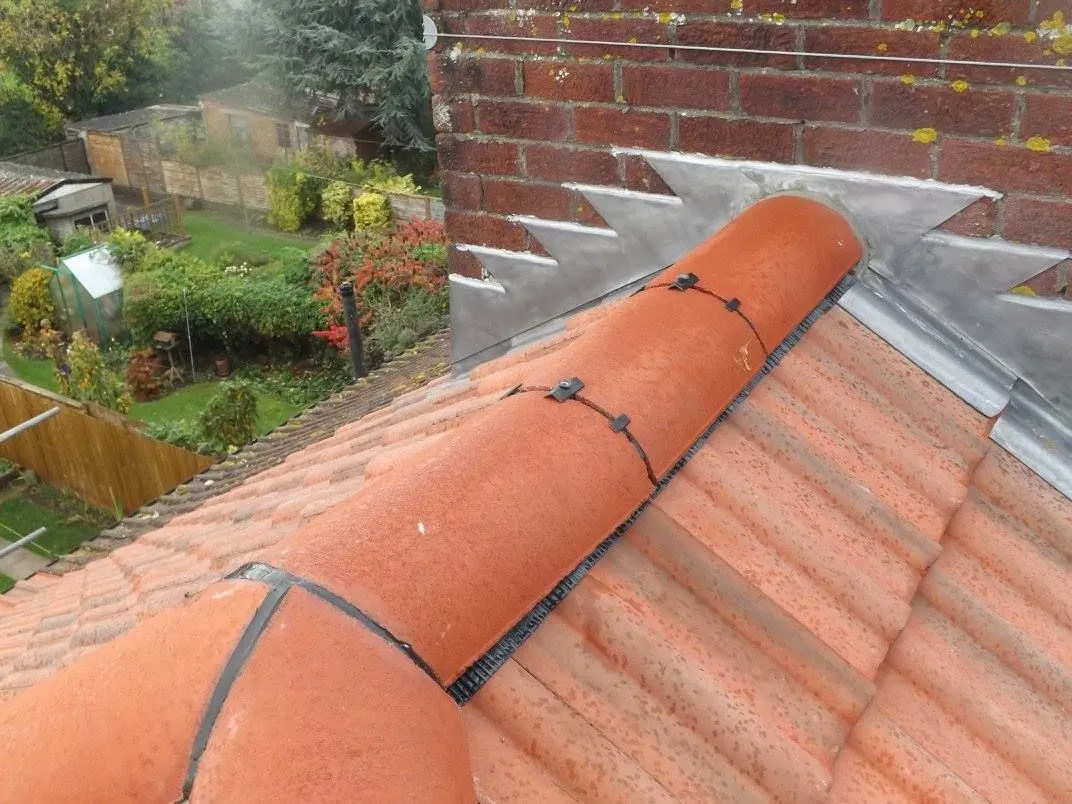
- We arrive with weatherproof sheeting, temporary repair materials, and the tools to make your property safe on the first visit
Response times can stretch during severe weather events when multiple properties across Derby are damaged at once. If that is the case, we tell you upfront and give you a realistic time.
Your next step: call
01332-529704 and tell us your postcode and what you can see.
What to Do While You Wait for the Roofer to Arrive
Getting a few things done before we arrive can significantly reduce damage inside your home.
Do these now
- Move furniture, electronics, and valuables away from the leak area
- Place buckets or thick towels under any drips
- If your ceiling is bulging with trapped water, carefully pierce it with a screwdriver to let it drain in a controlled way — this prevents a ceiling collapse
- Take photos of the damage from ground level; these support any insurance claim you make later
- Check your loft hatch — safely looking inside can show you how far water has spread
- Note when the damage started and what the weather conditions were — your insurer may ask
Do not do this
- Do not climb onto the roof yourself
- Do not attempt to nail or tape tiles in place
- Do not assume a small drip will stop on its own
- Do not use a standard tarpaulin without securing it — an unsecured sheet in wind can cause further damage
Derby’s older housing stock — including
Edwardian semis in Littleover and Victorian terraces in Normanton
— often has timber roof structures that absorb water quickly. The faster you contain the spread inside, the less secondary damage you face.
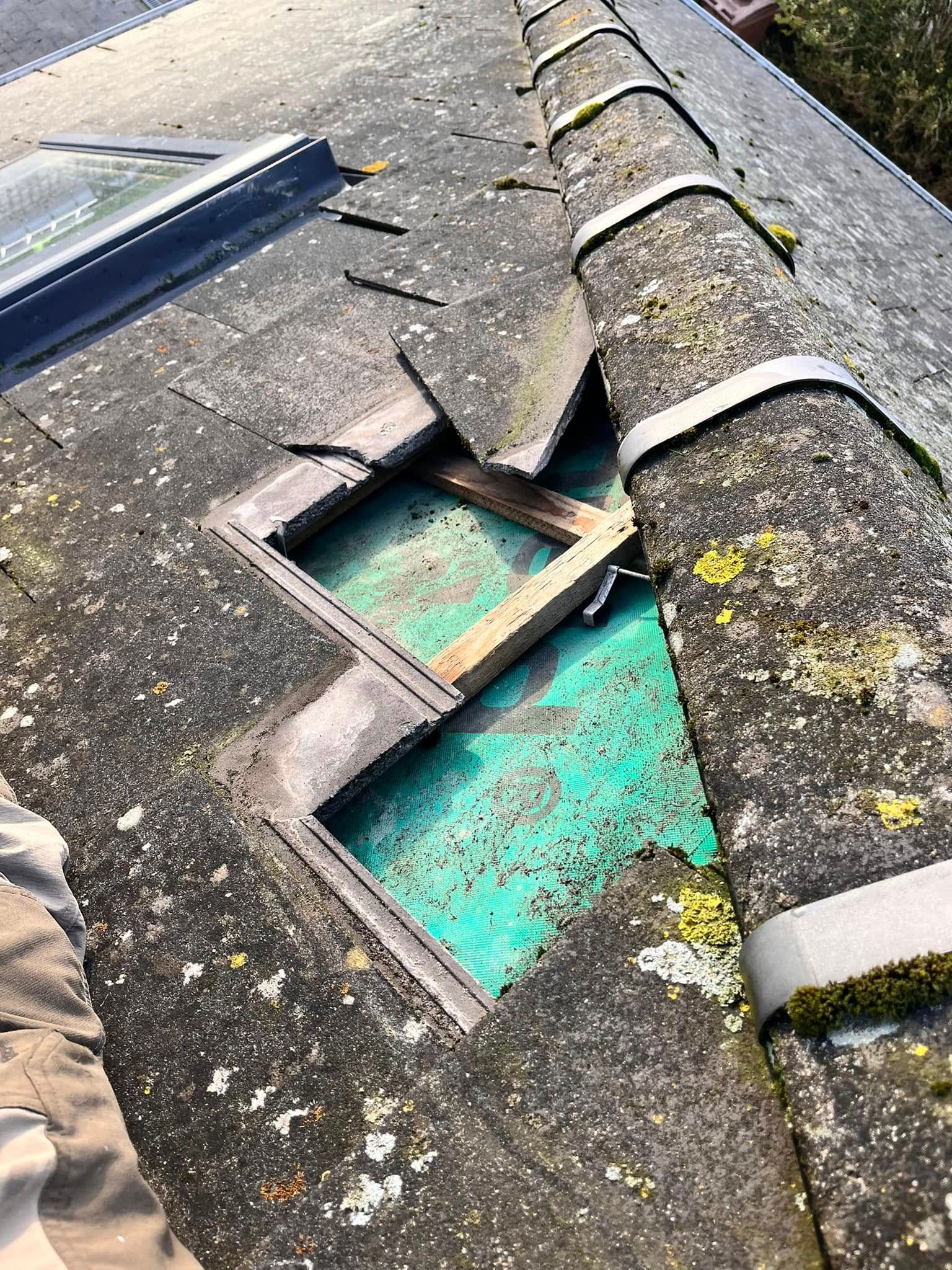
Emergency Roof Work in Bad Weather and After Dark
We carry out emergency call-outs in rain, wind, and after dark. Bad weather does not stop us from attending — but it does affect what we can safely do on the roof.
In poor conditions, our first priority is making your property watertight. We carry a full range of temporary repair materials on every emergency vehicle, including:
- Heavy-duty weatherproof sheeting secured over damaged sections
- Lead tape or sealant applied to failed flashing joints
- Temporary mortar or repair compound on cracked ridge tiles
- Emergency gutter clips and brackets for displaced guttering
- Foam sealant and waterproof membrane tape for split flat roof sections
Once your property is safe and watertight, we book the permanent repair for the next suitable weather window. You receive a written report of all work carried out on the emergency visit, plus a clear plan for the follow-up repair. That written report is accepted by most UK home insurers as evidence of professional emergency intervention.
Derbyshire autumns and winters bring regular gales off the Pennines. Night call-outs are not unusual for us. Our team carries equipment and materials for out-of-hours work as standard.
Storm Damage Roof Repair Derby
Storms are the single most common cause of emergency roofing call-outs in Derby. After a significant weather event, we see a sharp rise in calls from homeowners across the city — and the damage is often worse than it first appears from the ground.
Common storm damage we repair across Derby includes:
- Blown-off or cracked ridge tiles on pitched roofs
- Lifted or missing concrete, clay, and slate roof tiles
- Displaced or failed lead flashing around chimneys and dormer windows
- Split or lifted EPDM, felt, and GRP flat roof membranes
- Blocked or broken gutters and downpipes from wind-blown debris
- Damaged fascias, soffits, and barge boards
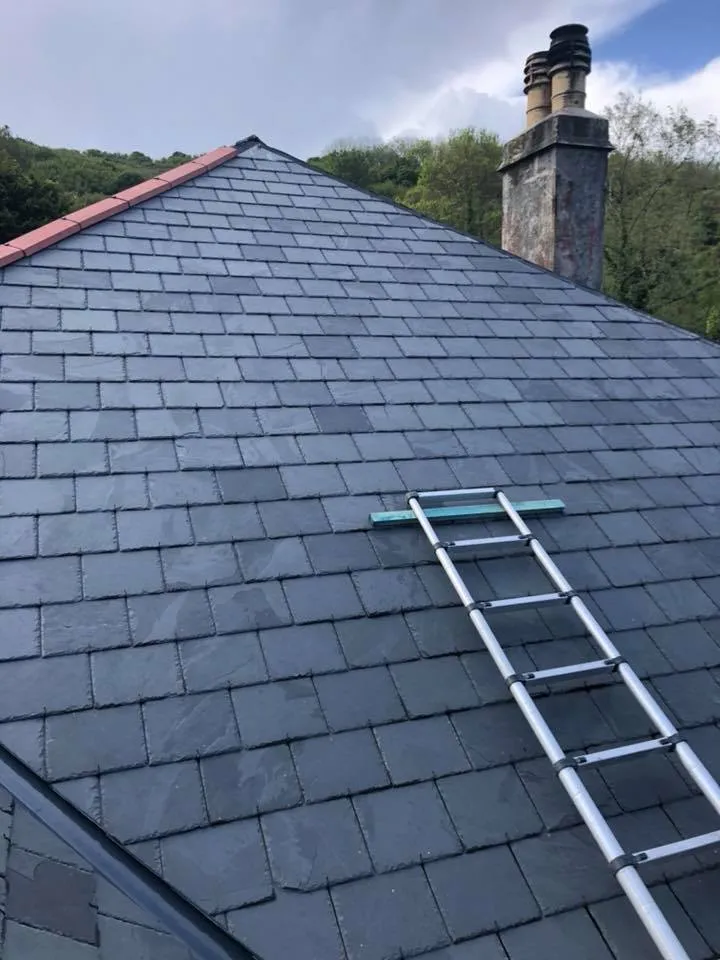
After a storm, we recommend booking an inspection even if you cannot see obvious damage from the ground. Many storm-related faults — cracked ridge mortar, lifted underlay, hairline splits in flat roof membranes — are only visible from roof level.
What a Planned Roof Maintenance Visit Covers
A planned maintenance visit is the best way to avoid an emergency call-out. We come to you before a problem becomes urgent, check everything that matters, and give you a clear written report.
Planned maintenance costs far less than emergency call-outs. Catching a failing flashing joint or a blocked gutter on a scheduled visit takes minutes to fix. Left until it becomes an emergency, the same fault can mean water damage to ceilings, walls, and insulation — costing many times more to put right.
Here is what a standard maintenance visit includes:
- Full visual inspection of all tiles, slates, or flat roof membrane
- Ridge, hip, and verge check — repointing flagged if mortar is failing
- Flashing inspection at chimney stacks, abutments, and skylights
- Gutter and downpipe clear — blockages are a leading cause of water ingress in Derby
- Fascia and soffit check — signs of rot or lifting noted
- Flat roof membrane check — splits, blisters, or pooling water identified
- Lead work inspection — joints and soakers examined for movement or cracking
- Check for moss, algae, and lichen growth — common on Derbyshire roofs and a cause of tile deterioration if left untreated
- Internal loft check if access is available — looking for signs of damp, water staining, or daylight
- Written report with photos and a list of recommended actions in priority order
At the end of every planned maintenance visit, you receive a written condition report. This documents the current state of your roof, flags any repairs needed, and gives you a priority order so you can plan and budget confidently.
Landlords and property managers in Derby find planned maintenance visits useful for keeping properties compliant,
meeting insurance policy maintenance requirements, and avoiding reactive repair costs between tenancies. We can set up an annual schedule so your roof is checked at the same time each year.
How Often Derby Homes Need a Roof Inspection
The recommended minimum for most UK properties is a professional roof inspection once a year. For flat roofs, twice a year is advisable — once before winter and once after. After any significant storm across Derby or Derbyshire, an inspection is recommended regardless of your regular schedule.
Some roof types need closer attention:
- Clay pantile roofs — common on older properties in areas like Ripley and Belper — are prone to mortar failure and need checking annually
- Flat roofs — EPDM, felt, and GRP — should be inspected every 12 months; ponding water spotted early is a simple fix; left alone it causes membrane failure
- Concrete tile roofs on post-war estates can develop hairline cracks that only show up under close inspection
- Slate roofs on period properties in Derby city centre age at different rates depending on origin and nail condition
- Newly repaired roofs should be checked within 12 months of any significant work to confirm repairs are holding
Many UK home insurance policies require evidence of regular roof maintenance. Without a documented inspection record, some insurers can reject claims or reduce payouts. A written report from a professional inspection gives you that evidence.
The NFRC recommends a professional roof inspection at least once every 12 months. Combining your inspection with a gutter clean means a single visit covers the most common causes of roof problems in one go.
If your roof has not been inspected in the past two years, now is a good time to book. Call
01332-529704 or use the contact form at derbyroofers.co.uk/contact-derby-roofers.
Areas We Cover For Emergency Call-Out Services & Planned Maintenance
Derby Roofers proudly serves homeowners and businesses throughout Derby city and the wider Derbyshire area. Our local teams cover:
Derby City Areas:
- Derby City Centre (DE1)
- Allestree, Mackworth & Quarndon (DE22)
- Mickleover (DE3)
- Littleover & Normanton (DE23)
- Chaddesden, Oakwood & Spondon (DE21)
- Alvaston, Crewton & Osmaston (DE24)
Surrounding Derbyshire Towns & Villages:
- Belper (DE56)
- Ripley (DE5)
- Ilkeston (DE7)
- Heanor (DE75)
- Swadlincote (DE11)
- Ashbourne (DE6)
- Matlock (DE4)
- Borrowash & Draycott (DE72)
- Etwall & Hilton (DE65)
- Melbourne & Chellaston (DE73)
- Duffield & Little Eaton (DE56 / DE21)
- Breadsall & Darley Abbey (DE21 / DE22)
- Long Eaton (NG10)
- Castle Donington (DE74)
Not sure if we cover your area? Call us on 01332-529704 and we’ll be happy to help.
Frequently Asked Questions About Emergency Call-Out Services & Planned Maintenance
What counts as a roofing emergency in the UK?
A roofing emergency is any damage that is letting water into your property, poses a structural risk, or creates a safety hazard. This includes missing tiles after a storm, an active roof leak reaching your ceiling, a sagging or bulging ceiling, visible daylight through the roof from inside the loft, and displaced ridge tiles or chimney flashing. If you are unsure, call us — we will advise you honestly on whether same-day attendance is needed.
How quickly can an emergency roofer get to me in Derby?
We target same-day attendance for emergency call-outs across Derby and the surrounding Derbyshire area. When you call, we confirm an arrival window on the same call. During widespread storm events when multiple properties are affected, response times can extend — we will always tell you the realistic wait time upfront.
Will my home insurance cover emergency roof repair in the UK?
Most UK home insurance policies cover storm damage and sudden structural damage. Take photos of the damage before we arrive and request a written report after the visit — both support your claim. Check your policy excess and whether your insurer requires an approved contractor. Some policies also require evidence of regular roof maintenance, which is another reason to keep inspection records.
What should I do while waiting for an emergency roofer to arrive?
Move valuables away from the leak area, place buckets under drips, and photograph the damage from the ground. If your ceiling is bulging with trapped water, pierce it carefully with a screwdriver to let it drain in a controlled way. Do not climb onto the roof and do not attempt temporary repairs yourself. Note when the damage started and what weather conditions caused it — this information helps both us and your insurer.
Can emergency roof repairs be carried out in bad weather or at night?
Yes. We attend in rain, wind, and after dark. In poor conditions, our priority is making your property watertight using temporary materials — weatherproof sheeting, lead tape, or sealant — before booking the permanent repair for a safe working window. We carry temporary repair materials on every emergency vehicle as standard.
Is there a call-out charge for emergency roof repairs?
We discuss all costs with you before any work begins.
Call us on 01332-529704 and we will be transparent about what is involved before we attend.
How often should I have my roof inspected as part of planned maintenance?
At least once a year for most Derby properties. For flat roofs, twice a year is advisable — ideally before and after winter. Always book an inspection after a significant storm, even if no damage is visible from the ground. Regular inspections also help you meet insurance policy maintenance requirements and protect your claim rights.
What does a planned roof maintenance visit include?
A planned visit covers a full visual inspection of your roof covering, ridge and verge check, flashing inspection at chimneys and abutments, gutter and downpipe clear, fascia and soffit check, flat roof membrane inspection, lead work examination, and a moss and algae assessment. You receive a written report with photos and a prioritised list of any recommended repairs.
Do you provide a written report after an emergency call-out or maintenance visit?
Yes. After every visit — emergency or planned — you receive a written report documenting what was found, what work was carried out, and what follow-up repairs are recommended. This report is accepted by most UK home insurers as evidence of professional intervention.
Can a roof leak cause structural damage if left untreated?
Yes. Even a small, slow roof leak can cause significant structural damage over time. Water ingress weakens timber roof joists and rafters, encourages mould growth in loft insulation, damages plasterboard ceilings, and can affect wall structures if water tracks sideways. A fault that costs a few hundred pounds to fix when first noticed can become a thousands-pound repair job if left for a season.
What’s Included on an Emergency Visit Versus a Maintenance Check
- Emergency: same-day attendance to storm damage, active leaks, missing tiles and structural risk
- Emergency: heavy-duty weatherproof sheeting secured over damaged sections
- Emergency: lead tape or sealant applied to failed flashing joints
- Emergency: temporary mortar or repair compound on cracked ridge tiles
- Emergency: gutter clips and brackets fitted for displaced guttering, plus foam sealant and membrane tape for split flat roof sections
- Emergency: written report of the work carried out, accepted by most UK insurers as evidence of professional intervention
- Maintenance: full visual inspection of tiles, slates or flat roof membrane
- Maintenance: ridge, hip and verge check, with repointing flagged if mortar is failing
- Maintenance: flashing inspection at chimney stacks, abutments and skylights
- Maintenance: gutter and downpipe clear, fascia and soffit check, and a moss, algae and lichen assessment
- Maintenance: internal loft check where access allows, plus a written condition report with photos and priority-ordered recommendations
Not Included / Costed Separately
- The permanent repair itself is not part of the emergency visit — the call-out makes the property safe and watertight, then the permanent fix is booked separately for the next suitable weather window
- Repairs flagged during a planned maintenance inspection are quoted and scheduled separately, and only carried out once you approve them — the visit is the inspection and report, not the fix
- Call-out charges and material costs are confirmed by phone before any work starts rather than published as a flat rate, since every job’s damage and access differ
- Full re-roofing or large-scale structural work sits outside both services and is scoped and quoted as its own project
From Your Call to a Written Report
- You call and describe what’s happening: A real person takes the call. For an emergency, we ask for your postcode, a brief description of the damage, and whether water is actively getting in. For maintenance, we ask about your roof type and when it was last checked.
- We confirm a time on the same call: Emergency call-outs get an arrival window confirmed there and then, with same-day attendance the target across Derby and Derbyshire. Maintenance visits get a scheduled date, and landlords can set up an annual slot so the roof is checked at the same time each year.
- We arrive prepared for the job: Emergency vehicles carry weatherproof sheeting, lead tape, temporary mortar, gutter clips and membrane tape as standard, in any weather and after dark. Maintenance visits bring the equipment to check the roof covering, ridge and verge, flashing, gutters, fascias and loft access.
- The on-site work is carried out: On an emergency visit, the priority is making the property watertight and safe using temporary materials. On a maintenance visit, it’s a full check of tiles or membrane, flashing, gutters, fascias, lead work, moss and algae, and the loft where accessible.
- You receive a written report: Every visit ends with a written report — photos, findings, and a priority-ordered list of any recommended repairs. This is the document most UK home insurers accept as evidence of professional intervention or maintenance history.
- Follow-up work is booked if needed: Where the report flags a permanent repair, it’s quoted and scheduled for the next suitable weather window rather than rushed. There’s no obligation to proceed on the day of the report.
Emergency Call-Out or Planned Maintenance: Which One Do You Need?
| Emergency Call-Out | Planned Maintenance | |
|---|---|---|
| When to book it | Active leak, storm damage, missing tiles, or a safety risk right now | Before a problem shows up — routine yearly or twice-yearly check |
| Response | Same-day target, including bad weather and after dark | Scheduled visit at a time that suits you, or an annual slot |
| What happens on site | Temporary weatherproof repair to stop water getting in | Full visual inspection of roof, gutters, flashing and loft |
| What you’re left with | Written report of emergency work, plus a follow-up repair plan | Written condition report with photos and priority-ordered recommendations |
| Typical cost pattern | Higher, because it’s reactive repair after damage has already occurred | Lower, because small faults are caught before they cause water damage |
Why Derby Homeowners Call Us for Both Sides of Roof Care
Derby’s roof stock fails in patterns that repeat across the same streets: clay pantiles in Ripley and Belper losing their mortar, Victorian terraces in Normanton absorbing water fast through old timber structures, post-war concrete tile estates developing hairline cracks as the tiles age. Twenty-plus years working on roofs across Derby and Derbyshire means those specific faults get checked for on both an emergency call-out and a planned maintenance visit, rather than running through a generic checklist. The same team handles steep pitches, tall chimneys and awkward roof lines directly, without needing a specialist brought in separately, because our engineers hold IPAF certification for powered access and MEWP operation and PASMA certification for mobile access tower work.
Don’t Wait for a Small Fault to Become a Big Repair
A cracked ridge tile or a blocked gutter left over a Derbyshire winter rarely stays a small problem — freeze-thaw cycles and exposed weather turn minor faults into ceiling damage fast. Book a planned inspection now while it’s a straightforward visit, or call for a same-day emergency response if water is already getting in.
Ready to Book? Call Derby Roofers Today
Whether you have a roof leaking right now or you want to get ahead of problems before winter hits, we are ready to help.
For emergencies — call 01332-529704 now. We pick up, we call back, and we attend the same day wherever possible across Derby and Derbyshire.
For planned maintenance — call the same number or complete our contact form at derbyroofers.co.uk/contact-derby-roofers. We will book you a convenient inspection slot, carry out a thorough check of your roof, and give you a clear written report with no obligation to proceed.
A well-maintained roof protects your home, your contents, and your insurance position. Do not wait for a drip to become a flood — book your inspection with Derby Roofers today.
“Very friendly and professional. They delivered my job on time and at a good price.”
DERBY ROOFERS - That is what we aim to hear from customers all the time.
Get a Free Quote
🔒 Your details are safe with us. No spam, ever.