
Derby Roofers
Ridge Tile Rebedding & Repair Service
Call us now book a FREE consultation and FREE Quotation
FREE Drone Survey Available
Call: 01332-529704
Ridge Tile Repairs & Rebedding Derby — Stop Leaks Before They Spread
We Are Your Trusted, Local Roofing Contractor Serving Derby & Derbyshire
Don't wait — contact Derby Roofers today for a FREE quote and a FREE drone roof survey.
📞
Call Now: 01332-529704
Ridge tile repairs and rebedding in Derby is one of the most common jobs we carry out across Derbyshire homes. Your ridge tiles sit at the very top of your roof. When the mortar holding them fails, water gets straight in. Left too long, a small ridge problem becomes a loft leak, then a damaged ceiling, then a structural repair bill.
We carry out ridge tile rebedding, repointing, broken tile replacement, ridge cap repairs, and dry ridge system installation across Derby and the surrounding area. If you've spotted loose tiles, crumbling mortar, daylight in your loft near the apex, or damp patches near your loft apex, we can survey the roof and get the work done — usually in a single visit.
Derby Roofers has been working on roofs across Derby and Derbyshire for over 20 years. We're a local roofing contractor, fully insured, and we work on both residential and commercial properties.
Call us on 01332-529704 to book a free drone roof survey — no obligation, no pressure.
What Is Ridge Tile Rebedding? — The Short Answer
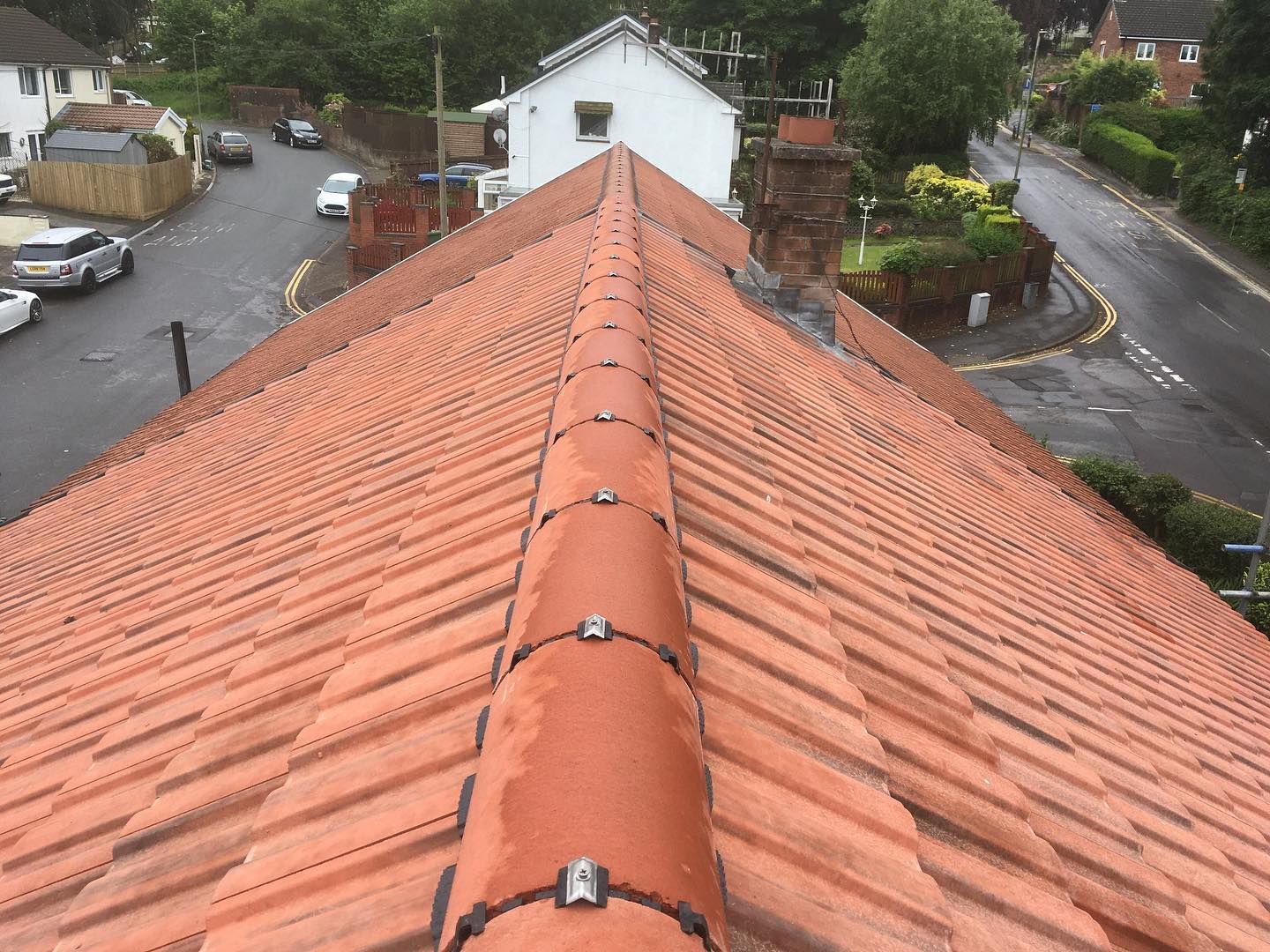
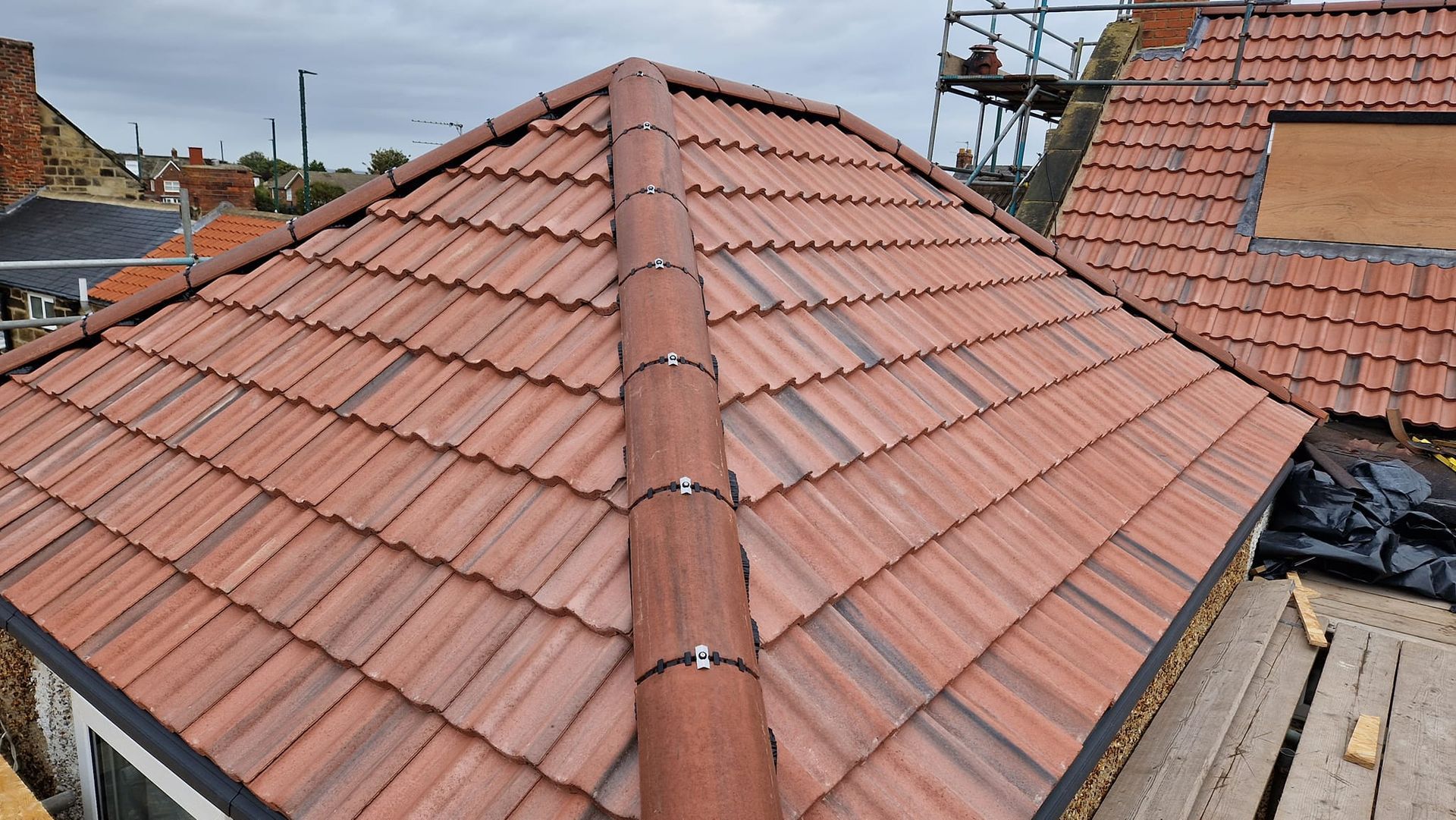
Ridge tiles are the curved or angled tiles that run along the very top of your pitched roof, sealing the joint where two roof slopes meet. Ridge tile rebedding means lifting those tiles, removing the old failed mortar underneath, and setting the tiles back on a fresh mortar bed. It is not the same as repointing.
- Rebedding — tiles are lifted, old mortar removed entirely, new bed laid, tiles reset and pointed
- Repointing — outer mortar joint renewed without removing the tiles
- Replacement — cracked or broken tiles swapped out, then rebedded and pointed
- Dry ridge — mortar-free mechanical fixing using stainless steel clips and a ridge roll
If your tiles are loose or rocking, repointing alone will not hold. The tile needs a new base — that is what rebedding provides.
Repointing a loose tile is a short-term cosmetic fix. It does not restore structural security.
How to Tell Your Ridge Tiles Need Attention
Most Derby homeowners only notice ridge tile problems after a leak has already started. You can often spot trouble from the ground before it gets that far.
Look up at the ridge line from your garden or the street. Tiles that have shifted, dipped, or show visible gaps in the mortar need checking. You may also see white chalky streaks running down from the ridge — that is mortar washing out. Inside, damp patches or watermarks near the top of your loft, close to the apex, point directly to the ridge.
Signs to look for from ground level:
- Tiles that look crooked, shifted, or lower than the rest of the ridge line
- Gaps or dark lines in the mortar between tiles
- White staining or chalk streaks on the tiles below the ridge
- Moss packed under ridge tiles, lifting them from their bed
- Damp patches or watermarks in the loft near the highest point
- Daylight visible through the ridge when you look up from inside the loft
- Mortar fragments or small pieces of cement appearing in your gutters
- Ridge tiles that sound hollow when tapped — a sign the bedding underneath has failed
Properties in exposed areas of Derby — Allestree, Mackworth, and hillside estates in particular — tend to show these signs sooner because wind and frost attack the mortar faster. After any significant storm or hard frost, it is worth a visual check from street level.
If you spot anything unusual after a storm, call us the same day — we offer rapid response surveys across Derby.
The Difference Between Repointing and Rebedding Ridge Tiles
This is the question we get asked most often. The two jobs look similar on paper but fix very different problems.
Repointing renews the outer mortar joint along the ridge line. It is the right fix when the tiles are still firmly seated and the bedding underneath is sound. It seals cracks and gaps, stops wind-driven rain from entering, and tidies up weathered mortar. It is faster and less involved than a full rebed.
Rebedding goes further. The ridge tiles are removed, all the old mortar is stripped back, and a new mortar bed is laid before the tiles go back down. If a tile rocks when you press it, or has been loose for any length of time, repointing the outside will not fix it. The tile needs a new base.
A good roofer will check each tile before recommending the approach. On many older Derby terraces, we find a mix — some tiles need repointing only, others need a full rebed. We treat each section of the ridge on its merits rather than charging for a full rebed when a repoint will do the job properly.
Repointing is best when:
- The tiles are firm and do not move when pressed
- The mortar bed underneath is still intact
- Only the outer joint is cracked or weathered
- You want a faster, less disruptive repair
Rebedding is the right call when:
- Tiles rock, shift, or sound hollow when tapped
- The mortar bed has crumbled or washed away completely
- Tiles have moved out of alignment along the ridge line
- The same section has been repointed more than once and failed again
The key difference is simple. Repointing seals the joint. Rebedding restores the base. If the tile is loose, sealing the outside will not make it secure. Repointing a loose tile may look tidy for a season, but the tile will move again and the joint will open back up.
If you are not sure which your roof needs, that is exactly what our free survey is for. We inspect the ridge, tap each tile, and tell you plainly what we find — before any work begins.
Why Water Gets In Through Ridge Tiles — and What Stops It
The ridge is the highest point on your roof. Unlike the field tiles below it, ridge tiles have no overlapping neighbour to shed water away. They rely entirely on their mortar bed and pointing to keep rain out.
When mortar cracks or dries out, even a small gap acts as a channel. Wind-driven rain — common across Derbyshire through autumn and winter — pushes water into that gap and straight down to the roof deck and felt below. From there it finds its way into the loft. By the time you see a stain on your ceiling, water has been sitting on the structure for some time.
Derby's older housing stock adds to the problem. Victorian and Edwardian terraces in areas like Chaddesden and Spondon were built with lime mortar, which is softer and more porous than modern cement mixes. It degrades faster, especially through freeze-thaw cycles. Concrete ridge tiles — common on 1960s and 1970s Derby semis — hold up better but the mortar around them still needs attention every decade or so.
What stops the water getting in:
- A properly laid and pointed mortar bed, reset on clean surfaces
- Mechanical fixing where tiles are loose or where the roof is exposed
- A dry ridge system where repeat mortar failure is the pattern
- Regular inspections to catch gaps before they become active leaks
Hip tiles — the tiles that run along the angled corners where two roof slopes meet — face the same risks as ridge tiles. If we are on your roof for a ridge repair, we will check the hips at the same time.
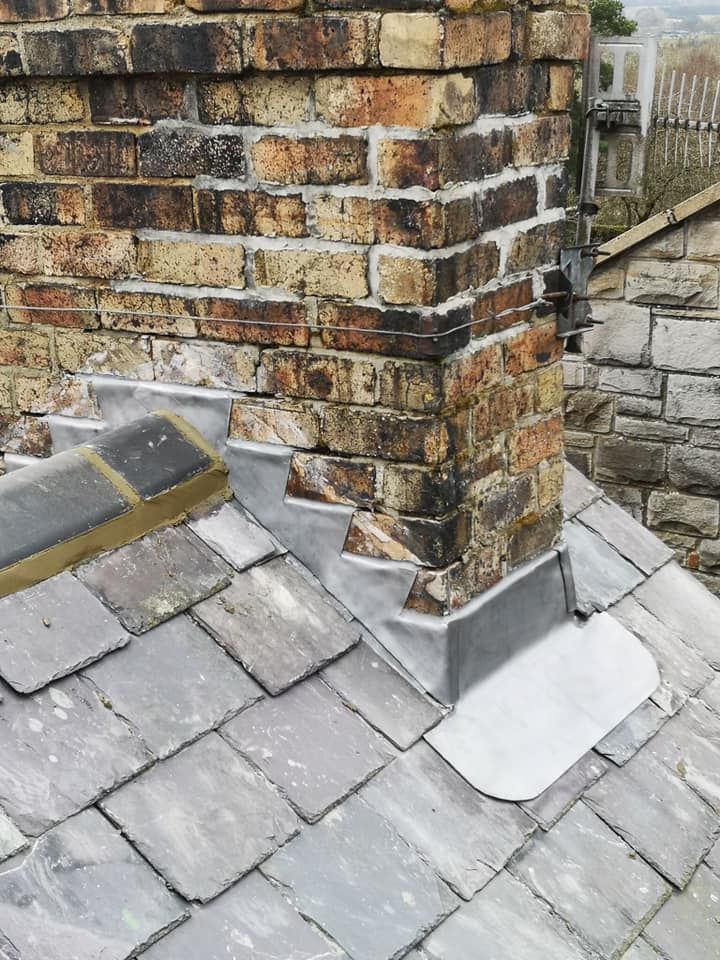
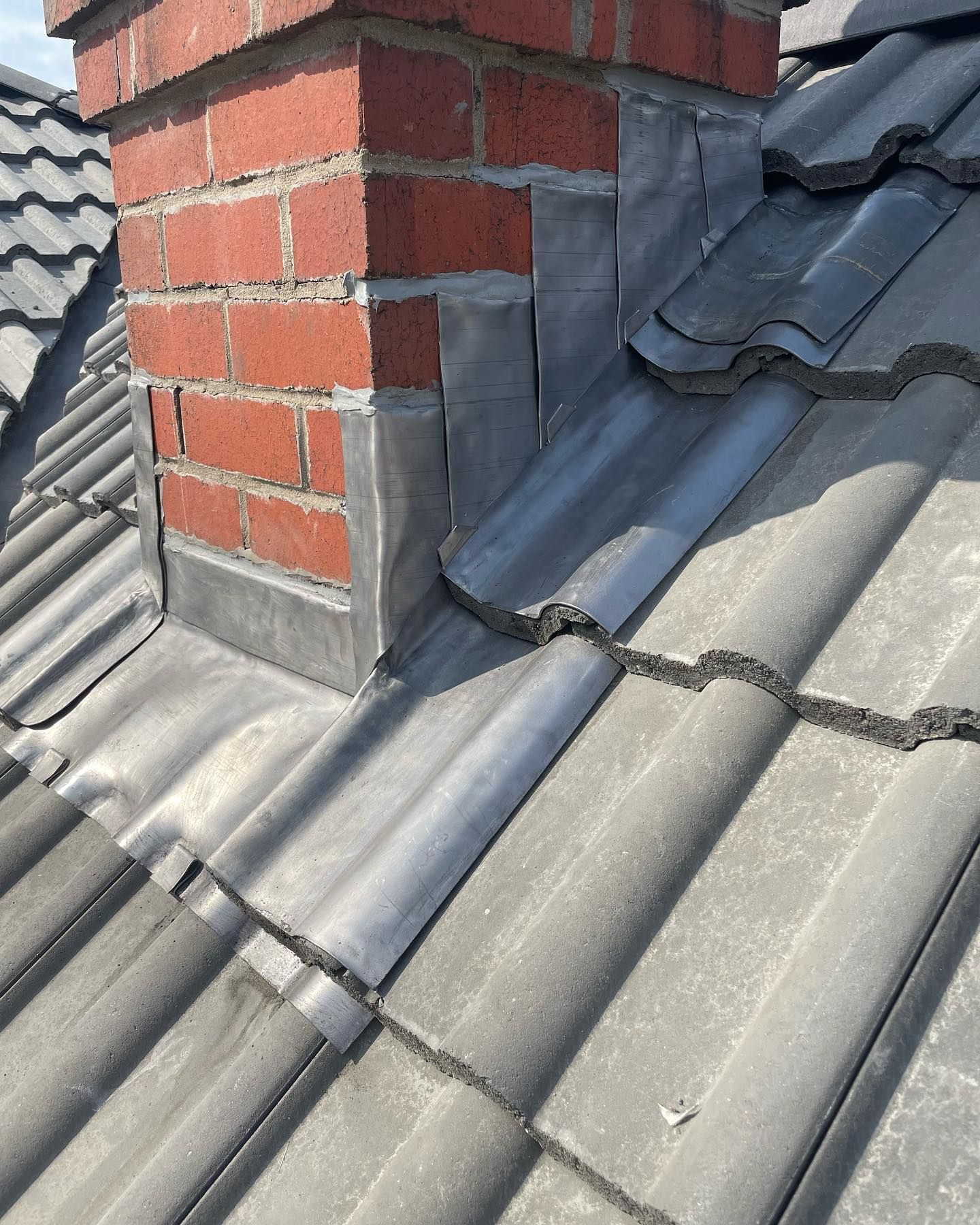
Valleys — the channels where two roof slopes meet — can also collect debris and fail at the mortar joints. We check these as part of every roof survey.
What Rebedding Ridge Tiles Involves, Step by Step
Knowing what happens during the job removes any uncertainty before you book. Here is how we carry out a full ridge tile rebedding on a Derby property.
Homeowners in Chaddesden and Spondon often ask us whether the job requires full scaffolding. On most standard Derby semis and terraces, we can access the ridge safely using a roof ladder and appropriate equipment. Your roofer will assess this before starting — it depends on the pitch, height, and position of the property.
The rebedding process:
- Roof is accessed safely — we assess whether a roof ladder or scaffolding is needed before we start, and confirm this with you in advance
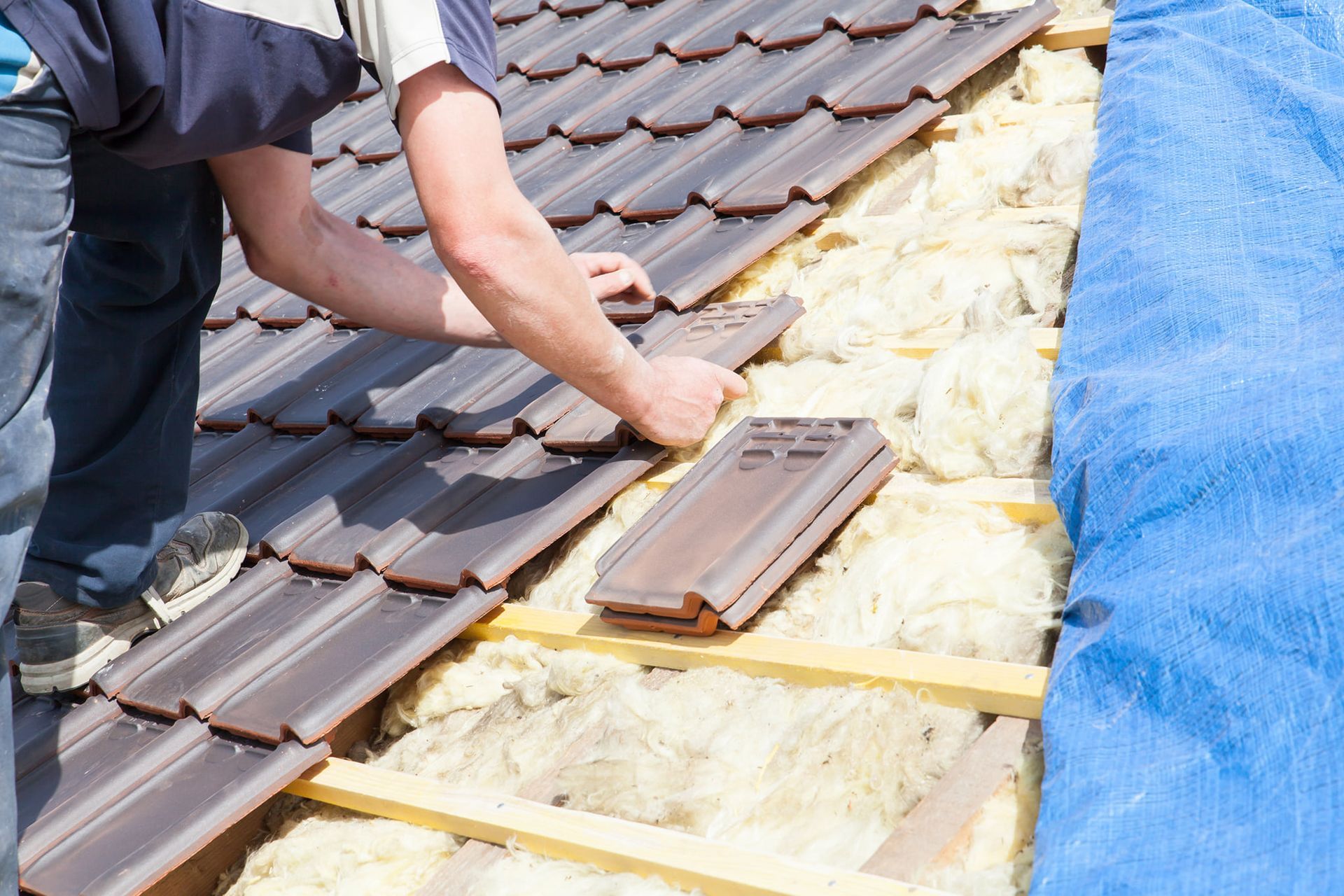
- Ridge tiles are removed carefully, one section at a time
- Each tile is checked for cracks or damage — broken tiles are set aside for replacement
- All old mortar is chipped away from the ridge board and tile haunches; surfaces are cleaned
- The ridge board and underlying structure are checked for any rot or damage while tiles are off
- A fresh mortar bed is laid at the correct angle to channel water away
- Tiles are reset on the new bed and aligned to match the original ridge line
- Both sides of each tile are haunched with mortar and pointed flush
- Where applicable, mechanical fixings are added in line with current BS 5534 standards
- The completed ridge is visually checked from roof level and from the ground before we leave
- All waste mortar and broken tile pieces are removed from the site
Where tiles match existing concrete or clay ridges on an older Derby property, we select replacements that sit as close as possible to the weathered colour of your existing tiles. A stark colour mismatch along an otherwise aged ridge line is avoidable with care at the material selection stage.
Do I need planning permission to rebed ridge tiles? In most cases, no. Repairing or replacing ridge tiles on an existing roof does not require planning permission or building regulations approval.
The exception is if your property is a listed building or sits within a conservation area — in those cases, we can advise you before any work begins.
How Long Repointing and Rebedding Takes in Derby
Most ridge tile work on a standard Derby semi-detached or terrace is completed in a single day. The exact time depends on the length of the ridge, the condition of the tiles, and the access method needed.
Derby landlords and homeowners who need to plan around tenants or schedules can expect the following as a general guide:
- Repointing only (mortar joints renewed, no tile removal): typically 2–4 hours for an average semi
- Full rebedding (tiles removed, bed stripped, tiles reset and pointed): typically 4–8 hours depending on ridge length
- Partial rebed (some tiles rebedded, some repointed): falls between the two
- Dry ridge system installation: typically one full day on a standard Derby semi
Mortar work needs dry conditions to cure properly. If rain arrives mid-job, we will protect the open ridge and return to complete — we do not rush mortar work in wet weather and expect it to hold. Derby's autumn months are the most likely to cause a delay of this kind.
In most cases, you will have your roof sealed and the site cleared on the same day we start.
If you are a landlord managing a Derby rental property, we can work around tenant schedules and provide a written report of work completed.
How Often Derby Roofs Need Ridge Tile Maintenance
Ridge tiles do not need attention every year, but they are not fit-and-forget either. The maintenance cycle depends on the fixing method, the property's age, and where it sits in Derby.
Homeowners buying older properties in Littleover and Chellaston often ask us for a straightforward maintenance schedule. Here is what applies to most Derby properties:
- Mortar-bedded ridges on properties under 20 years old: inspect every 10 years
- Mortar-bedded ridges on properties over 30 years old: inspect after every hard winter, particularly after severe frost or high winds
- Properties in exposed positions — hillside roads in Allestree, Mackworth, and similar areas: inspect every 5–7 years
- Dry ridge systems: check mechanical fixings every 15–20 years; no mortar to crack or wash out
- All properties: a quick visual check from ground level after every significant storm
Ridge mortar typically lasts between 10 and 20 years, depending on the quality of the original installation and the property's exposure to weather. Lime mortar on older Derby terraces can fail sooner. If your roof is over 20 years old and has never had ridge work, it is worth booking a survey.
An annual roof survey by a Derby roofing contractor is the simplest way to catch ridge movement early, before it becomes a leak. We offer free initial roof inspections for all new enquiries — call us on
01332-529704 to arrange a visit before you commit to any work.
Dry Ridge Systems as a Long-Term Alternative in Derby
Some Derby homeowners reach a point where they have rebedded the same ridge twice in ten years and want a permanent answer. A dry ridge system is the right conversation to have at that point.
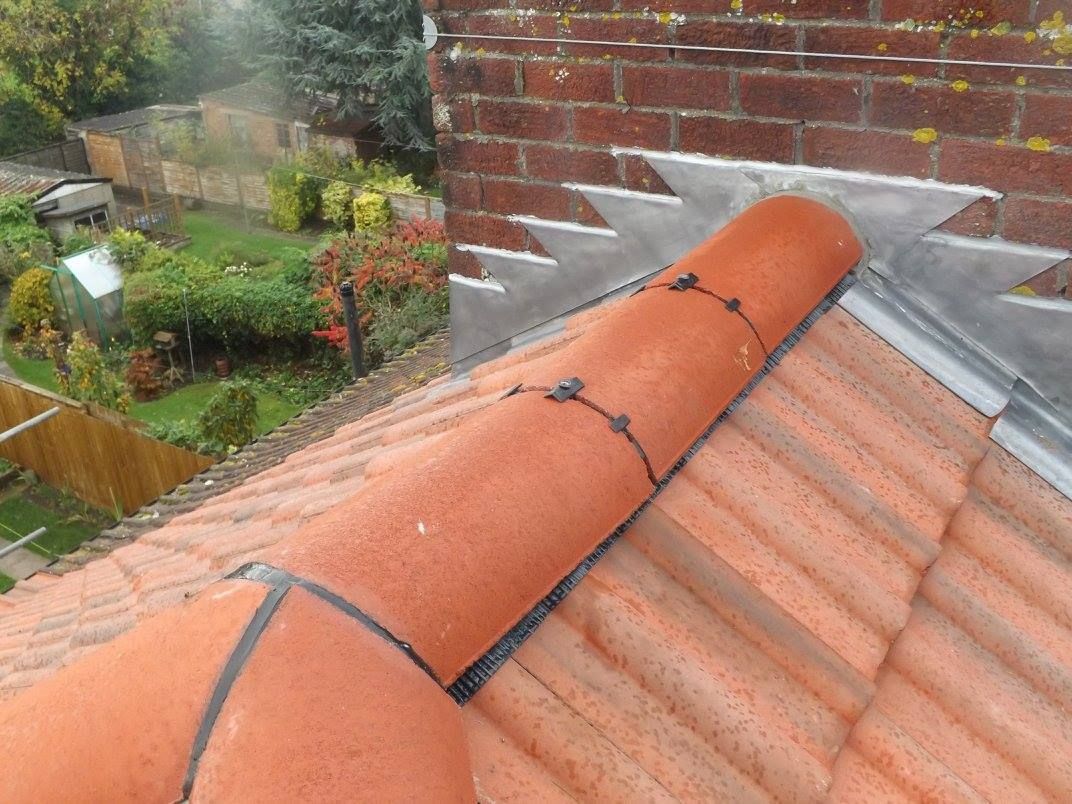
A dry ridge uses mechanical fixings — stainless steel clips, a continuous batten, and a ventilated ridge roll — rather than mortar. There is no mortar bed to crack, wash out, or need periodic replacement. The ridge tiles are locked in position and can only be released by deliberately removing the fixings.
BS 5534 — the British Standard for slating and tiling — now requires that ridge tiles on new roofs are mechanically fixed rather than relying on mortar alone. While this does not apply retrospectively to existing roofs, it reflects where best practice now sits. When we rebed ridge tiles, we add mechanical fixings where appropriate to improve wind resistance and long-term security.
Key points about dry ridge on Derby properties:
- Compatible with most concrete and clay ridge tiles used on Derby roofs
- Ventilated design reduces condensation build-up in the roof space compared to solid mortar
- Suitable for most standard pitch roofs across the Derby area
- Longer service life than traditional mortar bedding — easily 25 years or more with quality components
- The right option when repeat mortar failure is the pattern, not the exception
- No ongoing maintenance cost — no mortar to repoint, no joints to check
We install dry ridge systems alongside our standard
dry ridge and dry verge services. If you are not sure whether your roof is a candidate, we will give you an honest assessment during the survey.
There is no charge for the survey — we come out, look at the roof, and tell you exactly what it needs.
Frequently Asked Questions About Ridge Tile Repairs in Derby
Can my Derby ridge tiles be repointed without removing them?
Yes — if the tiles are still firmly seated and the mortar bed underneath is sound, we can rake out the failed pointing and apply fresh mortar without lifting the tiles. If we tap a tile and it rocks, or sounds hollow, it needs rebedding first. Repointing a loose tile will not hold.
How do I know if I need rebedding or full ridge replacement?
Rebedding is the right call when the tiles themselves are intact but the mortar holding them has failed. Full replacement is needed when tiles are cracked through, chipped badly, or so weathered they cannot hold a new mortar bed. We check each tile individually during the survey and tell you which sections need which approach.
Can loose ridge tiles be dangerous?
Yes. A loose ridge tile can fall from height in high winds. This is a safety risk to anyone below, and it can also cause damage to the roof tiles beneath when it lands. If you suspect a tile is loose, do not ignore it. Call us for a survey as soon as possible.
Do I need scaffolding for ridge tile repairs in Derby?
Not always. Most ridge tile repairs on standard Derby semis and terraces can be carried out safely using a roof ladder and appropriate access equipment. Scaffolding becomes necessary for taller properties, very steep pitches, or roofs that overhang a public pavement. Your roofer will assess this before starting and factor access into the quote — you will not be surprised by a scaffold bill mid-job.
Will my home insurance cover ridge tile repairs?
Storm damage to ridge tiles may be covered under your buildings insurance if you can prove it was caused by a specific weather event. Gradual wear and tear is usually excluded. If you are making a claim, we can provide photographs and a written report of the damage to support your case. Always check your policy wording before assuming cover applies.
Will my roof leak while the rebedding work is being done?
Ridge rebedding is carried out in sections, and we work with tiles removed only as long as it takes to prepare and relay that section. If weather closes in before the mortar has been laid, we protect the open ridge before leaving. We do not leave an unprotected gap overnight.
How soon after winter should I get Derby ridge tiles checked?
Spring is the best time to book a ridge inspection in Derby. Frost damage to mortar becomes clearly visible once temperatures rise, and a spring repair allows mortar to cure in mild, dry conditions before the autumn rains return. If you noticed anything unusual on the roof during winter — a shifted tile, debris in the gutters, damp in the loft — book a survey as soon as the weather allows.
Can I stay home while ridge tile rebedding is carried out?
Yes. Ridge work is entirely external. We do not need access to the inside of the property, and there is no interior disruption. Most homeowners carry on with their normal day while the work is done. We tidy up and remove waste before we leave.
Is it worth rebedding ridge tiles on an old roof?
It depends on the condition of the rest of the roof. If the tiles, felt, and battens below are in reasonable condition, rebedding the ridge is good value — it extends the life of the roof without the cost of a full replacement. If the roof is nearing the end of its life overall, we will tell you honestly and help you weigh up repair versus replacement.
Areas We Work — Ridge Tile Repairs & Rebedding in Derby
Derby Roofers proudly serves homeowners and businesses throughout Derby city and the wider Derbyshire area. Our local teams cover:
Derby City Areas:
- Derby City Centre (DE1)
- Allestree, Mackworth & Quarndon (DE22)
- Mickleover (DE3)
- Littleover & Normanton (DE23)
- Chaddesden, Oakwood & Spondon (DE21)
- Alvaston, Crewton & Osmaston (DE24)
Surrounding Derbyshire Towns & Villages:
- Belper (DE56)
- Ripley (DE5)
- Ilkeston (DE7)
- Heanor (DE75)
- Swadlincote (DE11)
- Ashbourne (DE6)
- Matlock (DE4)
- Borrowash & Draycott (DE72)
- Etwall & Hilton (DE65)
- Melbourne & Chellaston (DE73)
- Duffield & Little Eaton (DE56 / DE21)
- Breadsall & Darley Abbey (DE21 / DE22)
- Long Eaton (NG10)
- Castle Donington (DE74)
Not sure if we cover your area? Call us on 01332-529704 and we'll be happy to help.
Ready to Book? Here's How to Get Started
If your ridge tiles are loose, cracked, or you've spotted damp in the loft, don't wait for it to get worse. A small ridge repair dealt with quickly costs a fraction of what a water-damaged roof structure costs to fix.
Here is what happens when you call Derby Roofers:
- We take your call — we answer the phone or call you back the same day
- We arrange a free roof survey at a time that suits you
- We inspect the ridge, give you a clear explanation of what we found, and recommend the right fix
- You get a straightforward quote — no jargon, no hidden extras
- We carry out the work, usually within days, and clean up fully before we leave
Call us now on 01332-529704 or
contact us online
to arrange your free survey. We serve Derby, Derbyshire, and the surrounding areas — and we're ready when you are.