Derby Roofers
Roof Replacements & Re-Roofing Contractor
Call us now book a FREE consultation and FREE Quotation
FREE Drone Survey Available
Call: 01332-529704
Roof Repair vs Roof Replacement: How to Decide (A Derby Homeowner's Guide)
Your roof is showing problems. The question is whether you need a repair or a full replacement — and getting that call wrong costs money either way. Patch a roof that needs replacing and you will be back up on a scaffold within two years. Replace a roof that only needed a minor fix and you have spent thousands you did not need to.
We are Derby Roofers. We have been working on roofs across Derby and Derbyshire for over 20 years. This guide explains — in plain terms — how we assess whether a roof repair or replacement is the right call. We will walk you through the warning signs, the decision factors, local costs, planning rules, and the questions you should ask any roofer before you agree to anything.
If you want a straight answer for your specific roof, book a free drone survey and we will tell you exactly what you have.
Quick Answer: Should I Repair or Replace My Roof?
Repair if the damage is in one area, the roof is under 20 years old, and less than 25–30% of the surface is affected.
Replace if the roof is over 20–25 years old, you have had leaks in more than one area within the last 12 months, or the underlying structure — timbers, battens, felt — is failing across a wide area.
Rule of thumb: if the cost of putting it right is more than half the cost of a new roof, replacement will almost always give you better long-term value.
Not sure which applies to your Derby home? Book a free drone roof survey and we will give you a written assessment with no obligation.
The Warning Signs Your Derby Roof Needs Attention
Some roof problems announce themselves loudly. Others are quiet for months before the damage becomes serious. Here are the signs we see most often on Derby properties — and what each one typically means.
- Damp patches or water stains on upper-floor ceilings. This is the most common call we receive across Derby. A single damp patch after heavy rain often points to a localised issue — a slipped tile, failed flashing, or a cracked ridge. Multiple patches in different rooms suggest something more widespread.
- Missing, cracked, or slipped tiles or slates. Visible from the street or the garden. A handful of slipped concrete tiles on a Normanton terrace is usually a repair job. Widespread cracking or loss across an entire slope is a different problem.
- Ridge or hip mortar cracking and falling away. This is one of the most common faults we find on Derby properties built in the 1970s and 1980s. Mortar-bedded ridges and hips have a limited lifespan. When the mortar fails across long runs, the ridge tiles become loose and water gets in at the apex of the roof.
- Daylight visible in the loft. If you go into your loft in daylight and can see pinpoints of light through the roof structure, the felt and battens have failed. This always needs investigation and is often a sign that the roof covering has deteriorated beyond patchwork repair.
- Sagging or soft decking. Press gently on the roof surface from below or look at the roof line from the street. A sagging or uneven line indicates structural issues — wet or rotten timbers, failed decking, or battens that have deteriorated beyond repair. This is a replacement signal.
- Valley and flashing failures. Lead valleys, mortar valleys, and step flashings around chimneys and party walls are high-wear points on Derby roofs. A localised lead flashing failure is a repair. Corroded or missing lead across multiple valleys is a bigger problem.
- Flat roof extensions leaking or blistering. Flat roofs are common on Derby semis — garage roofs, kitchen extensions, bay window tops. A felt flat roof that is blistering, cracking, or ponding water has typically reached the end of its life. In most cases, a full flat roof replacement to EPDM or GRP is better value than repeated patch repairs.
- Repeated leaks after previous repairs. If a roofer has been out twice in three years to the same or different areas, the roof is telling you something. Repeated call-outs add up fast, and at some point a replacement becomes the cheaper option.
If you are seeing any of these on your Derby property, the first step is a proper inspection — not a guess. Our free drone survey covers every surface of the roof and gives you a written report with photographs before you spend anything.
Repair or Replace? The 5 Deciding Factors
Once we have inspected your roof, five factors shape the recommendation. Here is how each one works.
1. Age of the roof
A concrete tile roof under 15 years old with isolated damage is almost always a repair. The same roof at 30 years old with multiple issues is a different conversation. Natural slate is different again — a well-maintained Welsh slate roof can last over a century. Age alone does not decide it, but it sets the context for everything else.
2. How much of the roof is affected
A repair makes sense when the problem is contained to one area. When damage covers more than 25–30% of the roof surface, you are rarely getting good value from a repair. At that point you are patching a system that is failing across its whole surface.
3. The condition underneath
Tiles are the visible layer. What matters equally is what sits beneath them — the felt underlay, battens, and roof timbers. We check the loft on every survey we carry out. If the timbers are wet or stained, or the felt has broken down and is no longer providing secondary waterproofing, those findings change the recommendation.
4. How many times has it been repaired
One repair in ten years is normal. Two or three different repair jobs in three years is a pattern. When a roof starts needing repeated work in different areas, the covering is usually failing across the board. A replacement at that point stops the cycle and gives you a guaranteed roof for another 30–50 years.
5. Your plans for the property
If you are selling or remortgaging soon, a surveyor will flag a roof in poor condition. A replacement gives you a clean survey report and removes a negotiation point for buyers. If you are staying long-term, replacing a roof that genuinely needs it is an investment in 20–30 years without roofing bills.
Choose repair if:
- The roof is under 15–20 years old
- Damage is in one area only
- Less than 25–30% of tiles are affected
- The timbers and felt are sound underneath
- It is your first or second repair in ten years
Choose replacement if:
- The roof is 20–25+ years old
- You have had leaks in more than one area within 12 months
- More than a third of the surface is failing
- Timbers are wet, stained, or rotting
- You have needed repeated repairs across different areas
- You are selling, remortgaging, or planning to stay long-term
What Roof Repair vs Replacement Costs in Derby
Costs vary depending on the size of the property, access requirements, materials, and what is found once we open up the roof. These are realistic guide ranges based on the work we carry out across Derby and Derbyshire.
Roof repair costs in Derby:
- Replacing a small number of slipped or broken tiles: £150–£350
- Ridge tile repointing or rebedding (localised): £300–£700
- Lead flashing repair around a chimney or valley: £250–£600
- Flat roof patch repair (felt, EPDM, or GRP): £200–£600
- Chimney repointing: £300–£800
- Storm damage repair (multiple areas): £500–£2,500+
Full roof replacement costs in Derby:
- Standard 3-bed semi (concrete tiles): from around £5,000–£9,000
- Natural slate replacement: from around £7,000–£14,000+
- Flat roof replacement (garage or extension, EPDM or GRP): from around £1,500–£4,000
- Scaffolding: typically £1,000–£2,500 depending on access and duration
One cost many homeowners miss is scaffolding. For any roof replacement in Derby, scaffold is required by law. Always check whether quotes include it — a low headline price that excludes scaffold often ends up more expensive than a quote that includes everything.
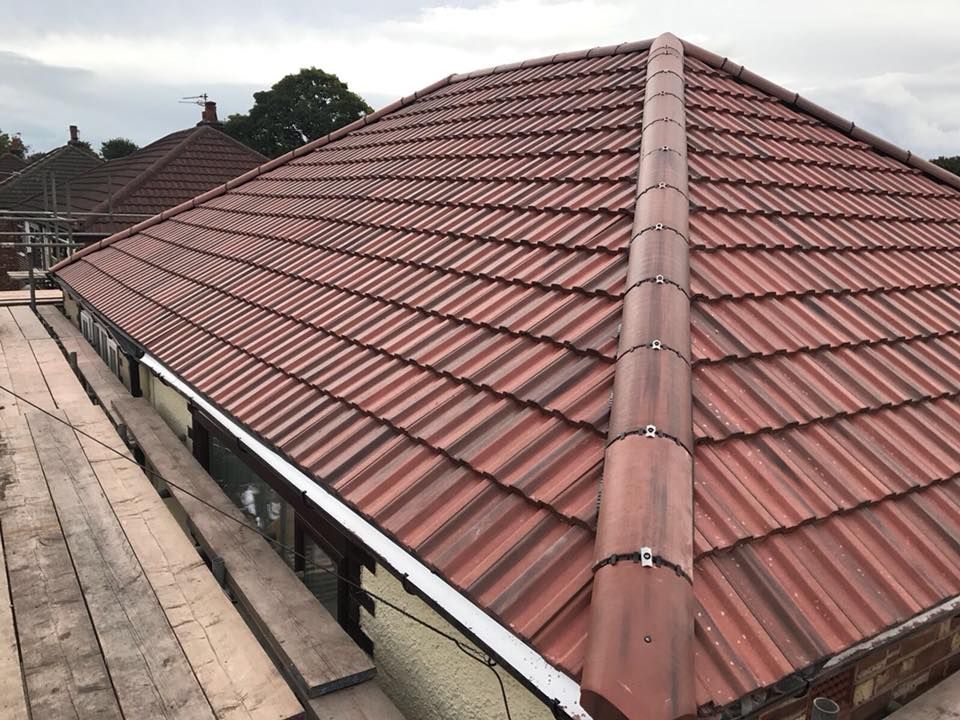
The dry ridge and dry verge question. When we replace a pitched roof in Derby, we recommend upgrading from mortar bedding to a dry ridge and dry verge system. This adds to the upfront cost but eliminates a future maintenance point. Mortar-bedded ridges need attention every 10–15 years. A dry ridge system is mechanically fixed, fully ventilated, and maintenance-free for the life of the roof.
VAT note. Roof repairs are charged at the 5% reduced rate of VAT. A full roof replacement is charged at 20% standard rate. This affects the total cost comparison and is worth factoring in when you are weighing up repair versus replace.
See our roof replacement service →
Partial Re-Roofing — The Middle Option Most Derby Homeowners Miss
Not every roof problem demands a full replacement. And not every repair is enough. There is a middle option that makes sense on many Derby properties: replacing one slope or one section, rather than the whole roof.
When a partial re-roof makes sense. Derby houses — particularly 1950s and 1960s semis in Allestree, Mickleover, and Chaddesden — often have a south-west-facing slope that takes most of the weather. That slope deteriorates faster than the sheltered side. If one face of the roof is at the end of its life but the other is still performing well, a partial re-roof is a sensible solution. You replace what needs replacing and leave what does not.
The tile matching question. The honest answer is that matching existing tiles exactly is rarely possible on roofs more than 15–20 years old. Concrete tiles change colour as they weather. We always raise this with Derby homeowners before agreeing on a partial re-roof. In most cases, a close match is achievable. Where it is not, some homeowners choose to replace both slopes at the same time to get a consistent finish. That decision is yours — we will show you the options honestly.
Cost saving. A partial re-roof on one slope of a standard Derby semi typically costs around 40–60% less than a full replacement. Scaffolding still applies to the section being worked on, so the saving is in materials and labour rather than access.
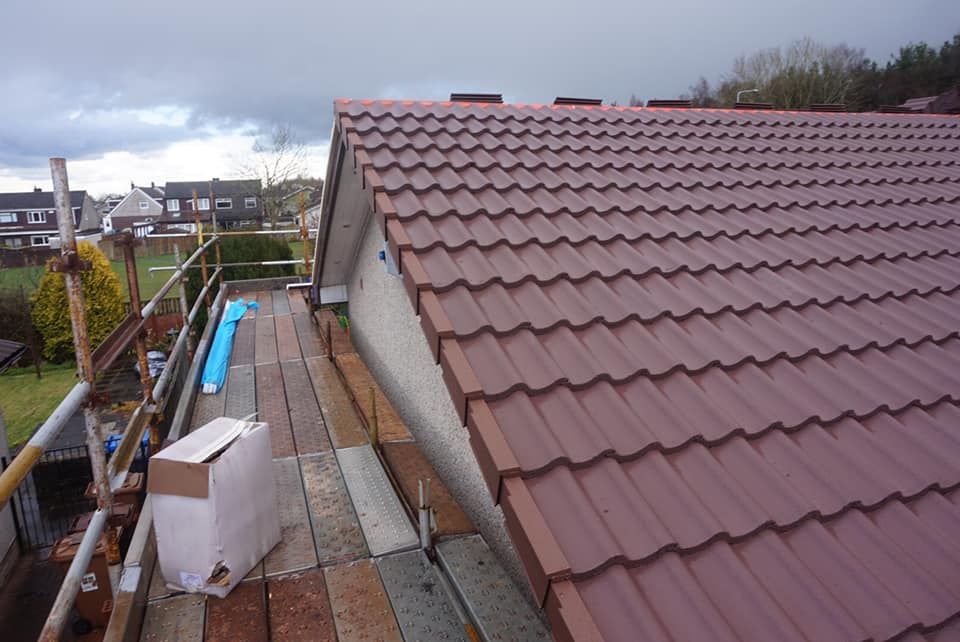
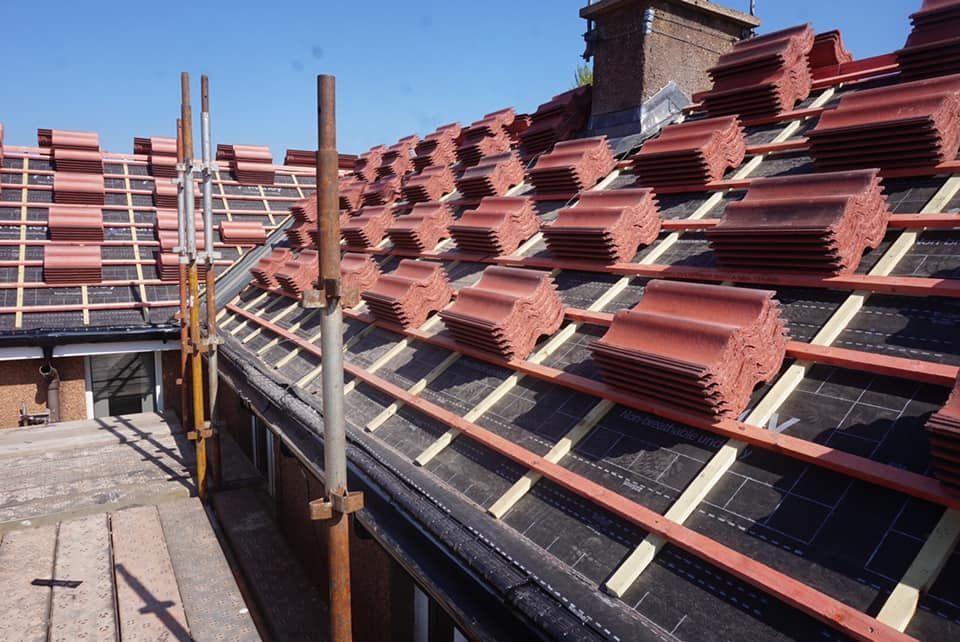
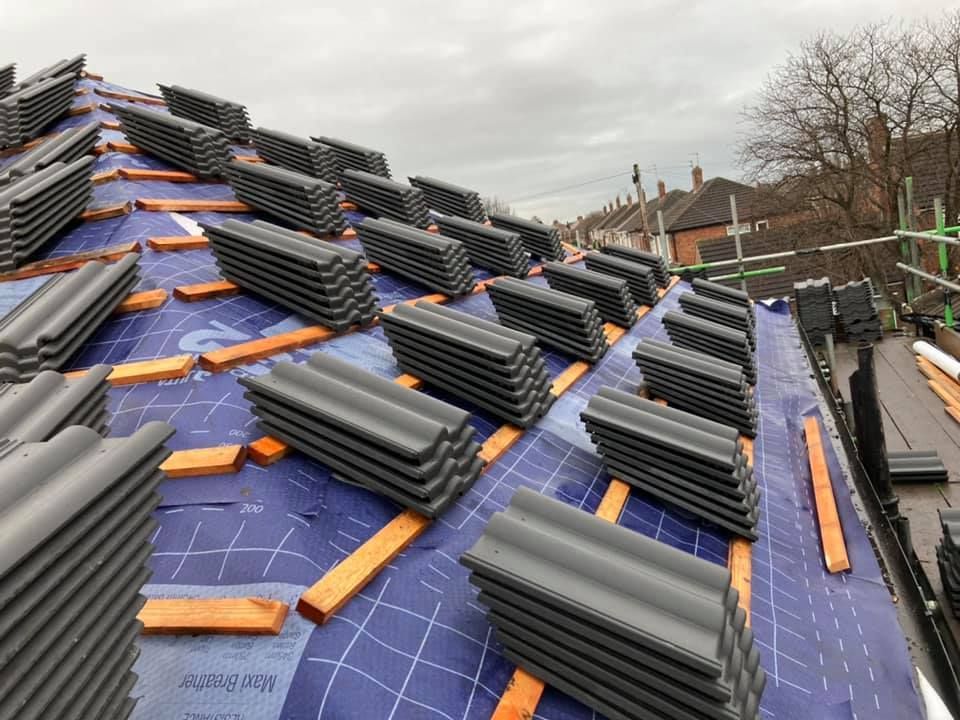
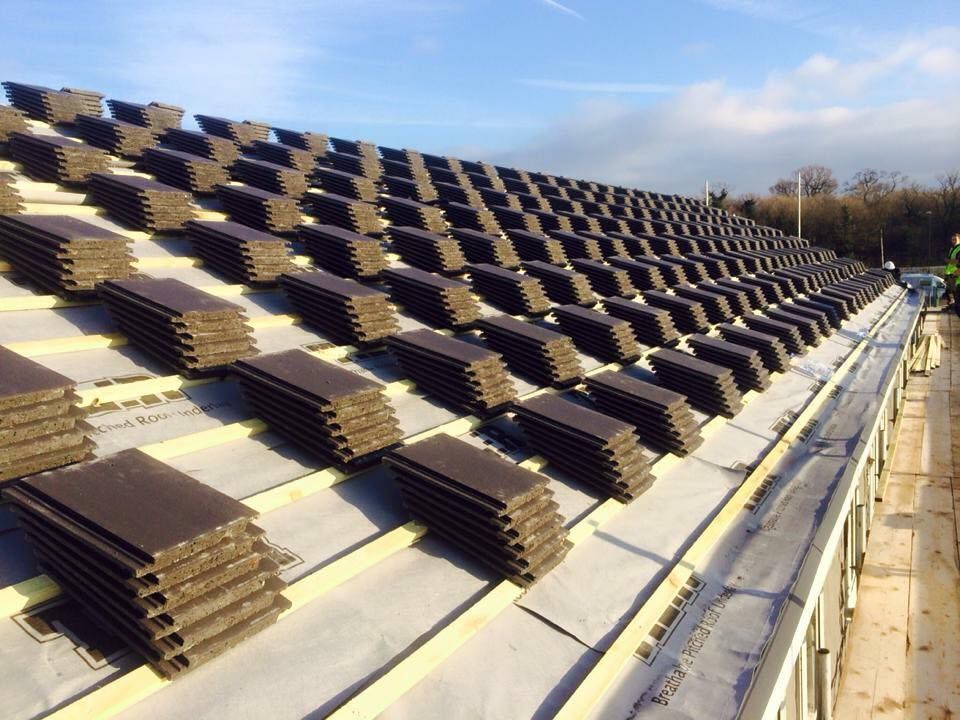
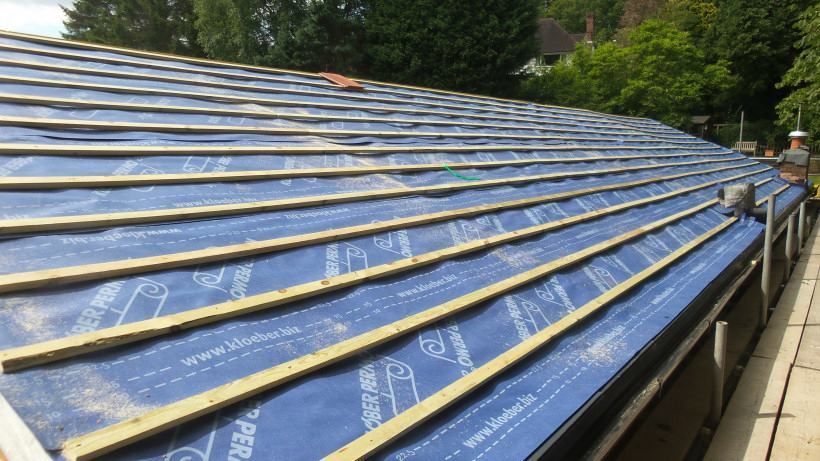
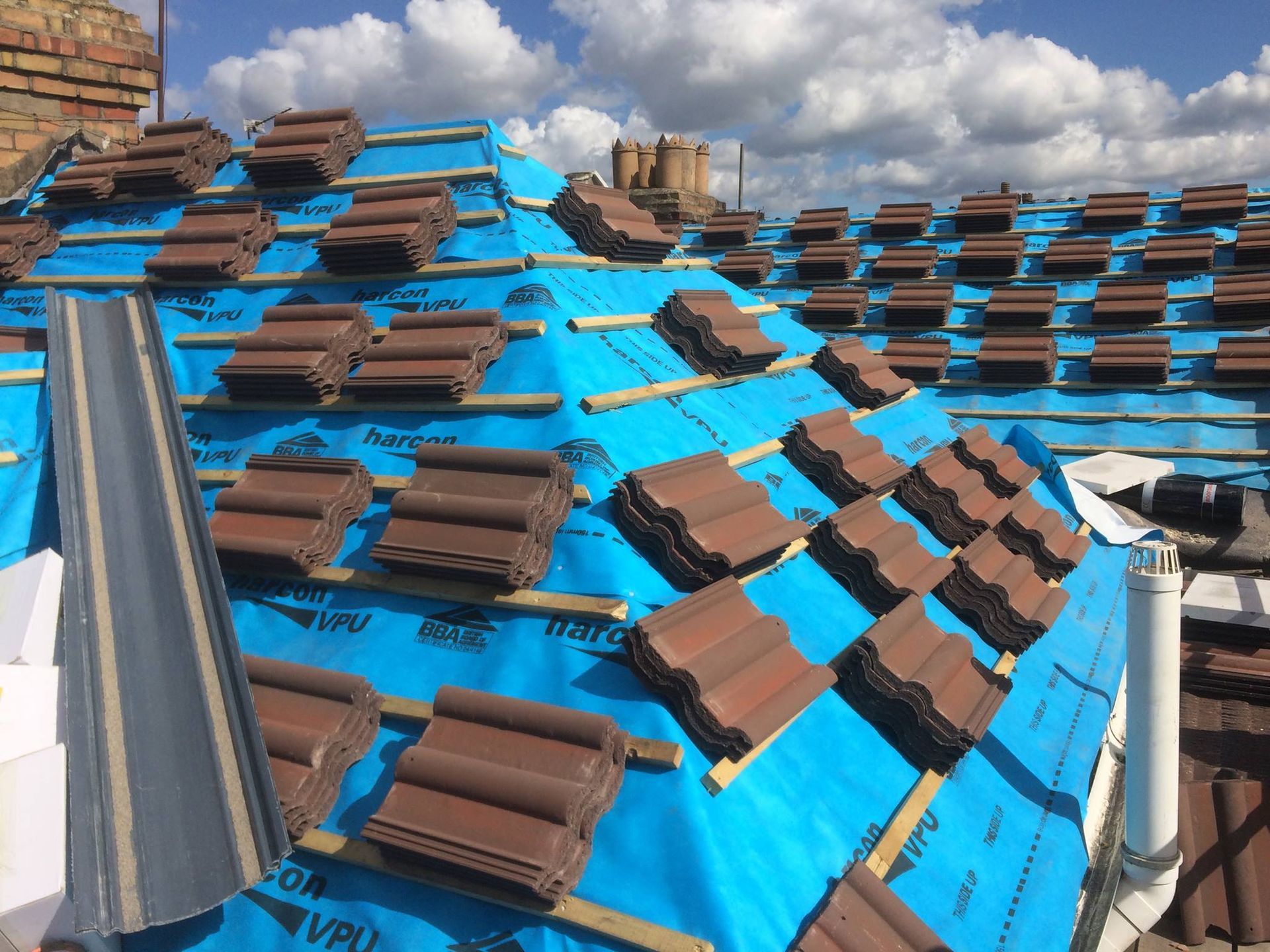
What a partial re-roof includes. Strip and dispose of the existing tiles, underlay, and battens on the affected section. Inspect and repair any timber work underneath. Install new breathable membrane, new battens, and new tiles. Re-bed or dry-ridge the apex and hips as required.
If you are weighing up a partial or full replacement, ask us to survey both slopes and give you a written comparison. We do this as part of every free roof survey.
Why We Advised Mr Maplin to Choose a Roof Replacement Over Repair on His Mickleover Detached House
Mr Maplin called us after spotting a damp patch on his bedroom ceiling following a spell of heavy rain. He assumed it was a loose tile — a straightforward repair job. He wanted a quick fix and a modest bill.
Our free drone roof survey gave him a more complete picture of his roof.
The roof on his detached property in Mickleover was a concrete tile system installed in the early 1990s. The immediate cause of the leak was a cracked tile and failed flashing around the chimney stack. We could have repaired both for a few hundred pounds and been on our way.
But the survey showed more. The mortar bedding along the full ridge line was failing. Several tiles had surface erosion significant enough to affect their water resistance. The underlay, visible in two places where tiles had slipped, had become brittle and was no longer performing as a secondary barrier.
We gave Mr Maplin the honest assessment — a repair would fix today's leak. Within 12 to 18 months, the ridge, the underlay, and the deteriorating tiles would generate new ones. He would spend repair money repeatedly on a roof that was approaching the end of its serviceable life.
He chose the full replacement. New breathable underlay, new concrete tiles, a dry ridge system, and new lead flashing around the chimney. The work was completed in six days.
Mr Maplin has not had a single roof issue since.
This is the conversation we have regularly with homeowners across Mickleover, Littleover, and Mackworth — honest advice, even when a larger job isn't what the customer expected to hear.
→ Book your free drone roof survey — call 01332-529704 or visit derbyroofers.co.uk/contact-derby-roofers
Frequently Asked Questions About Roof Repair Vs Roof Replacement
Should I repair or replace my roof in Derby?
Repair is usually the right call when damage is localised, the roof is under 20 years old, and less than a third of the surface is affected. Replace when the roof is older, leaking in multiple areas, or the underlying timbers and felt are failing. If your repair costs are approaching half the cost of a replacement, a full re-roof will almost always give you better long-term value. Call us on 01332-529704 for a free assessment.
Do I need planning permission to replace my roof in Derby?
In most cases, no. Like-for-like roof replacements fall under permitted development rights in Derby. Exceptions apply to properties in conservation areas — such as parts of Darley Abbey and the Cathedral Quarter — and to listed buildings, where additional consent from Derby City Council may be required. We check this for every property as part of the free survey.
How do I book a free roof inspection in Derby?
Call Derby Roofers on 01332-529704 or complete the contact form at derbyroofers.co.uk/contact-derby-roofers. We offer free drone roof surveys across Derby, Mickleover, Allestree, Normanton, Chaddesden, Littleover, Long Eaton, Belper, Ilkeston, and throughout Derbyshire. We will come out, inspect the roof, and give you a written report with honest recommendations — no obligation to proceed.