
Derby Roofers
Tel: 01332-529704
Roofers Cromford near Matlock in Derbyshire
Cromford sits two miles south of Matlock, deep in the Derwent Valley. It is one of the most historically significant villages in Derbyshire, and most of its buildings reflect that. Many homes on North Street and The Hill were built in the late 18th century using deep pink gritstone and Staffordshire blue clay tiles. A large part of the village sits within a Conservation Area. Eighty-eight of its buildings are listed.
If you are searching for roofers Cromford near Matlock in Derbyshire, you need a team that understands what these properties actually require. Standard roofing approaches do not always apply here. The right tile, the right mortar, and the right access plan all matter — especially when your property falls within a protected area or carries listed status.
This page covers roof inspections, repairs, and re-roofing for homes and buildings in and around Cromford. We also serve Matlock, Matlock Bath, Wirksworth, Bonsall, and the wider Derwent Valley. Call us on 01332-529704 or check availability for your address.
Cromford's Stone Cottages and Mill Buildings Need Specialist Roof Inspections
Not every roof inspection is the same. In Cromford, a proper inspection has to account for the materials, the building's age, and its protected status.
Many properties in the village were built using locally quarried gritstone, with roofs finished in Staffordshire blue clay plain tiles. Some carry original stone slate. These materials weather and fail differently from modern concrete interlocking tiles. An inspection that misses those differences misses the point entirely.
Cromford Conservation Area covers 135 hectares and contains 495 buildings. Of those, 88 are listed entries — ranging from three-storey workers' terraces on North Street to the Grade I listed Cromford Mills complex. If your property is listed, any roof work requires listed building consent in addition to being done correctly.
We carry out roof inspections across Cromford and the surrounding villages, including Matlock Bath and properties along the Bonsall Hollow valley. A proper inspection covers:
- Tile condition — noting type, colour match, and any missing or slipped sections
- Ridge and verge pointing — checking whether lime or cement mortar was used and how it is holding
- Lead flashings around chimney stacks and parapet walls
- Gutter and fascia condition at roofline level
- Any visible signs of water ingress at eaves or ridge
Common Roof Problems Found on North Street and The Hill in Cromford
The three-storey gritstone terraces on North Street date from 1776. They are widely regarded as the oldest example of planned industrial housing in Derbyshire. The buildings look solid from the outside, but their roofs carry specific vulnerabilities.
Lime mortar ridge pointing is one of the most common issues. Lime mortar is the correct material for these properties, but it weathers faster than modern alternatives. Cold Derwent Valley winters, with their freeze-thaw cycles, work away at ridge and verge pointing year on year. When it fails, ridge tiles shift and water finds a way in.
Blue clay tile wear is another common fault. North-facing sections and areas shaded by the valley's limestone cliffs weather faster than south-facing ones. The colour and profile of replacement tiles must match closely, or the property falls outside what the Conservation Area character appraisal expects.
Chimney stacks and lead flashings are a recurring problem on older Cromford properties. Many stacks have been repointed at some point with the wrong mortar, or have lead soakers and back gutters that have reached the end of their working life.
We see similar issues on properties in Wirksworth and Matlock town centre. If your roof has any of these signs, an inspection is the right first step.
What Cromford's Conservation Area Means for Your Roof
If your property sits within Cromford Conservation Area, it does not automatically mean every piece of roof work requires planning permission. However, it does mean that the materials you use matter — and if your building is listed, the rules are stricter.
For unlisted properties in the Conservation Area:
- Like-for-like repairs (replacing a tile with the same tile, re-pointing with the same mortar type) are generally permitted development
- Replacing a roof covering with a visually different material — for example, swapping blue clay tiles for concrete interlocking tiles — is likely to require consent from Derbyshire Dales District Council
- There is currently no Article 4 Direction in Cromford, so standard permitted development rights still apply to most properties
For listed properties:
- Listed building consent is required for any works that affect the character of the building — and that includes the roof
- Cromford has 88 listed entries, including the Grade I listed Cromford Mills complex and seven Grade II* properties such as Willersley Castle and 1–29 North Street
- Using the wrong material without consent can result in enforcement action, required reinstatement at your own cost, or prosecution
We carry out roof work on properties across Cromford and Matlock Bath. We can advise you on what applies to your specific building before any work starts. If you are not sure whether your property is listed, Derbyshire Dales District Council holds the full register.
What to Expect When We Re-Roof a Property in the Derwent Valley
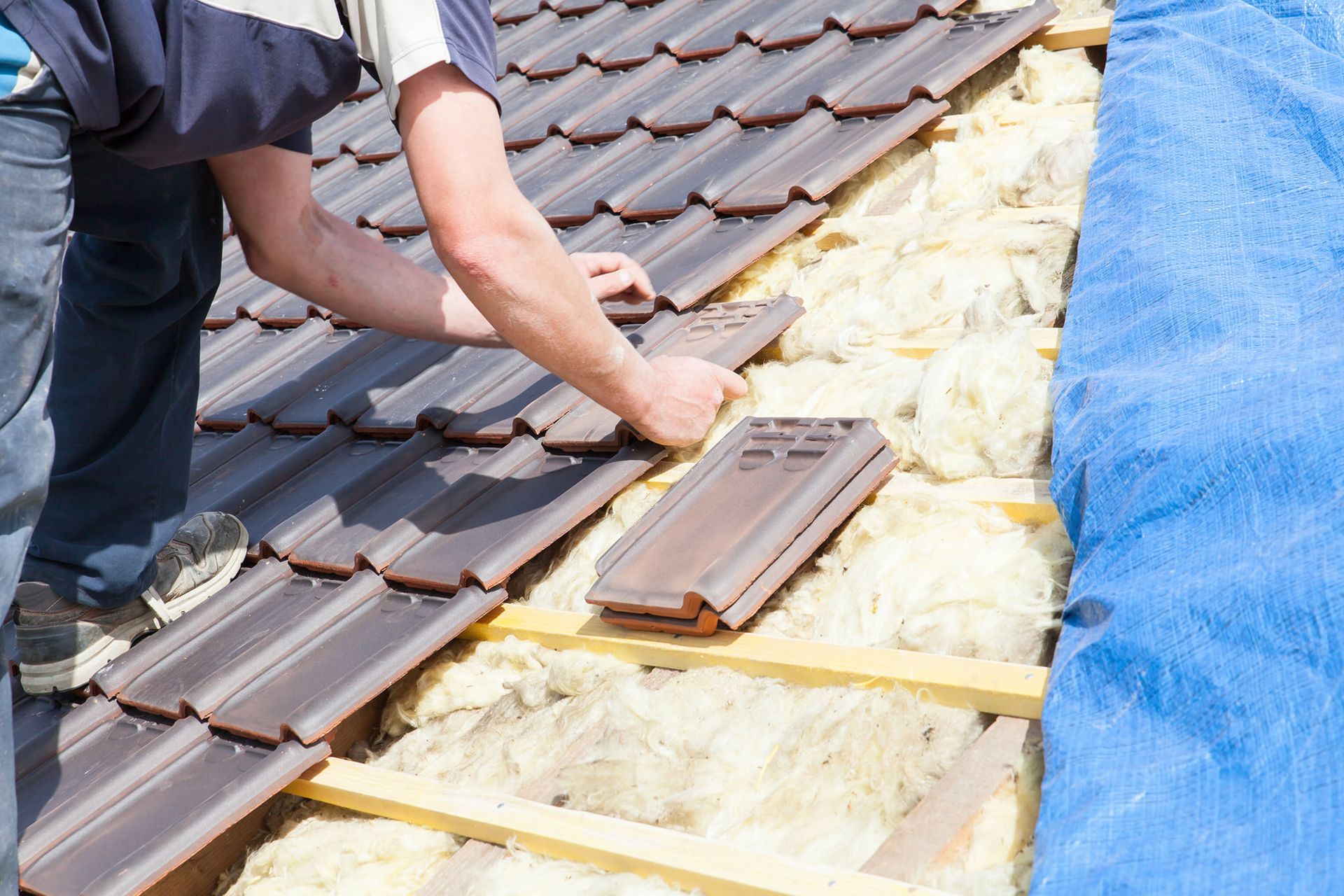
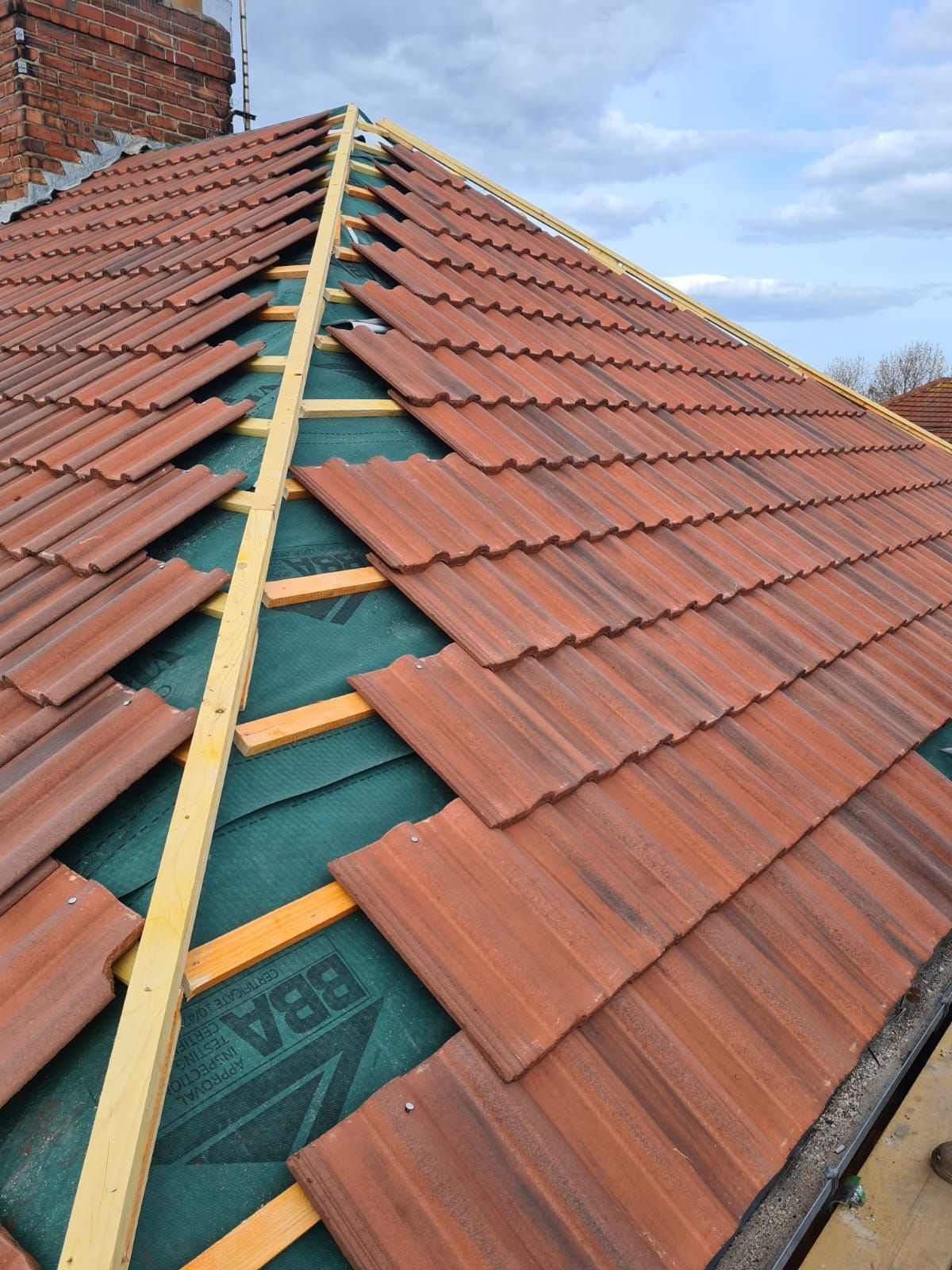
A re-roofing job in Cromford or the surrounding area starts with a site inspection. We look at the existing covering, the condition of the battens and felt underneath, and the structure at ridge and eaves level. Only then can we advise on what the job actually involves.
Materials for this area are not one-size-fits-all. Depending on your property type and its status, the right choice is likely to be one of:
- Staffordshire blue clay plain tiles — the traditional material for most of Cromford's workers' housing
- Natural slate — appropriate for many older properties; the stationmaster's house at Cromford Station used original ashlar gritstone walls with a slate roof as far back as 1855
- Stone slate — sometimes required on older agricultural and farmstead buildings in the wider Derwent Valley area
- Modern alternatives — acceptable on some non-listed properties where the visual impact is minimal, but always checked against conservation area guidance first
Once the material is confirmed, scaffolding is planned. Access around Cromford's Market Place, Scarthin, and the Canal Wharf area requires early preparation. The lanes are narrow and some routes have low clearance. We plan scaffold positions before the job starts, not on the day.
We also serve properties in Matlock Bath and the Cromford Meadows area. These fall under similar planning guidance and benefit from the same approach.
Storm and Wind Damage to Roofs in Cromford and the Matlock Area
Cromford sits in an open valley, with the land rising from around 260 feet to 500 feet above sea level within the village boundary alone. Properties on higher ground — including those up Cromford Hill toward Wirksworth — are exposed to prevailing south-westerly winds. Storm damage here follows a predictable pattern.
Common storm damage in this area:
- Ridge tiles shifted or lifted — particularly on older lime-mortared ridges
- Slipped or cracked blue clay plain tiles — especially on exposed elevations
- Lead flashings lifted at chimney stacks and valley junctions
- Verge tiles displaced where mortar pointing has already begun to fail
- Debris blockages in gutters and downpipes following high winds
If you have visible damage after a storm, it is worth having the roof checked as soon as conditions allow. A single slipped tile can let water behind the felt layer, and the damage that follows builds quickly.
We respond to storm and wind damage across Cromford, Matlock, Matlock Bath, and the surrounding Derwent Valley villages. Call 01332-529704 and we will arrange an inspection.
Preparing for Roof Work Near Matlock Bath and Wirksworth
Properties just outside Cromford's Conservation Area boundary still benefit from local knowledge when it comes to access and scheduling.
Access from the main road: The A6 runs through the Derwent Valley and is the main route from Derby northward toward Matlock. Cromford sits directly on this road. From Matlock town centre, the village is a five-minute drive south. From Derby, the journey along the A6 takes around 25–30 minutes.
Village lane access: Several key streets in Cromford's historic core — particularly around the Market Place and along Scarthin — are narrow. Scaffold vehicles need to approach from specific directions. We identify the access route before mobilising and arrange an early morning start where required to avoid visitor traffic on busier days.
Seasonal visitor congestion: The Cromford Mills Antiques Fair and Peak District visitor events attract significant traffic to the village, particularly from spring through autumn. If your job falls near one of these dates, we factor that into the schedule.
Wirksworth and Matlock Bath: Both villages are within easy reach. Wirksworth is one mile south of Cromford via the B5023. Matlock Bath is one mile north on the A6. The same crew and the same access planning apply.
How We Verify a Roof Repair Is Right for a Heritage Property in Derbyshire
Completing a roof repair is only part of the job. Checking that the repair is right for the building matters just as much — especially on older and protected properties.
After any repair or re-roofing in Cromford or across the Derwent Valley, we carry out a post-work check that covers:
- Tile colour and profile match — replacement tiles should sit visually consistent with the surrounding roof covering, in keeping with the deep pink gritstone palette of the village
- Mortar type — lime mortar should be used at ridge and verge on all older Cromford properties; sand-and-cement mortar is too rigid and can cause tiles to crack over time
- Lead work quality — all lead flashings should be properly formed, securely dressed, and free from standing seams that collect water
- Consent documentation — if listed building consent was required, keep a copy of the approval and any correspondence with Derbyshire Dales District Council alongside the completion record
It is also worth knowing that Derbyshire County Council runs a buildings at risk register, updated annually. Properties that fall into disrepair can end up on it. Regular, well-documented maintenance — with the right materials — is the simplest way to keep your property off that list.
The same standards apply to properties in Belper and Darley Abbey, both of which form part of the same Derwent Valley Mills UNESCO World Heritage corridor.
How to Reach Our Roofing Team Serving Cromford and the Matlock Area
Derby Roofers is based in Loscoe, Heanor, and covers the full Derwent Valley corridor from Derby northward through Belper, Cromford, Matlock, and beyond.
From Derby: Head north on the A6. Follow the road through Duffield, Belper, and Ambergate. Continue along the A6 into the Derwent Valley. Cromford is on the left as you pass through Matlock Bath. The journey is approximately 17 miles.
From Matlock: Head south on the A6 toward Matlock Bath. Cromford is two miles south of Matlock town centre — a five-minute drive. Cromford Station is a useful reference point on the left as you enter the village.
By train: Cromford Station sits on the Derwent Valley Line, which connects Derby and Matlock. If you need to meet us on site to discuss a job, the station is within easy walking distance of most properties in the village core.
All roofing work is carried out at your property. We come to you. Our first visit is a roof inspection — not a sales call. We will tell you what we find, what needs attention, and what your options are.
Call 01332-529704 to check availability in Cromford and the surrounding area.
Frequently Asked Questions
Do I need planning permission to repair my roof in Cromford?
For like-for-like repairs — replacing a damaged tile with the same tile type, or re-pointing a ridge with lime mortar — you generally do not need planning permission. However, if your property is listed, you do need listed building consent before any work begins, regardless of how minor the repair appears. Check with Derbyshire Dales District Council if you are unsure whether your property is listed.
Can any roofer work on a listed building in Cromford?
Any roofer can quote for the work, but the responsibility for obtaining listed building consent sits with you as the property owner. A roofer who is not familiar with heritage materials may use the wrong mortar type or tile profile, which can lead to enforcement action. It is worth using a contractor who understands what these buildings require before work starts.
What roofing materials are approved in Cromford Conservation Area?
Staffordshire blue clay plain tiles and natural slate are the traditional materials used across most of the historic village. Stone slate is appropriate for some older structures in the wider Derwent Valley. The correct choice depends on your specific property type. Derbyshire Dales District Council's Conservation Area Character Appraisal sets out what is expected, and we advise on materials as part of our inspection.
Is scaffold access difficult in Cromford village?
It can be, particularly in the Market Place area and along Scarthin. The lanes are narrow, and some routes have low clearance for large vehicles. We plan scaffold access before mobilising and arrange early start times on days when visitor traffic is likely to be heavy.
Do you cover Matlock Bath and Wirksworth as well as Cromford?
Yes. Matlock Bath is one mile north of Cromford on the A6. Wirksworth is one mile south via the B5023. Both are part of our regular service area, and the same access planning and material knowledge applies.
Can you work around the Cromford Mills Antiques Fair or busy visitor weekends?
Yes, but we factor event dates into the schedule when booking. Roads around the Market Place and the mills can become heavily congested during fair days and summer weekends. Booking in advance means we can plan access around those dates rather than into them.
What happens if I carry out unauthorised work on a listed building?
Carrying out work on a listed building without the required consent can result in enforcement action from Derbyshire Dales District Council. In serious cases this includes a requirement to reinstate the building to its original condition at your own expense, as well as potential prosecution. It is always worth confirming consent requirements before any work begins.