Derby Roofers
Roof Valley Gutter Repair Service
Call us now book a FREE consultation and FREE Quotation
FREE Drone Survey Available
Call: 01332-529704
Valley Gutter Repairs Derby: Stop the Leak Before It Spreads
We Are Your Trusted, Local Roofing Contractor Serving Derby & Derbyshire
Don't wait — contact Derby Roofers today for a FREE quote and a FREE drone roof survey.
📞
Call Now: 01332-529704
Valley gutter repairs in Derby are one of the most common call-outs we handle at Derby Roofers. In Derby, wet autumns and hard Derbyshire winters put constant pressure on valley joints, lead flashings, and mortar beds. Left untreated, a leaking roof valley can soak through insulation, rot timber rafters, and cause damp patches that spread across ceilings and walls.
This page covers everything — from spotting the first signs of a fault to understanding how a repair is carried out, which materials suit your roof type, and what happens when the valley sits on a shared boundary. We offer same-week assessments across Derby and Derbyshire. Our own team handles every job — no subcontractors.
Not sure if it's a valley gutter problem? Call us on 01332-529704 and we'll talk you through what to look for before booking.
What Is a Valley Gutter and Why Does It Leak?
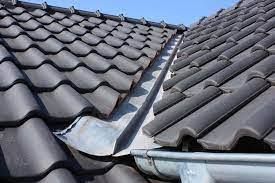
A valley gutter is the V-shaped channel where two roof slopes meet. It carries more rainwater off your roof than any other single point. Think of it as the motorway for your roof's drainage — it handles the combined runoff from both slopes at once. That volume of water is exactly why valley faults cause leaks faster than most other roofing problems.
In Derby, two things speed up failure. First, the city's Victorian and Edwardian terraces — common in areas like Normanton, Pear Tree, and Litchurch — have lead valleys that are often many decades old. Lead expands and contracts with temperature. Derbyshire's freeze-thaw winters crack lead faster than milder UK climates do.
Second, leaf debris and moss build up in the valley channel. When the channel blocks, water backs up above the edge of the flashing and forces its way under the tiles. You do not need a crack in the lead for that to happen — a blocked valley on its own is enough to cause a leak.
Common valley gutter failure points include:
- Cracked or split lead from repeated freeze-thaw thermal movement
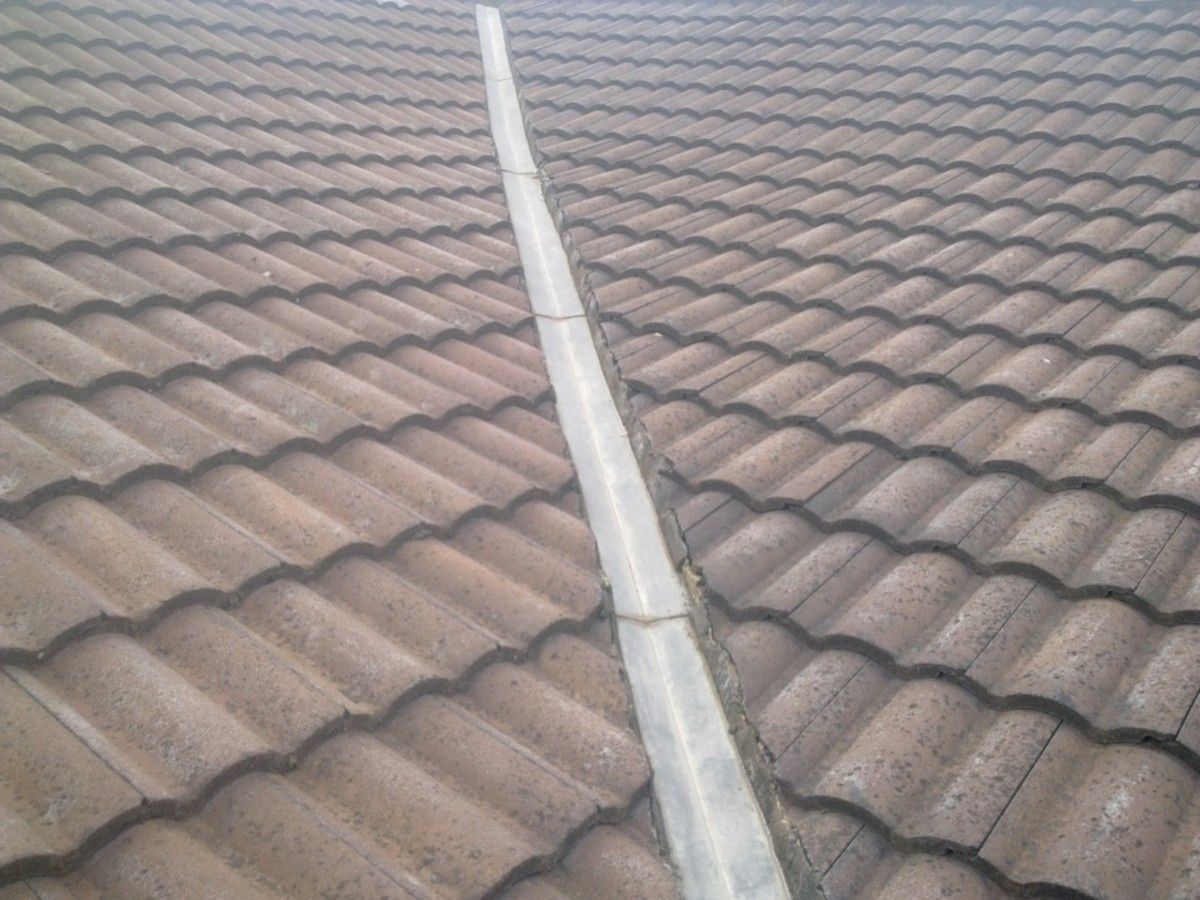
- Washed-out mortar on close-cut (laced) valley tile beds
- Debris and moss blockage raising water above the flashing edge
- Slipped or tilted tiles directing water into the joint
- Corroded zinc or undersized aluminium flashings
- Punctures from foot traffic or equipment placed on a weak valley membrane
- Poor original installation — badly framed valleys are a common cause of repeat leaks
How Do I Know If My Roof Valley Needs Repairing or Replacing?
The earliest sign is usually a damp patch on a ceiling that sits below or near the valley line. By the time water shows inside, it has often been tracking along a rafter for weeks. The wet patch on your ceiling is rarely directly below the entry point — water travels along timbers before it drips.
Other signs to check from ground level or from your loft:
- Water stains or wet insulation visible in the loft space
- Cracked, loose, or missing mortar in the valley channel
- Tiles that have tilted inward toward the valley — water pools there
- Dark staining or moss growth running along the valley line
- Visible daylight or gaps when looking up through the loft near the valley
- Recurring damp that returns after previous patch repairs
Repair or Replace — Which Do You Need?
If only the lead, mortar, or flashing is damaged, a repair is the right call. If the valley board beneath has rotted through, the valley liner needs replacing entirely.
We check the valley boards on every visit — a sound board is what holds any repair together long-term. We will tell you honestly which option your roof needs before any work starts.
Can a Leaking Roof Valley Be Repaired Without Removing the Tiles?
This is one of the most common questions we get — and the answer, for most Derby properties, is yes.
Most valley gutter repairs do not need a full roof strip. We remove only the tile courses on either side of the valley — typically one or two rows — to reach the fault. The rest of your roof stays untouched.
In areas like Chaddesden and Alvaston, many roofs have close-cut concrete tile valleys with mortar bedding rather than open lead. The repair method differs slightly, but the access and inspection steps are the same.
How a Valley Gutter Repair Is Carried Out — Step by Step
A standard repair follows these steps:
- Erect a scaffold tower or access platform — safe access is not optional on a pitched roof
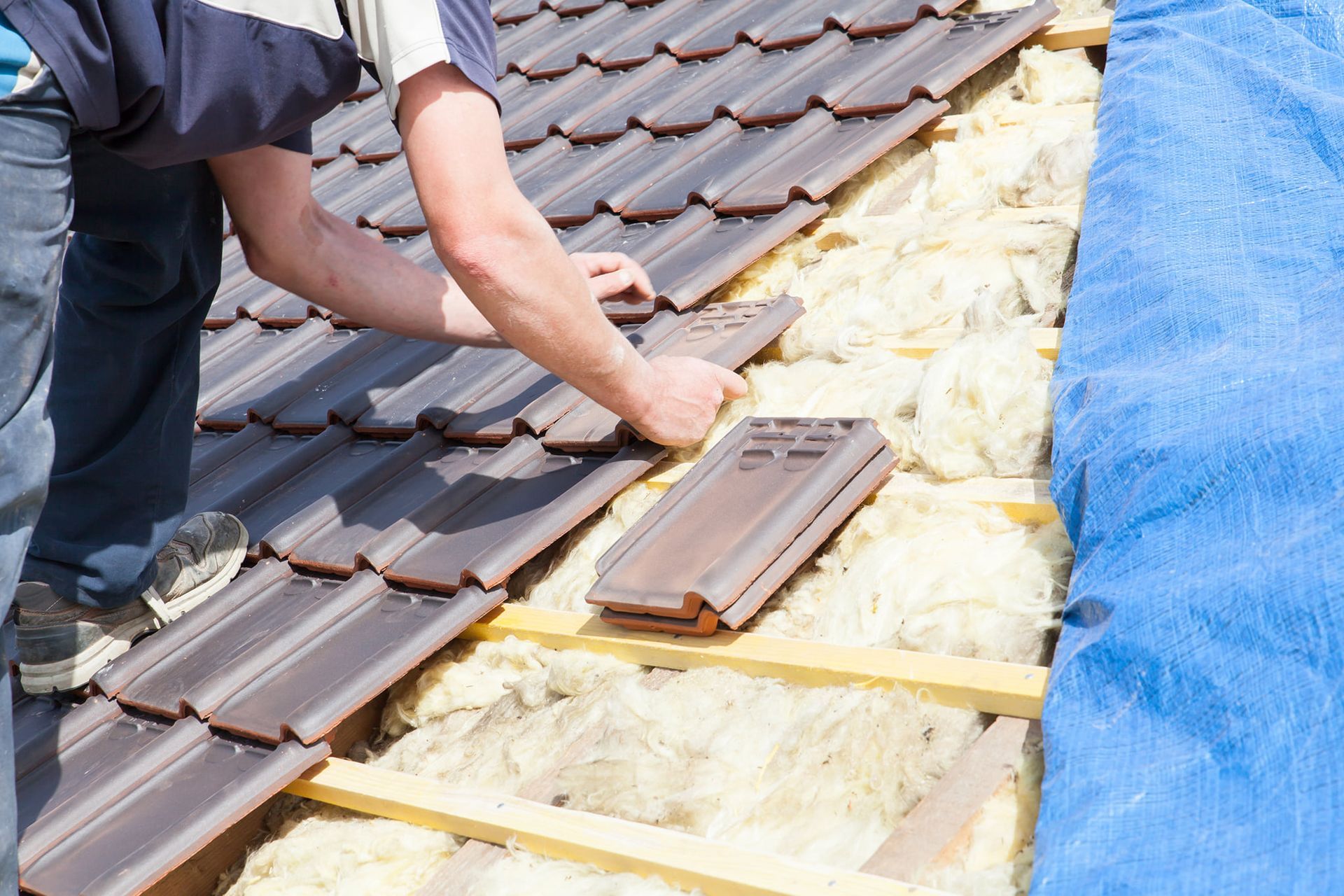
- Lift and stack the tiles either side of the valley in order, ready for re-fitting
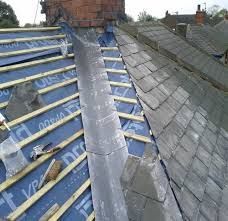
- Strip out the old lead, mortar, or damaged GRP liner and inspect the valley board for rot
- Fit new material — lead (minimum code 4 or code 5), GRP dry valley, or re-bedded mortar — matched to your existing roof type
- Re-fix tiles, check alignment and fall
- Apply patination oil to new lead to prevent staining and surface oxidisation
Most repairs take half a day to a full day. If the valley board needs replacing, allow a full working day.
We clear all waste from site before we leave — no skips to arrange, no mess left behind.
What Materials Are Used to Repair Roof Valleys in the UK?
The right material depends on your roof type, tile profile, and valley width. We will always tell you which option suits your property before work starts.
Lead (Code 4 or Code 5)
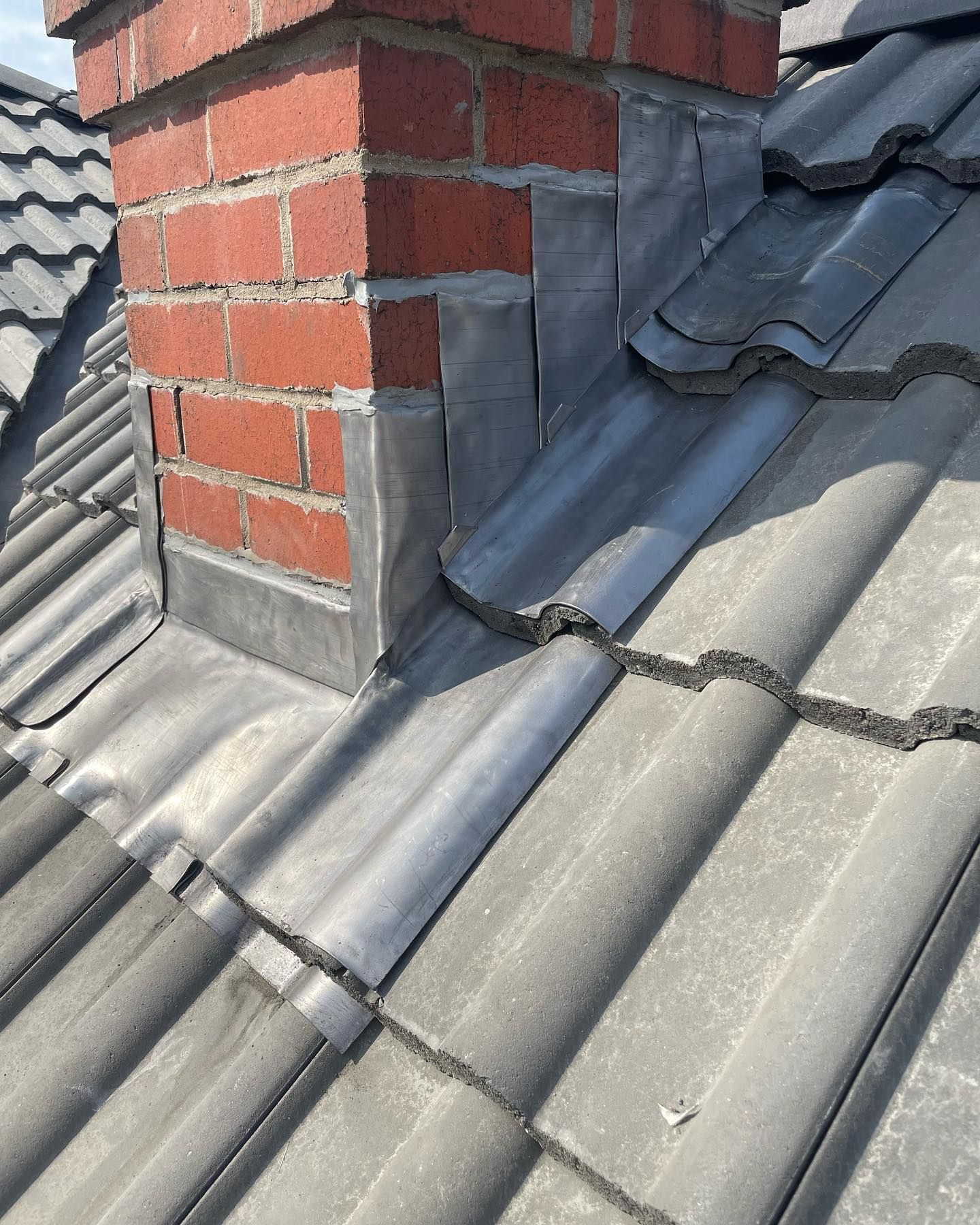
The traditional choice for roof valleys. Lead suits the slate and clay tile roofs found across Derby's older housing stock in areas like Darley Abbey, Kedleston Road, and the city centre conservation zones. It is fitted in short sections — not one continuous run — to allow for expansion and contraction. Patination oil is applied on completion. Lead work is a regulated trade; our team are qualified leadwork specialists.
GRP (Fibreglass) Dry Valley
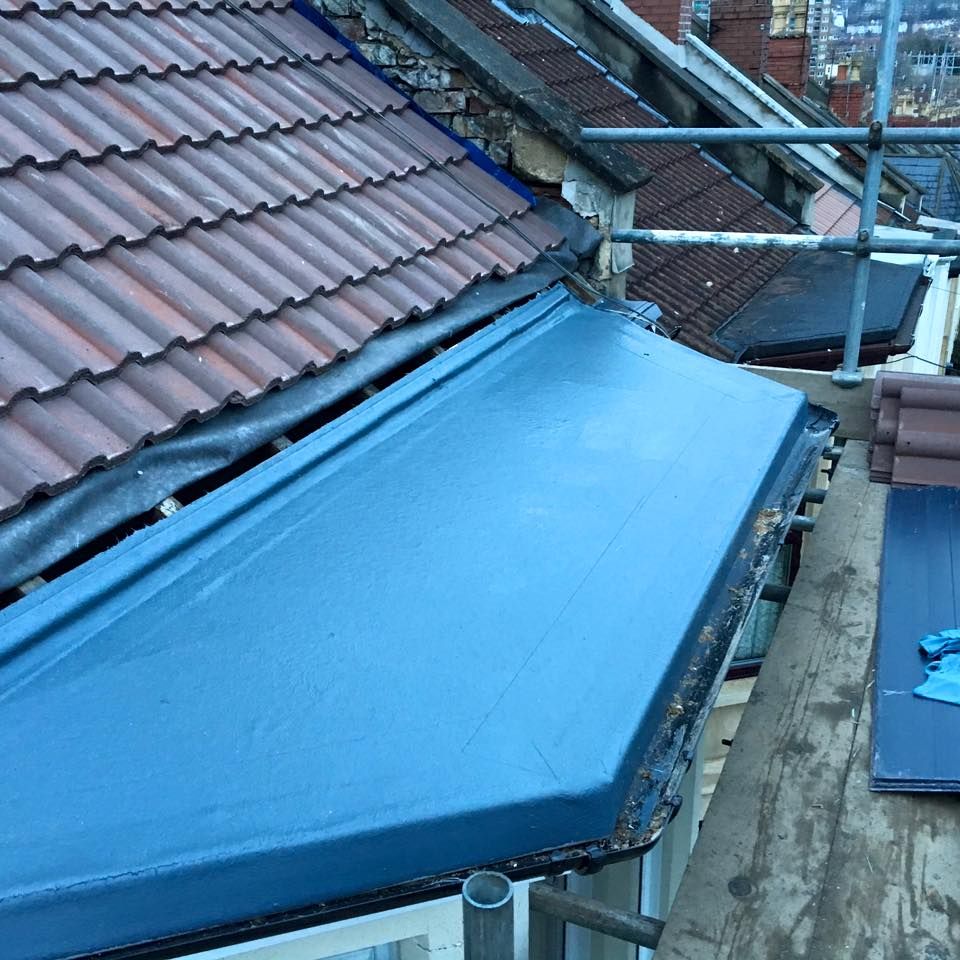
Now the standard on new concrete tile roofs across the UK. GRP dry valley systems — such as the Marley range — are mortar-free, lightweight, and do not move with temperature changes. They are a practical replacement when re-roofing or replacing a worn close-cut valley. They are also eco-friendlier than lead, with no toxicity concerns during installation.
Mortar-Bedded Close-Cut Valleys
Common on older concrete tile roofs across Sinfin, Chellaston, and Mackworth estates. Re-bedding the tiles onto an inert backing board with a fibre-reinforced mix extends the life of the valley and allows the lead beneath to move without cracking the mortar joint.
Aluminium Flashing
A lower-cost option, suitable for smaller repair patches. It has a shorter lifespan than lead or GRP and is not our first recommendation for a full valley re-line.
A Note on Temporary Coatings and Liquid Sealants
Brush-on bitumen coatings and liquid GRP sealants are sold as repair products — but they are not a long-term fix. They can slow a leak for a short time. If a previous roofer applied these products and the leak has returned, the valley liner will need stripping and replacing properly. We do not use patch-over coatings as a permanent solution.
Why Does My Roof Valley Only Leak During Heavy Rain?
This is one of the most common questions we hear — and there is a clear explanation.
A hairline crack in lead or a partial mortar gap may not let in enough water to show during light rain. During a heavy downpour, the volume running down the valley overwhelms the gap and forces water through. The same applies to a partial blockage — debris narrows the channel, water backs up, and finds the weak point.
Wind direction matters too. Strong winds push water uphill under tile edges — a condition called back-siphoning. This only happens when wind and rain combine at the right angle, which is why some storms trigger a leak and others do not.
Properties in higher parts of Derby — Allestree, Mackworth, and Breadsall — see faster surface runoff from the surrounding ground. That extra volume reaches the valley quickly and makes even a small fault show sooner.
One important point: the drip you see inside does not mark the entry point. Water tracks along rafters and roof timbers before it finds a gap to drip through. A proper inspection traces the water back to its source — ceiling stains alone do not tell the whole story.
Shared Valley Gutters — Who Is Responsible for the Repair?
In Derby's terraced and semi-detached streets — particularly in Normanton, Pear Tree, Chaddesden, and Long Eaton — many valley gutters sit directly on or near the boundary between two properties.
As a general rule under English common law, if the valley sits on the party boundary, both owners share equal responsibility for the repair. Neither owner can force the other to pay, but both benefit from the work being done.
The Party Wall Act 1996 may apply where structural work — such as replacing a valley board — is needed at or near the shared boundary. In those cases, a formal party wall notice may be required before work begins. Derby City Council's planning pages carry guidance on this, or a party wall surveyor can advise you directly.
The most practical approach is to agree on a single contractor with your neighbour and split the cost. Separate repair jobs on the same valley rarely line up correctly and can leave gaps at the joint.
If your neighbour is unresponsive or unwilling, a surveyor can serve a formal party wall notice on your behalf. This sets out the works, the timeline, and the cost-sharing arrangement in writing.
We can inspect and quote for both sides of a shared valley in a single visit — one survey, one set of findings, one clear recommendation for both households.
How Long Does a Valley Gutter Repair Last?
A properly repaired or replaced valley gutter should give you many years of reliable service. Lead valleys, when correctly installed with code 5 sheet and proper expansion joints, can last several decades. GRP dry valley systems are also long-lasting and require very little maintenance once fitted.
The lifespan of any valley repair depends on:
- The quality of the material used
- Whether the valley board was sound before work started
- Correct installation — particularly expansion joints on lead
- Regular annual checks to clear debris and moss before blockages develop
We recommend a visual check of your roof valleys every autumn before the heavy rain season begins — particularly important for Derby properties surrounded by mature trees.
Frequently Asked Questions About Valley Gutter Repairs
Can my valley gutter be repaired without lifting all the tiles?
Yes — in most cases we only need to lift the one or two tile courses either side of the valley. A full roof strip is rarely necessary for a valley repair alone.
How do I know if my valley needs repair or full replacement?
Repair is right when only the lead, mortar, or flashing is damaged. If the valley board beneath has rotted, the full valley liner needs replacing — we check the boards on every inspection so you know exactly what you need.
How long does a valley gutter repair take in Derby?
Most repairs take half a day to a full day. If the valley board also needs replacing, allow a full working day for the complete job.
Will my home insurance cover a leaking valley gutter?
Sudden storm damage is often covered; gradual wear and tear is usually excluded. Check your policy wording and contact your insurer before booking repair work. We can provide a written report of the damage to support any insurance claim you need to make.
My valley only leaks in heavy rain — is it still worth fixing now?
Yes. Even an intermittent leak saturates roof insulation and timbers over time. Catching the fault early avoids a much larger and more disruptive repair later.
Is a valley gutter repair a DIY job?
We would not recommend it. Working on a pitched roof requires proper scaffold access, and removing valley tiles incorrectly can cause further damage to surrounding courses. Lead is also a controlled material — cutting and fitting it safely requires experience and protective equipment. Professional repair will also last far longer than a DIY attempt.
What roof types have valley gutters in Derby?
Valley gutters are found on any roof where two sloping sections meet — including cross-gabled roofs, hip-and-valley roofs, L-shaped extensions, and dormer additions. They are very common across Derby's semi-detached and terraced housing stock.
Does Derby Roofers carry out valley repairs in Mickleover and Allestree?
Yes — we cover all Derby postcodes and the wider Derbyshire area. Same-week visits are usually available. Call us on 01332-529704 or email info@derbyroofers.co.uk to arrange an inspection.
Areas We Cover for Valley Gutter Repairs
Derby Roofers proudly serves homeowners and businesses throughout Derby city and the wider Derbyshire area. Our local teams cover:
Derby City Areas:
- Derby City Centre (DE1)
- Allestree, Mackworth & Quarndon (DE22)
- Mickleover (DE3)
- Littleover & Normanton (DE23)
- Chaddesden, Oakwood & Spondon (DE21)
- Alvaston, Crewton & Osmaston (DE24)
Surrounding Derbyshire Towns & Villages:
- Belper (DE56)
- Ripley (DE5)
- Ilkeston (DE7)
- Heanor (DE75)
- Swadlincote (DE11)
- Ashbourne (DE6)
- Matlock (DE4)
- Borrowash & Draycott (DE72)
- Etwall & Hilton (DE65)
- Melbourne & Chellaston (DE73)
- Duffield & Little Eaton (DE56 / DE21)
- Breadsall & Darley Abbey (DE21 / DE22)
- Long Eaton (NG10)
- Castle Donington (DE74)
Not sure if we cover your area? Call us on 01332-529704 and we'll be happy to help.
Ready to Book? Here's Your Next Step
A leaking valley gutter does not fix itself — and the longer it is left, the more it costs to put right. Water that gets past a cracked lead flashing or a failed mortar bed will work its way into the roof deck, the insulation, and eventually into your ceilings and walls.
At Derby Roofers, we have over 20 years of experience repairing valley gutters across Derby and Derbyshire. Our team carries out the full job — inspection, access, repair or replacement, and site clearance — in a single visit wherever possible.
Call us today on 01332-529704 or email info@derbyroofers.co.uk to book your free inspection. Same-week appointments are usually available. We always answer the phone — and if we miss your call, we call back.
Contact Derby Roofers — Book a Free Valley Gutter Inspection