Derby Roofers
GRP Fibreglass Roof Specialists
Call us now book a FREE consultation and FREE Quotation
FREE Drone Survey Available
Call: 01332-529704
How Long Does a GRP Fibreglass Roof Last? What Derbyshire Homeowners Need to Know
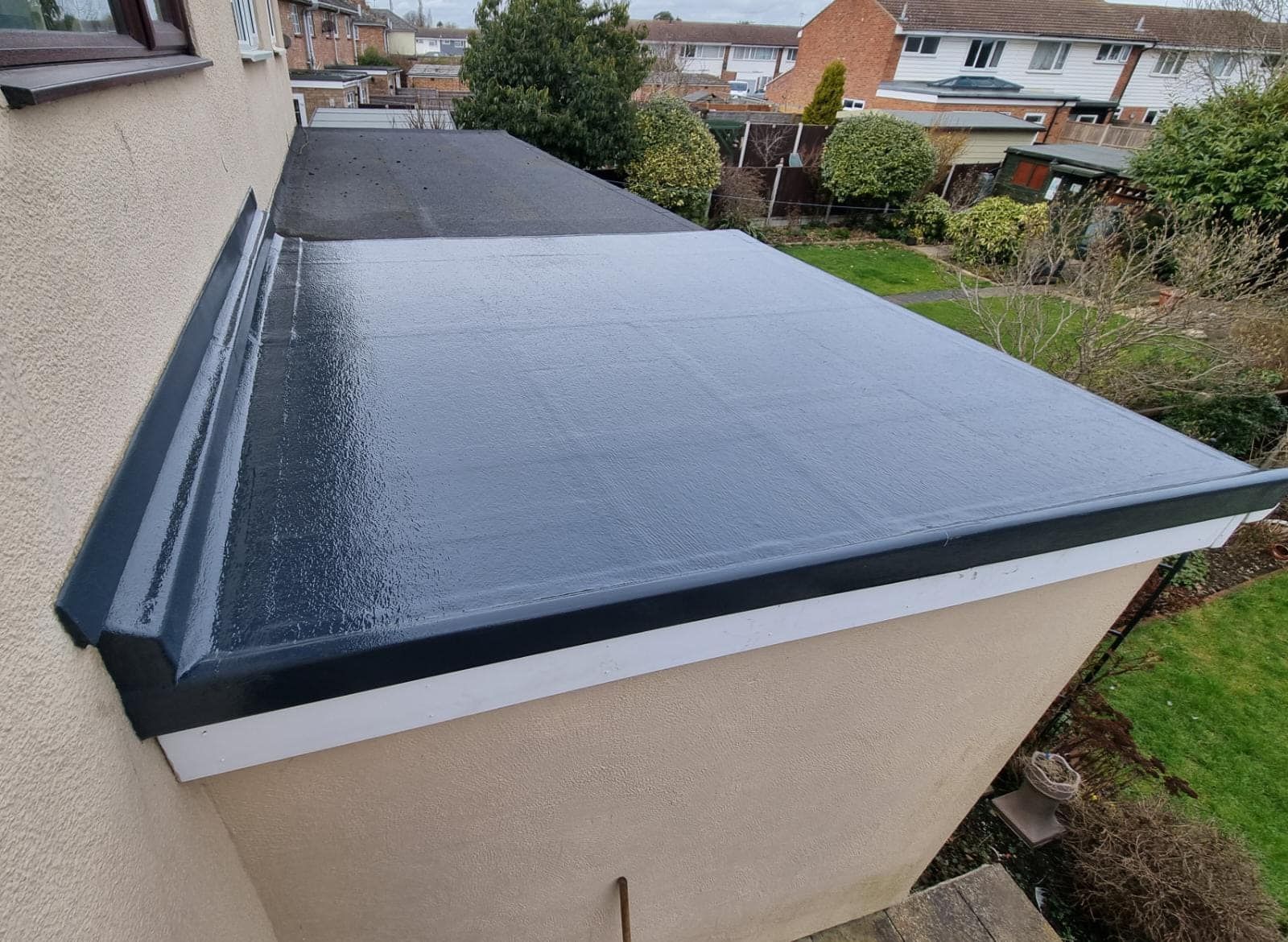
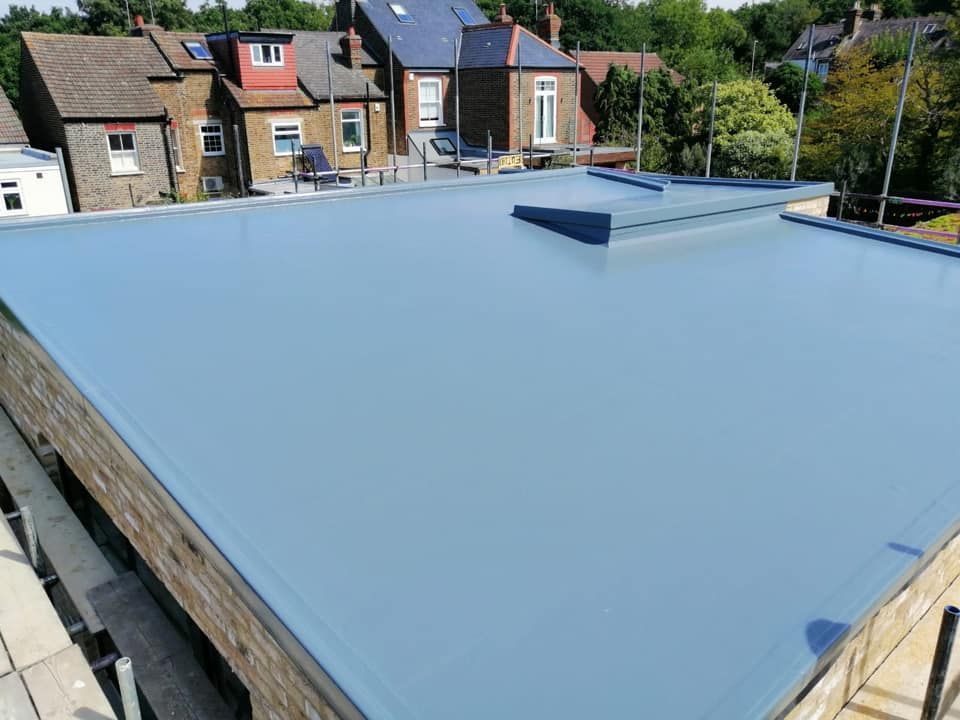
A GRP fibreglass roof, installed correctly on a sound deck, typically lasts between 30 and 50 years in the UK. That's the straight answer. It's also why GRP has replaced felt as the go-to flat roof system for extensions, garages, and bay windows across Derby and Derbyshire.
But lifespan isn't automatic. It depends on installation quality, material grade, deck condition, and how the roof handles Derby's specific weather — wet autumns, cold winters, and the freeze-thaw cycles that push up into the Peak District towns of Matlock, Bakewell, and Buxton. Get those factors right and a GRP roof will outlast felt two or three times over. Get them wrong and problems can appear within a year.
We've been fitting and repairing roofs across Derby and Derbyshire for over 20 years. In this guide, we answer how long does a fibreglass roof last — with the detail that actually matters for your property. We cover lifespan, local weather risks, warning signs, what a proper guarantee looks like, and why poor installation can affect your home insurance and future house sale.
→ Book a free GRP fibreglass roof survey in Derby — call 01332-529704
How Long Does a GRP Fibreglass Roof Last? (The Short Answer)
A properly installed GRP fibreglass roof lasts 30 to 50 years in the UK. Some last longer.
Manufacturers typically quote 10–15 year product guarantees on their resin systems — but this is deliberately conservative. In practice, GRP roofs installed by qualified contractors on properly prepared decks regularly exceed 30 years with minimal intervention. Modern resin grades and UV-stable topcoats have improved significantly, and a roof laid today should comfortably outperform one from two decades ago.
Compare that to traditional felt, which typically needs replacing within 10–15 years under British conditions. A GRP roof fitted now is likely the last flat roof you'll put on that part of your property.
Four things determine where your roof lands in that range:
- Installation quality — the single biggest variable. Poor lamination or missed expansion joints cause early failure regardless of material grade.
- Deck condition — GRP bonds to the deck. A rotten or unstable substrate cuts lifespan drastically.
- Material specification — resin grade, mat weight, and topcoat UV resistance all affect longevity.
- Maintenance — bi-annual visual checks and clear gutters. GRP asks very little of you.
→ See our GRP fibreglass roofing service in Derby
GRP vs Felt vs EPDM: Which Flat Roof Material Lasts Longest?
Most Derby homeowners are choosing between three systems when replacing a flat roof: GRP fibreglass, EPDM rubber, or felt. Here is how they compare on lifespan and real-world suitability for Derbyshire properties.
GRP Fibreglass Typical lifespan: 30–50 years Manufacturer guarantee: 10–15 years (product) Best suited for: Garages, extensions, bay windows, balconies, and complex roof shapes Approx. installed cost: £70–£110 per m²
EPDM Rubber Typical lifespan: 25–40 years Manufacturer guarantee: 15–20 years (system) Best suited for: Large, simple flat decks and commercial roofs Approx. installed cost: £60–£95 per m²
Torch-on Felt Typical lifespan: 10–20 years Manufacturer guarantee: 5–10 years Best suited for: Budget replacements and short-term solutions Approx. installed cost: £45–£70 per m²
Mineral Felt Typical lifespan: 10–15 years Manufacturer guarantee: Rarely guaranteed Best suited for: Sheds and garages on very tight budgets Approx. installed cost: £30–£55 per m²
GRP wins on finish quality and suitability for the smaller, detailed flat roofs common across Derby's housing stock — the 1960s–1990s extensions in Littleover, Allestree, and Chaddesden, the bay windows on Victorian terraces near the Arboretum, the garage roofs in Mickleover and Alvaston. These shapes are where GRP performs best.
EPDM is the better call for large, simple commercial decks where flexibility and seam accommodation matter more than aesthetics. For domestic properties across Derbyshire, GRP is our most commonly specified system.
Felt has the lowest upfront cost — but replace it twice and you've already spent more than a single GRP installation. Over 30 years, GRP consistently wins on cost per year of protection.
What Affects How Long a Fibreglass Roof Lasts? The 5 Key Factors
The lifespan range — 30 to 50 years — isn't vague. It reflects genuine variables that separate a roof that reaches 45 years from one that cracks at 8. Here are the five factors that matter most.
1. Installation Quality
This is the dominant variable. A poorly laminated GRP roof can fail within months. Missing expansion joints, contaminated decks, wrong resin ratios, or laminating in cold or damp conditions all compromise the bond. We've attended roofs across Derby where previous contractors rushed the curing stage or skipped the topcoat entirely. The roof failed before the first winter.
GRP must be laid between 5°C and 25°C in dry conditions. We check the Derby weather forecast before every installation day. If conditions don't meet the threshold, we reschedule. That's not overly cautious — it's what the manufacturer specifies and what the warranty requires.
2. Deck Condition
GRP bonds directly to the deck. If the OSB3 or plywood underneath is rotten, damp, or unstable, the laminate will delaminate regardless of how well it's applied. We inspect every deck before quoting and replace any compromised boards before laminating begins. You'll know about this at the survey stage, not halfway through the job.
Chipboard and compressed straw board decks are not suitable substrates for GRP. If your property has these — common in some 1970s and 1980s Derbyshire builds — we'll advise you before work begins.
3. Expansion Joints
GRP expands and contracts with temperature. Derby's summer surface temperatures can push well above 50°C on a south-facing roof. Winters bring it back toward freezing. That swing is significant. Expansion joints built into the installation absorb this movement and prevent stress cracking at edges and upstands.
Contractors who skip them are saving an hour on the job — and creating a failure point that shows up within a few years.
4. Material Specification
Not all GRP systems are equal. Resin grade, chopped strand mat (CSM) weight, and topcoat UV resistance all affect durability. We use UV-stable topcoats on all Derby installations — a non-UV-stabilised coat can chalk and degrade within five to seven years in direct sun, which on a south-facing extension in Mickleover or Chellaston is a real concern. Ask any contractor quoting your roof what resin grade and topcoat they're specifying.
5. Maintenance
GRP requires very little. An annual visual inspection, clearing gutters and downpipes, and removing any debris that has pooled around upstands. If you spot topcoat crazing or small cracks early, a targeted repair is straightforward and inexpensive. Leave the same damage for five years and you're looking at delamination and potential deck replacement.
We tell every customer we fit for: spring and autumn are the best times to check your flat roof in Derbyshire — post-winter damage assessment, and pre-winter clearance before the wet season.
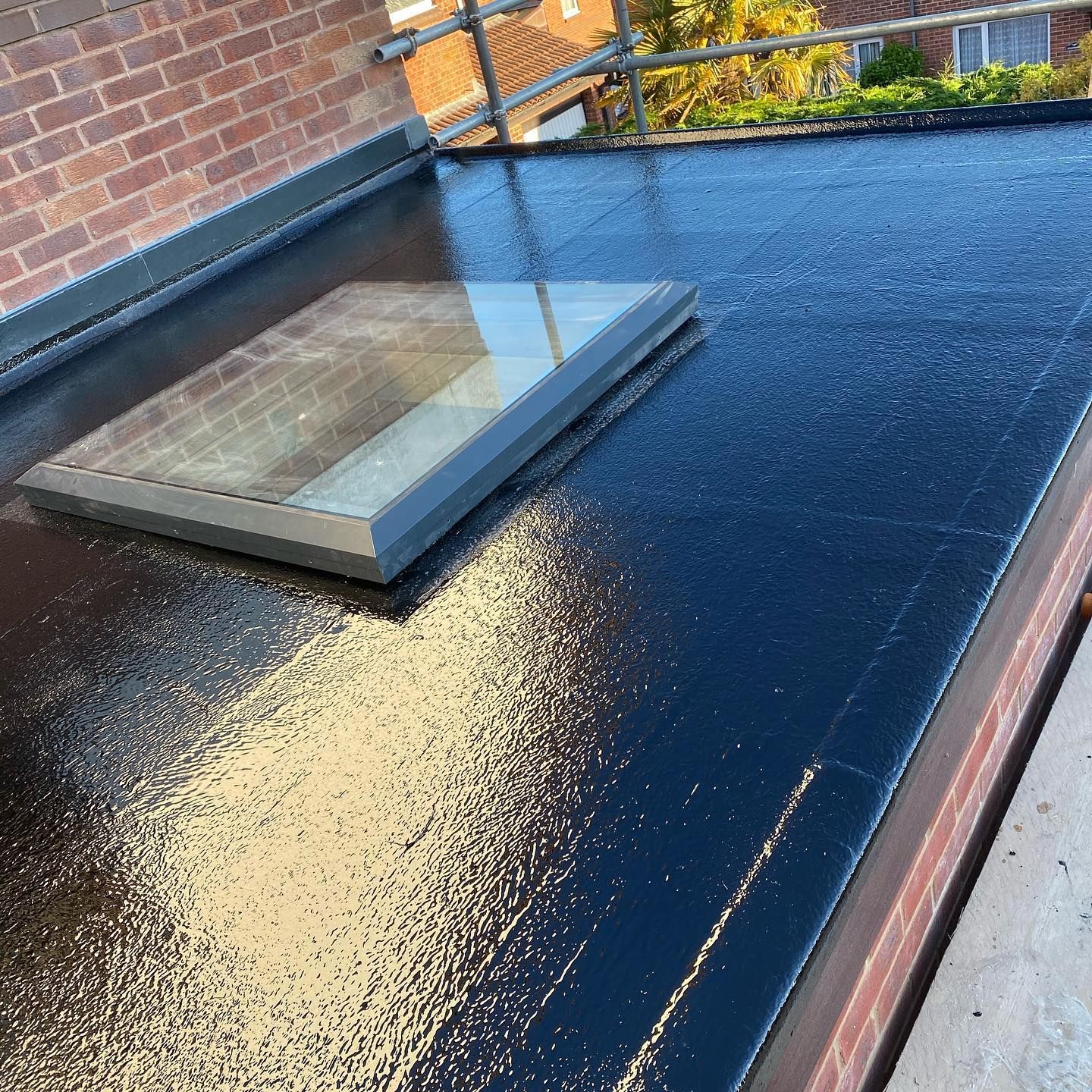
Will Derbyshire's Weather Shorten My GRP Roof's Life?
This is a question no local competitor is answering — and it should be. Derbyshire's climate is not the same as the national average. The county's elevation, particularly in the Peak District towns of Buxton, Matlock, and Bakewell, creates weather conditions that put specific stresses on flat roofs.
Freeze-Thaw Cycles
Derby winters regularly bring temperatures down to -6°C or -7°C, with the higher ground toward the Peaks seeing harder and more sustained frosts. Freeze-thaw cycles — where water in roofing materials or deck voids freezes, expands, and then thaws — are one of the most damaging forces on any roof covering.
Traditional felt and tile bedding mortar are highly vulnerable to this. GRP is not — because the laminate is non-porous and water cannot penetrate the cured surface to freeze inside it. This is one of GRP's genuine advantages in Derbyshire's climate over felt systems.
However, freeze-thaw still matters for GRP at the edges and joints. If expansion joints are absent or poorly detailed, repeated thermal movement creates micro-cracks that water then enters. Once water is behind the laminate, frost does the rest. We see this pattern on roofs fitted by contractors who don't account for Derbyshire's temperature swings.
Rainfall and Drainage
Derby receives consistent rainfall throughout the year — wet autumns and springs are the norm. A GRP roof handles standing water far better than felt, because the seamless surface has no laps or joins for water to track through. But drainage design still matters. If a roof is laid without adequate fall toward the outlet, ponding water will eventually find any weakness in upstand detail or edge trim fixings.
Properties in Chaddesden, Spondon, and Oakwood with older flat-roof extensions are some of the most common jobs we attend. Many were originally laid with insufficient fall — a problem GRP alone won't fix. We assess fall and drainage at every survey before specifying the system.
UV Exposure on South-Facing Roofs
Derbyshire gets meaningful summer sun, and south-facing flat roofs on extensions in areas like Allestree, Littleover, and Borrowash can get very hot in July and August. A cheap topcoat will chalk and degrade under UV exposure within years. We specify UV-stable topcoats on all installations for exactly this reason. On a well-specified GRP roof, UV is not a material concern for decades.
How We Changed Mrs Carson’s Garage Felt Roof in Swadlincote to GRP Fibreglass
Mrs Carson contacted us after noticing damp patches appearing on the internal wall of her garage in Swadlincote. Her felt roof was around 14 years old — not ancient, but well past its best in Derbyshire's wet winters. The surface was blistering, water was pooling at the back edge, and the felt had started to lift at the seams.
We booked a free survey within 48 hours.
On inspection, the existing felt had failed across most of the rear section. Two of the deck boards were soft — moisture had been sitting against them long enough to cause rot. The drainage fall was also insufficient, which explained the chronic ponding.
We stripped the old felt completely, replaced the two compromised deck boards with new OSB3, re-graded the fall toward the outlet, and fitted GRP fibreglass using a two-layer chopped strand mat system with a UV-stable grey topcoat. Edge trims were fitted around the full perimeter and the upstand detail against the rear wall was taken up to the correct height to prevent any future water ingress at that junction.
The job was completed in two days. Mrs Carson now has a seamless, fully waterproof garage roof that will not need replacing again for decades.
We provided a written workmanship guarantee on completion.
This is a typical job for us across Swadlincote, Newhall, and Woodville — older garage and extension felt roofs that have simply reached the end of their useful life and need a permanent solution.
→ Book your free roof survey — call 01332-529704 or visit derbyroofers.co.uk/contact-derby-roofers
Warning Signs Your GRP Fibreglass Roof Needs Repairing or Replacing
Catch problems early and a targeted repair is often all that's needed. Leave them and you're looking at delamination, deck replacement, and eventually a full re-roof.
Here's what to look for on your flat roof in Derby:
- Topcoat crazing or flaking — fine surface cracks or peeling on the topcoat. Usually caused by UV degradation or a topcoat applied over uncured laminate. Often re-coatable if caught early.
- Visible cracks at edges or upstands — where the GRP meets a wall, soil pipe, or roof light. Thermal movement without proper expansion joints causes this. Needs targeted repair before water enters.
- Soft or spongy areas underfoot — if the roof feels soft when you walk on it, the deck beneath has rotted. This means moisture has been getting in — often through a failed edge or upstand, not the flat field itself.
- Blistering or bubbling on the surface — trapped moisture or adhesion failure during the original installation. More common on roofs fitted in damp conditions.
- Water staining on ceilings below — active water ingress. Act immediately. Delay turns a repair into a replacement.
- Persistent pooling after rain — if water sits on the roof for more than 48 hours, drainage is inadequate. Standing water works at every joint and upstand over time.
Repair or Replace? The Honest Answer
A single-point failure — a cracked edge trim, a pinhole in the topcoat, a lifted upstand — is almost always repairable. We carry out GRP repairs across Derby regularly without touching the main field of the roof.
A full replacement is the right call when: the deck is rotten in multiple areas, large sections of laminate have delaminated, the roof has had repeated repairs that haven't held, or the system is over 25 years old with widespread surface degradation.
We use our free drone survey to assess exactly this. We give you a straight answer — repair or replace — and a written quote for whichever is right. We don't upsell a replacement when a repair will do the job.
→ Not sure if your flat roof needs repair or replacing? Book a free drone survey in Derby
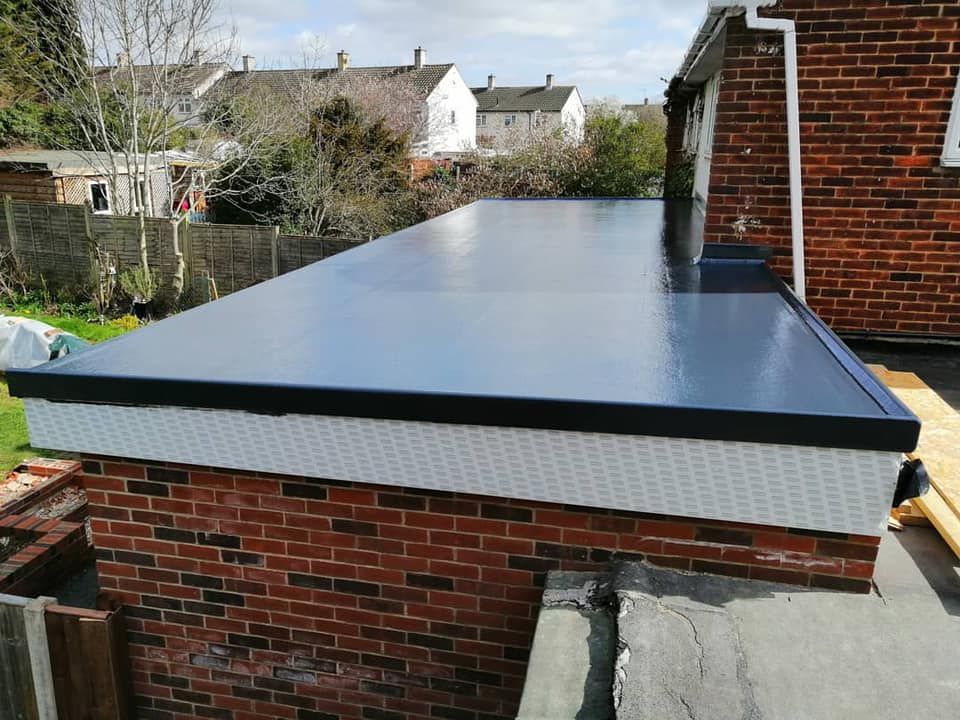
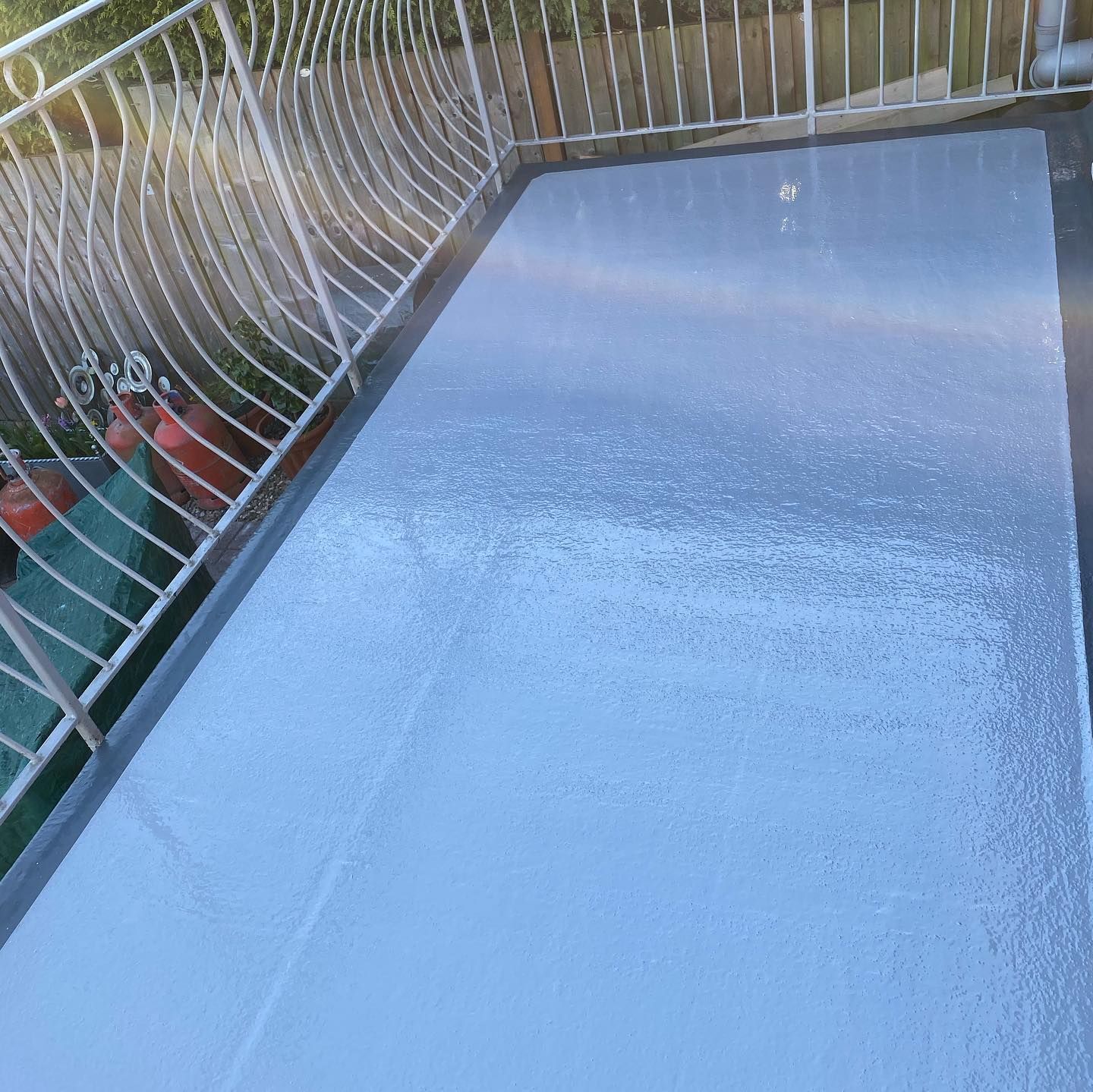
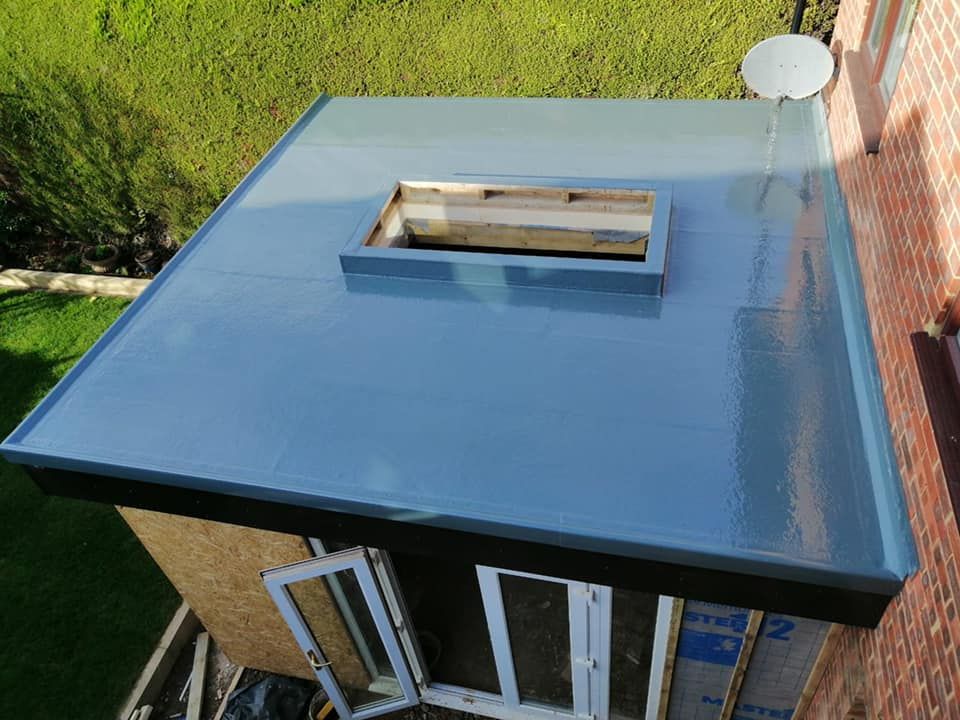
Frequently Asked Questions — GRP Fibreglass Roofs in Derbyshire
How long does a GRP fibreglass roof last on a Derby home?
A correctly installed GRP roof in Derby typically lasts between 30 and 50 years. Derby's freeze-thaw winters and warm summers create thermal movement — proper deck prep, UV-stable topcoats, and expansion joints at the edges are what allow GRP to handle that movement without cracking. Poorly installed roofs can fail within a year. Quality installation is the deciding factor.
Is a GRP fibreglass roof better than felt for my Derbyshire home?
Yes, in most cases for Derby and Derbyshire properties. GRP outlasts felt two to three times over, is seamless (no laps for water to track through), resists the freeze-thaw cycles common in Derbyshire winters, and requires far less maintenance. The higher upfront cost is typically recovered within the first replacement cycle that felt would have needed.
What are the signs my GRP flat roof in Derby needs attention?
The most common signs are topcoat crazing or flaking, visible cracks at edges or upstands, soft or spongy areas underfoot, blistering on the surface, and water staining on ceilings below the roof. A free drone survey from Derby Roofers will assess your roof's condition without ladders or scaffolding and give you a clear recommendation.
Does Derby Roofers offer a free survey before quoting a GRP roof?
Yes. We offer a free drone roof survey and no-obligation written quote for every new GRP enquiry across Derby and Derbyshire. We inspect the deck, drainage, upstands, and existing covering before making any recommendation. You receive a clear, itemised quote with no pressure to proceed. Call us on 01332-529704 to book.
Ready to Get Your GRP Fibreglass Roof Sorted in Derby?
If your flat roof is leaking, aging, or you're planning an extension and want a system that will genuinely last — here's what happens next:
- Call us on 01332-529704 or complete our contact form at derbyroofers.co.uk/contact-derby-roofers
- We book a free, no-obligation drone roof survey at a time that suits you
- You receive a clear, written, itemised quote — no pressure, no surprises
- We schedule your installation around a suitable dry weather window
Derby Roofers has been working on Derbyshire roofs for over 20 years. We know the housing stock across Derby, Long Eaton, Ilkeston, Belper, Matlock, and every part of the county. We know what Derby's climate does to flat roofs. We know what lasts.
→ Book your free GRP roof survey — call 01332-529704 or contact us online → See our GRP fibreglass roofing service → View our full range of roofing services in Derby