Derby Roofers
Professional Moss & Algae Removal Service
Call us now book a FREE consultation and FREE Quotation
FREE Drone Survey Available
Call: 01332-529704
Moss & Algae Removal in Derby — Clean Your Roof. Protect Your Home.
We Are Your Trusted, Local Roofing Contractor Serving Derby & Derbyshire
Don't wait — contact Derby Roofers today for a FREE quote and a FREE drone roof survey.
📞
Call Now: 01332-529704
Roof moss and algae removal in Derby is one of the most common maintenance calls we handle across Derbyshire. Derby's wet climate, shaded rooflines, and cold winters create near-perfect conditions for moss, algae, and lichen to take hold on your tiles — and once they do, they spread fast.
This page covers roof moss removal, algae treatment, biocide application, roof tile cleaning, and long-term prevention for residential properties across Derby. Whether you have concrete tiles in Mickleover, clay tiles in Allestree, or slate in Spondon — we have the right method for your roof.
Call Derby Roofers on 01332-529704 for a free roof inspection. We will assess what is growing on your roof, explain the best treatment, and give you a no-obligation quote before any work begins. As Derby's roofing contractors with over 20 years of experience, we carry full public liability insurance and work safely at height on every job.
Does Moss and Algae Actually Damage My Roof?
Most Derby homeowners spot green growth or black streaks on their tiles and assume it is a cosmetic problem. It rarely is.
Moss, algae, and lichen are three different organisms — and each causes a different type of damage:
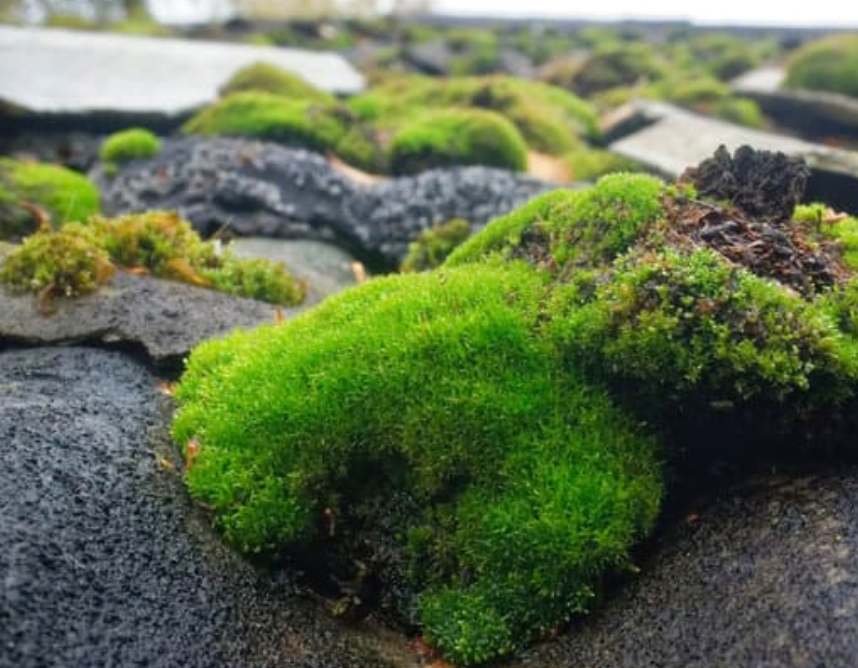
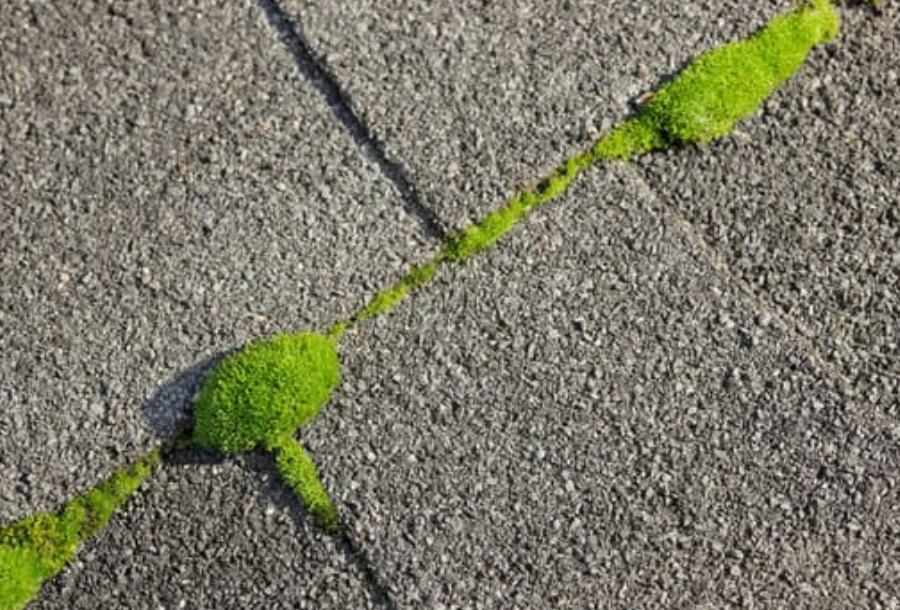
- Moss — a small plant that forces its way under tile edges and holds moisture against your roof surface. In a Derbyshire winter, that trapped moisture freezes, expands, and cracks tiles. This is called freeze-thaw damage, and it is one of the most common causes of roof leaks in Derby homes.
- Algae — grows flat against the tile surface and feeds on the limestone in concrete tiles. The dark black streaks you see are not dirt. They are a type of algae called Gloeocapsa magma, spread by wind and birds from roof to roof. Over time, algae breaks down the tile surface and can also increase heat absorption — pushing up your energy bills.
- Lichen — the hardest of the three to remove. Its root-like strands grip deep into tile surfaces. Pale green or grey crusty patches are lichen. Left untreated, lichen causes permanent pitting and scarring to roof tiles.
Left untreated, all three will:
- Lift and crack roof tiles from the inside out
- Block gutters and downpipes with decomposing debris
- Speed up freeze-thaw tile damage every winter
- Add significant weight to the roof structure as wet moss becomes heavy
- Reduce kerb appeal and lower your property's value — an issue if you are planning to sell
- Allow damp to penetrate the roof deck and loft space — often undetected for months
Roofs in shaded spots — particularly north-facing slopes in areas like Allestree and Quarndon — are the most at risk. But moss and algae spread fast. A south-facing roof can follow within a season or two once spores are established nearby.
What Is the Safest Way to Remove Moss and Algae From a Roof in Derby?
The safest method for removing moss and algae from a roof in Derby is soft washing — a low-pressure biocide treatment that kills growth at the root without damaging your tiles. This is the method recommended by the National Federation of Roofing Contractors (NFRC) and the one we use on every job.
Our Step-by-Step Roof Cleaning Process
- Free roof inspection — we assess the extent of moss, algae, and lichen growth and check for any existing tile damage before we start
- Manual debris removal — loose moss is carefully scraped by hand or with telescopic tools from the roof edge, keeping foot traffic on tiles to a minimum
- HSE-approved biocide application — we apply a professional-grade biocide solution by low-pressure sprayer across the full roof surface, killing spores at the root
- Dwell time — the solution gets to work immediately; rain washes the treated residue away naturally over the following weeks — no rinsing required
- Gutter clear — we clear your gutters and protect downpipes throughout the process so removed debris does not block your drainage
- Post-clean roof inspection — we check for cracked or slipped tiles, failed flashings, and damaged ridge mortar during the clean and flag any repair work before we leave
- Optional: Roof sealing — for older, more porous concrete tile roofs we can apply a breathable roof coating after cleaning. This adds a waterproof barrier and slows moss and algae regrowth significantly
Derby's mix of Victorian terraces, post-war semis, and modern builds means tile types vary widely. Concrete tiles in Spondon respond differently to treatment than older clay tiles closer to Derby city centre.
We always adjust our biocide strength and cleaning method to suit your specific tile type and the level of growth present.
Why You Should Never Pressure Wash a Roof
Many Derby homeowners search for roof cleaning and find companies offering pressure washing. We do not pressure wash roof tiles — and here is why you should be cautious of any company that does.
The NFRC is clear: high-pressure washing damages roof integrity. Pressure washing:
- Strips protective granules from concrete and asphalt tiles, removing their UV defence
- Breaks the adhesive seal on tile edges, letting water get underneath
- Can crack older, brittle tiles — common across Derbyshire properties built before the 1980s
- Scatters live moss spores across the roof surface, meaning regrowth starts faster than before
- Voids most tile manufacturers' warranties
- Forces water under tiles, risking immediate water ingress into your loft
Older properties in areas like Mickleover and Spondon often have concrete tiles that are already porous after decades of Derbyshire weathering. High-pressure water on these tiles causes immediate surface damage.
Soft washing achieves exactly the same clean result with none of the risk to your tiles, your loft, or your roof warranty.
Should You Attempt DIY Moss Removal on Your Derby Roof?
A diluted bleach solution can work on light algae — but there are important limits to what DIY can safely achieve.
For very light algae growth on a low, accessible roof, a 50/50 mix of laundry-strength chlorine bleach and water, applied by pump sprayer and left to rinse naturally in the rain, can reduce surface discolouration. Oxygen bleach is a gentler, less toxic alternative — safer for garden plants and the environment around your property.
However, DIY moss removal carries real risks:
- Two-storey semis and Victorian terraces — common across Derby — are not safe to access without proper fall protection equipment
- Heavy moss needs physical scraping before any chemical will penetrate — doing this without the right tools risks tile damage
- Supermarket sprays do not contain professional-grade biocide — they treat the surface only, leaving spores behind that regrow quickly
- You will not spot the hidden damage a professional finds during the clean — cracked ridge tiles, slipped slates, failed lead flashings
If you can see green growth on your roof, it is always worth getting a professional eye on it before attempting any treatment yourself. Our free inspection costs you nothing and tells you exactly what you are dealing with.
Professional Moss Removal vs DIY — What You Actually Get
Choosing a professional Derby roofing contractor for moss and algae removal gives you more than just a clean roof. Here is a clear breakdown of what you actually get with each approach:
Safe Working at Height Professional: Full fall protection equipment, anchors, and insured operatives on every job. DIY: Serious risk of injury — two-storey roofs are not safe without specialist equipment.
Biocide Treatment Professional: HSE-approved, professional-grade biocide that kills spores at the root and protects for one to two years. DIY: Supermarket sprays treat the surface only — spores remain and regrowth is fast.
Tile Damage Check Professional: Full roof inspection during the clean — cracked tiles, failed flashings, and damaged ridge mortar all flagged. DIY: Hidden damage is rarely spotted until it becomes a costly leak.
Gutter Clearing Professional: Gutters cleared and downpipes protected as part of the job — no extra charge. DIY: Separate task that is easy to overlook.
Lichen Treatment Professional: Specialist method required — lichen roots grip deep into tile surfaces and need targeted treatment. DIY: Standard sprays rarely effective against established lichen.
Tile Warranty Protected Professional: No pressure washing used — your tile manufacturer's warranty stays intact. DIY: Incorrect methods or pressure washing can void your warranty without you knowing.
Speed and Result Professional: A standard Derby semi-detached completed in a single visit. DIY: A full weekend of work, with a high risk of missing growth and incomplete treatment.
How to Stop Moss and Algae Coming Back on Your Derby Roof
Removing moss and algae is only half the job. Preventing regrowth is what protects your investment long-term.
The most effective prevention steps for Derby roofs:
- Cut back overhanging trees — shaded roofs in Allestree and Quarndon stay damp far longer after rain. More sunlight means faster drying and far less opportunity for spores to take hold
- Zinc or copper strip installation along the ridge — metal ions wash down the roof in rainfall and prevent new moss and algae growth across the tile surface
- Annual gutter cleaning — blocked gutters keep the roof edge permanently wet. This is where moss starts on most Derby homes
- Biocide retreatment every two to three years — professional biocide continues working in the tile surface long after application, but retreatment maintains the protection layer
- Regular roof inspections — catching thin early-stage moss growth costs far less to treat than a heavy infestation after several winters
- Consider a breathable roof coating — particularly useful on older concrete tile roofs across Derby that have become porous over time
Derby Roofers offer roof inspection as a standalone service. If you are unsure what is on your roof or how bad the growth is, call us — we will come out, take a proper look, and tell you exactly what is needed with no obligation.
Areas We Cover For Moss & Algae Removal in Derbyshire
Derby Roofers proudly serves homeowners and businesses throughout Derby city and the wider Derbyshire area. Our local teams cover:
Derby City Areas:
- Derby City Centre (DE1)
- Allestree, Mackworth & Quarndon (DE22)
- Mickleover (DE3)
- Littleover & Normanton (DE23)
- Chaddesden, Oakwood & Spondon (DE21)
- Alvaston, Crewton & Osmaston (DE24)
Surrounding Derbyshire Towns & Villages:
- Belper (DE56)
- Ripley (DE5)
- Ilkeston (DE7)
- Heanor (DE75)
- Swadlincote (DE11)
- Ashbourne (DE6)
- Matlock (DE4)
- Borrowash & Draycott (DE72)
- Etwall & Hilton (DE65)
- Melbourne & Chellaston (DE73)
- Duffield & Little Eaton (DE56 / DE21)
- Breadsall & Darley Abbey (DE21 / DE22)
- Long Eaton (NG10)
- Castle Donington (DE74)
Not sure if we cover your area? Call us on 01332-529704 and we'll be happy to help.
Frequently Asked Questions About Moss & Algae Removal
Does moss on my Derby roof need removing now, or can I wait?
Moss causes progressive damage — the longer it stays, the harder and more expensive it is to remove. Light moss growth is quick to treat. Heavy infestation that has been building for several winters may have already caused tile or mortar damage beneath the surface. If you can see green growth on your tiles, book an inspection now.
What causes moss and algae to grow on my roof?
Moss and algae need three things to grow: moisture, shade, and something to feed on. Derby's wet climate provides the moisture. North-facing roof slopes and overhanging trees provide the shade. The limestone filler in concrete tiles provides the food source for algae. Once spores land — carried by wind, birds, or squirrels — growth can establish within a single season.
Will the biocide treatment harm my plants or garden?
A correctly applied professional biocide is safe for plants and garden areas at the right dilution. We cover all borders, protect downpipes, and use biodegradable products wherever the roof type and growth level allows. Modern professional biocides are specifically formulated for minimal environmental impact when used correctly.
Can I remove roof moss myself on my Derby home?
Light algae on a low, accessible single-storey roof can be tackled carefully with a DIY bleach solution. Heavy moss, steep rooflines, or anything above single storey carries real fall risk. Two-storey semis and terraces — the most common property type across Derby — are not safe for DIY treatment without proper fall protection equipment.
How long does moss stay away after treatment?
A professional soft wash with biocide application typically keeps a Derby roof clear for one to two years. Zinc strip installation and regular gutter cleaning extend that interval considerably. Annual retreatment programmes are available at a reduced rate if you want year-round protection.
What time of year is best to treat roof moss in Derby?
Late spring through early autumn gives the best results — the biocide needs a dry surface and at least two to four hours without rain to bond properly. That said, if heavy moss is present going into a Derbyshire winter, it is better to treat before the freeze-thaw cycle starts than to wait for spring.
Will moss removal damage my roof tiles?
No — when carried out correctly using soft washing and hand scraping, moss removal does not damage tiles. Damage only occurs from high-pressure washing, incorrect chemicals, or untrained operators walking on tiles. We use telescopic tools where possible to keep foot traffic off your roof surface entirely.
Is roof moss removal covered by home insurance?
Moss and algae removal is classed as routine maintenance and is not covered by standard home insurance policies. Check your policy before assuming cover. A regular treatment programme is the most cost-effective way to avoid the larger repair bills that untreated growth eventually causes.
Does moss and algae affect my home's energy efficiency?
Yes. Algae darkens tile surfaces and increases heat absorption, which can affect roof temperature and loft ventilation. Moss blocking vents reduces airflow into the roof space, which can make heating and cooling less efficient. Keeping your roof clean is part of keeping your home running well.
Ready to Book? Get Your Free Roof Inspection Today
If you can see green growth, black streaks, or patches of lichen on your roof — do not leave it another season.
Every month moss stays on your tiles, it holds more moisture, pushes further under tile edges, and does more damage. A clean roof treated properly today can add years to your roof's life and save you the far bigger cost of tile replacement or re-roofing down the line.
Derby Roofers have been protecting roofs across Derby and Derbyshire for over 20 years. We carry full public liability insurance, work safely at height on every job, and give you an honest assessment of what your roof actually needs — nothing more, nothing less.
Call us today on 01332-529704 or visit derbyroofers.co.uk to book your free roof inspection. We cover Derby and all surrounding Derbyshire postcodes. We always answer the phone — or we call you back.