Roof Maintenance Tips For Residential Homeowners in Derby
Most Derby homeowners do not think about their roof until water appears on the ceiling. By that point, the damage has usually been building for months. A loose ridge tile above a Normanton terrace, a blocked valley on a Chaddesden semi, or a failed flashing behind a Mickleover chimney — these faults start small and stay hidden until they cannot be ignored.
This guide gives you practical roof maintenance tips for residential homeowners in Derby. We cover what to check, when to check it, how to spot problems early, and when to call a professional.
Derby Roofers has been working on roofs across Derby and Derbyshire for over 20 years. We see the same problems repeated across the same property types, season after season. What we share here is based on that firsthand experience — not a generic checklist.
Use the sections below to work through the key maintenance areas. If anything gives you cause for concern, we offer a free drone roof survey across all Derby postcodes — with no obligation and no pressure to proceed.
Call 01332-529704 or visit derbyroofers.co.uk/contact-derby-roofers to book yours.
How Often Should You Have Your Roof Inspected? (Derby Guide)
UK homeowners should have their roof professionally inspected at least once a year. Spring and autumn are the best times — spring to catch whatever winter left behind, autumn to prepare for the cold months ahead.
After any significant storm or period of high winds, a check is worth arranging even if the roof looks fine from the ground.
Derby's climate makes regular inspection more important than many homeowners realise. Our wet autumns deposit moss spores and debris. Cold winters trigger freeze-thaw cycles that crack mortar and lift ridge tiles. Wet springs reveal every small weakness that built up through winter. A roof that looks intact from the pavement can have failed pointing, cracked valleys, or loose lead flashing — and be silently letting water into the structure.
Inspection Frequency by Roof Type
- Concrete tile roofs over 30 years old — inspect every year. The underlay often degrades before tiles show visible wear.
- Felt flat roofs — inspect every year without exception.
- EPDM and GRP flat roofs — inspect every two years, or annually if over 20 years old.
- Slate and clay tile roofs — inspect every one to three years, depending on age and condition.
- Any roof not checked in the last three years — book a survey now.
We use a free drone roof survey on every new enquiry. Our CAA-compliant drone captures high-resolution images of every surface — tiles, flashings, ridges, valleys, gutters, chimneys, and loft structure — so you see exactly what is there before any work is agreed.
Book a free drone roof inspection — derbyroofers.co.uk/roof-maintenance-derby
Warning Signs Your Derby Roof Needs Attention
You do not need to climb a ladder to carry out a useful first check. A walk around your property and five minutes in the loft gives you enough to know whether a professional inspection is worth arranging.
What to Look For From the Ground
Take a walk around the property and look up. Use binoculars if you have them.
- Missing, cracked, or slipped tiles or slates — common after storms and freeze-thaw periods in Derby.
- Ridge or hip tiles that have moved or are sitting unevenly.
- Visible moss or algae patches, especially on north-facing slopes.
- Gutters pulling away from the fascia, sagging, or overflowing during rain.
- A roofline that dips or sags when viewed from the pavement.
What to Look For Inside Your Home
Interior signs often appear before a visible leak develops downstairs.
- Water stains on upper-floor ceilings or walls — even old, dry stains show where water has tracked.
- A damp smell in the loft after rainfall.
- Daylight visible through the roof timbers during daytime.
- Dark patches or damp timber on rafters or on the underlay felt.
Derby's post-war housing stock presents a specific issue. Many semis in Chaddesden, Spondon, and Normanton have concrete tile roofs where the underlay — the felt layer beneath the tiles — has degraded quietly. Water tracks through this felt without any tile movement visible from outside.
Interior signs are often the first evidence. If you spot a damp patch on a first-floor ceiling of a post-1945 semi in Derby, a roof inspection is worth arranging even if the tiles look fine.
If you notice any of these signs, call us on 01332-529704. We cover all Derby postcodes and aim to respond the same day.
Contact us for a free roof inspection: 01332-529704
Repair or Replace? How to Decide
This is the question we hear most often from Derby homeowners. The honest answer depends on what we find during a proper inspection — not what a roof looks like from the street.
When Repair Is the Right Call
Most faults on Derby roofs are isolated. A single slipped tile, a section of failed pointing, a cracked flashing at a chimney base, a minor flat roof blister on a garage extension — these are common, straightforward to resolve, and far cheaper to fix early than to leave.
Repair is almost always the right decision when:
- The fault is confined to one area of the roof.
- The roof is under 25 to 30 years old and structurally sound.
- Tiles are largely intact with no widespread cracking or slippage.
When Replacement Is Worth Considering
Replacement makes more sense when multiple fault points exist across different areas, when the underlay has failed and water is tracking through even without visible tile movement, or when a concrete tile roof is approaching the end of its working life.
We see this regularly on Derby properties. Post-war semis in Chaddesden, Spondon, and parts of Littleover often have concrete tile roofs that look reasonable from the pavement. The tiles are still in place. But the underlay beneath — laid 40 or 50 years ago — has become brittle and permeable. No amount of repair work on individual tiles solves that problem.
Replacement is worth a professional assessment when:
- Multiple leaks exist across different roof sections.
- Leaks have returned after previous repairs.
- The roofline sags visibly from street level.
- The roof is over 40 years old with no replacement history.
We will never recommend replacement where a repair will do the job properly. You receive a written report with annotated photographs — and straight advice, not a sales pitch.
How to Remove Moss and Algae From Your Derby Roof
Moss and algae growth is one of the most common roof problems we find on Derby properties. It is also one of the most underestimated.
Why Derby Roofs Are Prone to Moss
Derby's damp climate, with frequent overcast periods and wet seasons, creates ideal conditions for moss growth. North-facing roof slopes — common on Victorian terraces in Normanton, Allestree, and Darley Abbey — stay damp longest. Properties with mature trees in close proximity see heavier spore deposits on roof surfaces.
Left untreated, moss holds moisture against the tile surface. In winter, that moisture freezes, expands, and widens hairline cracks across the tile. Over time, moss lifts tile edges, blocks valleys and gutters, and adds weight to the roof structure. Algae accelerates surface erosion on concrete tiles.
How We Remove Moss Safely
We use a soft-wash method — not high-pressure washing.
Pressure washing is a common DIY approach that causes more damage than it resolves. It forces water under tiles, strips protective surface coatings from concrete tiles, and can crack older clay and slate surfaces. We do not use pressure washing on any roof we maintain.
Our process:
- Free drone survey to assess moss coverage and check tile condition.
- Manual scrape of heavy moss from the roof surface.
- Soft-wash biocide treatment applied across the full roof area.
- Gutters and downpipes cleared of all debris and moss residue.
- Tile, ridge, and flashing condition report — any repairs are quoted separately and clearly.
We follow every moss removal with a preventative biocide treatment to slow regrowth. Zinc or copper strips at the ridge line are also worth considering for properties in persistently damp locations.
Find out more about our moss removal service —
derbyroofers.co.uk/moss-algae-removal-derby
Gutter Maintenance — Why Derby Homeowners Cannot Ignore It
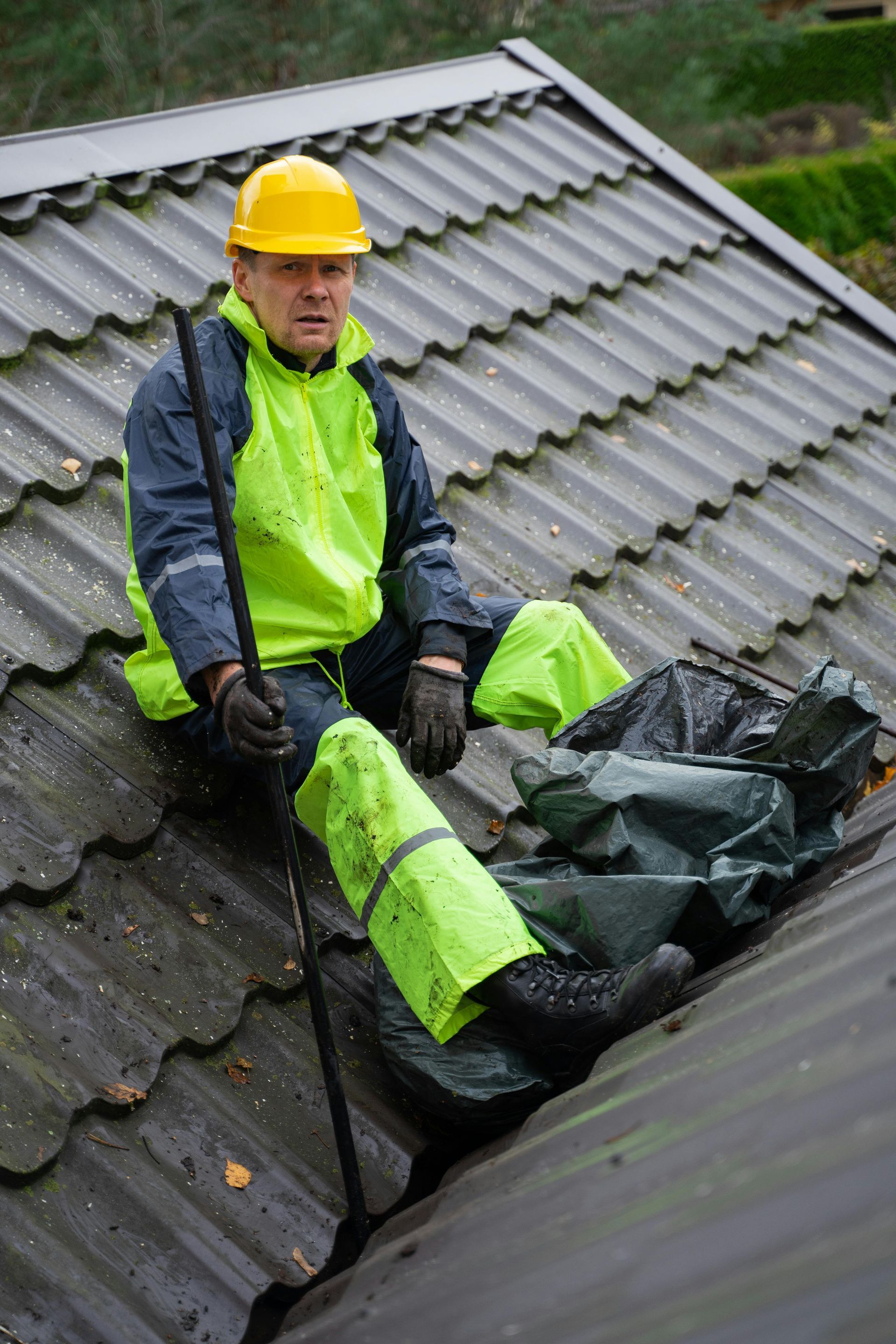
Gutters are part of your roof's drainage system. Blocked gutters cause more roof-related water damage than most homeowners expect — and the damage does not always start at the roof surface.
Water backing up behind a blocked gutter works its way under the eaves, behind the fascia board, and into the roof structure. On older Derby properties with timber fascias, this leads to rot. On flat roof extensions — common across Mickleover, Borrowash, and Long Eaton — blocked outlets cause water to pond and accelerate membrane deterioration.
How Often to Clean Your Gutters in Derby
Clean your gutters at least twice a year. Autumn is the most important time — leaf fall from October onwards blocks gutters quickly across Derby's residential streets. Spring is the second priority, to clear debris deposited over winter.
Signs your gutters need attention now:
- Water overflowing over the front edge of the gutter during rain.
- Gutters sagging or pulling away from the fascia.
- Visible plant growth from inside the gutter.
- Damp patches on external walls directly below the guttering line.
When to Replace Rather Than Clean
Cleaning resolves blockages. It does not fix structural failure. Look for rust, cracks, poorly sealed joints, or sections that no longer sit at the correct fall angle. UPVC gutters with split joints or cast iron gutters with heavy corrosion need replacing — not just clearing.
On every maintenance visit, we clear all gutters and downpipes and check fascias, soffits, and roofline components for rot, movement, or failure. If we find anything that needs attention, we tell you clearly and quote separately — there are no hidden additions to a maintenance visit.
How Long Does a Roof Last? Derby's Housing Stock Explained
Knowing your roof material and its likely lifespan helps you plan — and helps you understand what maintenance schedule it needs.
Derby has a wide range of property ages and tile types. Here is what to expect from each:
- Natural Welsh slate — 80 to 100 years or more. Common on Victorian and Edwardian properties in Darley Abbey and the Cathedral Quarter.
- Clay tiles — 60 to 80 years. Found on pre-war properties in Allestree and parts of Mickleover.
- Concrete tiles — 30 to 50 years. The most common post-1945 tile across Chaddesden, Spondon, Normanton, and Littleover.
- EPDM rubber flat roof — 25 to 50 years. Common on extensions and garages across all Derby postcodes.
- GRP fibreglass flat roof — 25 to 30 years or more. Common on modern extensions across DE3, DE23, and DE24.
- Felt flat roof — 10 to 20 years. Found on garages and older bay window roofs across Derby.
The most important point for Derby homeowners: on concrete tile roofs, the underlay typically degrades before the tiles show obvious wear. A roof that looks intact from the pavement can have underlay that has been failing quietly for years. We see this repeatedly on post-war semis across Chaddesden, Spondon, and parts of Normanton. Annual inspection is particularly important once a concrete tile roof passes 35 years old.
Conservation Areas and Listed Buildings in Derby
If your property sits in a conservation area — such as Darley Abbey Village, the Cathedral Quarter, or parts of Little Eaton — material choice for any roof repair or replacement may be subject to planning requirements. Like-for-like replacement is typically required in these areas.
We advise on conservation area requirements as part of every survey on properties in those locations. There is nothing to arrange separately — it is part of the service.
Best Roofing Materials for Derby's Climate
Derby's climate is defined by persistent rainfall, damp winters, and regular freeze-thaw cycles — not extreme heat or heavy snow. Material selection should reflect that.
Pitched Roofs
Natural slate performs best over the long term. It handles moisture and freeze-thaw stress better than concrete. On older Derby properties in Darley Abbey, Allestree, and the Cathedral Quarter, matching original slate with like-for-like material is both a planning requirement and the right technical choice.
Clay tiles offer good longevity and moisture resistance. They are harder to source in matching profiles for older properties but perform well and last considerably longer than concrete.
Concrete tiles are the most common tile on Derby's post-war stock. They are cost-effective but require more attention as they age — particularly regarding underlay condition.
All materials we install are BBA (British Board of Agrément) approved, giving you documented performance assurance beyond our own workmanship warranty.
Flat Roofs
EPDM rubber roofing is our most recommended flat roof system for Derby homes. It handles the persistent moisture of Derby's climate well, requires very little ongoing maintenance, and lasts up to 50 years with proper installation. We install Firestone EPDM systems.
GRP fibreglass is seamless, waterproof, and highly resistant to the UV and weather conditions Derby experiences. It is the most popular modern flat roof choice for extensions across the DE postcode area.
Felt (bitumen) remains a budget option for garages and smaller flat areas. It works, but lifespan is shorter — 10 to 20 years — and it requires closer annual monitoring.
Not sure which system is right for your property? Call us on 01332-529704. We give you honest advice and a written quote — no pressure to decide on the day.
Roof Maintenance and Repair Costs in Derby
Understanding costs before you call a roofer helps you ask the right questions and compare quotes properly.
Typical Cost Ranges in Derby
- Professional roof inspection (annual): £100 to £300
- Drone roof survey: Free with Derby Roofers
- Moss removal and biocide treatment: £200 to £500 depending on roof size
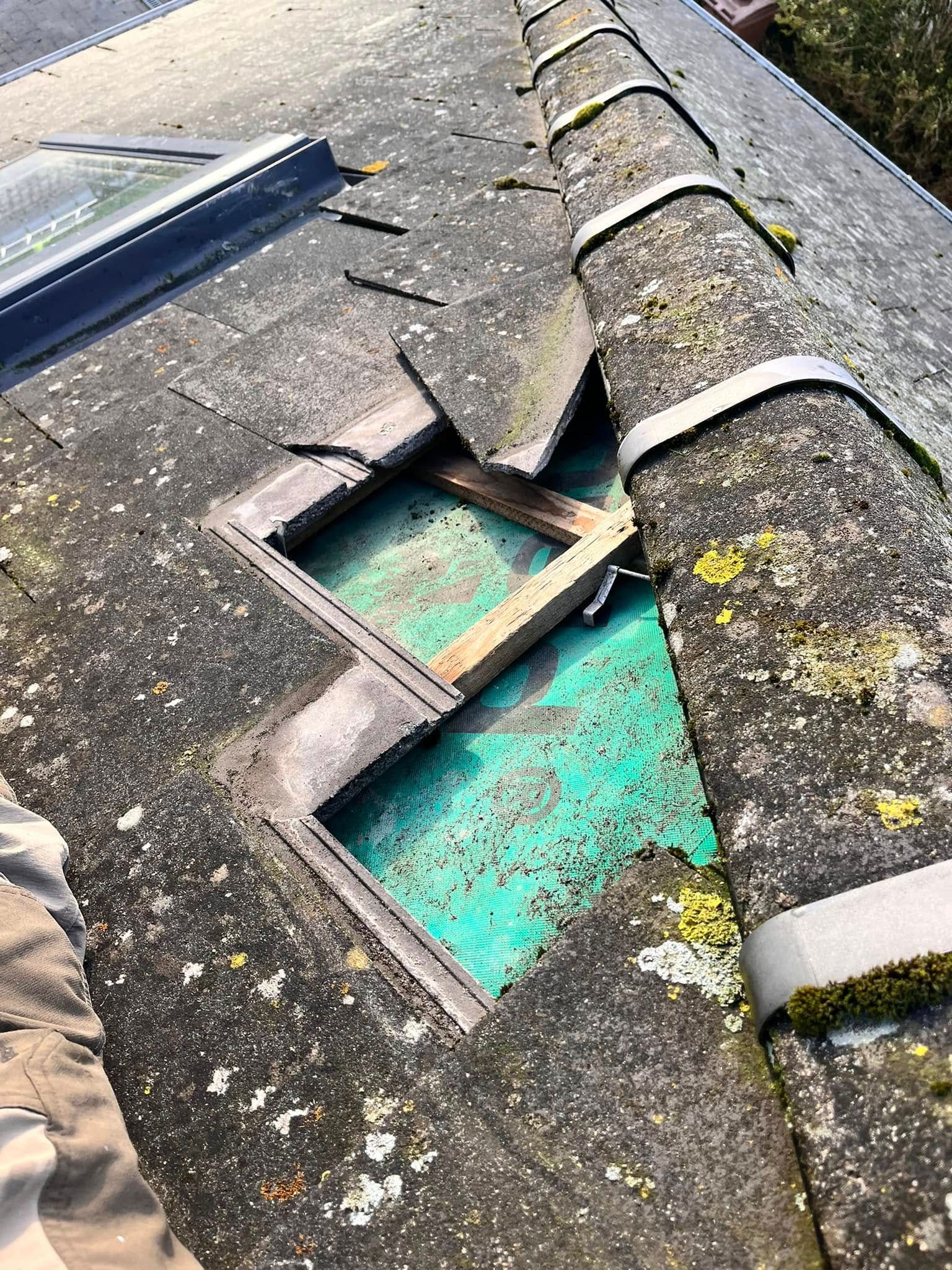
- Minor tile repairs (small number of tiles): £150 to £300
- Flashing repair or replacement: £200 to £500
- Gutter clearance and check: £60 to £150
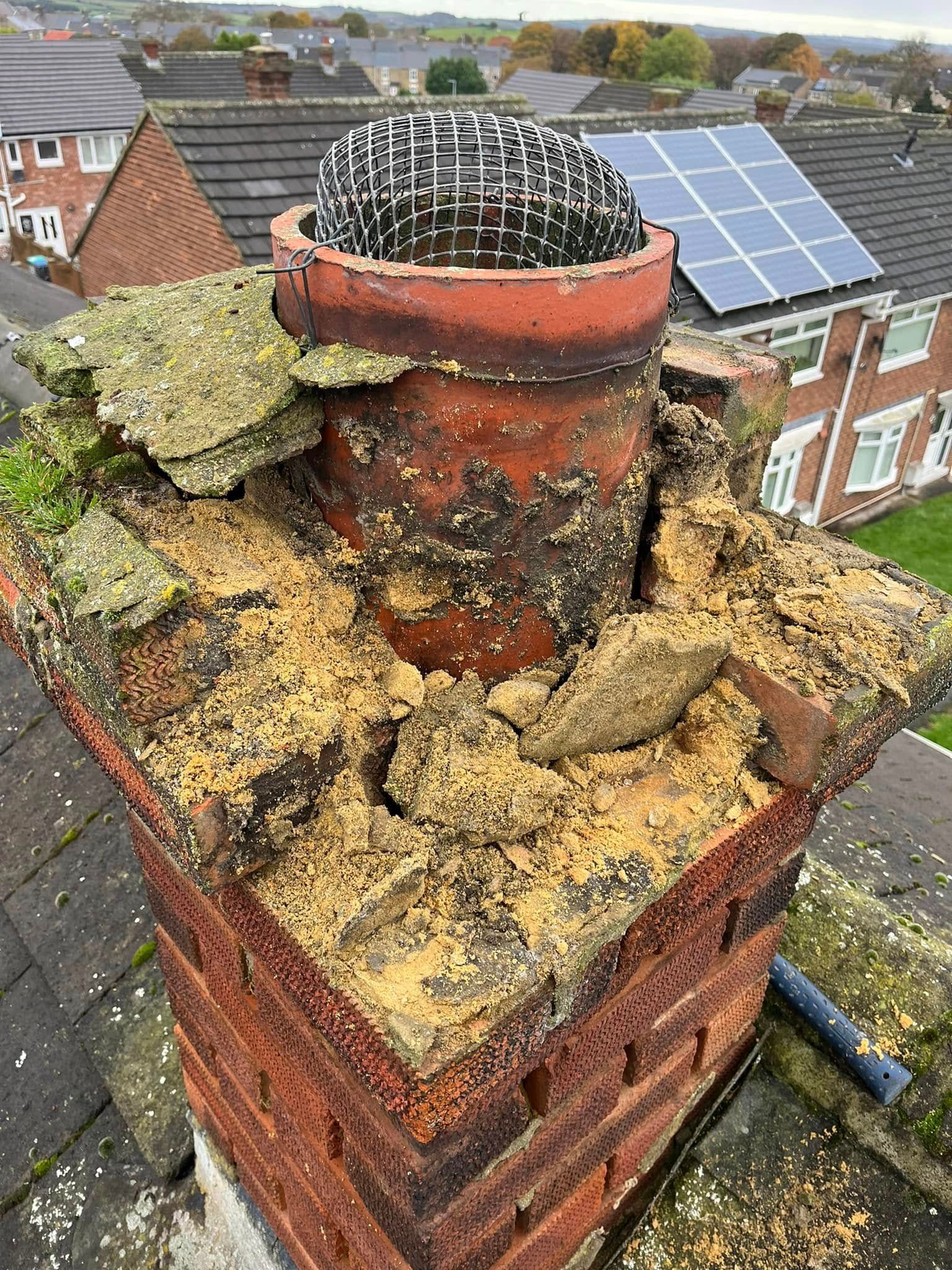
- Chimney repointing: £300 to £800
- Full pitched roof replacement (typical Derby semi): £5,000 to £9,000
- Flat roof replacement (garage or extension): from £1,500
Costs vary based on roof size, access requirements, and material choice. We always provide a free, fully itemised written quote before any work begins. No verbal estimates. No surprises on the invoice.
What Your Home Insurance Covers — And What It Does Not
Most Derby homeowners assume their buildings insurance covers roof repairs. It can — but the terms matter.
What insurance typically covers:
- Storm damage — tiles stripped by high winds, slates dislodged in a storm event.
- Impact damage — a fallen tree branch, debris from a neighbouring property.
- Sudden accidental damage from an unforeseen event.
What insurance does not cover:
- Gradual wear and tear.
- Neglect or lack of maintenance.
- Damage that a loss adjuster determines was foreseeable with reasonable upkeep.
This is where regular, documented maintenance has direct financial value. Our written inspection reports — with dated annotated photographs — give you evidence that your roof was being maintained properly. That evidence can directly support a claim if sudden damage occurs later.
Flat roof owners should check their policy carefully. Many insurers require annual inspection evidence to keep a flat roof policy valid. If you cannot provide it, a claim may be disputed.
If you are making a roof insurance claim in Derby, we assess, document fully, and provide a written repair quote with supporting photographs. Call 01332-529704 to arrange this.
Frequently Asked Questions About Roof Maintenance in Derby
How often should I have my roof inspected in the UK?
Most UK homeowners should have their roof professionally inspected at least once a year. Spring is the best time — it catches damage from winter before it develops further. If your Derby roof is over 30 years old, has not been checked in several years, or is a flat roof of any age, annual inspection is the minimum.
How do I know if my roof needs repairing or replacing?
Isolated faults — a single tile, a section of pointing, a flashing repair — are almost always repairable. If you have multiple leaks in different roof areas, a sagging roofline, recurring leaks after previous repairs, or a concrete tile roof over 40 years old in Derby, a full assessment is worth arranging. Our free drone survey gives you a clear, honest answer before any decision is made.
How do I get rid of moss and algae on my roof?
Moss and algae should be removed using a soft-wash biocide treatment. Pressure washing forces water under tiles and damages surfaces — we do not recommend it. A soft-wash treatment kills moss at the root and slows regrowth. We carry this out across all Derby properties as part of our roof maintenance service.
How often should I clean my gutters, and what happens if I don't?
Clean your gutters at least twice a year — autumn and spring are the priority times in Derby. Blocked gutters back up water under the eaves, into fascias, and into the roof structure. On flat roof extensions, blocked outlets cause pooling that accelerates membrane failure. The cost of clearing gutters is a fraction of the repair costs that blocked drainage causes.
Can I carry out roof maintenance myself, or should I always hire a professional?
From the ground, yes — a visual check of tiles, ridges, and gutters is something every homeowner should do. Getting onto the roof itself carries real risk and we do not recommend it without proper access equipment and training. Any work that requires going onto the roof — repairs, moss removal, flashing checks — is better handled by a qualified roofer with the right equipment and insurance.
What are the signs that my roof is leaking or damaged?
External signs include missing or slipped tiles, visible moss lifting tile edges, gutters overflowing during rain, and a sagging roofline. Interior signs include water stains on ceilings or upper-floor walls, a damp smell in the loft after rain, and daylight visible through the roof timbers. On Derby's post-war semis, a damp ceiling patch can appear even when tiles look fine — indicating underlay failure.
How long does a typical UK roof last, and what affects its lifespan?
Natural slate lasts 80 to 100 years or more. Clay tiles 60 to 80 years. Concrete tiles 30 to 50 years. EPDM rubber flat roofs 25 to 50 years. GRP fibreglass flat roofs 25 to 30 years or more. Felt flat roofs 10 to 20 years. Regular maintenance, good ventilation, and clean gutters extend the life of any roof type. Neglect, blocked drainage, and untreated moss growth all shorten it.
What is the best roofing material for the UK climate?
For pitched roofs in Derby, natural slate handles the persistent rainfall and freeze-thaw cycles better than any other material. For flat roofs, EPDM rubber is the most durable and lowest-maintenance option for Derby's wet climate — lasting up to 50 years with correct installation. GRP fibreglass is an excellent alternative for extensions. All materials we install are BBA approved.
How much does roof maintenance and repair cost in the UK?
In Derby, a professional roof inspection typically costs £100 to £300. Minor tile repairs start from around £150 to £300. Moss removal and treatment ranges from £200 to £500 depending on roof size. A full re-roof on a typical Derby semi costs from around £5,000 to £9,000. We offer a free drone roof survey on all new enquiries — you know exactly what is needed before you commit to anything.
Does my home insurance cover roof repairs and damage?
Home insurance covers sudden accidental damage — storm, impact, and unforeseen events. It does not cover gradual wear, neglect, or damage that should have been caught with reasonable maintenance. Regular documented inspections give you evidence to support a claim if sudden damage occurs. Our written drone survey reports with annotated photographs are directly useful for this purpose.