Slate vs Concrete Tiles vs Flat Roof: Which Is Right for Your Home?
Choosing a new roof in Derby is not a small decision. The material you pick affects your home for decades.
Derby has a wide mix of property types — Victorian terraces in Darley Abbey, post-war semis in Chaddesden, modern extensions in Mickleover, and everything in between. Each one can suit a different roof type. The wrong choice can mean higher costs, more maintenance, or problems with planning.
This guide explains the real differences between slate, concrete tiles, and flat roofs — covering cost, lifespan, maintenance, suitability, and planning rules. By the end, you will know which option fits your Derby home and what to ask a roofer before committing.
We cover all three roof types at Derby Roofers. We have worked on properties across Derby and Derbyshire for over 20 years. The advice below comes from that experience, not from a spreadsheet.
What Are the Three Roof Types? A Plain-English Guide for Derby Homeowners
Before comparing costs and lifespans, it helps to understand what each option actually is.
Natural Slate
Slate is a natural stone, quarried and cut into thin tiles. It has been used on British roofs for hundreds of years. Most slate used in the UK today comes from Wales, Spain, or Portugal. Welsh and Cumbrian slate is regarded as the best quality. Spanish slate is more affordable but still performs well in the UK climate.
You will see slate on older and heritage properties across Derby — especially in conservation areas such as Darley Abbey, and on Victorian terraces throughout Normanton and Spondon. If your property was built before 1940, there is a good chance it originally had a slate roof.
Concrete Roof Tiles
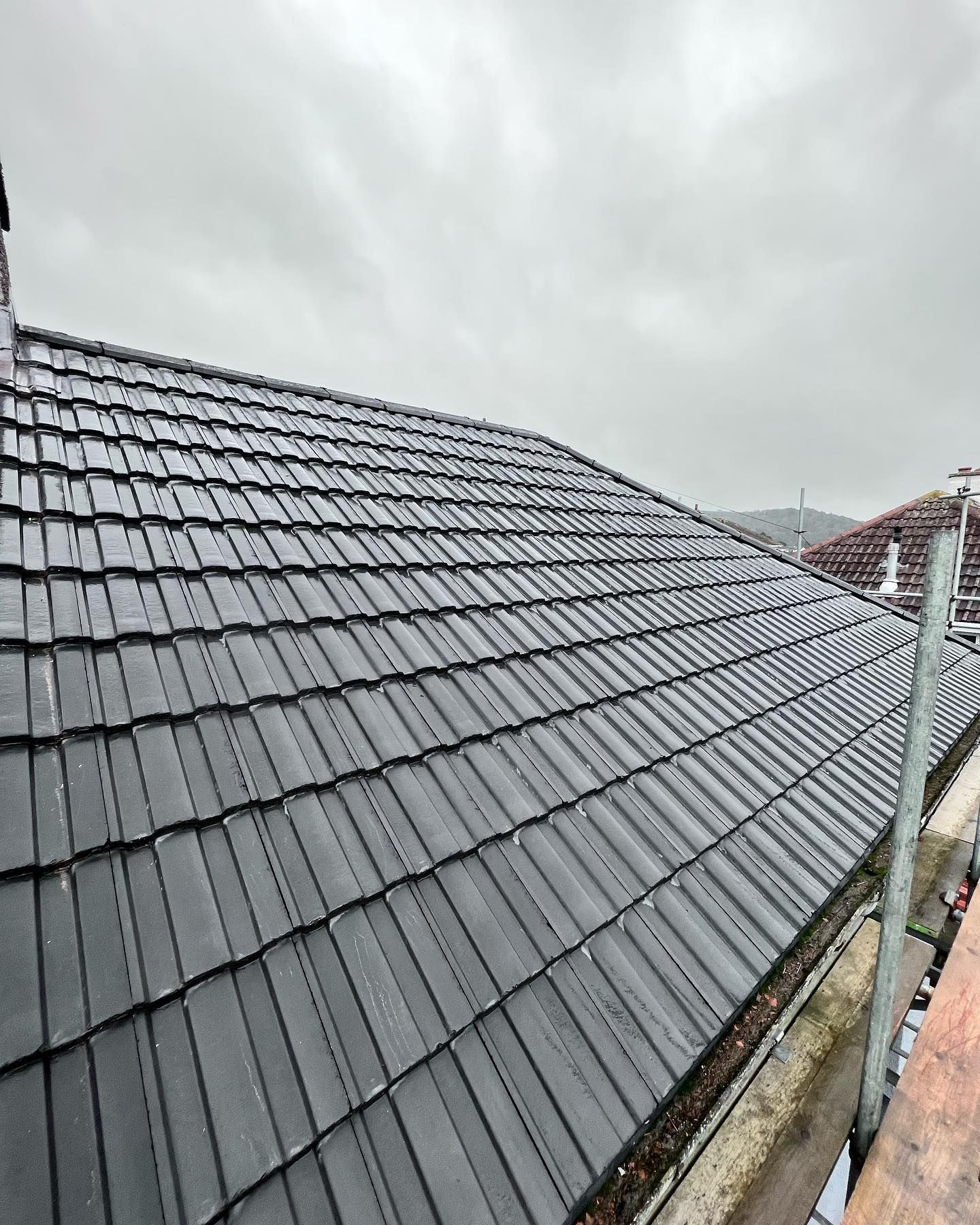
Concrete tiles are manufactured from a mix of cement, sand, and water. They are the most common roof covering on post-war housing in Derby. If your home is a 1960s, 1970s, or 1980s semi-detached, it almost certainly has concrete tiles.
They come in a wide range of colours, profiles, and shapes. This makes them flexible for both replacement and new installation. Concrete tiles are heavier than most people expect, and older roof structures may need checking before a switch is made.
Flat Roofs
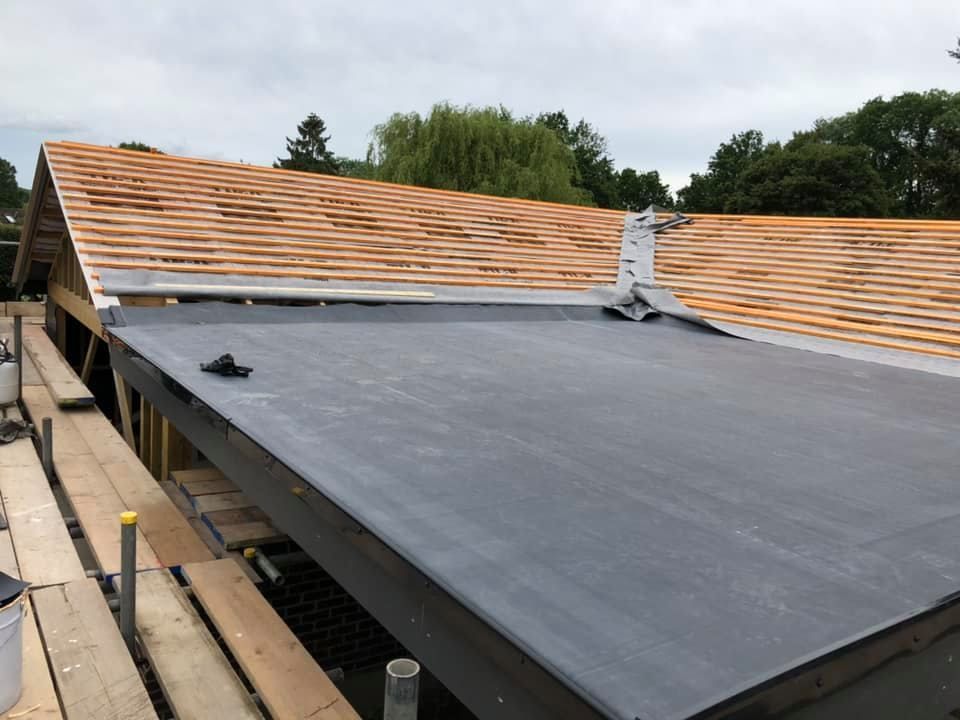
A flat roof is not completely flat — it has a slight slope to allow water to drain. Modern flat roofs use one of three main systems: EPDM rubber, GRP fibreglass, or bitumen felt. We install all three at Derby Roofers.
Flat roofs are standard across Derby on house extensions, bay windows, garages, and porches. They are also common on commercial buildings across Pride Park and industrial areas on Alfreton Road. Modern flat roof systems are far more durable than the felt roofs of 30 years ago.
How Much Does Each Roof Type Cost in Derby?
Cost is usually the first question. Here is a realistic guide based on what we quote for properties across Derby and Derbyshire. Prices vary depending on roof size, access, and condition of the underlying structure.
Slate Roof Costs in Derby
A full slate roof replacement in Derby typically costs more than a concrete tile replacement. The higher price reflects the specialist labour required, the cost of the slate itself, and the time involved in laying each piece individually.
For a standard three-bedroom semi in Derby, a full slate re-roof would typically start from around £8,000–£12,000 depending on the slate type chosen. Spanish slate is more affordable than Welsh or Cumbrian. The long lifespan of slate makes the higher upfront cost more competitive over time.
Concrete Tile Costs in Derby
Concrete tiles are the most budget-friendly pitched roof option. A full re-roof on a typical Derby semi using concrete tiles would generally start from around £5,000–£8,000. The wider availability of the material and faster installation time keep costs lower than slate.
One thing Derby homeowners often overlook: if your current roof has concrete tiles with spray foam applied underneath, removal costs can add significantly to the overall price. We will always check this before quoting.
Flat Roof Costs in Derby
Flat roof replacement costs in Derby depend on the system chosen and the size of the area. A garage or small extension flat roof typically starts from around £1,500–£3,000. Larger flat roofs on rear extensions or commercial units will be priced on size and access.
EPDM rubber is generally the most cost-effective flat roof system over its lifetime. GRP fibreglass costs slightly more upfront but is completely seamless and virtually maintenance-free. Felt is cheapest upfront but needs replacing sooner.
We provide a full, itemised written quote before any work begins. No vague estimates, no surprise bills. Call 01332-529704 or visit derbyroofers.co.uk/contact-derby-roofers to book your free inspection.
Which Roofing Material Lasts the Longest?
Lifespan is one of the most important factors when choosing a roof. Here is how the three main options compare.
Slate Lasts the Longest
Natural slate outlasts every other common roofing material. A well-installed Welsh or Cumbrian slate roof can last well over a century. We have worked on Derby properties where original Victorian-era slate is still intact and performing.
One thing worth knowing: the slate itself often outlasts the fixings. Nails and hooks corrode over time — sometimes after 50–60 years — causing slates to slip or fall even though the tiles themselves are fine. A roofer can re-fix individual slates without replacing the whole roof.
Concrete Tiles
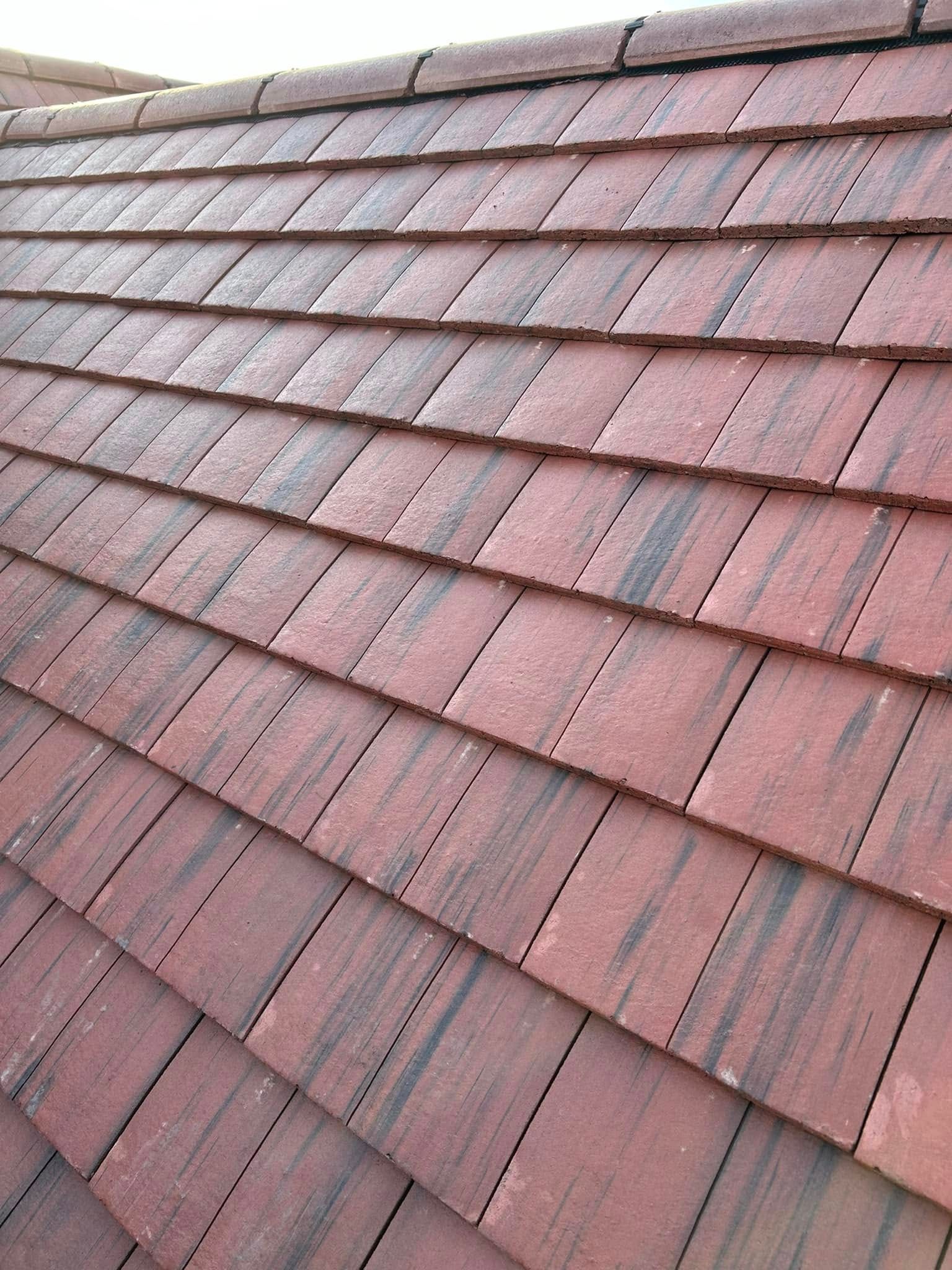
Concrete tiles typically last 30–50 years in Derby's climate. Derbyshire's cold winters create freeze-thaw cycles that can affect porous concrete tiles more than natural stone. Good quality tiles with a weatherproof coating perform better than budget imports.
Colour fading is also worth noting. Concrete tiles lose their original colour over time. This does not affect performance but can impact how the roof looks. Some homeowners choose clay tiles specifically to avoid this.
Flat Roofs
The lifespan of a flat roof depends entirely on the system used. Modern EPDM rubber roofs, correctly installed, can last 25–50 years with minimal maintenance. We install Firestone EPDM systems at Derby Roofers, backed by a manufacturer warranty.
GRP fibreglass flat roofs typically last 25–30 years. Felt roofs are the shortest-lived option at 10–20 years — which is why we recommend EPDM or GRP for any new flat roof installation across Derby.
Which Roof Type Suits Your Derby Home?
The right roofing material depends on your property type, your roof pitch, and where in Derby you live. Here is how we approach the decision.
Victorian and Edwardian Terraces — Normanton, Spondon, Darley Abbey
If your Derby home was built before the 1940s, it was almost certainly designed for natural slate. These older roof structures have lighter timbers suited to slate's weight distribution. Switching to concrete tiles can put excessive load on roof timbers not designed to carry that weight — we have seen ridge sagging across Derby as a result.
For period properties in conservation areas such as Darley Abbey, like-for-like slate replacement is usually expected. Changing materials may require planning consent. We advise on this as part of our free inspection.
Post-War Semis and Estates — Chaddesden, Allestree, Mickleover, Littleover
Most post-war semis in Derby were built with concrete tiles, and concrete tiles remain the practical choice for like-for-like replacement. The roof structure is designed for this weight. A wide range of profiles and colours are available to refresh the look of the property.
If you are considering an upgrade to slate on a post-war semi, we will check the roof structure first. Some properties will need additional timber support — which adds to the cost but is entirely manageable.
House Extensions and Garages — Across Derby and Derbyshire
Flat roofs are standard for house extensions, garage conversions, and bay windows across Derby. A pitched roof on an extension is possible but often runs into planning constraints around height — particularly where the extension butts up against first-floor windows or a neighbouring boundary.
A modern EPDM or GRP flat roof on a rear extension in Borrowash or Breadsall will perform reliably for decades. We always recommend adding roof insulation to current Building Regulations standards at the same time.
Pitch Requirements
Slate needs a minimum roof pitch of around 25 degrees. Concrete tiles can be used on pitches from about 15 degrees. Flat roof systems work on anything below 10 degrees. If your roof pitch is low, your options may be limited — and we will tell you honestly which materials are suitable before any work begins.
Maintenance: What Does Each Roof Type Actually Need?
All roofs need some level of attention. Here is what you can realistically expect for each type.
Slate Roof Maintenance
Slate is the lowest-maintenance pitched roof option. Once correctly installed, a slate roof can go many years without any work needed. The main things to watch for are slipped slates caused by corroded fixings — not the slate itself. Individual slates can be re-fixed or replaced without a full roof replacement.
We recommend a visual check of your Derby slate roof after any significant storm. Pay attention to gutters — a fallen or cracked slate can block downpipes and cause water damage if left for a season.
Concrete Tile Maintenance
Concrete tiles need a bit more attention than slate. Moss and algae grow readily on concrete, particularly on north-facing slopes across Derbyshire. Left untreated, moss traps moisture and accelerates tile deterioration.
We carry out professional roof cleaning and moss removal across Derby using a low-pressure soft-wash system. This safely removes moss without damaging tiles or voiding warranties. Ridge tile repointing is also commonly needed on concrete tile roofs after 15–20 years.
Flat Roof Maintenance
Flat roofs need the most regular attention of the three. The main maintenance task is keeping drainage outlets clear of leaves and debris — particularly in autumn across Derby when leaf fall is heavy. Pooling water adds weight and stress to the membrane over time.
A good annual inspection will catch any small splits or lifted seams before they become leaks. EPDM and GRP flat roofs are largely maintenance-free beyond this. Felt roofs need more frequent inspection as they age.
Quick maintenance checklist for all roof types:
- After any storm: check for slipped slates, cracked or lifted tiles, or debris blocking gutters
- Autumn: clear gutters and flat roof drainage outlets before winter
- Every 2–3 years: book a professional roof inspection — we offer free drone surveys across Derby, no ladders, no scaffolding, no charge
- If you see damp patches on ceilings: call us the same day on 01332-529704
Do You Need Planning Permission to Change Your Roof in Derby?
Planning rules catch many Derby homeowners off guard. Here is a clear guide to what usually applies.
Like-for-Like Replacements
Replacing your existing roof with the same material — for example, concrete tiles for concrete tiles, or slate for slate — generally does not require planning permission under permitted development rights. This applies to most properties in Derby and across Derbyshire.
Building Regulations do apply to roof replacements regardless of planning. This covers structural integrity, thermal performance, and ventilation. We advise on Building Regulations as part of every job.
Changing Roof Material
If you want to change the material — for example, replacing slate with concrete tiles, or adding a flat roof extension to a pitched roof property — the rules become more complex. In most cases, permitted development still applies for standard residential properties in Derby.
However, there are important exceptions. Properties in conservation areas, including parts of Darley Abbey and Derby city centre, may require planning consent even for straightforward material changes. Listed buildings always require Listed Building Consent. We check this for you before any work is quoted.
Converting a Flat Roof to a Pitched Roof
This is a structural change and almost always requires planning permission. The height increase and change to the roofline need to be assessed by Derby City Council. It is a popular project for bungalows and extensions in Derby, and we have experience managing the planning process alongside local architects.
Not sure about planning for your Derby property? We check planning requirements for you as part of our free roof inspection. No charge, no obligation. Call 01332-529704.
Which Roof Adds Value — and Which Is the Most Eco-Friendly Choice?
Property Value
A slate roof is widely regarded as a premium feature in Derby's property market. Estate agents in the city note that a well-maintained natural slate roof positively affects buyer perception — particularly on period properties in desirable areas like Allestree and Darley Abbey.
Concrete tiles maintain a property's value when they are in good condition. A neglected tile roof — with heavy moss growth or cracked ridge tiles — can reduce kerb appeal and be flagged in a pre-purchase survey. A quality re-roof in concrete tiles is a sound investment before selling.
A modern flat roof on a well-designed extension adds usable living space — and that adds value. A flat roof in poor condition has the opposite effect. Buyers and their surveyors will notice.
Environmental Impact
Natural slate is the most environmentally friendly roofing material. It is a natural product, requires minimal processing, and can last over a century — meaning it only needs to be produced once in most homeowners' lifetimes. It is also fully recyclable.
Concrete tiles have a higher carbon footprint in manufacturing but are recyclable at end of life. Modern EPDM flat roofing membranes are also recyclable. If you want to go further, a flat roof is the right base for a green sedum roof — increasingly popular on Derby extensions for biodiversity and insulation benefits.
Solar panel preparation is another consideration. We carry out solar panel roof preparation across Derby, ensuring your roof structure is ready before installation. A pitched slate or concrete tile roof is the most practical base for solar panels. Some flat roofs can also support panels with the right mounting system.
Still Not Sure? Here's How We Help Derby Homeowners Decide
Many Derby homeowners come to us knowing their roof needs attention but not knowing which direction to take. That is exactly what our free inspection is for.
We send our drone up first. Our CAA-compliant drone pilot gives us high-resolution photographs of every part of your roof — tiles, slates, flashings, ridge, valleys, gutters — without any scaffolding or ladders. You receive annotated images with plain-English findings.
From that survey, we give you honest options. If your concrete tile roof has another 10 years in it, we will tell you. If your slate fixings are failing but the slates themselves are sound, we will recommend re-fixing rather than a full replacement. We never push unnecessary work.
If you are weighing up a full replacement — and trying to decide between slate, concrete tiles, or converting to a flat roof extension — we will talk through the real costs, lifespan, and planning implications for your specific property in Derby or Derbyshire.
Book your free drone roof survey → Call 01332-529704 or visit derbyroofers.co.uk/roof-drone-survey-derby
Get a free roofing quote → derbyroofers.co.uk/contact-derby-roofers · No obligation, same-day response
Frequently Asked Questions
How much does a slate roof cost compared to concrete tiles in Derby?
Slate costs more upfront than concrete tiles in Derby. A full slate re-roof on a three-bed semi typically starts from around £8,000–£12,000 depending on slate type, versus £5,000–£8,000 for concrete tiles. Slate's longer lifespan — 75–100+ years versus 30–50 years for concrete — means the cost per year of ownership is often comparable. We provide free, itemised quotes for both options so you can compare directly.
Which roofing material lasts the longest in Derby?
Natural slate lasts the longest — 75 to 100+ years when correctly installed and maintained. Concrete tiles typically last 30–50 years in Derbyshire's climate. Modern EPDM rubber flat roofs last 25–50+ years. Traditional felt flat roofs are the shortest-lived at 10–20 years. Lifespan also depends on installation quality — a poorly fitted slate roof will fail sooner than a well-installed concrete tile roof.
Is a flat roof or pitched roof better for a Derby home extension?
For most Derby home extensions, a flat roof is the practical choice. The low pitch of a typical rear extension often rules out pitched roofing options entirely — a pitched roof would exceed planning height limits or clash with first-floor windows. Modern EPDM or GRP flat roofs perform reliably for 25–50 years and can be insulated to current Building Regulations standards. We install flat roofs on extensions across Derby, from Mickleover to Borrowash.
Does my Derby home need structural reinforcement before adding slate or concrete tiles?
It depends on your property and what is already there. Switching from slate to concrete tiles on a Victorian-era Derby home can overload roof timbers not designed for the extra weight — we have seen ridge sagging in Normanton and Spondon as a result. Switching from concrete tiles to slate is generally fine as slate is lighter per tile. We carry out a structural assessment as part of our free drone survey before recommending any material change.
Which roof type is best for the Derby and Derbyshire climate?
Slate handles Derbyshire's wet winters and freeze-thaw conditions best of the three. It is dense, non-porous, and highly weather-resistant. Concrete tiles perform well but can be vulnerable to freeze-thaw cracking on cheaper or porous tiles — particularly on exposed Derbyshire properties. Modern EPDM and GRP flat roofs also handle the local climate well when installed correctly. Traditional felt flat roofs struggle more in cold, wet conditions and have a shorter lifespan as a result.
What maintenance do slate, concrete tile, and flat roofs need in Derby?
Slate roofs need the least regular maintenance — an inspection after severe storms and a check of fixings every few decades is usually enough. Concrete tile roofs benefit from moss removal and ridge repointing every 15–20 years. Flat roofs need drainage outlets kept clear year-round, particularly in autumn across Derby when leaves block outlets quickly. All roof types benefit from a professional drone inspection every two to three years. We offer free drone surveys across Derby and Derbyshire.
Can I replace my slate roof with concrete tiles in Derby?
Yes, in most cases — but there are important things to check first. If your property is in a conservation area in Derby, such as Darley Abbey or parts of the city centre, changing material may require planning consent. If your roof structure has lighter Victorian timbers, concrete tiles may add too much weight without additional support. And if the current roof has spray foam applied underneath, this affects mortgageability and needs to be removed before re-roofing. We assess all of these factors before quoting.
Which roof type adds the most value to a Derby property?
A natural slate roof in good condition adds the most visual value to a period Derby property. Estate agents and buyers in areas like Allestree and Darley Abbey respond positively to slate. Concrete tiles in good condition maintain value and are expected on post-war semis. A modern flat roof on a well-built extension adds value through additional living space. The biggest value risk is a roof in poor condition — regardless of the material — as surveyors will flag it and buyers will factor repair costs into their offers.
Do I need planning permission to change my roof type in Derby?
Like-for-like roof replacements in Derby generally do not require planning permission under permitted development rights. Changing material — for example, replacing slate with concrete tiles, or adding a flat roof where there was none before — may require consent if your property is in a conservation area or is a listed building. Converting a flat roof to a pitched roof almost always requires planning permission. We advise on planning requirements as part of every free inspection.
What is the most eco-friendly roofing choice for a Derby home?
Natural slate is the most environmentally friendly option. It is a natural material, requires minimal processing, lasts over a century, and is fully recyclable. Concrete tiles have a higher carbon footprint in production but are recyclable at end of life. EPDM rubber flat roofing is also recyclable and — combined with a green sedum layer — can contribute to local biodiversity on Derby extensions. If you are also planning solar panels, we carry out solar panel roof preparation across Derby to ensure your roof is ready.