Derby Roofers
Roof Repair By Professional Roofing Contractor
Call us now book a FREE consultation and FREE Quotation
FREE Drone Survey Available
Call: 01332-529704
The Most Common Roof Repair Problems in Derbyshire (And How to Fix Them)
Roofing complaints are the most reported trade issue in the UK — and most of them start with a problem that was left too long. In Derbyshire, that pattern plays out across a specific type of housing stock: Victorian terraces in Normanton and Pear Tree, post-war semis in Allestree and Chaddesden, stone-built properties in Belper and Matlock, and flat-roof extensions across most of Derby's suburban streets. Each property type comes with its own set of failure points.
We have been repairing roofs across Derby and Derbyshire for over 20 years. The same problems appear again and again — and the homeowners who call us latest always pay the most. This guide covers the ten most common roof repair problems we see across Derbyshire, what causes them, and what a proper fix actually involves.
We start with the problems you can see from the pavement. We finish with two issues that barely any Derby roofer talks about publicly — but that affect a large number of local homes. By the end, you will know what to look for, what questions to ask, and when to pick up the phone.
Call Derby Roofers on 01332-529704 for a free roof inspection — no scaffolding, no obligation, no charge.
What Are the Most Common Roof Repair Problems in Derbyshire?
Derbyshire's housing stock — much of it built before the Second World War — faces a harder set of roofing challenges than newer properties. Cold, wet winters, exposed elevations across the Pennine fringe, and original materials that are now well past their design life all contribute.
The ten most common roof repair problems we see across Derby and Derbyshire are:
- Slipped or broken tiles — often a symptom of deeper nail or batten failure
- Failed ridge mortar — crumbling pointing that lets water into the roof structure
- Faulty lead flashing — the single most common cause of a persistent roof leak
- Moss and organic growth — lifts tiles, blocks gutters, and accelerates decay
- Flat roof failure — felt, EPDM, and GRP systems that have reached the end of their life
- Chimney deterioration — mortar, pointing, flashing, and pot failures combined
- Freeze-thaw damage — Derbyshire winters open up cracks that widen every year
- Nail sickness in slate roofs — rusted fixings on Victorian and Edwardian properties
- Hidden structural problems — batten rot, failed felt, and rafter damage behind surface-level symptoms
- Heritage and conservation area issues — wrong materials used on listed or restricted properties
Each of these is covered in detail below, with specific guidance for Derbyshire properties.
→ Book a free drone roof survey with Derby Roofers — we inspect every surface, tile, flashing, and chimney without scaffolding or obligation.
Slipped or Broken Tiles — The Problem You Can See From the Street
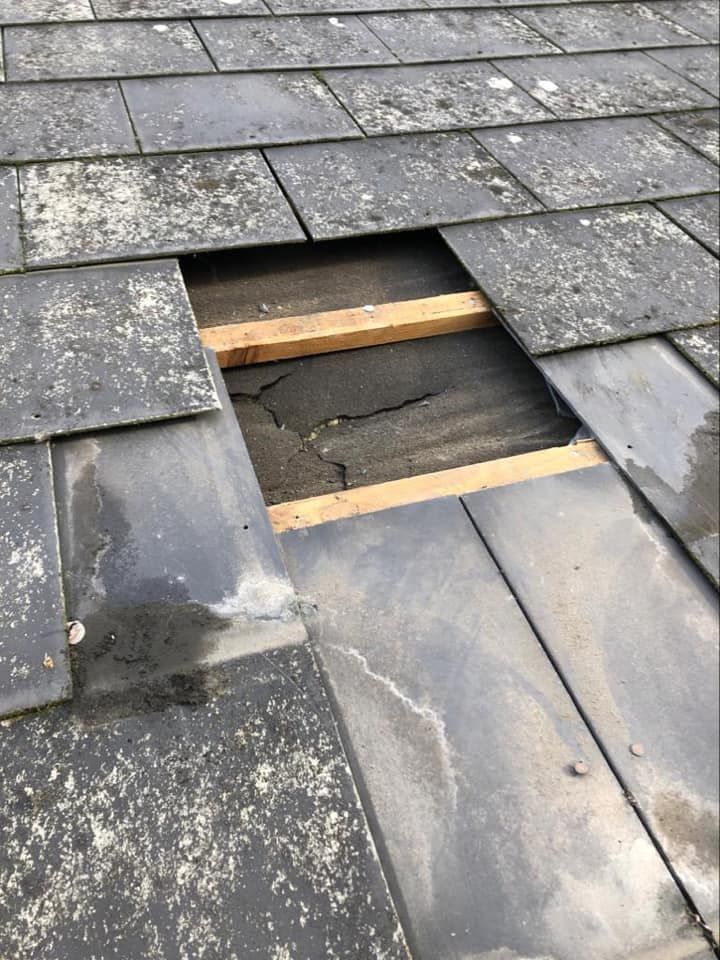
Slipped, cracked, or missing tiles are the most visible roof problem across Derbyshire. They are also the most misdiagnosed.
Many homeowners — and some roofers — replace the displaced tile and call the job done. That works when a single tile has been dislodged by wind or impact. It does not work when the underlying cause is batten rot, nail corrosion, or a failed mortar bed holding a ridge or hip tile in place.
What causes tiles to slip or break:
- Nail corrosion — the fixings holding slates and plain tiles rust through over time, releasing the tile. This is especially common on pre-1970 properties across Derby's older suburbs.
- Batten decay — timber battens rot behind the tile, leaving no solid fixing point. Replacing the tile without replacing the batten means it will slip again within months.
- Thermal movement — concrete interlocking tiles expand and contract with temperature. On Derby's post-war semis, decades of thermal cycling can crack tiles along the nail hole.
- Wind damage — exposed properties in Belper, Matlock, and along Derbyshire's higher ground lose tiles in winter storms. The tile that lands on your path is not always the only one affected.
- Impact — fallen branches, aerial installations, and foot traffic from previous tradespeople all cause localised damage.
What a proper fix looks like:
Replacing a single tile is a 30-minute job. Diagnosing why it slipped — and checking the surrounding tiles and battens — takes longer and matters more. We always inspect the area around the damaged tile before we replace it. If the battens are wet or soft, they need replacing too.
Material matching also matters in Derbyshire. Clay plain tiles common on older Derby properties cannot simply be swapped for modern concrete alternatives without affecting appearance and, on conservation area properties, potentially triggering a planning issue. We source reclaimed materials where matching is needed.
Signs the problem may be more than a single tile:
- More than one tile has slipped within a short period
- You can see light through the loft when it should be dark
- Damp patches appear on the ceiling after rain
- The ridge line looks uneven from the pavement
Failed Ridge Mortar — The Leak No One Sees Coming
Ridge tiles sit at the highest point of the roof, bedded in mortar. That mortar does not last forever. On most Derbyshire properties, the original mortar bed is between 20 and 50 years old — and many are well past the point of safe service.
When ridge mortar fails, you may not see it from the pavement. The cracks are small at first. But water finds them every time it rains, and freeze-thaw action through a Derbyshire winter widens those cracks steadily. By the time damp patches appear on the bedroom ceiling, the mortar has often been leaking for months or years.
Signs your ridge mortar needs attention:
- Visible crumbling or gaps around the ridge tiles
- A ridge tile that rocks or moves when touched (never test this without safety equipment)
- Mortar pieces or debris visible in the gutters
- Localised damp patches near the top of the roof line on upper ceilings
- A ridge line that looks slightly uneven when viewed from a distance
Re-bedding vs. re-pointing — what is actually needed:
Re-pointing replaces the surface mortar between joints. Re-bedding involves lifting the ridge tiles, removing all old mortar, and re-seating the tiles on fresh bedding. Many homeowners are sold a re-pointing job when the real problem requires re-bedding. The difference in cost is real, but so is the difference in how long the repair lasts.
The dry ridge alternative:
Dry ridge systems eliminate mortar entirely. Mechanical fixings and purpose-made caps hold ridge tiles in place with no bedding required. They are fully ventilated, last longer than mortar, and are now compliant with current UK building regulations. For properties in exposed parts of Derbyshire — Buxton, Matlock, the higher-elevation areas around Ripley and Alfreton — dry ridge is often the better long-term answer.
Cost guide:
Ridge re-pointing in Derby typically starts from around £300–£500 for a standard semi-detached. A full re-bed and re-point on a larger property will cost more. A dry ridge conversion adds to the initial cost but removes the need for future mortar maintenance.
→ Get a free, no-obligation quote for ridge repairs in Derby — call 01332-529704
Faulty Lead Flashing — The Most Misdiagnosed Roof Leak
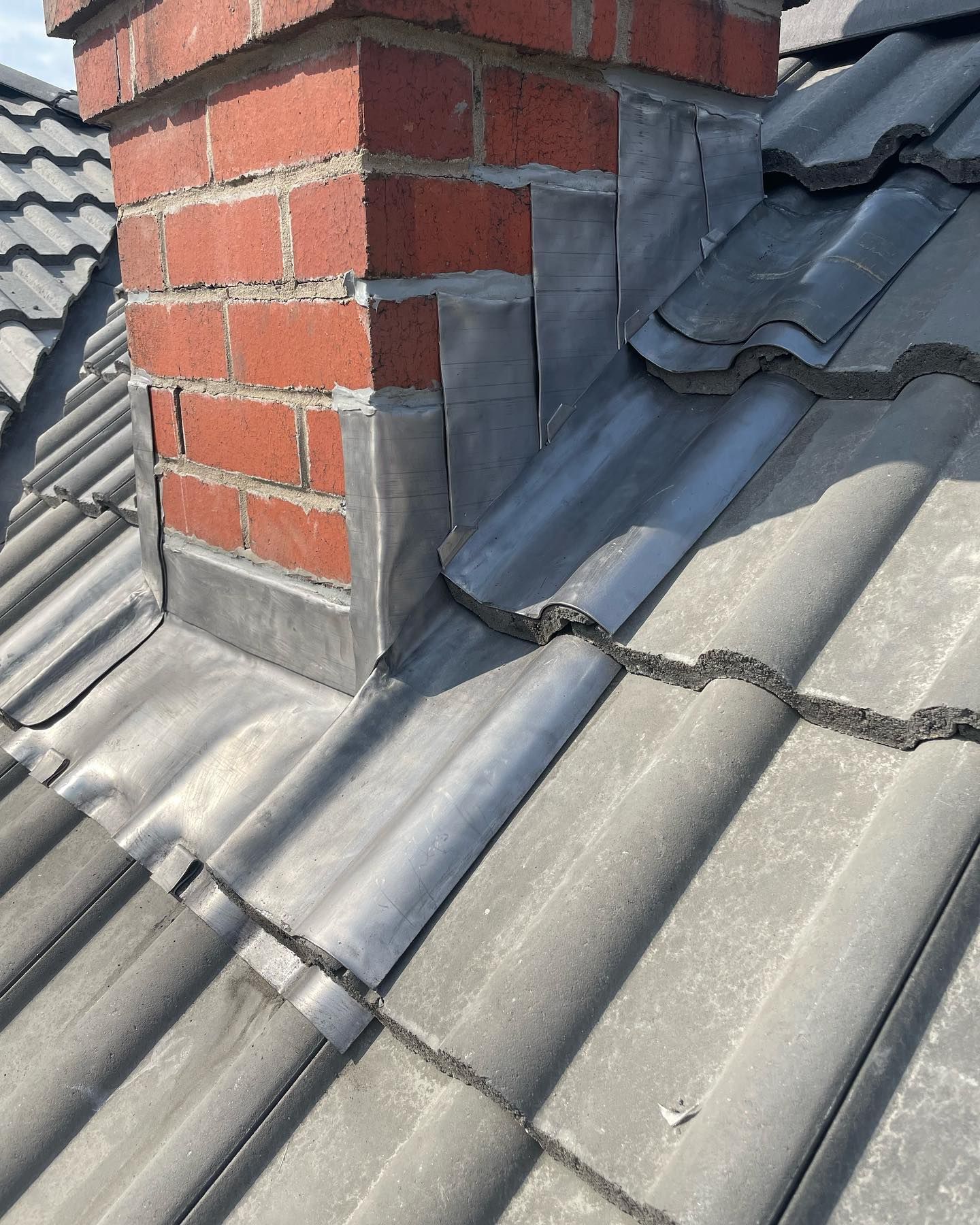
Lead flashing is the strip of metal that seals the join between your roof covering and a vertical surface — a chimney stack, a dormer wall, a parapet, or where a rear extension meets the main house wall. When it fails, water gets in. The leak usually appears several feet away from where the flashing has actually failed, which is why it is so often misdiagnosed.
We are regularly called to properties across Derby and Derbyshire where the same leak has been "repaired" two or three times. A roofer has replaced the nearby tiles, found nothing obviously wrong, and left. The tiles were not the problem. The lead was.
How lead flashing fails:
- Thermal movement — lead expands and contracts significantly with temperature. Over years, this pulls the flashing away from the wall joint it was tucked into.
- Mortar chase failure — lead is held in place by mortar packed into a cut channel in the brickwork. When that mortar crumbles, the flashing drops away from the wall.
- Poor original installation — flashing installed without proper laps, incorrect overlap widths, or without soakers beneath it will fail prematurely regardless of material quality.
- Age — original lead on properties built before 1980 is often at or past the end of its practical lifespan.
Where to look:
- Around the chimney stack base and sides
- Where a rear extension roof meets the back wall of the main house
- Around dormer cheeks and window sills
- Along parapet walls on flat roofs
- Around any roof penetration: vent pipes, skylights, soil stacks
What a proper repair involves:
Patching failed lead with sealant is a temporary fix. It may hold for one season. A proper repair involves cutting a new mortar chase, dressing new lead into the joint, and sealing with appropriate pointing. On properties where the flashing is beyond repair, we replace with new Code 4 or Code 5 lead to BS EN 12588, correctly lapped and fixed.
Where lead is not appropriate — on certain heritage properties or tight budgets — correctly installed lead-alternative flashings are available. We advise on this on a property-by-property basis.
→ Read about our leadwork and flashing repair services
Flat Roof Failure — Extensions, Garages, and Bay Windows Across Derby
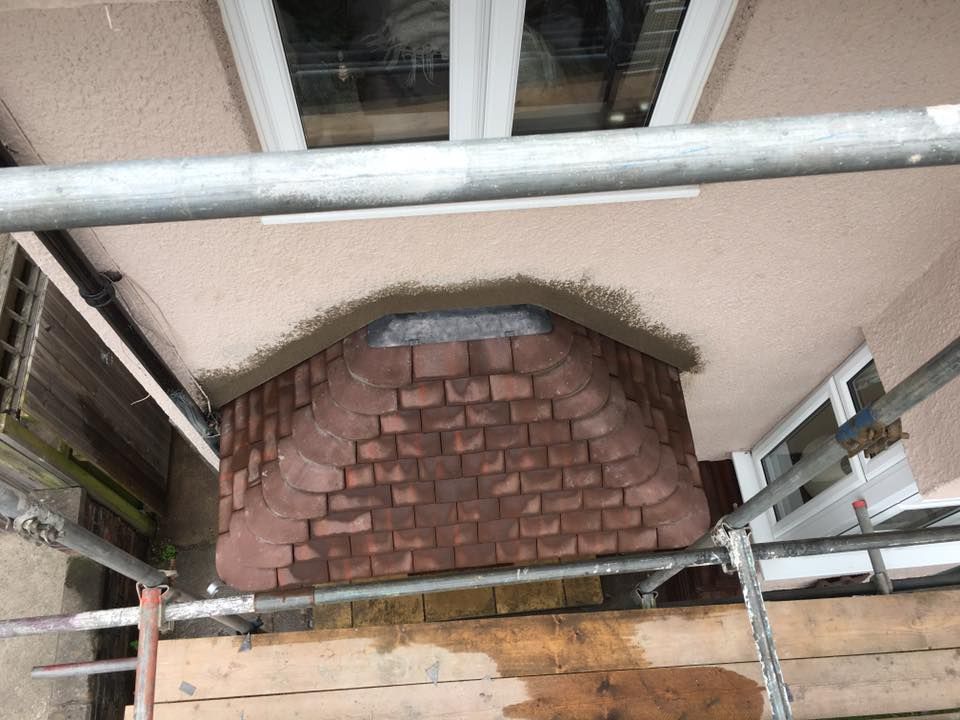
Flat roofs are common across Derby's housing stock. Bay window roofs, rear extensions on post-war semis in Mickleover and Chaddesden, garage roofs across most suburban postcodes, and commercial properties throughout the city all rely on flat roof systems. When they fail, the water damage can be substantial — and swift.
The three systems and how they fail:
Felt (bitumen): Traditional bitumen felt is still found on a large proportion of older Derby extensions and garages. It has a practical lifespan of 10–20 years. It fails through blistering, cracking at laps and seams, and ponding water that accelerates UV and thermal degradation. Once a felt roof blisters badly, patch repairs offer limited life — a full replacement is usually the more economic decision.
EPDM rubber: EPDM is a single-sheet, synthetic rubber membrane. Correctly installed, it can last well over 50 years. It fails almost exclusively at the edges, terminations, and any penetrations — vent pipes, drainage outlets, fixings. A well-installed EPDM roof in Derby with correct detailing will outlast the building it covers.
GRP fibreglass: GRP is rigid, seamless, and highly durable. It is the most popular modern flat roof choice across Derbyshire for domestic extensions. It is vulnerable to cracking if the deck beneath it moves — which happens when builders use the wrong deck board, or when a property settles. Cracking at the upstand joint where the roof meets the wall is the most common GRP failure point.
Signs a flat roof needs attention:
- Damp patches on ceilings directly below the flat roof area
- Visible bubbling, cracking, or splitting of the surface
- Water pooling and staying on the roof after rain
- Green or black discolouration on the roof surface
- Separation of the roof covering at the wall junction
Repair or replace?
A localised split or edge failure on an otherwise sound roof can be repaired. A roof that is blistering across large areas, or that has been patched repeatedly, should be replaced. We inspect every flat roof before recommending a course of action — and we tell you honestly which it is.
A full EPDM replacement on a standard Derby garage starts from around £1,500–£2,000. A larger extension roof in GRP will cost more depending on area and specification.
→ See our flat roofing services in Derby
Not sure whether your flat roof can be repaired or needs replacing? Call us on 01332-529704 — we'll carry out a free inspection and give you a straight answer.
Chimney Deterioration — The Most Expensive Problem Left Too Long
Chimneys are the most exposed element on any Derby property. They project above the roof line into full wind and rain exposure. They are subject to thermal cycling from the inside if used, and from the outside regardless. And they are often neglected until a problem becomes impossible to ignore.
Most chimney failures are not single events. They are the cumulative result of several deterioration processes happening simultaneously over years.
The five main failure points on a Derbyshire chimney:
- Lead flashing — where the chimney meets the roof surface. See Section 3 above.
- Mortar pointing — the joints between bricks. These degrade with freeze-thaw action and weathering. Crumbling pointing lets water into the brick core.
- Haunching — the sloped mortar cap around the chimney pot base. It cracks, drops into the flue, and lets water down the stack.
- Chimney pot — cracked or leaning pots allow water directly into the flue and can fall onto the roof below.
- Render or capping — rendered chimneys crack and allow water to sit behind the render, accelerating brick decay from the inside.
Why left-too-long is expensive:
A chimney with failed pointing costs a few hundred pounds to repoint. The same chimney, left for two or three Derbyshire winters, can absorb enough water to require partial or full rebuilding — a job that runs from £1,000 to over £3,000 depending on height and access.
Chimney removal:
Where a chimney is no longer used and is in advanced deterioration, removal is sometimes the most cost-effective answer. We carry out full chimney removal in Derby — including making good the roof covering, installing a proper weathering detail, and matching tiles to the existing roof where possible.
Surface Symptoms vs. Hidden Structural Problems — What Your Roofer Should Be Checking Underneath
This is the most important section in this guide. It is also the one that most Derby roofers avoid discussing publicly, because it asks homeowners to demand more from the survey process.
Most roof repairs treat what is visible. A slipped tile is replaced. A crumbling ridge is repointed. A patch of felt is sealed. The roofer leaves, the invoice is paid, and the leak returns. Not because the repair was poorly done, but because the visible problem was a symptom of something happening one layer deeper.
The three hidden layers most often missed:
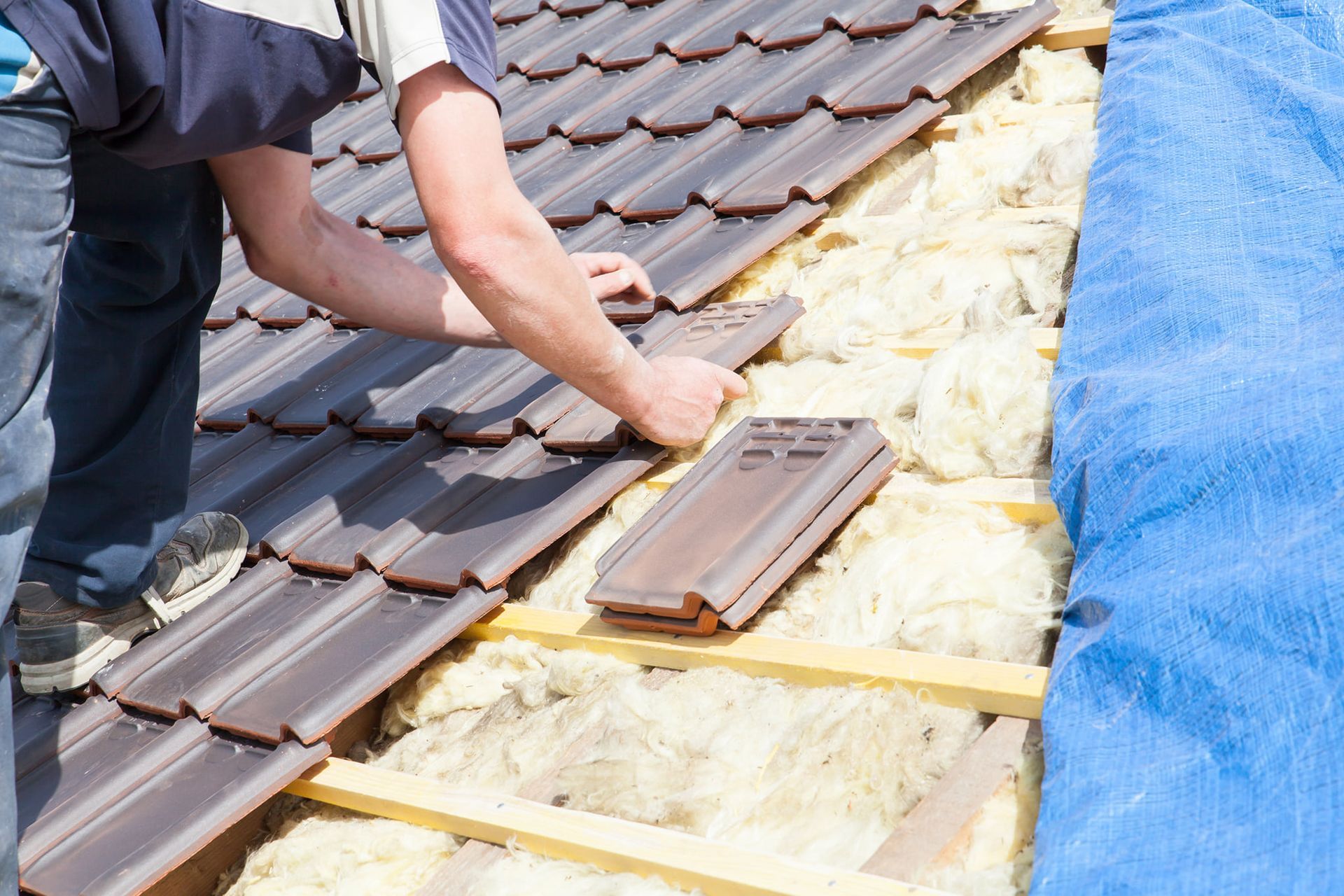
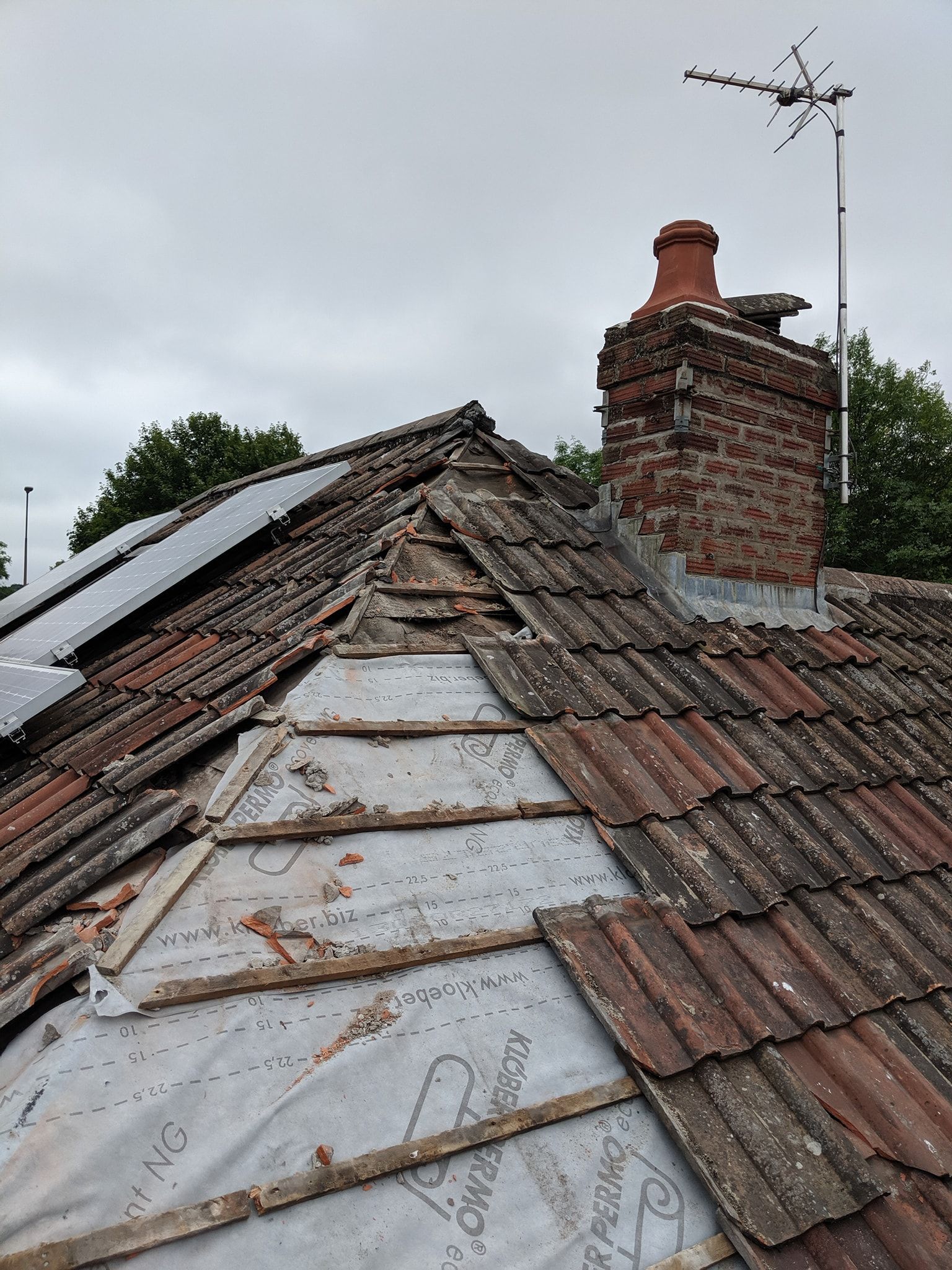
1. Sarking felt / underlay The underlay beneath the tiles is the secondary waterproofing layer. On properties built before the 1970s, this is often absent entirely — the roof was designed to dry out naturally through a ventilated loft. On properties where underlay was fitted, it has a lifespan. Old mineral-surface felt becomes brittle, tears, and fails — often in the same areas where tiles are slipping, because the two problems have the same underlying cause: age and moisture ingress.
When a tile is removed for repair on an older Derby property, the condition of the felt directly underneath should be checked before the new tile goes back on. Many roofers do not do this.
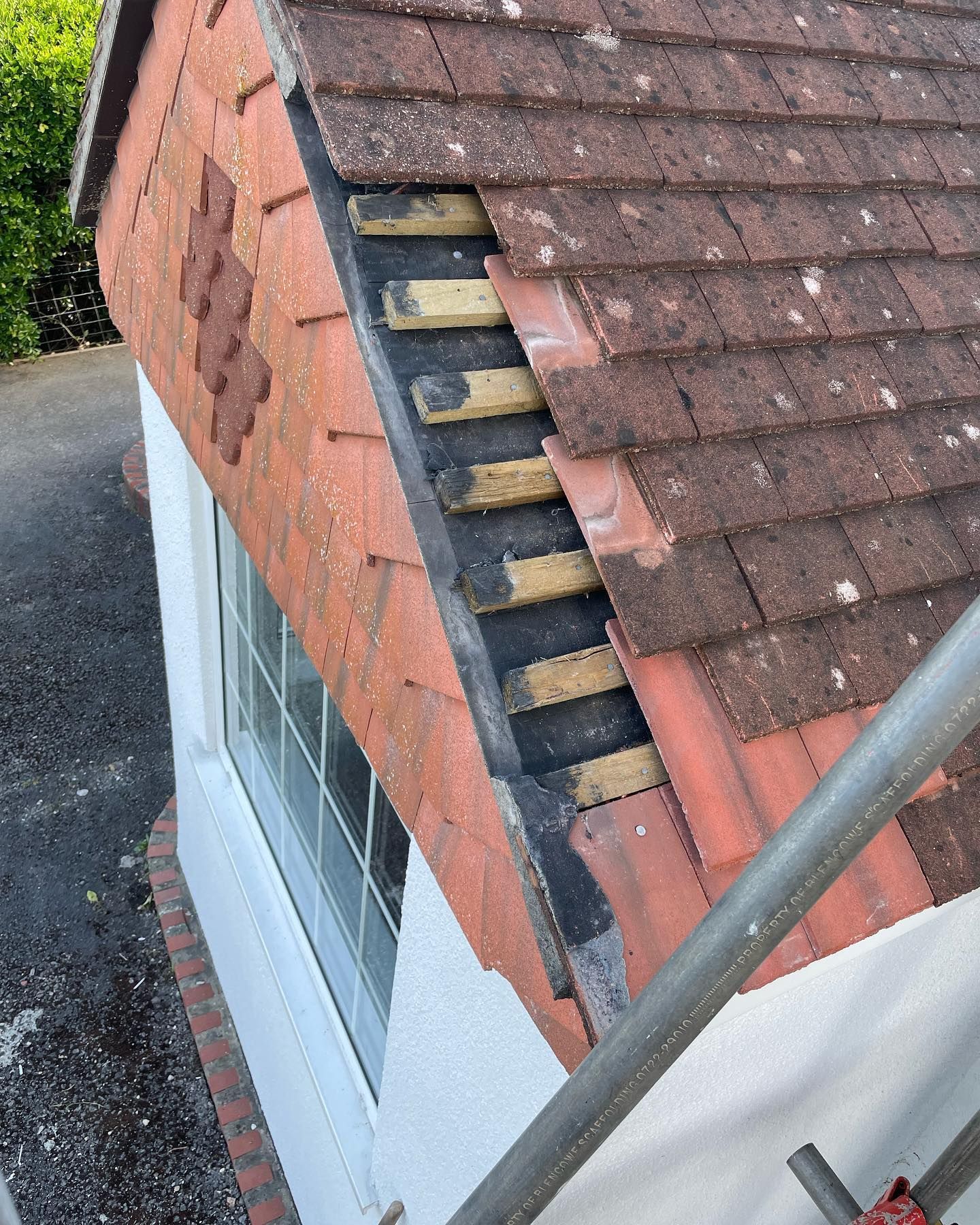
2. Roof battens Timber battens are the horizontal strips the tiles hook onto. When water gets through failed tiles or felt, the battens get wet. Wet battens rot. Rotten battens provide no fixing for the tiles above them. The tiles that are slipping most readily are often the ones directly above a section of rotten batten.
Replacing tiles on rotten battens without replacing the battens means the repair will fail again. The batten needs to be visible and sound before new tiles are fixed to it.
3. Rafter ends and wall plate The rafter ends — where the rafters overhang the wall at the eaves — are the most exposed structural timber in the roof. They are directly behind the fascia board, exposed to any water overflowing from blocked gutters. Rotten rafter ends are a common finding on Derby properties with long-standing gutter problems, and they are invisible without removal of the fascia.
What a proper inspection looks like:
Before we recommend any repair to a Derbyshire roof, we inspect the internal loft space. We check the condition of the felt, the battens visible from below, and the rafter ends at the eaves. We do this as part of our free survey — not as an additional charge.
Questions to ask any roofer before they start:
- Will you check the condition of the felt and battens before you replace the tiles?
- Will you inspect the loft before you quote?
- Can you show me what you found on your survey?
If the answer to any of these is vague, that is a signal worth noting.
→ Book a free roof inspection with Derby Roofers — we always start in the loft
Frequently Asked Questions — Roof Repair Problems in Derbyshire
Why does my roof keep leaking even after it has been repaired?
The most common reason is that the repair addressed the visible symptom rather than the actual cause. If tiles were replaced but the lead flashing, batten condition, or underlay beneath them was not inspected, the underlying failure point continues to let water in. Persistent leaks after a repair almost always indicate that the survey process was incomplete. We inspect the loft space and all relevant layers before recommending any repair — call 01332-529704 to arrange a free inspection.
How do I know if I need a roof repair or a full roof replacement in Derby?
A repair is usually the right answer when the problem is localised — a section of failed flashing, a small number of displaced tiles, or a single point of deterioration on an otherwise sound roof. Replacement becomes the better financial decision when the same areas keep failing, when the roof covering is approaching or past its design life, or when a structural survey reveals widespread batten or felt failure. Our free drone survey gives you a clear picture of which situation applies to your property.
What causes roof tiles to slip — and is it a sign of something worse?
Tiles slip because the fixing has failed — either the nail has corroded through, or the batten behind it has rotted. On Derbyshire properties built before 1970, nail corrosion affecting large sections of the roof is common and often not visible until multiple tiles start moving. A single slipped tile can simply be a one-off impact or wind event. Multiple slipping tiles in a short period is a sign that the underlying fixings need assessment. Book a free survey here.
What is nail sickness and why is it common on Derby slate roofs?
Nail sickness is the corrosion of the iron or galvanised steel nails that fix slates to the roof battens. As the nails rust through, the slates lose their fixing and begin to slip. It is common on Derbyshire properties built between roughly 1880 and 1950 — particularly Victorian terraces in areas like Normanton, Spondon, and Pear Tree — where the original fixings have never been replaced. The slates themselves are often in good condition; it is the nails that have failed. Depending on how widespread the nail failure is, individual slate repairs or a full re-slate may be the appropriate fix.
Why does my chimney keep letting water in even after flashing repairs?
Chimney leaks often have more than one failure point. The lead flashing at the base is the most commonly repaired element — but failed pointing between the bricks, cracked haunching around the pot base, or a cracked pot itself can all let water in through separate routes. A repair that addresses only the flashing will not stop a leak that is also entering through cracked pointing. We inspect all five failure points on every chimney survey before we recommend a repair scope.
Can slipped tiles or failed ridge mortar hide a bigger structural problem underneath?
Yes — and this is more common than most homeowners expect. Slipped tiles and crumbling ridge mortar are often the visible indicators of batten rot, failed underlay, or rafter damage at the eaves. Treating the surface without inspecting what is underneath typically results in the repair failing within one or two seasons. Our surveys always include a loft inspection to assess batten and felt condition — not just an external tile check.
Ready to Get Your Derbyshire Roof Sorted?
If you have spotted any of the problems described in this guide — or if your roof has not been inspected in the last two to three years — the next step is a free inspection.
Every inspection includes:
- A free drone survey of all roof surfaces, tiles, flashings, and chimneys
- An internal loft check of battens, felt, and eaves condition
- A written report with honest recommendations
- A fully itemised quote if work is required — with no obligation to proceed
📞 Call us now on 01332-529704 📧 Email: info@derbyroofers.co.uk Or complete our online contact form — we respond the same day.
Derby Roofers · Loscoe Grange, Loscoe, Heanor, DE75 7JY · 01332-529704 · info@derbyroofers.co.uk